S4 ● E127 We're bringing Curtis Stone to Sweden...
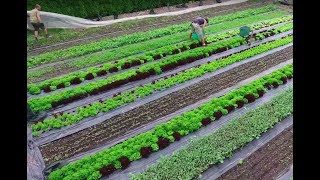
This is a recorded conversation (YouTube) between Richard Perkins and Curtis Stone announcing trainings in Sweden: a one-day seminar in central Stockholm on 14 July and a four-day farm training at Richard’s farm from 19–22 July. The farm intensive will showcase regenerative agriculture in full production—market gardens, several thousand meat birds on pasture, about 1,200 hens producing ~1,000 eggs/day, turkeys, pigs, perennial systems—and combine Richard’s farm-design, keyline and animal-economics teaching with Curtis’s market-gardening, business and marketing workshops. They emphasize low-cost, modular startup models (sub €20,000), scaling by market, entrepreneurial mindset, record-keeping, and accessibility (discounts for under-25 and over-65). Curtis reports his quarter-acre market garden generates over $100,000 USD in annual sales (third year running) as an example of high-intensity, high-value production.
Questions this video answers
14 July (Saturday).
19–22 July.
About 1,200 hens producing ~1,000 eggs per day.
Over 100,000 in annual sales (currency stated by speaker as dollars).
Chapters
So today we're announcing the first of our trainings for next summer and I'm super excited that we're bringing Curtis Stone, the urban farmer to Sweden. So next season we're not running our internship program and we're doing a few short trainings starting with a one day seminar with Curtis and myself in Stockholm and, and then we're doing a four day training intensive at the farm. It's Curtis's first time over in Europe for educational purposes. So, Curtis, I know you're bringing your wife and your baby daughter over. How are you feeling about the trip?
Yeah, we're super stoked to come to Europe. I've never been to Europe, my wife has and it'll obviously be my seven month old daughter's first time in Europe, but we're super stoked. I've wanted to come to Europe for a very long time, like as far as I can remember. But I've always, I think I've always waited because I knew I'd have a reason to go there instead of just wanting to go for the sake of being a tourist. I think I've waited so long just to have the opportunity to go there with a purpose, teach some people, bring some value. So that's what we're really excited about.
Yeah, people are going to be really excited to see you. And I think, you know, regenerative ag is really growing here at the moment. It's great to see a load of people starting to copy and emulate our models. And I think market gardening is really one that's growing because there's so much scope for people without access to land, which is a big issue here and with low startup costs. So I think market gardening is one we're going to see growing much quicker in the next couple of years. I think we're both excited about supporting the next generation of entrepreneurial, innovative thinking small farmers to get out there. We have this problem here with, you know, the average age of Swedish farmers is 65 or more and that's the same problem all over Europe. And we're just trying to get more people started in a smart, intelligent way. I'm guessing that's similar over there with you, Curtis.
Yeah, you know, the aging farming population and the small amount of farmers on the planet is concerning for a variety of different reasons. One I like to focus on is that when there's not enough people involved in agriculture, not enough people understand where their food comes from or understand the food system in general. And I think that ignorance in society has led to it's not the core cause, but it certainly enables certain problems to exist. When people don't know, when you don't have educated consumers asking the right questions about what's in this, what chemicals are in this, how was this grown? Then it leaves people to just kind of do things with an ignorant marketplace. And I'm all about having a educated consumer base. And I think it would incentivize producers to make better decisions for the health of people, for the health of the planet, and even for their local economics. I think there's a real strong case we made through that that if we have educated consumers who are asking the right questions, it'll incentivize farmers to make the right decisions.
Well, the snow will all have gone by then and it'll be mid summer and we wanted to put this training on in the height of summer so you can see the farm in its full production. The market gardens will be pumping and there will be several thousand meat birds out on pasture as well as about 1200 hens producing 1000 eggs a day. And there'll be turkeys in their gobbledygo forest, raised pigs, all the silver pasture lanes will be in full bloom and growth. And it's a really great time to be in Sweden and to be at the farm to really understand the sort of scale and intensity that we work at. We're going to be eating awesome food from the farm and just having a really good time, really focused in an intensive way on practical regenerative solutions. So for the four day training at the farm, we're going to be doing two days each. I'll start by giving a big tour of the farm and leading people through our approach to regenerative agriculture and farm design, sharing my experience over the last decade designing properties around the world. And I'll be really looking at the bigger systems and patterns of wider landscape design and focused on keyline planning and the economics and business of the animal enterprises here, as well as the perennial systems. And I'll touch a bit on the gardens with our approach to no Dig market gardening. But we'll leave a lot of the gardening stuff to Curtis. That's his speciality. Curtis, I wonder if you could just tell our followers a bit about what you're excited to share during the two days that you lead at the farm.
Yeah, my real focus with my workshops is to do things that they can't get in other places. And some of my strong points are business and marketing and, you know, setting up a business, running it, how to find customers, how to build a clientele these are a lot of things that I like to focus on also as far as production. I mean I'm really known for high value, high rotation crop production. And so that's really what, what I want to show people is how you can make a very, very profitable farm on a very tiny piece of land. You know, here we're quarter acre, we still do over 100,000 in sales on that quarter acre. So it's our third year in a row doing that. In fact, we were a third of an acre the last two years. We're a quarter acre now, still doing the same numbers. So I'm really all about showing people how to run a lean business profitable and how to focus on the things that are delivering returns.
Yeah, that's really sweet. I think, you know, one of the most powerful elements of this training is the shared approach we bring to business entrepreneurialism, the planning and back end stuff that really is what makes this stuff work. We, we've done so much work with collecting data on time and motion studies and I think that's so beneficial to help people be able to scale their enterprises to their time, place and circumstance. I think that's a really awesome element of this to really help people get started on the right foot. And you know, I see that market gardening is such a great one for people, you know, as a gateway enterprise because you can start on rented land, you can start in small spaces with super low startup costs. I wonder, Curtis, could you talk a little bit about who the training is relevant for, you know, in terms of experience level, who can do this stuff that you're doing?
Yeah, absolutely. You know, some of the many of the farmers I've trained, I don't want to say most, but many of the ones that I've trained that have been the most successful came from zero experience in farming. I often find that people with less experience in farming have less to unlearn because with 30 inch bed, market gardening, bio intensive, whatever you want to call it, it's so unconventional from the traditional forms of tractor based farming that I find people that are really attached to a certain way of doing something have a really hard time getting their head around these concepts and they're not necessarily new, but they're just different. So I think it works for all experience levels. And it's not to say that people who are really experienced are going to have a hard time with it. Sometimes that experience can lend itself well, but I've certainly seen all levels of people's experience do well. You got to be the right person, you got to be motivated, you got to be willing to work hard and stick it out. But yeah, this can work at any experience level.
Yeah, I really share all those points about hard work and diligence and good planning, record keeping, et cetera. I think it's all key stuff that we both share in our approach to training the next generation of farmers. And something that's important to us has been scale versus intensity. And all of the enterprises we've chosen here are things that can be. They're modular, so you could set them up on rented land. They're all designed to be sub 20,000 Euro startups that pay off their investments in the first year and get you rolling and can be scaled up or down to meet your land base, your skills, your resource base or your financial needs. And I think that's, you know, market gardening is a great one for that because people can start up with super low costs in rented land, those kind of situations. And I wonder, Curtis, if you could perhaps speak a bit about the approaches and techniques you share and how easy it is to scale them up and down.
Oh man, these techniques can be scaled until you're blue in the face. Really what it comes down to is can you scale to the market? The production methods scale, it's like Lego blocks, they can perpetually stack. However, if the market won't take the product you're selling, then that's really all it comes down to. So, yes, it can scale easily. You know, the nice thing about market gardening in my context is that we can set up a farm really quickly. And so I really encourage farmers, especially in places like Europe or where people don't have access to land. I encourage people to start on leased or rented land because you're starting with. Without that huge investment. And buying land is a big investment and a huge risk. And if it doesn't work out, or say you buy a land and the marketplace isn't what you thought it was, or maybe there's circumstances on the land that weren't as you thought they were. Maybe have horrible neighbors, maybe there's bio regional elements of that land that you didn't anticipate, you know, whatever it could be, buying land is a huge risk. And just starting a production on leased or rented land is great because you can just get it going. You can just get in there and learn. You might find in a year or two that land isn't perfect. But hey, if you have to move your farm, it's not the end of the world. And that's what's so Great about this sort of lean and small scale farming models is they're transferable, they're modular, you can pick them up and move.
Yeah, I totally agree. I think this, you know, new wave of farming with low cost startup, modular infrastructure, movable infrastructure is so important and really key to getting young people engaged on the land. Most people we come across don't have access to land, don't have large capital resources and this successional, generational thing between farmers where most farmers are telling their kids to go to the city, get a real job. Now it's a major problem with all over the world that I've been to. And so I think, you know, some patterns behind this. Like what I see is there's similar patterns in most successful small farms and both in their infrastructural and design approaches to business but and to regeneration of the soil also. But also the mindsets required for success. You know, all about solutions, focused and looking at very good planning and really diligent record keeping. And it's a really important part of our training. I've said so many times about context and clarifying that for yourself and record keeping and monitoring and these are the things that really make a business work. And that mindset to entrepreneurialism I think is key. And I think Curtis shares the same approach. Curtis, maybe you could speak a little bit about mindset and how that's been important in your success for your business, but also whether that's a key element of your training.
Also mindset is a huge part of my training and it's something that really comes out on the in person experiences when they're there. Also seeing your farm or my farm in a week of operation and seeing what it takes from people to coordinate that day in and day out, that's part of it as well. But absolutely mindset is so key and I really promote the idea of an abundance mindset and this is something that gets interweaved in every subject that we talk about on the farm. So absolutely it's critical part of the discussion and so key to this content.
Yeah, I'm really looking forward to it. The one day seminar is in central Stockholm. It's a beautiful conference center on the waterfront there and we've kept the price point low. We've got a special discount for people under 25 or over 65. We really want people to be able to get there from other places in Europe as well. Take the opportunity to come and meet myself and Curtis and I think it's going to be a really cool event. That's happening on the 14th of July. It's a Saturday. Curtis, maybe you want to just say a couple of words about the seminar. Yeah.
So the one day event in Stockholm will be obviously a lot different than being on the farm. What we want to achieve here is just introduce people to these ideas, have people come out, make an event big enough and at a reasonable enough price point that we can bring people from all over Europe. I'm hoping that we're going to see people from all these surrounding different countries. You know, not everybody can take four days off, especially if they're farmers, but they might be able to come down, hang out, do the meet and greet and potentially meet other entrepreneurs or farmers that are looking to do the same thing. And I often find with events like this, that's often the biggest takeaway is the other people you meet.
Hey Kadis, thanks so much for being with us and I'm really looking forward to hosting you and your family here in Sweden. The other training at the farm is happening on the 19th to the 22nd of July. Tickets are on sale on our website. You can see them in the links below. And I'm really excited for this. I think it's great to bring together like minded people with the same sort of business and entrepreneurial mindset and really give people a deep insight in what it takes to run these pioneering farms. I'm sure most of you that follow our channel are well aware of Curtis's channel. If not and you're into urban farming and high profitability, high rotation market gardening, you can find that in the links below as well as links to the workshop tickets that are on our website and our book, Making Small Farms Work. There's also a link to Curtis book the Urban Farmer. So thanks so much for watching. Hope to see some of you down here and we'll see you in the next video.
More from Richard


A review of short and intensive season on a mixed farm and restaurant/event space in Sweden






Alskade Kyckling Exploring complexities of poultry production in Sweden and what we stand for


