S4 ● E23 Pre-Season Update. Our days off are often when we start our biggest projects!
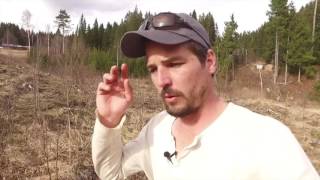
Sam updates on spring farm work: installing pig fencing for rotational grazing across six half-hectare paddocks, building chick infrastructure, and seeding vegetables. He's harvesting mature timber for roughly €18,000–€20,000 to clear land for broadleaf succession, and planning to graze about 25–30 pigs per rotation area.
Questions this video answers
April 8, 2017
Approximately €18,000–€20,000
About six plots of roughly 0.5 hectare each
Several hundred kilos of fresh local fish per year
Roughly 25–30 pigs per (~6 of a) hectare for about a month
Chapters
In a glorious few days of weather. And we've been busy doing many things. Right now we're going up to do some fencing work. Slow down here, love. We're going to stop up here. Perfect. Good job. Good job, Gracie. Been really busy times here. We've been seeding a lot more vegetables and we've been building staircases and we've been sorting out the broodery for the chicks. We've also managed to get a bit of time off and get out on the lake in our boat. It's a local lake. It's a lovely place to go and relax, take some time away and also go. Fishing is a passion of mine. I fished since I was a little boy and I really value eating freshwater fish. We get several hundred kilos of fresh local protein from the wild each year. It's something I really enjoy as a way to take time out from the busy farm and managing a lot of people here during the summer. So it was a really nice day to get out on the water. Things are slowly just starting to grow now. The grass is just showing its first signs of growth now. This week we've had some really nice weather and the buds on the trees are starting to swell. We've got hazel and fruit trees in the lanes here as well as berry fruits on the front. Some gooseberry here is just starting to swell. So we've been working on the pig fence. This is the first of five more paddocks we're building this year. We've already put a paddock around the larch which is here, and this paddock will join onto the existing fence that we have at the top of what we call nutfield. It goes down to the riparian, up to the property edge here and along the road we're going to do a five wire system quite different to the other fences at the farm. This is only mainly for the pigs to be rotated through the forest paddocks. But then, because wherever we've grazed the pigs, this is actually the area where the pigs first came in when they came to the farm last year. And what we notice is it comes back with a lot of grasses and forbs and gives us grazing for the cows and sheep later in the year once the ground is recovered again. It's recovered very nicely in here. So we have about six plots of half a hectare that we can keep the pigs in for several weeks at a time and rotate them through. We've just heard that they're actually digging the electric cable. I made a video in the winter about designing these different Paddocks and I was mentioning how they're going to dig this cable under the ground. We heard now that's going to happen late in the summer. It's quite rocky ground here, so we've had a bit of trouble getting the corner anchorages in. We've gone for quite short intermediate posts and it's just the five wire high tensile system. So we've got the corners in nice and solid. But then we have some pretty Tetris terrain on this side. You can't really see so well on the camera, but it's very lumpy and rocky. We're going to use a few trees in the fence here. All the tree species that are coming back are trees we really appreciate. Behind me is one of hundreds of oaks that we have. And you don't see oaks, mature oaks in the landscape around here really. I don't think people really know what the natural forest assembly looks like here because everything's just monoculture spruce like we have up behind us here on the hill. And maybe birch plantations for firewood, etc. But the species that come back here are oak and ash and tilia rowan. And these are all beautiful timber trees that I'd much rather leave. So we've had a change of plan over the winter and we're thinking we'll actually cut the timber trees we own up here. Our plan was to selectively fell the mature trees. They're about 70, 80, 90 years old up there, and then allow the pigs through there to turn up the ground and start a new succession of broadleaf trees. But I think it's. It's about time to harvest those trees. We were talking with the neighbor who owns the adjacent forest and he's up for cutting his too at the same time. And it's about €18,000, €20,000 worth of income for us. And then we've got a clean slate that we can put the pigs through and then quickly start a succession towards the sort of species of trees that we want here. So Matt and I have been putting out the basic post structure along temporary lines that we put up to get straight lines. High tensile obviously has a huge amount of force once you strain the wire. So putting the post in a nice straight line off very well anchored corners is vital. And we're down here at the stream, which is flowing very nicely at this time of year, and we'll be anchoring the corners off a couple of trees in here. Just because it's very rocky ground, it's very hard to get a good corner post. In, but we've got some decent sized trees that we can then run a line up the edge of the property here. This ditch marks the edge of our property, although actually this timber here is ours and the stream is here. It's a really lovely fresh water stream. And we're going to keep about 6, 7 meters off here to ensure that this is going to be left as a natural riparian. We'll just leave that and make sure the pigs don't come too close to here. And then we've worked out this setup. We're thinking to have two main gates for every paddock and we're actually going to have non electrified solid metal style gates like sheep pen sort of fencing bars, just to allow a more rapid daily chore routine so we don't have to turn off spring gates and open them up. We can just walk through quickly and they can then be moved between the paddocks. We're transitioning the land from forestry and one of the main reasons is that it's a much better economic return being able to graze the pigs and then also the cows and sheep through here than it is doing monoculture forestry. And at the same time we're able to stimulate succession and bring back a series of broadleaf trees which are much more valuable long term in my mind. They're much more resilient to changing climatic conditions as well as pest, diseases, etc. There are some diseases that are starting to affect the monoculture forestry here in Sweden now. So behind me is the sort of fence that you see all around our farm. We have two 10,000 voltage electric lines at the top of the fence. Obviously it's not turned on right now. And then we have a high tensile stretch net and then we have another 10,000 volt line on the inside of the fence. And that's mainly for the wolves because wolves will stick their nose through first. But by having the line on the inside of the fence, it means the animals can graze under that and keep the line clear so it doesn't short. And then the lines at the top technically for lynx as they're climbing animals, but they're also in our case mainly for. We have wolves in the forest around here, but certainly I haven't heard of any lynx around. But mainly for elk and deer because they're protecting the silver passage systems. You might just be able to make out behind me in topfield. And yeah, they can go over a fence like this, but because there's such wide open landscapes all around here that don't have fences they're not really likely to. And elk here is what in America or Canada you call moose. Someone always says they're not the same thing, but they are. It's the same animal. We just call them elk here and what you call elk over in America. We just. We don't actually have them here, but we would call it a deer, I guess, if we did have it. So this fence will be connecting up to the corner post of this fence. The pig fence we're building now will connect up to this one, but a very different style of fence, mainly because we don't have to protect the tree systems in here. These are not trees that are particularly valuable economically in that sense to us. And I think just even the basic metre high tensile wire will keep any browsing animals out. Just because there's so much hundreds of hectares of open land all around us, we're going to have a lot more space with all the new paddocks that go up to the line of young trees that you might just see there. And then we have the old forest up at the back, so we have a few hectares to rotate the pigs through. These trees are big enough to resist the whole herd of pigs as long as they're not kept in here too long. And we've got enough space to be able to run up to 25, 30 pigs per 6 of a hectare for a month or so. And that's been working well so far based on what happened last year in the coldest months of winter. We have them down at the farm centre. They have an indoor and an outdoor space, but there's no food and the ground is frozen outside. So it feels more beneficial to have them up in the farm center where it's easier to do our daily chores. That's all. Just a quick update today. Got a lot of work to do in this next week before people arrive. I hope you like the updates from the farm. You can click subscribe below if you want to keep up to date with the season as it progresses. Really excited to share with you all the different things going on here this season and for the film of the farm coming out made by Olivia. It's going to be awesome to see the draft of that soon and can't wait to be able to share that with people. If you want to find out more about the technical aspects of the farm, the trainings we run on our website, and you can also read our book, Making Small Farms Work in the links below. Thanks for watching. See you next time. Sam.
More from Richard


A review of short and intensive season on a mixed farm and restaurant/event space in Sweden






Alskade Kyckling Exploring complexities of poultry production in Sweden and what we stand for


