S4 ● E31 When will Spring truly arrive? Farming at 59°N
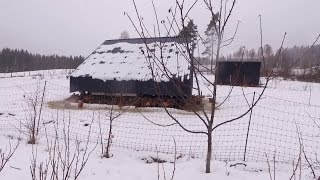
Richard Perkins gives a farm update from Ridgedale at 59°N in late April. Snow is still melting, interns including Frida have arrived, and the team is building loft space, fencing a new pig paddock, and preparing livestock for spring. Pigs, sheep, and hens are transitioning off winter feed as the farm moves into its busy season.
Questions this video answers
About 0.75 of a hectare.
About three or four weeks.
Day eight.
Under 36 grams per bird per day.
About two weeks.
Chapters
There's more unexpected snow today. It's quite deep snow, but it's thawing up. It's above zero. Here's a quick update from the farm today. Had a really nice relaxing weekend. Managed to get out fishing. Matt caught the first fish of the year. I didn't really have any luck this time, but really nice to be out on the water. And the team is finally all here. Frida arrived at the weekend so the team is finally all assembled and it's amazing to have such wonderful people here. We're so lucky and I feel like, you know, we've been here a week now. In some ways it feels like we've all been here for a month or so and time here is really distorted. It's been my experience every year we get so much done in a short time here that it feels like we, you know, one week, it's quite a long time. In the perspective of Ridgedale, it really feels like we're a small family and we've been living quite intensively together because we're eating indoors in the house because it's so cold. We can't set up the yurts and the spaces that we typically have throughout the summer. But it's been really lovely in sauna every night and just hearing from different people from their respective cultures. And it's one part of what I love about the farm because I myself have traveled extensively since I was a teenager and I traveled every year since, since then. And Johanna, my partner, has also traveled a lot. And we really love that sharing of cultures and experiences. And we knew that once we had livestock we'd be settled in one place. And it's something that we really value about our farm is that we actually can bring people from all corners of the world here. We're really lucky in that. And it's also part of the design of the place. You know, we always wanted to do this together with people to benefit other people who want to go off and start their own thing up. And I feel like it's a unique place in that way. There aren't many farms like this in Europe and there aren't many places where you can go and get really deep hands on experience with sort of leading edges of regenerative agriculture. So we're super happy to share and be together and seems like everyone is pumped to be here. We got really organized in the week that we've been here and everything's running smooth despite the setbacks with the weather, like the snow, the team have been busy building up in the loft and we're setting that up in the next couple of days before we get on with the fencing. I'm up here, I've just been out getting a lot of gear. For the fencing project coming up, we're going to install the next pig paddock. The pigs are in the distance here you probably can't see on the video. But next they're coming up into a paddock that surrounds one of the blocks of old trees that we have here. But it also includes a little portion of the cut forest behind me here, not including the clearing around the wires here. That's going to be a separate paddock. We've actually decided to fell these trees perhaps this winter if the timber prices are good and it makes it worthwhile. We're going to work in collaboration with our neighbour who's got an adjoining piece. Typically you cut your timber at the same time because you have this domino effect of trees blowing over when neighbour cuts their trees down. But I'm just, I love to visualize projects through before we do them, often multiple times, just to make sure we have all the materials to get a really good workflow going and have the right materials in the right place at the right time. But also, you know, we're making long term decisions. When you're putting fences in, they're pretty permanent structures, or they should be if they're a permanent fence. And so we need to both protect the riparian areas. We have a beautiful area of the farm down by the stream and the neighbors actually cut some bigger trees on the bank where the light comes through here. And I was very happy to see they left a lot of trees standing in the riparian area. Now we also have the tree house behind us up here, you can just see. And I want to leave a lot of trees around that to protect that and just to also keep a nice atmosphere around that. So I'm just working out where the best place is to come in with the fence. That makes sense in a longer term perspective. I expect they'll come up here a few times in the next couple of days and we'll be hopefully starting this project soon. It's probably about three or four weeks till we're actually going to move the pigs. We're going to rotate them through all the different paddocks throughout the summer. And obviously they can't come in here until the new paddock is ready. But we want to be a bit ahead of the game. We're going to leave some of the fencing to do with the intern crew that come because I Think fencing is a really undervalued skill and such an important part of farm management. So it's nice. It's a small paddock, this one. It's about 0.75 of hectare. That's like 1, 2, 3 of an acre or so. Not so big. And we've got plenty of trees to go off, so we'll be utilizing some of the bigger trees that we don't want to fell in the fence just to save on posts, etc. It's quite rocky ground up here, so hard to put decent posts in. It's really beautiful at this time of year. Despite the sort of little upsets that come logistically with unexpected weather, it's still such a lovely time to be out and watch the buds forming on the trees and see the insects starting to come back and bird life starts. You start hearing a lot more birds at this time of year. There's a lot more birds here than I'm used to growing up. But it's also. My neighbor stated that it's a lot quieter than it used to be. And, you know, I don't know if that's linked to pesticides and all this kind of stuff, but it's, you know, it's likely as a link there. Here we're coming down on the area of the stream, one of the streams that goes through Hypoptus. And the pigs are in the paddock on the other side there. That goes up towards the road just in front of that house. You see the eggmobiles in the background. We'll go and have a look at the hens in a moment. And so we're leaving a good 8 to 10 meters here. We're on a steep bank. This is where the ram pump comes down. It's a holder tank for the ram pump that's at the bottom down here. It's not on at the moment, but we'll be leaving this steep bank. It's not a great idea to have pigs on a steep bank because they will just cause erosion. And so I'm going to head down towards the gate and show you what we're doing down there. So we'll be creating some laneways to come across with the pigs. We're going to actually build a bridge here with tree trunks and put sod back on top, because pigs don't really like traveling over water. They're pretty scared of it. And we're leaving these big gates that we're just using old sheep gates for to allow access in the future, especially when the big machines Come in to dig down the telegraph poles, etc. And they're seeming to work fine. They just pull in with these metal pins and so we can easily take these gates to the next pen when we want to move the pigs to the next pen. But it's been working well so far. The pigs are respecting the fence. There's a good 6,000 volts coming through there. And so the new pigs that have never seen fence before have quickly learnt how to behave around fence. And you see this is an old pig paddock under the larch with spring gates, and they do respect the spring gates, but they can get through them. And once one has got through, they know that they're free to go. So we've chosen to go for solid gates just for ease of entering the pens, for servicing the animals with feed and water, and also just allows us to have good, secure gates without the risk of the pigs escaping through the fencing there. The currents are just coming into leaf now and the trees are coming into bud. We'll see. We're lucky. We haven't had things going to blossom yet. And we're a little bit colder than the neighbours. Even about sort of 30 meters elevation, you'll find that we have snow sitting up here up to six weeks later. And we're really in the intersection between some different climate zones here, so it's interesting to watch these little microclimates at this time of year. Hens are doing great. They're sheltering nicely today. Obviously, it's very interesting experience for them. They've never seen snow before and I've got no issues with the cold. I mean, it's above zero, so it's not particularly cold, but they're, you know, not wanting to venture out in it so much. So we're feeding them close to the eggmobiles, but they seem to be doing fine. The beds have been coming straight out as we've been opening up in the mornings now, and they tend to stay pretty close still. Some will range out. I mean, now with the weather as it is, they're not particularly keen to get out so far, but each day we move the feed further away from the eggmobile just to encourage them and coax them to come around. In a couple of weeks, they'll be out and about and running around, utilizing all the space in their fences. So it's day eight for the chicks. I think the camera is steaming up a bit, but you can see they've grown markedly and they're under 36 grams a day per bird. And it's really nice and warm in here. Now. We've got the heaters on this whole time because of the cold snaps, but the birds are very active, they're very hungry and their growth is exponential. Now at this point, Maria is just measuring with a laser thermometer on the bedding and on the backs of the birds just to get a. Because you're measuring with such an accurate tool, it's good to understand what you're actually measuring and see how the differences in temperatures in the actual building and the bedding and on the backs of the birds under the lights affects their well being from batch to batch. And we always collect a lot of data so that we can start to understand patterns better and better. We're giving grit to the birds really early and it's really good to introduce the birds both to sods of turf when they're young and also to grit really early. They do a lot better and we tend to start giving them turfs of grass to get used to standing on grass, pecking at it, understanding what it's about. And we'll probably start that. These birds have got two weeks left inside, so we'll probably start to give them turfs hopefully in the next week if it's not all covered in snow. But these birds should be out in two weeks from now. So we just hope the weather is continuing to get warmer. It looks like the weather will be up to 14 degrees in the daytime soon at the end of the week. So fingers crossed, all is going perfectly well. The sheep have had access to the outdoors now, but they're choosing to spend the day indoors. They look very comfy and relaxed. It's important to transition animals off winter feed into summer well onto grass slowly because the grass at the early times in the year is just full of protein. It's got no carbohydrates really, and it just gives them diarrhea. So we just made a little pen out here that they can get used to running around a bit and eating some grass. We're using some nice fences this year with these plastic verticals and it allows you to go over undulating terrain much better than just standard sheep nets. They only cost a little bit more and I'm very happy with them so far. I think we'll transition to only using these nets and it's much less likely for the lambs to get shocked and stuck in them. And part of the reason to make this pen now is to get the sheep, the lambs used to, to electric fencing. And we'll probably run the sheep and the cows and the lambs together in this. Yeah, they seem to have taken to it. I've seen a few getting shot and they've all been out eating grass. We've got a bunch of bigger projects coming up now with slaughtering the old hens. We'll be getting the slaughtery together. Just got a bit of work to do in the outside changing rooms and we're going to modify the chiller room to be able to fit more birds in this year, but we'll be using that before the broiler season starts to take the old steering hens both for sale. And a lot of customers seem to like the sort of more tasty steering hens, but we also eat a lot of those ourselves, as well as boilers throughout the season. Had to do a bit of snow clearing off the fleeces. We've got young transplants in some of these hardier crops like kale, and so it's just been a case of keeping the covers from hitting the crops and crushing the crops. Garlic's protruding nicely through the snow. Just had the dinner bell and I'm actually off to Gracie's in her mother's place to have dinner there. So that's all for today. Don't forget to click, subscribe and share this video if you find it useful. I think we're going to be sharing a lot of stuff that's quite unique in small farm regenerative agriculture stuff in Europe. So share it with your friends if you think they'll benefit. And don't forget to click, subscribe, like the video and we'll see you next time.
More from Richard


A review of short and intensive season on a mixed farm and restaurant/event space in Sweden






Alskade Kyckling Exploring complexities of poultry production in Sweden and what we stand for


