Richard Perkins built grain storage from used metal silos for €150 each plus delivery, with a concrete pad and feed chute. He projects saving €4,000 to €5,000 per season against roughly €1,000 in setup costs. He's expanding broiler pens from 12 to 18 and walking through barn renovations and seasonal prep work.
Questions this video answers
12 already; about 18 pens this year.
€150 each.
About €200.
Approximately 8–10 cubic metres (per silo).
Investment ≈ €1,000 this year; reported savings mentioned as both €5,000 (early) and €4,000 (later) for the season.
Chapters
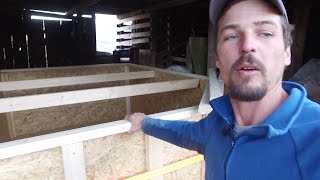
Hi. It's been a beautiful day and the snow's all melting away again. Temperatures are picking up and we've been super busy at the farm. Quick update from today. We're picking up materials for eight more boiler pens. We've got 12 pens already, but we've got a big order of chicks first thing in the season. So we're going to have about 18 pens on the field at once this year. So we're going to set up a line to assemble all those efficiently in the next couple of days. We're putting a concrete slab down here and we found two old, probably 8 to 10 cubic meter metal silos that we can paint up, put a roof on, and they will be for broiler food and layer food, which we supplement with local grains and obviously the pasture too. But we go through some food each year and so we'll put down some concrete pads and install those soon. Hopefully, putting in the bulk storage this year is going to save us €5,000 in fee costs. So it's quite an important investment for us, but we've done it really cheap. We found two silos, €150 each, and this farmer who's. Well, his father was a farmer and this big milk farm nearby, and they used the grain to supplement the feed, but they're clearing out their barn, so they've sold them to us really cheap and they can deliver them as well, which is usually the major cost here. But delivery is going to be about €200, so it's a bargain for us. We just got to put a concrete slab down, which will cost a little bit, but it's a very small investment for such a big gain for us. So I came back in the afternoon. I've just been putting together this old style silo. It's just basically a big, heavy structure that can hold 10 metres of grain. And the reason I've built this is because we get grain, typically from our local organic growers, the only local grain grower left in the region. And we pick up on the trailer ourselves. And it's a lot of time during the busy season and we start giving grain to the layers as well as the broilers as well as the pigs when they run out of their brewers. Grain that we get from our local breweries. It's built in a modular way. It's just four panels put together with nice joins in the corner and then ratchet straps to hold the whole thing in because the load is spread, so it's only about 1.2 meters high. So the load is spread out on a large distance that it's just straight on the barn floor, the old wooden barn floor here. And I did it in this way because I want to renovate inside the barn and put a concrete slab across the whole barn so we can start keeping large flock of layers into the winter. And it's quite convenient placement. We've got a little mill here that we use to mill all the grain before we feed it to the animals. And so I'm going to build a little ramped chute to be able to just pour grain in there and a little stair access inside to get the last bits. So it's a little bit less convenient than modern silos that have some kind of grate at the bottom you can feed straight into a wheelbarrow. But it costs just a couple of hundred euros to build and it's going to save us that in fuel costs pretty much this year, especially if you include time in that too. So we're going to save about €5,000 this year just on bulk feeds. But the reason we haven't done that before now is because we're looking ultimately to transition towards more truly pastured livestock, like geese and rabbits, for example. But there's currently no market for that right now. And it's a long term process. You can't be super idealistic with those things. And something I'd say to people setting up, designing farms, etc. Is to be careful where you place your money and how permanent you make infrastructure. In the beginning, for example, the water lines that run along the edge of our field with quick release points run between all the silver pasture lanes so we can give automatic water with a gas pipe straight to the sheep, the boilers, the layers, the cows, etc. We didn't bury that because when you're laying the farm out, you can put a lot of thought into that and think you've laid it out correctly. But once you've used the land for a few seasons, it becomes more clear where precise locations of different things should be. That's a similar thought to the silos. We know we don't want to rely on imported grain. We're using the enterprises we are because it's allowing us to import nutrient to our pasture and radically improve our grassland so we could run purely pastured livestock. But it's, you know, it's a big investment in the beginning when you're not sure if you're going to run those enterprises long term. For us, it's going to cost about €1,000 this year to put in the two silos, concrete pad and the little grain silo I built. And it will save us €4,000 just this season alone. So it feels like a really good thing to do. We're going to be pulling out the old boiler pens and just repairing any that need a bit more windbreak on the sides. We have quite a lot of side and roof protection. Three quarters of the roof is protected and two of the sides because of the strong winds and regular rain that we get here. So it's day 10 in the brooder and Marie and Astrid have been doing an amazing job starting to the management in here. We rotate the farm managers through all the different roles at the farm so everyone can get exposed and really get hands on experience with managing each part of the farm, which we found everyone finds really beneficial here. The birds are growing really well. They're getting really strong. They've grown a lot now and they'll be ready to go out in about 10 more days now. And the weather looks like it's going to improve a lot. You start to see a lot of size differentiation when the birds get to this age and that will go on until the birds are older. But you see they've got very well developed wing feathers now and they were not fully feathered when they go out actually. So we need to really watch the weather. We always make sure we don't put them out on cold, wet days and we'll put straw down for them to get up off the ground if it's particularly wet on the ground. So things are going really well in here. Despite the scare at the start of the season. It's looking great. We've lost very few birds and super happy with how that's going. Had the chiller technician around today just to check out the chiller. We've had a few electronic issues with the new chiller that's in the slaughtery behind me for the pasture poultry. I'm just checking on the chiller for the market gardens, which is running fine. It's good to be prepared before the season starts, which kicks in about June for us. The crew have been really busy up here in the loft and it's looking awesome. Just a bit more of the side walls to do, but it's really transformed this space now. It sort of makes this crooked barn look a lot straighter again and so maybe another half day in here and it should be ready to go. Really happy with the job they've done. The hens are doing great. They've been out and about a lot more today. Now the snow has melted, they didn't really want to venture out so much when it was pretty cold and snowy. But it's warming up a bit like 6, 7 degrees today and it's going up to like 14, 15 later in the week. So really nice for the team here to. The weather really affects the mood here in many ways because we spend all day outdoors and later in the season we eat in the yurt. So it's, you know, when it's cold and miserable and wet, it's a bit hard on people after time. But the hens seem to be really happy. We'll go up and take a quick look at them. So there's hens right out at the edges of the nets today. It's really nice to see they're learning about the fence and they're really plucking up some courage today. We just moved the eggmobile a very small distance today. You can see where they sat last night. But because they didn't really. Because it's so snowy, they didn't really venture out very far. So we didn't bother to move them far today. We kept the nets in place, but very nice to see the birds coming out now. And you can see in the second eggmobile behind, they're really learning about their legs and wings. Really nice to see. I expect they're still jumpy when they hear noises. They're aware that there are other creatures and predators about. We spend a bit of time putting the last few to bed at night at this time of the season. They go to bed about. About 9:30, so I come up here with anyone that's awake and we'll put the last 10 to 30 away because they get into a habit of sleeping under the egg mobile. So we're trying to get them all into the habit of going straight to bed. It's worth a bit of effort in the beginning. You see, the birds are getting a lot more curious. I think they're very happy to be outside. We'll probably move them into a new quarter tomorrow because they've been quite active out on the land today. So some nice projects coming up at the farm. We've got all the boiler pens to make and we've got to take some of the old rams and butcher them, as well as all the old laying hens, as well as getting the birds out onto pasture in the next in probably 10 days time. And we've got a lot of pig fencing to put up, as well as finishing a few spaces and putting up the yurts and getting the Infrastructure ready for the season. So exciting times and the weather's getting better, so it's really exciting. Everyone's pumped and we're super happy to have the team we've got here this year. It's an awesome team. So thanks for watching our videos. Don't forget to click, subscribe and please share these videos because I feel like it's something special at this place that we're creating here and there's a lot of information and knowledge that can be gleaned from following us throughout the season. We're really happy to share in this way and I think a lot more people could be exposed to this. Our subscriptions are growing, but we just popped them out on Facebook, etc. So if you enjoy them and you think your friends would benefit from watching them, then please like and share the videos. Another thing I want to tell you about is the film by our friend Olivia Aselen, who was here last year. He's released his Kickstarter for Gracie's Backyard, which is a wonderful, candid, but also beautifully filmed look at the farm through the eyes of the people that come here. And we have amazing young people from all over the world coming because of the sort of pioneering approach to regenerative ag that we have here and also the dedication to education. You know, I've been working in education for half my life now and it's a pretty unique place in my mind and it's a beautiful place to farm farmers. Essentially, we're growing farmers as well as a lot of food for local consumption. And the Kickstarter looks great, it's really nice. I had a preview of the film with the team here and it's beautiful film. I think there's a lot can be learnt from the sharings in that. And the Kickstarter's got some great promotional prizes, including early views of the film, DVDs of the film, but also bundled DVDs with Olivia's other work, which is all really beautiful, the Market Gardener's toolkit, permaculture orchard, etc. So have a look at that, it's in the links below. And don't forget to subscribe, share the videos and we'll see you next time. Thanks for watching, Sam.
More from Richard


A review of short and intensive season on a mixed farm and restaurant/event space in Sweden






Alskade Kyckling Exploring complexities of poultry production in Sweden and what we stand for


