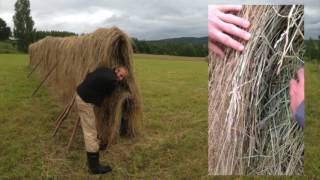
Richard Perkins shows how traditional pole-stacked hay keeps more leaves and flowers than machine-baled hay, giving cows better nutrition. The old method lets air circulate through the stack, sheds rain, and the cows prefer it.
It's a beautiful windy morning here and I've just started feeding our cows the hay we made in the summer in a traditional way. And whilst it's not an economic way to make hay nowadays, the differences in the quality of hay are remarkable.
How long has it been here? A week now. You see how they're stacked on poles to allow air circulation. There's a lot of gaps underneath where kids might have slept in the summer. And what do we think, Mikael? It's drying quite nice. It's drying very nice. Come and take a look here. See how pale it is on the surface and then how beautiful green it is underneath. And very dry. So all the nutritions are preserved.
It's quite dark, so you can't really see so good, but the amount of dried leaves, almost like pressed fruit flowers when you're a kid is amazing. When you make machined hay, a lot of this leaf material is just smashed off by the machines. A whole dandelion leaf here, beautifully preserved. And flowers even. There's some vetch here with the purple of the flowers just showing. And what we found is that the cows will eat pretty much all of this. They'll eat all the stemi material that they would normally just reject from baled hay. We do buy baled hay in as well, but they really prefer this hay. It would have been such an important social time of the year for people to gather and we had a lot of fun doing this. I really wish we could have done it from our own land because it was a really bad quality field that we took the hay from. We just got given the opportunity, so we thought it would be fun to do it. Whereas our grass is improving so much. It would be much nicer to do it from our own land if we do it again. But I think some people in the village really enjoyed it. You know, see people out in the fields doing something that was done up till the 70s, early 80s. And it does allow you to make hay even when it's raining, because the shape of the structure allows the water to wick off. All of these leaves and flowers that bring extra nutrition are preserved in a way that you just don't get in baled hay.