S4 ● E48 Todays No-Dig Market Gardens and Pastured Poultry update
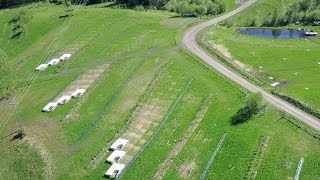
Richard Perkins walks through his farm in May 2017, covering egg production from mobile coops, rotational grazing, pasture improvements, and vegetable tunnels. His layers are hitting 80 eggs per day. Omar talks about growing tomatoes densely in a greenhouse.
Questions this video answers
About 400 eggs/day now; expecting about 700–750 eggs/day soon.
About 50–52 grams per egg.
About 186 grams of feed per bird per day (day 36).
About 40 species in the pasture.
Planned return on 31 May (to Topville).
Chapters
Gardens are looking awesome and tomatoes are going in in the tunnels today. Bit behind with our tomatoes, but a quick update from the farm. So we're up to about 400 eggs a day from the eggmobiles. It won't be long now until we have about 700, 750 eggs a day, so this place will get full very quickly. We can utilize our root cellar. We built these simple boxes that take trays in the van when we've also got chickens and veg boxes, etc. But egg production is going up exponentially and hens are doing great and enjoying fresh paddock. The grass is really growing up now, so they're taking a lot of forage first. Eggs have come pretty small and they grow throughout the season. They're averaging about 50 grams, 52 grams, but they will go up over the season quite steadily now in number and in size. This week we're fixing up all the old boiler pens to be able to use them. Really nice to have the hens in front field now. And the second batch of boilers will be going out on Monday and they'll be coming in to this field. And we just calculate that they have enough space that we don't need to move fields with any pens with birds in them because that's a bit of a logistical challenge. Everything's really leafing out. This is the Siberian pea tree. Some nitrogen fixed in the tree lanes that you see there in between the fruit trees here. We're bringing the rams in to separate them. This field is our camping field. It's the flattest spot on the farm, but it's got sea buckthorn and Japanese quince that we make beautiful jams with. So we'll be just fixing up these nets and leaving the rams in here. They will be butchered soon, but we'll just get the grass grazed down before all the happy campers come. Next Wednesday, There'll be over 50 people here at the farm for an exciting training farm scale permaculture. A couple of days now. Warm weather after some good rains and grass has really started to grow now. And it's been very interesting to have the sheep and cows off our land for this first month. We're going to bring them back in on the 31st of May up in Topville. Behind and around the boiler pens might have to adjust our grazing plan slightly because we can't graze them right behind where the boilers have been. We've got to allow that grass to recover. But very nice seeing up in Nutfield. It's where we ended with the boilers last year and the grass has gone off really well. Some parts of that field were stunted grass and now this little hilltop we go up and have a look is really thriving from their activity. So second batch of chicks are doing great. I got the lights off now because it's quite warm in here and we put half the lights on at nighttime. These birds are doing great. They're going out in the week, same low mortality rates. Girls have been doing a great job, but all the farm managers have swapped roles this week. So they shadow each other and teach each other about the daily tasks and also observations they've made and the little details that they've learned from doing this for the last month. So now the girls are swapping out, one of them staying behind to teach someone else and they've done fantastic job. These birds will go out on Monday and the third batch of the season will come in. So it's day 36 for these birds and they're on about 186 grams of feed per day and they are doing very nicely enjoying the weather. It's very nice weather we're having this week and it looks like good weather all week. And they're enjoying the pasture now. It's really growing up. We have about 40 species in the pasture. You can see in the book, the pasture surveys we've been doing and we should be able to record a lot of data of how things have changed this year because we have radically improving the grass. We're actually sitting on an area that was just moss when we came here. And through the action of the laying hens and the fertilization of the broilers particularly as well as the cows and sheep. This area is now very happy looking pasture. Good mix of species and it's transformed radically. This is up at the neighbour's land and we've bought laying hens here once before. But it's a good example of the changes that have happened bringing animals. This is how the land looked at the hill at the top of Northfield, sorry, Nutfield. And you see it's very large spaces between the plants and the grasses are stunted. They don't really grow much more than this in the whole season. But when we compare that to how it's changed on the very sandy, low fertility soil in Nutfield, just from the action of bringing animals around, it's radically different. Chickens are incredibly rapid pasture developers. If they're kept on the move. Nutfield is coming back really nicely. After the broilers were in here at the end of the season and now we're up on this hill where the grass used to look like our neighbours up on a hill and you can see it's radically different. The grass is a lot thicker. Different species coming back in and that's had broilers over it once and layers over it twice now. Really radically transformed this land. This is actually where an eggmobile sat last year and already the grass is taking off. A lot of dandelion right now, but it's totally transformed in comparison. You have to turn it on first. More free timber. We took a load last week and we're gonna go back to the. These racks are full and that will allow us to build a lot of stuff. Oak tree is coming into leaf quite quickly now and our little espaliers from last year are doing great. These were put in as little 1 meter 10 single stem whips. They grew really well last year and so we're training them up to sort of shelter the driveway from the gardens and a bunch of rhubarb and herbs, chives and sage and things in here. This is a nice avenue up here. We're starting a building project now to put a roof, fairly flat roof that doubles up as a parking space for the van in the winter, but is also part of our washing station for the vegetables washing and packing. We need a shaded area. We'll have two bathtubs for washing that drain down into the pond, down through the paddies and out to the ditch that goes off down to the farm. But we'll start building with all the free timber we've got and have a nice veg packing station for the veg boxes. First. Tomatoes are in. We're putting in three or four beds. Omar. He can't hear me. He's got his headphones. We're putting four beds of tomatoes in at 22 centimeter spacings. Bit late with our tomatoes and we're still eating some of the salad crops that going to remain there. We're planting up salads and herbs on both sides of the rows. We usually prune the tomatoes up about 50cm off the ground so we can grow single or double rows of lettuce and herbs through this space. So all the tomatoes going in today. Got plenty of beautiful salad for the course coming up and cucumbers are still developing but they'll soon be in. Omar actually has been working with 10 hectare intensive tomato productions in Mexico. So for him it's an easy 30 hectares, he says. So small scale for him and a slightly different way of producing. Omar, how many Plants per square meter you do in Mexico Depends because if.
You are growing salad, tomato salad, it's 2.3 plants per square meter per. If grape or cherry, you need to put like 4.3 or 4.5.
How many we doing here now?
Like 4.8? Yeah, I think so.
So quite intense.
Yeah, it's quite intense, but it's nice. I think it works because just one steam per plant. So if you shoot two steams per plant, it's. It's quite. You need to more space. More space for. For the light. So you can look the steam of this and the steam of this you can. How strong is the steam? So have the same. Is the same seat date but the steam is. This is longer. So this need to be hanging first.
How high would you. In Mexico how high would you take off the bottom leaves off the ground when you're pruning and training depends.
Because it depends to the fruit that you can harvest. So in the salads is the first is when you have the ninth blossom. You start. You have the. Could harvest the first blossom the plants. So you start to pruning one week before to harvest the first blossom. Have the nice maturity. So you keep in this pruning each week. Each week depends. You need to manage. It depends. If too hot you need to harvest to pruning more. But maybe you should. You can leave two blossoms without leaves because you can do that because the fruit can have enough nutrients to have the correct size to the tomato.
And you say it was 30 hectares of greenhouse you were working in and how many people working there and the.
Full season is like 300.
300 people?
Yeah. With all the. For harvest to manage the plant, to take out the. The harvest. If you have one single price for all this, all the season, it's. You just worry about produce, produce, produce. But if also you have like a. A different price in all the season. Season you can make more, but sometimes you can lose more because it's other countries or other areas produce more. So the. It's like the. Is the word is that if you have more than they need.
Yeah. So over producing.
Yeah.
So it's quite a different scale here.
Yeah.
With this nice warm weather, things have just taken off. Beautiful Pak choys in here. This crop was totally decimated last year and we're going to try some experiments with putting diatomaceous earth with molasses in water. Omar has been working with a diatomaceous earth expert in Mexico and using it as a spray, a foliar spray to get more coverage on the leaves, but so far so good. This time last year we'd already lost this crop, so it's looking better from a weather perspective for this pest, but also our strategies. So that's it today folks. Quick update. Busy days again as always, and really excited to have this last sort of eight, nine days before it gets really busy here at the farm. Stay up to date by clicking subscribe. Thumbs up if you like the videos and share them with your friends. You can find out a lot more in our book, Making Small Farms Work. See you next time.
More from Richard


A review of short and intensive season on a mixed farm and restaurant/event space in Sweden






Alskade Kyckling Exploring complexities of poultry production in Sweden and what we stand for


