S4 ● E53 Farm Scale PDC beginning, rapid grass growth, and a Ridgedale Cookbook plan
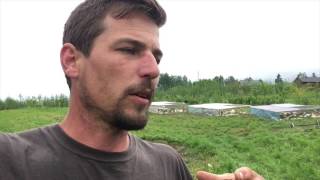
Richard Perkins documents the start of a farm-scale permaculture design course at Ridgedale Farm with 50+ international participants, plus a 10-day PDC and two-month follow-on training. He shows grazing rotations building soil carbon, pastured poultry operations, and equipment tweaks. The farm is also planning a Ridgedale cookbook with recipes, costings, and scaling guidance.
Questions this video answers
May 30, 2017
59 degrees north
About 800 laying hens and about 1,000 broiler chickens
One group was 44 days old; another new batch was 23 days old
More than 50 people
Chapters
Super exciting. The PDC starts tomorrow. It's not a normal pdc, it's a farm scale permaculture design course. We're focused on pragmatic, profitable, doable, get on it stuff. And quick update as people arrive and we get busy at the farm. The neighbors, they're so lovely, they invited us over for waffles and played nice music. Kent's an amazing accordion player. So we had a nice little group pow wow before everyone starts arriving. People from all over the world coming for the course. Everyone's arriving now. We've got a few people arriving, about half the PDC course. But August just arrived with his air top pop up tent. Very nice. Supposed to go get young. So the cows are reaching their last day in our neighbour Kentsfields. This is what we call K3. We have K2 we've just been going through and K1 is the nice little paddock on the other side of the trees. And you see the grass is really put on growth, so they're not, they're trampling quite a lot. But you see some of the aerial footage from the previous days. We were taking everything green basically, but you see it's already green back up behind them because growth has just exploded. So we're bang on our grazing plan exactly where we want it to be. Cows are looking good, sheep are good. There's a lot of this poor quality forage here. It's like a wetland grass species that's not very good forage, but there's other grass in here. It's very wet in this portion of the land. You see all the sedges here, indicating how waterlogged it is here. But there's plenty of feed for them for tonight and tomorrow while I start the training and give a farm tour. They'll be bringing the animals back to our land for the next two months. You can see how we've been moving them through a little bit quicker these days and they're trampling a lot of this grass. And that's what we want to achieve this year. We want to have, you know, 60% of the grass trampled because this is carbon going straight into an active soil microbial layer on the surface. It's going to get broken down really fast now as soil life picks up in the summer months. This patches of land will have about 90 days recovery now and so it'll be up to my waist and all of garbage on to seed. And that's something new for us. We've been keeping grass in vegetative states, but now we're changing the way we're grazing because we've got access to more land and we're going to be aiming for a lot of trampling. Plants are putting short chain polysaccharides into the ground through their roots, which is building carbon into the soil. They also shed some of their annual roots when they're totally grazed down. But a great way to get a carbon litter on the surface and start breaking it down into the soil is humus, is to trample this ground down. And that works very well for us because we've got a few more animals this year. We can actually get some animal impact. And the main reason we want cows and sheep ahead of our laying flocks is to take the grass down for the electric fencing system. So I think it's going to be an exciting year and very different results by the end of the year for us. So this is the ground that was grazed two days ago, now seven days, this is nine days, and this is two weeks ago. This is where they were a month ago. And this land is nowhere near as good as our paddocks. Let's go up and look where the chickens have been through again. So here's the broilers, 44 days old, and you see it's been quite rainy, actually, so they leave the ground very flattened and they've grazed a lot of the grass, a lot of manure. But as we go back one week, you see it's greened up. One week will be at the end here, two weeks, and it's looking like this, so it doesn't take long. We're gonna have to really watch how the cows and sheep work in here when we bring them in. But we've had 800 laying hens through here for a month and a thousand boiler chickens in here. And we should expect to have about 20 days with all the cows and sheep in here. But it's really thickened up, you know, it's a lot of nitrogen going down. And so the grass here is quite rich. There's even flowers forming already with the hot weather. We've had the grasses here. Typically you want to go to seed by mid summer, which is not far away, but we're going to graze back through here again in two cycles. So we'll graze through top field here and then we'll make our way to front field, around all the broilers there. Then we'll take a long graze through Nutfield, which is the biggest field. Then we're going to cycle round again, so there'll be about 40 day recovery time, but this is the time of year when grass is growing quickest. Recovery time might be less than two weeks at this time of year. So everything's going to plan according to our schedule. Obviously that might change, so I'll update you as the season progresses. But super happy to see how thick and dense our grass is compared to the neighbors. And that's just the result of all the animals we've been having on the land. It's a joy to behold it really. I don't know how well you can sort of gauge this from seeing little videos, but the grass here, when we first moved here, was appalling and just full of moss. And now it's just thick and dense and zero bare ground. Just the way we want it. If you want to know what the future of farming looks like, it looks like this. This is Astrid. She was here as an intern. And this now our Rockstar core team member. And she's been on broilers with Marie, both from Denmark, and Carl, also from Denmark. And they've been doing a fantastic job. Their new batch came out yesterday, 23 days old, a bit rainy today. And the birds are all huddled up in the shelter. But you see they got so much protection with the way we built the pens this year. It works out really well and they're very happy. We fit four pens through a tree lane in front field because we have 12 meters between our silver pasture lanes here. And the configuration for the silver pasture in front field is a fruit tree in the middle and berry fruits on each side. We've got blackcurrants on one side and honeyberry on the other. And the main reason behind this is the sun is arcing over. South is here, so the sun is arcing over and we get light to everything here. A lot of flowers on the honeyberries this year. It's so sweet to see all the people arriving. There's tents going up here in Buckyfield. And the core team now take on a role as mentors also for the people coming because they have learned an incredible amount in the six weeks they've been here. You know, you've got people who have never encountered pastured poultry before that now know how to run the enterprise from brooder to building pens to slaughtering and packaging, processing birds, etc. And so we've been having a little briefing and we're ready for the season to begin. On the educational side of things, it's really exciting time. Everyone's super excited to be here and we've got Some sunny days and then a rainy bit of weather ahead of us. The other birds are at the top of the field here, and it's calculated that they will meet in the middle when it's time for their one bad day, as it were, and they'll be off. We've adjusted our dolly a bit this year. We made it a bit shorter so that when you stand it up, it's about shoulder height for me. And we've, you know, it's a simple, homemade rig, but it does the job quite well. We lowered the handle, which stuck up a bit too far, and shortened. These pegs that hook under the eggmobile tool are the boiler pen to allow you to lever it onto the contraption. And it's working really well. Some of our pens, like this one behind me, is super heavy. It's built like a tank, and it's ridiculously heavy in a way. But with a dolly that works well, it's movable for, you know, for pretty much anyone, even on bumpy terrain like this. So that's been working really well for us this year. And happy birds, it's the same every year for us. But we're so blessed to have amazing teams of people who are just about to go off and set up their enterprises for themselves or some kind of regenerative business for themselves. And it's just fun to play with ideas and empowering people to, you know, get the most out of their experience. We've launched the idea of a Ridgedale cookbook, and the chefs are going to record all the meals they make. So it's a kind of Farm and Forest and Forage to fork cookbook. We're writing down all the recipes, but also the costings and the production methods for all the products that come from the farm. And how to cook for, hey, 15 people, 30 people, 50 people, and how to scale up recipes. And maybe we'll make an app for this. How to cost having people at the farm. This type of agriculture requires people, and it's more fun with people, and it's the quality of life we're going for. We want people from all over the world visiting us. It's awesome. It means we don't need to travel so much. And so it's a really nice element to bring some kind of business to the farm where the chefs can get paid nicely for the work they put into that. And we're happy to sell the book for them because we'll get a copy of the book which helps the chefs here in the future, and they can make a Micro enterprise for doing, you know, 20 minutes work, writing down a recipe and taking some photos. And so we'll be building this project up over the summer. And it might be that we release a little cookbook that's €10 and has a few hundred recipes and tells you all about the economics of having people at your place and how to start that up and how to run that, how to manage a certified kitchen, how to forage food, how to ferment and pickle and all the beautiful things we do here. Which I think is a beautiful way to share the kitchen's role, because it's a hidden role, but it's really the heart of the farm. It's what makes the whole thing work. And we're blessed to eat, you know, the best quality food you can have on the planet. There's no restaurant that can serve food of the quality that we have people talking food miles today. But we have food meters where the food that we eat goes up to the kitchen behind this barn. It's a joy to eat the food that the chefs are making here. So that's something we'll keep you updated with and maybe ask for your input in. But I think it's a resource that could help a lot of people who are also doing similar things like this. So we'll keep you posted on that one batch. Three broilers coming in tomorrow lunchtime. And Astra's just cleaning the lights in the same way we do with the air compressor. And we're putting down another couple of watering cans of water into the bedding and adding a new layer, maybe an inch of bedding, and then keep the lights on overnight to get it hot, ready for the chicks arrival. Do the same with the waters. Have the water up at ambient temperature, so another 800 birds arriving at the farm. I'm on chicken duty tonight, and it's 10 past 11 now, and you see how light the sky is at this time of year. It's very fuzzy grain video, but I just wanted to show you because it's. We're very far north, 59 degrees, and chickens don't go to bed until it gets dark. But you see this is Eggmobile 1, the old Eggmobile, and they're pretty much all in. I see two outside, and they're ready to go in. But this Eggmobile is a bit lower to the ground, so it's a bit darker underneath. EggMobile 2. Not sure you'll make this out, but there's still seven, eight birds out in the field. Yesterday when I came up there, were quite a lot out in the field still when these were all in bed in number one. And I think it's because it's higher off the ground and it's lighter underneath. So it really affects the, the way things operate. And that's one thing, you know, raising chickens at this latitude is finding ways to get them to roost at night. Really nice to meet all the crew that will be here now for the 10 day training as well as the two months training that leads on from that amazing team from around the world. And everyone seems super excited and it's a lovely group and we've been spending the evening just getting to know each other. We had a wonderful dinner and then getting to know the crew from the farm and the interns and the PDC students and why they're coming here and a lot of time spending learning each other's names. There's 50, more than 50 people here now and I've got everyone's names down and it's really important. You learn better when you know everyone's names. You speak to each other in a different way and it's, you know, it just feels like a respectful way to relate and just going over the ground rules, how we like the farm to operate and, you know, making sure everyone's safe, secure and everyone's aware of any medical conditions or allergies that people have, etc. So we can maintain a safe environment for everyone. I'm super excited for the training. We start tomorrow with a half day tour of the farm. Trying to explain in a nutshell everything going on here. It gets harder and harder every time we do that because you can spend two months doing a farm tour here really, but super happy. And I'm clocking off to go to bed now because I'm up at 6 and we're going to be doing the eggs with some of the crew and then we're heading off to the market garden to help them move some wood chip and there's big, loads of wood chip coming and a lot of cars parked. So we've got to move a whole load of wood chip and beautify the gardens at the same time. So thanks for watching our videos, look forward to trying to share with you over this next 10 days. It's going to be challenging. We're filming the entire course, like 80, 90 hours of footage and might not have much time for making videos like this. But I'll do my best and see if we can check in here and there. Thanks for watching. Click, subscribe, share the videos and find out more in our book Making small farms wet. See you tomorrow.
More from Richard


A review of short and intensive season on a mixed farm and restaurant/event space in Sweden






Alskade Kyckling Exploring complexities of poultry production in Sweden and what we stand for


