S4 ● E60 First 1000 birds done, No Dig Market Gardens pumping
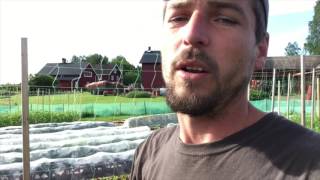
Richard Perkins updates his farm operations after processing the first 1,000 birds, with the current batch 55 kg heavier than the last. His no-dig market gardens are producing lettuces, peas, and brassicas while greenhouse tomatoes and cucumbers grow well. He's also started breeding New Zealand Red rabbits for meat.
Questions this video answers
About 100 grams per day.
55 kilograms heavier.
Range up to 2.8 kg, averaging about 1.8 kg, with a target average of 2 kg.
About 1,000 birds completed previously; another ~300 processed that day.
New Zealand Red (referred to as New Zealand Reds).
Chapters
So day two updates. We've just finished packing and we're a little bit below target. Small now. These birds came out in the snow, if you remember, if you've been watching our videos. So they actually are slower growing than we thought they would be. And there are some very big birds, but there's also a lot of smaller than average weight birds and they're getting picked up by the smoking company in about 20 minutes. We're just putting some of the birds we're keeping for private sales back in, but it looks like we're going to be slightly down on our contracted weight. So we're going to make a decision about what to do that today. We can anticipate tomorrow's weight because the birds gain weight every day obviously and at this point it's up at 100 grams a day or so. So this batch was 55 kilos heavier than yesterday's and we anticipate that to be slightly more tomorrow. So, you know, that's the way it goes. We gotta just find a solution that works for everyone and we'll see what happens there. Great job from the team yesterday. Really it was a bit slower than the day before, but much higher quality. Work with the clean, making sure there's no feathers left, etc. You should put the organs on the very top there, so you want to take them from there. The guys are just packing organs. We keep the livers and hearts, we sell some, but we also make pates for ourselves and the necks, we like to roast the necks so we keep them for ourselves too. We're quite a big range in birds, ranging from 2.8, averaging about 1.8, but we're aiming for 2. So my estimation that the birds were above average is. I mentioned in the video the other day, we were a bit off actually, and it's hard to tell until you actually weigh them all. Obviously they look good size, they're just some of them come out way lower and a few small birds that bring the average down and we won't sell them, we'll keep them for ourselves. Clean down went really good and we'll be having a deep clean down today. We won't be slaughtering again for two more weeks. But it's looking good in here and we're just having a quick clean before breakfast. Ready to go again, Lars. Birds going through today. Over in the north beds and a lot of lettuces. We've been selling a lot of romaine to the restaurants. Really loving this motto stone. It's a very beautiful salad leaf. Things growing a little slower over here, which you'll see when we compare with the south beds. But everything's really pumping. It's hard to see because everything's under the inset nets and row covers. We've had very good results with the insect covers this year. Last year, the Pak Choi here was totally decimated by flea beetle. It hasn't really been touched yet. And yeah, we just had really good getting the nets on as soon as things are sown. Fennel's coming up nicely now. A lot of great cabbages and Homsai Thai doing really well. Just been eating flowers over in the south beds. In these beds, it's just coming up nicely. Leeks and spring onions are looking good going out in the first box. But have a look at these peas and we'll compare to the south beds. These were planted a little bit later, but they're significantly faster growth in the south beds. More mescaline from the trials. And Carla, what are you putting on, Carla? Biofertilizer for the trial. And you're doing every two weeks? Every week. So the trials have begun. Lots of salad mixes coming up and we can go and look in the south beds and compare the difference in growth over there. Some really nice kohlrabis coming. We'll just step over these beds, have a look down here and pick up trucks here for second batch of chickens. So we better go deliver their chickens to the man. South beds are looking awesome. Here's the peas. The difference in growth just from being in the south. A bit more sun access. Amazing kales coming up. And we've had really no insect damage this year whatsoever. Really great to have good quality insect nets small enough for flea beetles. We've got some beautiful broccoli heads coming on. Don't know if you'll be able to see through this. Yeah, you can just make out the broccoli coming through. It's looking great. Peas doing really well with their side plantings as well. Different herbs and things. Let's go and take a look at the greenhouse and see how the tomatoes and cucumbers are doing. First squash in. These are just summer squash. And we've got patty pans for the restaurants and Honsei Thai Making a ridge in these nets with the flowers now. They're at the perfect stage now for eating like broccolis and stir fries. Super delicious vegetable. Garlics are doing great. What a view out of our bedroom window. This is our bedroom window here and my office is in here looking out through the veg packing station. What a sight. To wake up to with all these amazing people every day. Here's all those strawberries. If you watch our videos, you'll know we got twice as many as we ordered because the first lot didn't look great. So they replaced them immediately, free of charge, which was fantastic. And they're looking great. We could just pull out a root trainer here and I'll show you the sort of development going on inside. See how the roots are on the ground there. We should have them up off the ground, but they look great and they're going in very soon. We've got a bunch of agroforestry projects, new vines to put in on the vineyard to finish that off. But in here things are really taking off. Tomatoes are super robust. We've got some flowers coming now, so we'll start pollinating just by tapping the top lines, walking along, but some really nice lettuce growing underneath here on both sides actually. And we've got dill for the midsummer boxes when people traditionally eat potatoes and dill. And cucumbers are going in. So we've got cucumbers all along here, mostly English, you know, long cucumbers, basil in as a side support plant here and cucumbers going in here. We ran out of hooks. We just made our own hooks up and we're still eating the salad right down at the end here. So more cucumbers coming in, but they're doing great in their pots. Some beautiful motta stone here on the side and still the last few transplants in here I mentioned before. We're going to build a couple of caterpillar tunnels or buy them and start putting transplants in those next year. But it looks great in here and Omar's been doing a wonderful job looking after this with the others. Breakfast bell. And we'll be getting straight out of breakfast with a new team for this lottery today. We haven't decided the team yet, so we're going to get that organized and get in here and get in the slaughter as soon as we can. Last big slaughter for two weeks and then we've got a couple of weeks off before we start the regular weekly slaughter. And it looks like nice weather's coming. It's going up to 25 degrees and we're sending the interns off to the nature reserve to go camping and get to know each other. Some nice squash coming up in the spare beds. This is a self assessment run slaughtering, so everyone that's new to slaughtering process leaves their name and address and signs a waiver to say they are free of infectious diseases or colds, anything like that. And laundry's all been done from yesterday and dried in the sauna to be ready today. Boots and aprons and hair nets, etc. And we get dressed in here, change clothes and then we go for our last session for a while. Day three, birds coming in soon. Everyone's getting ready. So no more chickens for two weeks now. And then it'll be every week we're doing a batch. Each batch will be processed over three weeks. Nicholas is just finishing up in here and nice clean down again. Further free. So thousand birds done. We did another 300 or so today and great job by everyone. Actually, I'm just going to empty the ibc, but clean down is done and it's lunchtime, so great progress and no cuts or bruises. Someone commented on the video. I think I posted the video somewhere on Facebook. Someone was commenting that it's dangerous to use eviscerating knives without steel glove. And I just wanted to address that because actually you can't process these birds if you're wearing any kind of glove. It's all tactile sense based movements and I mean it's. I've been doing this thousands of times so I can do it with my eyes shut, literally. It's about muscle memories and movements. And in the video you saw moving Fairly fast, about 45 seconds, a burr. But that's because I've done it so many times, there's no pressure on anyone else to do it fast, as it were. I can sort of keep the workflow going like that. And it's a learning opportunity for people. So I want them to learn how to do it well. And then after many times doing it well, speed naturally comes, but there's no rush for people. And it's, it shouldn't ever, you know, I've done it thousands of times without cutting myself. So you shouldn't really be cutting yourself. And in that way it's no more dangerous than using a cordless screwdriver or something like that. Sure, if you cut yourself it would cut sharp and deep, but really you shouldn't be cutting yourself. There's only two or three cuts that need to be made in a chicken and they're very precise. So if you're inaccurate enough to cut your finger, you're probably not accurate enough to process birds. Well, the wastewater, I forgot to mention that it's a mixture of water and blood and soap from the wash down. But this is actually all the water used for processing 300 plus birds. And we're allowed to put that out onto non edible crops like the windbreak down here, as it were. And so now everything's in front field and there's a new batch of boilers here. There's new birds going out next week that will go up into nutfield. Some rain clouds coming in and the layers who are in nutfield. The cows and sheep were finishing in the bottom of front field. They've been really fast through here because there's a lot of spaces used up by the broilers. But they will now jump into the front of the hens and graze the front portion of nutfield and then they'll jump back up to the very top where there's been no birds. And then we're back on our grazing plan with the cows and sheep four days ahead of the layers which is how we want them. I just come down to start with the wastewater into the windbreaks but one of the boiler pen's lids has blown off. It just started getting really windy. And that weather front came in. It just started pouring with rain. Sheep have all been sheared and they're looking curious at these birds. We're going to do the farm chores and then take it easy for the rest of the day. Misa. What's that? Misa is very curious because here are some of the new rabbits. And these are three females we believe. It sounds like we've got two young males in here. They just arrived while we're finishing up slaughtery. So we're going to make some new runs for them. Quite a bit smaller than madam in here. Very pretty. These are New Zealand red rabbits. Actually a Belgian breed. They're called New Zealand Reds. Good meat rabbits and they do well on pasture here in Sweden. So excited to start a new chapter. We're breeding meat rabbits. Up we come fishing and Nicholas is first fishing trip of the year and he's in the win. I'm gonna get the net. Three fish. A nice fish. Nicholas got his fish. Double rainbow. I just come home from fishing and Jasper's made a turkey mobile. Love it. Roosts are going on these diagonals and we put some shade net on the top here. Probably half of them will sleep on the frame down here. But it's just going to be an open structure with electric fence around. Better order some turkey pods. Thanks for watching our videos as always. Hope you enjoy them. Get some information out of them, Click subscribe, share them with your friends and we look forward to seeing you next time.
More from Richard


A review of short and intensive season on a mixed farm and restaurant/event space in Sweden






Alskade Kyckling Exploring complexities of poultry production in Sweden and what we stand for


