S4 ● E66 Hop Poles, Midsummer, Sheep butcher & Sausage Making, Salmon fishing and Pond Making
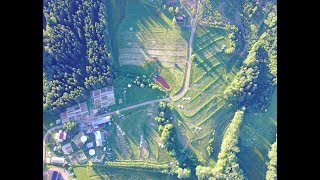
Richard Perkins installs hop poles on his farm, digs a pond, and processes €1500 worth of sheep for sausage making. He celebrates Swedish midsummer with traditional herrings, fresh potatoes, and smoked ham.
Chapters
So it's day three in what we're calling Kent one. And they got their last day in here tomorrow before heading off to the paddock through the trees. Bit smaller paddock today, so they've done a lot of trampling. Someone was asking about whether like a light grazing would favor unwanted grasses. But what we find in most paddocks, everything in there is desirable species. It might favor things that weren't grazed, but to be fair, they're equally grazing most things. It's just not enough ground for them to actually trample this much with these amount of animals. So I'm not concerned because really next time we come through we're going to take it down and it's not that long till we come back in and take it right down to the ground, you know, going as slow as possible because one of the neighbors conditions is that we leave it like almost like cut because otherwise he'll have to cut it. So we'd rather take it slow and graze it. Hot pulse, first line. Back in Bucky field, we're off. So what's happening, Nicholas? We're going to do a little introduction to basic welding. What are you making? We're making little anchors for the hop poles. Anchor the wire, Anchor the wire. Right. So we're making a little eyelet in the bottom. So we're going to weld the rebar together and then we have a little hook that secures it in the ground super nice. So the hop poles are ready. Hops are growing and we've been untangling them from the bushes and just coiling them up. We've got to put in posts 1.2 meters in the ground and here we're in between two hops. So we're going to use some boards to create a bit of a protection for the plants while we dig these holes. We hide a little auger here so we can get a nice decent hole. And we're not in a straight line, which is a bit unconventional. Most hop yards are square rows of poles. But we're going around a corner here and been experimental. We're going to see how it goes. The whole idea of this hops is a trial of the three main beer brewing hops that are great for Sweden. And if we like the idea, we might expand the hop yard to fill bucky field here. So it's a trial phase and see how they go this year. So we've gone 120 down now. We have no experience putting up hops and we know we're doing it unconventionally. But it's because we're only doing a single row. So we've got eyelets on our wires and we're just going to mark the orientation and have the wire in place as we pop them up. We're going for vertical poles with a slight angle on the end one to accommodate that. To be frank, we're not hop experts, we're beer experts. So. We're hitting better ground now. It's just rock up in the corner. Sand on the first post and some on the second post. Now we're hitting pure clay, but it's a bit of hand work and a bit of machine work. And we're getting rolling now. So we're going to try and get all the posts up today and then put the concrete support anchors in the ends and pull the wires tomorrow. We're putting the wires up as we go because it just seems easier than sticking a ladder up there. Mr. Camp. Feet up, poles going up, last two down here, and then the concrete and the anchors down in the bottom here. Then we've got 11 poles to go up over here now. So that's the anchor post for the whole thing that's going cemented down in here, and that's what will hold the line. We'll tension the line to this and stretch it out. So they're mixing cement Thai style next to the hole, or is it Irish style? Irish style? It sounds like the anchor brace going in at the other end. And we got a bit of an angle on this post. So the wire, when it's stretched, is going to be pulling this one into the ground. So it's an unconventional setup because it's a single line and it's going around a bend. But these are just variety trials, and if we like growing the hops and we can process them and the varieties are good, we'll probably turn the whole of Bucky Field. This is the Sea Buckthorn Plantation. We'll put hops over the top of all of this. We use it for the rabbits, too. The rabbits have got their new runs and they're coming in here later today. This area here used to be an old blacksmithy, and one of my dreams is to do a bit of bladesmithing when I'm older and don't have so much to do. So I'll hopefully build a log cabin. Or we might have some German. The wandering German carpenters who come and do apprenticeships for part of their traditional training might do some traditional framing building for us here, which would be super nice. So nearly done with what we can do today here, just got to lift the last couple of poles and then we're going to try and get the holes dug and poles arranged in the bottom of front field there. It's afternoon. Fika. Nicholas has been getting out of heavy work, doing heavy baking. Check this out. Wow. Keep it coming, johnny. That's the last anchor hook going in. And we're just aiming to cement in the two anchor posts on each end of the wires. So tomorrow we can just get the rest of the posts up, stretch the wires out. Really changes the architecture of the farm. Having these growing up on the edge of the riparians. I'm really interested how it goes. We've got room to expand this as an enterprise if we wish to and quite excited about it. So we're done for the day and going for a swim in the lake to refresh and clean up and should hopefully finish this tomorrow before the midsummer celebrations, which have. Midsummer's already passed, but we celebrate on Friday here in Sweden. So the Swedes here are going to teach us about traditional midsummer. So some of These hops are 7 meters long now. We've pulled them out of the undergrowth and coiled them all up. But we broke the auger today. The handle well snapped off. And so we're going by hand. And what we're finding is the soil is nice here. It's heavy clay. There's no rocks in this part of the field. So it's actually going quicker doing this by hand. So hopefully done by lunch. So the welds, there's corrosion inside. Exactly. And it looks like the weld has been corroded a long time. It's only welded on one side. You can see rust down in here. And with some fatigue, it's just split off the welds and it's bent up this frame. Now we're clamping wires. We couldn't find enough wire the right length. This is the thicker wire than the other one. And to keep on schedule, we just wanted to get this done. So we're using an 8 mil wire for this one with a double figure of 8 clamp to hold it. And we'll just test that when we tension the wire, see if it's good enough. Poles are going in okay by hand. It's a lot of clay here. And what we're doing here, we're going to build a pond here. Hopefully it's going to be GCL lined. And this is a trash ground. They just dump all the concrete. There's old stoves and washing machines all Kinds of rubbish down here that's just sort of grown over and we can't get through here. There was going to be a post in the dam wall, which isn't really a problem. When we're building the dam, we'll be taking out another 30, 40 centimeters here and building up this wall to get it level. But because it's GCL lined, we can just have a post in the middle of it. But what we might do is wait till the machine comes and we can temporarily prop up the line with a stick. There's no hops here yet, but there will be longer term. Keep it above your shoulder. It's midsummer and we're having feasts. And it's raining, which is typical for midsummer. It's got a rain on midsummer. It's not a Swedish summer. But we got to raise the post. We've just been processing sheep, about €1500 of sheep. And we're going to make sausage. What's midsummer all about?
It's about the light, about fertilizing soil. It's about being grateful for what you've been given. And be grateful and remember where you come from.
Wow. Without.
So just look it up and remember. So we have our raku salad. Oh, maybe he wants to come down a bit.
Yeah.
Okay, Mom. Okay. So we have herring of many different kinds. This one is with mustard and this one with onion. This one with dill. This one I think is with anchovies. Taste like some anchovies. And usually we eat this together with the fresh potatoes and this cream that is specific culture. It's fil. It's called fil. It's cream. Fil. Sour cream. Yeah, it's just sort of. Yeah, sort of. It's not fully, but almost. And here is just boiled eggs.
And this one is not just boiled eggs. Pasture raised mousse twice.
And we have a ham that is from. It's made by the sheep farm next door. It's smoked ham.
It's very good. It's very good.
This is herring with butter and dill. And a little bit. It's not gluten free. I'm sorry. So like there is a little bit of rye flour on it.
You float it in butter fresh.
The year's first fresh potatoes is very important for midsummer. This is cheese pie made of a special cheese that we make in Sweden.
It's called with extra gluten.
With extra gluten.
Nice. Like it.
And here are some small rolades with a local salmon, smoked salmon and creme fraiche. And here are it's the same, but with the ham. Actually, Creme Fresh and Hamilton.
More from Richard


A review of short and intensive season on a mixed farm and restaurant/event space in Sweden






Alskade Kyckling Exploring complexities of poultry production in Sweden and what we stand for


