Richard Perkins plants 2,500 strawberries using root trainers and bone meal, blood meal, and mycorrhizal fungi in augered holes. The video covers replacing dead trees, planning willow windbreaks, and managing farm work with interns on a no-dig system.
Questions this video answers
2,500
Blood meal, bone meal (mostly bone meal), and a mycorrhizal fungal inoculant (a flat spoon per hole).
Bitten Felder
30 centimetre cuttings
About 6–7 meters tall
Chapters
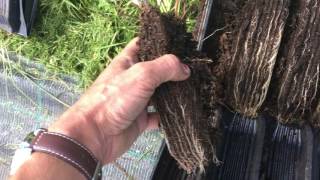
Sa. It. Okay. Strawberry and tree planting day in our keyline strips between the tree lanes in top field. These guys have already got strawberries coming on, but they're healthy looking plants and we're gonna go and work out a good group process for dipping holes in plastic. Dipping holes, soil amendments, and getting the strawberries in. So this is the planning plan. We're replacing dead trees with. Where's our trees? They're coming. So we have some trees to replace with. We've got Bitten Felder. It's an apple that grows well off its own rootstock. And we've got more chestnut and walnut. So any dead trees get replaced, any live trees get weeded. Mika's just cutting the edge of the lanes because the grass is a bit unruly and we want the strawberries to get a nice bit of light. So then we are burning holes, all augering holes, putting in a mixture of rock dust. Sorry, not rock dust. We're putting in a mixture of blood meal, bone meal and mycorrhizal fungi. Pop the plant in, water it, walk away. Next week we'll have strawberries because all the strawberries are nearly ready to eat. This is a mixture of blood meal, bone meal, mostly bone meal to help for good root development and some mycorrhizal fungal inoculant. And we'll be putting just a flat spoon in each hole. Walnut being replaced. Strawberries are being laid out and we're going to zoom through here. We've got 2,500 strawberries to put in. These are the plants we put into root trainers and they're healthy plants. They need a bit of soil and food now. And you see lovely root structure. And we're going to dig a hole with. We're going to burn the plastic and dig a hole with this tool rather than you could use a dibber to squash the hole, but then you're compacting the ground all around. I'd rather take soil out and then put in these root trained plants without actually disturbing their root system. And hopefully if we do that skillfully, we won't lose any of this fruit that's already set. Super nice route development. Albert, what have you made? Well, that's a little. Look at this concentrator for the flames. Very nice to protect here. Should we try it out? Yeah, for sure. You got to be ready to light this burner. Yeah. Here's the lighter. So then the handle is stuck, but you can press that, but then you have to push it back up. Okay. Look at this. All right, let's See, let's take this one first. That's it. You only need a tiny bit size. All right, guys, that's perfect. Make sure it's a good hole. Moving eggmobiles is never going to be the same again. Strawberries, getting water. It's time for dinner. Blackcurrant's coming on. Well, these are the Ben Lomin that grew up the size of my thumb now. So for reference, there's my thumb. There's a long way to go yet, but it won't be that long before we're harvesting. These bushes are loaded. Got to come in here and mulch all these, but they're actually quite well protected underneath here. It's just overgrown, but this is all well mulched. Beautiful moist worm rich soil in here. Just a bit of spray weeding to do. And we'll be mulching with the animal bedding very soon. So a bit late in the year for planting strawberries, but we wanted to wait and do this as a project with the interns. So we just got to make sure they're well watered in and keep them well watered while they just get established. But I think they're much happier out of the root trainers with room to grow. Now with this extra light from being separated as plants, I think they're going to shoot off. And we've turned from an auger to a bar because it's much easier to make the right size hole with a bar. Plants are popping in. We found the small root trainers much easier and we did some root pruning to get them into the small root trainers because they're already too big as bare root plants. But most of the plants look pretty good, pretty healthy. We cut the grass back a to just get in and work easier, but let the plants get established with some light. And Eric's at the back there just watering. So we've got a nice workflow going today and we're nearly done. We just got this many plants left. So it turns out in all the old videos I've been talking about strawberries, I've been mentioning that we had 800 and then they gave us a free lot of 800. Turns out I didn't read the order sheet. I just had a number in my head from last winter thinking about this last summer even. And actually we've just put in 2,500 strawberry plants. We had till lunch to get the strawberries done, but it's 11 o' clock so we are going to string the rest of the hops here and we've been Talking to tractor driver it seems like we might get the tractor and keyline plough out to put in a willow windbreak around the edge of top field here and nutfield here. This windbreak on the far side, 6,7 meters tall now was put in as 30 centimeter cuttings three seasons ago in the middle of the season. And we're going to do that. We haven't decided the configuration yet, but we want to put up a natural hedgerow just like this one, mixed species that can be laid as a living hedge, but it's very slow to grow and we want instant wind protection. So we're going to start with willow. Either one row of willow with two rows of hedgerow to be laid later, or two rows of willow and one row of hedgerow. I haven't decided yet. I'm just going to decide that randomly. Nearly time here in the riparian. I just noticed the first flowers from the black locust. Now, some of these died. They grew crazy in the first year. They smell beautiful. There's another flower over there. But some of these died and didn't grow at all for two years. This one grew last year, but not the year before. And now we have flowers, beautiful edible flowers, great for bees. And when you have enough black locusts, you have a very nice firewood supply that can be coppiced much higher Btu than birch, which is the common firewood here. It's fixing nitrogen and giving a lot of great flowers for salad and also for bees. This is a funny assembly at the end because of the electric line I mentioned before. We are temporarily stringing in the line down at the base support. But this is the pole that fits here. Once they've taken this line down in the autumn, we'll be putting up this post next spring and putting this wire over it. So we made sure we got enough overlap and let the plants go on. Last string.