S4 ● E79 3 new calves and challenging ourselves to excel...
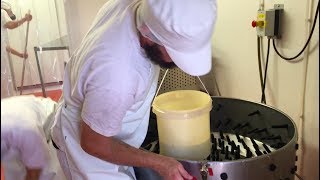
Richard Perkins (with Matt) guides a farm vlog episode focused on practical farm management: animal health (new calves, turkey/broiler observations), ecosystem notes (regrowth of spruce, willow propagation), compost progress, and detailed processing throughput and efficiency targets for poultry slaughter and clean-down. They discuss training and feedback for interns, time-and-motion improvements (e.g., evisceration at ~35–40 seconds/bird; current kill station ~90 birds/hour, potential to reach ~180 birds/hour with extra equipment), vegetable production planning (≈70–75 additional beds, 56 varieties; season runs from July 17 to last veg box Oct 25), and marketing/packing options. The episode emphasizes observation, monitoring, and building trainees’ self-motivation and operational skills.
Questions this video answers
July 17, 2017.
About 35–40 seconds per bird.
Approximately 90 birds per hour (current setup).
About 180 birds per hour (with doubled kill station capacity and two skilled eviscerators).
About five to six days old; heating well with thermophilic activity and becoming homogenous.
Chapters
So a big part of what we do with our trainings here is encourage people to challenge themselves, to see how efficient they can do the tasks that we need to do every day. Whether it's slaughtering hens or moving egg mobiles, whatever it is, it's key to success of small farms in my mind. So we're doing some interesting things. Up here at the very neck of Topfield, right in the north of the farm. We've got the boilers lined up in a line because we want to make the use of the grass here. It's better to run broilers staggered so they're further apart from each other. Less stress and, you know, having less animals beside you. It's like they're in a smaller group. And it's interesting here there's a lot of spruce between. Between the sheep there, hundreds of little spruce trees from not grazing this land as intensively. It wants to go back to forest here. And spruce and birch and alder are the things that typically, you know, the pioneers that come up here. And so I'll chop them down with a scythe later in the year. And there's a lot of willow down below the shade mobile too. But we hardly ever come up here compared to the rest of the land. And we can't come up here with the eggmobile. So it's interesting to watch the ecosystem processes at play here. This is the willow wind bait we've put in. I've just pulled one up, so you can see they've started to root already. This one might not make it. If you're pushing back into the ground with the annual roots there, it's going to break them off, but just wanted to see for how they're doing. So the cops are a few days old, doing good. Twins are both drinking and Clover May's calf's drinking, milking out the front teat that's been injured. She stepped on her teats and they got injured. But calves are doing great. They're drinking. Seem to be getting stronger every day. Clover May's calf is the spitting image and Violet's cousin and both beautiful white ones with slightly different colour noses. We're taking it slow through here, through nutfield. Gonna come in here and clean up the nut trees soon because we've got overgrown chestnut seedlings and things. We just need to put some good mulch down on them. Some really good nut trees popping up. I don't know if you're going to see them very well. Very excited about nut trees again. I'm going to try English Walnut next year because I've been in contact with a lady who's growing English walnuts from a bigger starting tree and has had nuts. Now for the first time it's 25 year old tree and so all the seedlings are coming up and so I never would have thought to try English walnut actually, to be honest. But happy to give that a try because I like walnuts quite a lot. I don't know how well you make this out in the field, but here's where one of the eggmobiles sat overnight. You see the flush of grass there. Cows and sheep are on very small paddocks as you saw up there. A, we're taking it slow but B, the grass is so much more nutritious here on our paddocks compared to the neighbours. So it's been a good day for me. There's been lots of interesting stuff coming up as people are checking in and feeding back about their experiences and you know, the more human aspect of things. But I find that all really interesting. I've done a lot of community development work in the past and treat things and relate to things quite differently now. And yeah, it's been really interesting for me. Really nice exercise today in time and motion studies. I feel like it's critical to start in a farm for many reasons. So our barns were last painted in 1938 but it's starting to get a facelift. Animal barns coming along. Good work, boys. That looks really good. How do you like the paint? Do you think it's okay? Yeah, it's alright. This is the powdered paint we bought. So you mix it up yourself to save on shipping water around. Works out about a quarter to a fifth of the price of buying it conventionally. Good job. So we've been doing farms there and the guys have painted. This whole barn looks awesome. We're going to do lime wash on the bottom and the doors will be black in the same sort of paint. And then we need a different paint from the whiteness. Amazing. And this plant hasn't been painted for 78 years so gonna bring it back to life days off. It's often when we get busy.
That's a good one.
Which one? All this trample grass that's been left behind in the neighbor's land forming a thick blanket on the soil. Lots of insect life under here. New grass is popping up through and we're not coming back through here until August. So we'll see if it's grown up and recovered in that time and then we'll be off our Farm, hopefully August and September to stockpile the winter grazing for the farm. Turkey's doing good and we have 12110 lost so far. Now, it's often the case early in the days for the turkeys. They're quite fragile in the beginning, but the birds here now are strong and good, doing really well. So compost pile is developing nicely. It's five or six days old and it's been getting quite hot. So this has got a bit of actinomycetes, which is a thermophile. It looks like a fungi, behaves more like a bacteria. I'd expect to see that in a hot compost pile, but not in high proportions. But it got a bit over the temperature we'd like, so we've been turning it more often than you might in a pile with the correct ratio. I think we shouldn't have added the chicken manure in the pile, but it's okay as long as you stay on top of it. In five days, you see all the green is gone. It's becoming homogenous. It's going really well. So, like any of these biological processes we work with on the farm, it's all about observation, monitoring and timely interaction, wouldn't you say? Indeed, indeed. Over here, we've got the two piles we combined. How's the temperature doing on those? 60. I think 60 degrees. So we're going to turn these as well. And I think it was a good move to combine the piles that you saw in previous videos, and they seem to be going well. So these are the recombined piles and they look like they've rescued nicely. Very happy. So we've been having some feedback sessions with the core team and we're about to do that with the interns. They've got two weeks left now and some of the feedback is some people feel stressed about the emphasis put on trying to do things efficiently, but I think it's so critical to what we're doing here. When people are packing eggs for the first time, it's taken two people, two, three hours sometimes, and that's one person, one hour job. And then by the time they've done that for a little while, they get it down to half an hour job with two of them, which is on target. So I'm giving people, I'm pushing them to reach these targets so they really know in their direct experience, what they're capable of, because ultimately that's what allows them. Once they know how to build a spreadsheet and factor in the economics, they can then build their enterprises based on how much they're capable of running for themselves. So one thing that came up in the feedback was about like feeling pressure inside yourself about having to do things faster and the feeling like there's a lot of people here, why do we need to do things fast? And for me that's really missing the point. There's an opportunity here that people have that they couldn't really find any other place to really test themselves and see what they're capable of. So today I'm not in the slaughtery, I'm there and I'm going to stick with them all day. But I'm eviscerating birds at about 35, 40 seconds a bird, which means I could do the birds in about two and a half hours on my own for 250 birds. But for people starting out, it takes them a lot longer. So I've asked them if they're committed to the whole process, whether it takes them all day or not. And they've got to manage the workflow. So because I think a lot that goes on here is based on a lot of behind the scenes work, making things organized and checking all the little details that people either miss or take for granted. So today's an experiment for people to see if they can really manage that for themselves. So I'm actually legally responsible for health and safety and making sure the birds are fit for human consumption. So I'm here all day checking that things are going well and offering any advice as needed. So for me it's also about motivation. We've been talking about what is motivation and I'm not actually here. My role and responsibility here is not to motivate people. What I see with the people leaving the farm and setting up their own enterprises is they're coming with self motivation. And I think realistically, if you're going to start a business, particularly an agricultural business, you need to have that already. It doesn't really matter what you're doing. And that's the culture I like to build here at our farm. It's like building up a team with supportive characters who are just into doing whatever we're doing, whether it's processing chickens, digging out barn manure, planting trees, whatever it's like to turn up with a joyful heart and to just contribute to be a benefit to the whole whatever it is. And that's why we share out all the chores evenly here. So everyone gets both experience, but also takes responsibility for part of the whole and cycles through everything so that they feel responsible for the whole, for me, it's like, hey, how do you motivate yourself when you're tired? You know, when you realize, like, it's going to take another five hours? How do you keep motivation going in a group? How do you communicate in a group to make a workflow? And that's something I do a lot with people, but I want them to really do that for themselves because ultimately when they go away from here, they're going to be in charge. Their money on the line, their decision making on the line. So I'm trying to respond to the feedback and I'm excited for the process. It seems to be going well so far. Birds coming through. Good job, team. So it's now half past ten. How many birds food? 125. 125.
No, it's much more than that. How many birds is it? Yeah, we're past that.
140 something. Yeah. So, Matt, you've been adjusting the garden plan. We got 70 more beds that are only in the rotation pen.
Yeah, 75 at least. So all we have that's outside of the beds that are allotted for the veg boxes. So we're already having beds allotted and all the varieties planned and seeding and everything for the veg boxes. And what we're trying to do now is grow absolutely the most possible food until the end of the growing season. So we've ordered a whole bunch of seeds and we're up to with those 75 beds, we've got 56 varieties and it's now July 17th, and the last box goes out October 25th.
We'd love to go. Restaurant sells in Rico. We might start experimenting with some ways of selling at Rico. Yeah.
So so far we've been doing small boxes and large boxes, but we're noticing some of the other producers are having some success just selling loose veggies or for example, giving a list of 10 varieties the customer can choose. I want these five for this set price and these 10 for that set price. So we have an abundance. We're going to grow in abundance and.
Sell in all different manners. So we're thinking of bunching something our friends are doing in Denmark that we really like is like everything's bunched to 20 grams. One bunch for 20, three for 50, 10 for 150. So we might play around with some ideas like that.
No, it works quite well. So 4 for 100, 8 for 200. But then 200 is the cost of our small box. Last week we had over 15 varieties.
So we were bunching 30s or something like that.
We're bunching 30 score for 100. But once you're up to that value, it makes much more sense to just get the small box.
Yeah, nice. So team, doing a really nice job. It's about halfway through at 11 o' clock and starting at 7:30. But we're not doing livers and hearts and we've just been calculating. That's about an hour and a half additionally. So we'll see what the full job is in the equivalent of what we normally do when on the line as well. So I'm just calculating. With the kill station, they can put through 90 birds an hour. With the current setup, that's two lots of six kill cones. And the scalding and plucking station could handle 180 birds a second at full tilt. Now I can turn through 90 birds an hour. So if we had two eviscerating at that speed, we could keep up with 180 birds an hour. We would need to double the capacity of the kill station. So that's about thousand euros in equipment. If we bought the equipment off the shelf, as it were, for new kill cows and then we'd be up at 180 birds an hour, which I think is about the maximum you could do. I would have two on evisceration and four on the clean station in that case, to keep up with that pace. That's where I'd like to see if we can get to by the end of the year with a dedicated team in each position to just see how far we can take this ability to pack them. Yeah, like packing and chilling will obviously be an issue. If you double the birds our chiller could take, I think it could take double the amount, but it would be logistical. Packing them the next morning could be that packing began that evening. The birds get to temperature within four or five hours, no problem. They have to reach temperature in seven hours legally. But it seems like the kill station could be doubled either having two people with two setups here in Europe, like you hear figures of like 200 birds an hour coming out of Polyface, the Saladin's place, but they don't stun their birds and that takes quite a lot of time here in Europe you must by law. So I think that station does take a lot longer, but I reckon we could do 180 birds an hour here working efficiently with two really good eviscerators. And that's interesting to consider because we would never grow this enterprise beyond 5,000 birds a year unless we could do that. And that would improve the economy of the clean down operation. Obviously it takes the same amount of time to clean down, whether you do 50 birds or 500 birds. So it makes it work relatively less. So it takes about four minutes for each batch of six birds to come through and two minutes to scold and pluck six birds. And that can be done consistently. We have two of these scolders, we actually have three, but we could have two set up side by side, which would allow for not having to change the water halfway through. Although if we were doing double the amount of birds, we would need to change both skolders halfway through. Mainly not for like to keep the water clean, otherwise it doesn't penetrate the feathers properly. But that could be remedied by one more additional scalder, which is the €200 investment. Having two scalders outside with hot water to bucket into here halfway through. Very nice job done. Late lunch is booked, but we're gonna do cleanup partly over lunch because there's only one pressure washer. So they do the outside typically before we're done inside. And I usually work over lunch break to get the inside cleaned down just to make use of the pressure washer because then all the boots and aprons are done out here afterwards too. Very nice job. Excellent work, team. So everything down is going on same as usual. Hot soapy water from top to bottom, all the utensils and spray nozzles, everything like that is washed with soap too and then put into boiling water for half an hour. Feathers out of the scalder and plucker. And we typically try and do that first because when you start cleaning down, feathers just go everywhere, especially if you're using a pressure washer. We're aiming for zero feathers left in obviously and really taking care to wash under things. There's always bits of things under the tables, etc. And then we'll come back in later and we're using like an organic kind of disinfectant that we'll just spray everything with afterwards. We don't normally do that. Just hot soapy water and then a good rinse is perfectly good for most hygiene applications. As long as the water is really hot and degreasing. The floor is obviously important. So once the clean side is done, then we can pull all the water this way and ready to pressure wash the whole thing. All the boots and jackets are soaked and washed down, IBC emptied and cleaned. So I think that's an amazing effort from the team. So with adding the livers and hearts, they'd finish about 220. Last week it was 1120. So three hours difference. But with the amount of people involved, that's actually 30 people hours difference. If you're monitoring your enterprises, you can see where the weak points are like I described with the boiler enterprise. Where do we put our focus to now scale that enterprise up. But it also clarifies the time inputs needed so that you can track time versus money and see which enterprise is more profitable. Therefore where to leverage your attention to balance your financial plans, etc. But also crucial if you are wanting to employ people or work with people to be able to give them realistic expectations and train them up to do that work. So I think it's, you know, it's been very critical here and I couldn't recommend it enough for people. If you're not tracking time to do jobs that are sort of daily jobs, then you really don't know what you're working with in a way. So yeah, it's a critical part of management. So I'm meeting up with the interns tonight, but thanks again for watching our videos. You can click subscribe like the videos, share them with your friends if you find them beneficial. You can backtrack through the season on the channel through the links below. And yeah, you can find out a lot more in our book Making Small Farms Work. There's a lot of information and detailed know how of all the enterprises and systems that we run here. Thanks again, really appreciate your time and we'll see you next time.
More from Richard


A review of short and intensive season on a mixed farm and restaurant/event space in Sweden






Alskade Kyckling Exploring complexities of poultry production in Sweden and what we stand for


