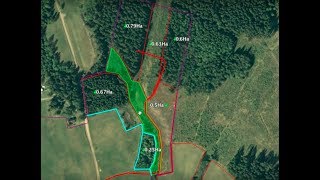
This is a farm vlog by Richard Perkins documenting completion of the season's fencing and general farm activities. Main points: they finished all fencing across the farm (about 1.5 km of fence installed this season), which took ~20 human days (roughly three weeks of person-time) and cost just under 30,000 crowns (~€3,000). The video also covers how paddocks (including areas previously occupied by pigs) will be rested and cleared for pasture, the electrification setup (top three wires live, bottom wires physical barrier), livestock moves (separating boars, moving broilers), and an inventory of that week's vegetable boxes (small and large shares: carrots, zucchini, cucumber, peas, tomatoes, lettuces, kales, garlic, turnips, onions, chard, broccoli, radish, herbs, flowers, etc.). Observational notes include team teamwork, neighbour boundary details, and landscape recovery after grazing.
Questions this video answers
August 4, 2017.
About 1.5 kilometres.
About 20 human days (roughly three weeks of work for one person).
A bit under 30,000 crowns (about €3,000).
Chapters
So we finally finished all the fencing at the farm. Feels great and really nice to have the forest paddocks put up now. So we finished all the fencing at the farm. Great achievement. Some really nice teamwork in the last days. I'll show you around. So the last two fences that we need on the entire farm, just marking a line up through this is the neighbour's property lines. He takes good care of things. I like the way he's put these metal caps on top of his post to make them last for 40, 50 years. And so we've got a nice line. This paddock here is the northeast of the farm and the aim is, as with the other paddocks, to turn it back to pasture. Hoping to clear the trees this winter. So it'll open a lot more light and there's already some grasses and forbs, but the species assembly will change a lot. And then our last paddock is where the pigs were last autumn. A bit more clearing to do in there, but a few days work and then we've done all the fencing at the farm. So fencing's going good. Just putting on an H brace here and you can see how this one is wired. So this is the paddock under the telegraph wires and in the trees that there are over here, that's where they've been already. But we've wired this up so that we can isolate each individual paddock and wire it like you see here. So I'm just putting the corner on now and I'll put a tension wire across and then I'll go down and build the gates down at the front. All the poles are out. Maybe hard to see but got all the posts out all the way down the forest dividing the property with our neighbours land. And so we're about to go. There's a few people full time job for the day to build this paddock. It's about a chectare and there's four of us on it, but we're just putting half a day into it because we've also got chores to do around the farm. Very nice to do fencing. So Kit's on post banging. I'm going to join him in a second. And Astra's pulling out wires and should be done this evening by dinner. Very nice job. I really like Penson knowing that you're safeguarding your future, keeping animals in as well as animals out. It's quite hard to imagine right now this being more open pasture with young trees growing up in between. But it doesn't take long once pigs have been through here. We'll rest the land and cut the trees this winter and then we'll get rid of most of the pigs to allow this to recover. There's a lot of young rowan and as we get towards the front there's more hazel, more oak as the light gets increasing here. I love this spot, but I, you know, on a small farm you don't want to be looking at 80 year investments like forestry like this. We can drive a lot more revenue by using the land more intensively and still have trees. How are you making it? Pushing out all the water and then you're going to add some salt. We added already. Right. You have a lot of peas. I got to eat some of the fat ones. Really good, aren't they? Yeah. This is why we love no dig. You don't need to dig. Carrots that just pop out the ground. Beautiful yellow carrots that's got there. Farming soil, not vegetables. So the top paddock here is done and we're working on the last stretch, just about 60 meters here of posts to put in, then insulators. We've done all the posts and insulators down the bottom here and then put the wires on. Should be done today. And that will conclude all fencing at the farm. That's a really nice achievement. Pulling out the wires. We've got three pulled out now and we'll pull out the other two. Then we'll start to straighten them. Not straighten them, tighten them. So we go up, pulling and then we come back putting them into their loops. Box is going out. Very nice. Cow, herbs. Anything unusual in the box this week? Nice patty pan squash, tomatoes. Very nice.
A very nice modest answer.
What is that? Chile spool. Really beautiful. I like the monaster now. It's a good one. I'm really enjoying the turnips this year. They're looking awesome. We've had great cabbages this year. Too intense. This is this week's small box. Carrots, zucchini, cucumber peas, few tomatoes, first of the tomatoes ripening up and this beautiful molestone lettuce, different kales, some herbs and flowers, Garlics, turnips. Very nice. This is this week's large share. So carrots, garlic and onions. Nice cabbage head. First of the tomatoes and peas. Some romaine lettuce and some motto stone lettuce too. Chard, broccoli. There's some radish as well as turnips, zucchinis, cucumber, tuliques, some herbs and flowers and carrots. Really nice share. So these wires are ready to be stretched now. We're at the corner between the paddock has never had pigs in. And this is where the pigs were last autumn. You can see how the forage has grown back nicely. And so we're just finishing up here and just putting on these connectors. This is a nice little tool for bending strong wire around. I'm not sure if I can do it with one hand. You basically put this, the smallest hole you can, on the wire and twist it round around and it joins it like this. So these are built in a way where we can electrify each paddock individually because we've got paddocks adjoining other paddocks. So when we're using this paddock, say we will just put a crocodile clip connecting the two wires here. And that means the top three wires are electric. We've kept it so that it's always the top three electric, which allows the pigs to throw sticks and mud up against these and there's no problem. Here's an example of where we just joined together the corners so we can electrify individual paddocks. Hello, mama. So they're going to get moved on. We're going to separate the males out, let the females out into a new pen and we'll decide who we're selling, who we're going to send off for eating, etc. So first line to be stretched on the last fence we ever have to build. Kind of nice. There's a lot of ants this year. I don't know if it's because we're just noticing them, but I think this year is a very prolific year for the wood anti. It.
Feels good.
Yep. Stand back.
Use the pliers to hold the middle nut so it doesn't roll around. And under.
And then back through on itself. Back in?
No, no, just this. Too.
And then was it through?
Yeah, from the top. Go that way.
And then up. Yeah, Tighter.
This is good. And then make it handle.
Ready? Yeah.
And then pull to the left.
Very nice. Very nice. Good. So this is the laneway and we're just tightening the bottom string. We're just walking around with a bit of tension on the bottom just to check how it's sitting. You remember I said that only the top three wires will be electric, and so the bottom wires are just for a physical barrier. There's places like here where they coming over the tree stump, but that's okay. It's really no issue. I'm just making sure the wires are in here at the bottom. They need to be the other way up. Sometimes when there's A change in elevation. So just quick check around and tension this one off. And we're done. Done tucking in. Beautiful fence. Done. Time to eat strawberries. So this season we put up about a kilometer and a half. It's taken about 20 human days, so about three weeks work for someone. And it came in a bit under cost about 30,000 crowns. €3,000. We anticipated about three and a half. So that's really nice. And pigs are ready to be moved and separated. We're going to separate the boars at this point and then decide who's going to be sold as a live pig, who's going to be eaten. So we're turning the corners with the broilers. It's a bit of a logistical issue, but we really wanted to get the birds up in this top bit of nutfield because they've never really been up here and we haven't brought layers in. This is the seasonal flow. It's trampled because we've been grazing in here, but it's very wet in here. You can see all this willow coming back now and so we need to cut that and somehow get all these birds around the corner. And so I'm going to start that process today and get them heading off horizontally across nutfield. Between the rows of nuts that you see here. We just got two, three English walnuts from a neighbour in Sheil who, as I said before in other videos, have never bothered planting English walnut because they just wouldn't expect it to be hardy here. But she's had that tree 20 odd years and it's bearing nuts each year. So we got three of the seedlings, which is very kind of her. And so they'll be taking a couple of vacant spots up the top of here. Looks like we have some rain for the next few days. Got an open day on Sunday, but I doubt it'll be so many people as the earlier open day because the weather's not so good. But still we're up for showing people around, telling them how and why we do what we do. Just moving these last birds before breakfast now. Starting to bring broilers into this little hill where we've had layers come a couple of times before and really radically change what's going on up here. I've shown this in other videos. There's different flowers and species here. The grass is quite stunted compared to everywhere else. It's very sandy. Here's where chickens have been digging. It's just pure sand. Basically. Down in here is more clay and our grass is looking fantastic. I'VE just been over in top field doing broiler moves, and it's pretty amazing. This is the neighbours up here where we can compare what our land was like before we came in. Don't know how well this was sharp, but our grass is thick and dense. It was grazed a few weeks ago and we're going to have very nice grass into December. I think we're going off farm again. Once we've been through Nutfield here, we might take the sheep up into the pig paddocks we've built, just to crash through and take some of the tree leaves. And then Kent's land's recovered. We're going back in there real slow and we've got his front field that we haven't used yet, that we might use to allow our land to stockpile a bit. Really nice to see the procession of animals coming through Nutfield. Several thousand chickens and all the cows and sheep in here right now.