S4 ● E96 Some deeper thoughts and an update as I sign off for a while...
Richard Perkins updates on farm improvements including a new polytunnel and packing area, then shares results from three years of holistic grazing: 25 cm of topsoil built through high animal impact. He's launching a 10-day Farm-Scale Permaculture course focused on practical business training for regenerative farming.
Chapters
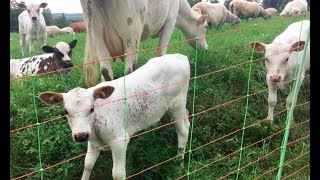
This is 2 tonnes of polytunnel coming. One big pallet and two tons of material. Thank you. First tunnel. Didn't look out so good. Fell off the pallet. It tipped the truck up. It's too heavy. But I guess it's off the loing now, so we're gonna carry it. So apparently this happened to Mikhail too. No, too heavy. Need a bigger machine. But don't think any damage done. We're just going to load it on and move it like this. Maybe that works out even better. It's gonna. This is the marker post. It's gonna fill right to the back here and it's gonna be up there. Yeah. Very nice. Look at these beauties. Like radishes. Very nice radishes this year. Are the peas coming out soon? Yeah. What are we going to put in there? Different combinations of rocket, Mizuna, mustard green, direct seed, a bunch of things. Very nice. So here it is, a Larde steel. I like this polytunnel manufacturer because they make very simple but very solid frames. This is going to be totally strong against snow, just like the other one. This is even bigger dimension poles because it's a lot bigger tunnel. However, my one bit of feedback for them, which was confirmed by Mikko and Denmark, is their instructions are really not very good. So being constructive folks that we are, we are going to help them to make better instructions. Because Michael was saying when the chicken caravan, if you remember from that video, came, he really loved the instructions. They are much more visually efficient. And so I would like to. Basically, they tell you to put this thing up up in the air, but really you want to make each assembly on the ground, stand it up in the air and then just put your connect center rods and support beams once it's up. So we're going to sketch diagram some better instructions because I remember when we put the other tunnel up, it was a back and forth kind of case the whole way through. Can you show us a few pages of it? And you. You had to go backwards and forwards and I think it just needs updating a bit. But we'll see how it goes and we'll give some feedback as we go. This is the corner here, so gives you a sense of the length. It's a big old tunnel. It's longer than the barn by a good 7 meters and it'll change the gates. So we rip the fence up here and we'll have the gates adjoining to the corner here and leave enough space for the trailer between the tunnel and the barn and enough space between the next tree line. So in our original design this was going to be a natural swimming pond. But we realized quite quickly we just didn't need one because we have a beautiful lake and we do need more tomatoes and mainly space for the layers. We're going to have four eggmobiles next year. So we need space for all those birds during the winter here in the windbreak. This is the willow that we cut and coppiced during the internship. You see it's growing back, very bushy, very nice. And so the windbreak will just be getting thicker and thicker now and we'll just keep alternately coppicing. So we've got a bit to trim down the end. We've done two of the rows, but really we should do three of the rows. There's six rows here. Very nice. So packing station is having an overhaul and we're very inspired by Mikael and Katrina and Andish's wash station. And it's very simple. It's not finished, it's busy now with the course on. But basically these are draining units. So packing crates will be taken in the field, brought up here and we're going to have a draining system that runs out into the garden here to our espaliered apples. And there's chokeberries here. This will be a dunking sink for cold water dunking of kales and whatever needs chilling down out in the field. And this will be a drying station here. And we're going to build some shelves in for the kanga boxes. This is what we deliver all our temperature sensitive things in. So chickens and then they can be rinsed and put vegetables in there. Really love these boxes. We have a lot of them now. It saves us having a refrigerated vehicle which is expensive. So we're going to build on here to put some slatted walls in, like an open sort of barn wall with some windows. But the beauty of this space is multifunctional. So things are getting moved around a lot. But this is where we will park the van and the lawnmower in the winter to avoid having to clear snow off them all the time. We're going to keep this table that we got for the first year when we bought the plucker off the local chicken farmer with these scales and things. But we will get rid of some of the paraphernalia that's lying around this year. It's a bit of a mess because we're tidying up. But we will have a very efficient setup here. What's beautiful about this is the Bathtub is on some little old coat hangers here. The bathtub just lifts off and tucks away. And these are hinged. So all these racks fold up into the roof. I was gonna make it so the legs fold down and the whole thing is tucked into the wall. And then I realized that when it folds up it's much higher than the vehicle anyway. So both of these tuck away and I'll build some shelving and a wall here. I want to have a doorway out here. Just for context. This is where we come through to the lean to greenhouse. This is where we do all our starts in the spring. And this has been working great this year. So we're going to keep this and we'll be doing micros all winter in here. We're selling quite a lot of micros each week. And this is the south beds down below us. But we need to tidy it up in here. We've been considering to turn the egg packery current egg packery into a walking cooler. And we're thinking we're going to stick it right here. It's going to be parked here in the summer because it can fit under this roof here. So actually it will come back to here and this table will move backwards and we'll have a little ramp up into here. So the walking cooler will be a coolbot system. It's quite well insulated but we'll put some more insulation on there and take out the dividing wall because it's not big enough for our proposed expansion of the egg enterprise. That's going to double next year because we can always sell double the eggs already. And so we're going to park that up here in the summer and in the winter it will go back there out the way. And this is our cashing up station that is also functioning as our winter firewood supply. So that works well. We picked up this wagon for a few chickens that we swapped before. We swapped quite a lot of infrastructure for free chickens and which is really nice. And so that won't take up any space and it'll be very practical for the packaging side of things. And then the wagon here, the intern wagon is going to turn into hopefully a smokery on one side and it'll be a big egg packery on the other side. So it's two rooms with a dividing wall in between. And that will allow us to easily handle the eggs from doubler hens. I have a source of some new labels and I think we should just get new labels. Looking forward to more table tennis tournaments. Hopefully we'll get some nice weather that we can do it. We like these beautiful boxes, boxes, boxes. This is this week's small box. It's quite a nice box for a small box. This is today's big share. And you don't get many vegetable baskets like this at this price in Sweden. Fully organic. Beyond organic. No dig awesomeness. That is a ridiculous share. So it's late in the evening and I'm just coming to check on the birds and all the farm scale permaculture course people have come. We had a busy day today. We had Jordburgsverken organize a farm tour and that's the Swedish Agriculture board. So there are people here that farmers and people that make farming policy and advisors to farming advisors, like extension service people. So it's really nice to show them around, share our perspective because, you know, we're farming quite differently to most Swedish farms around. And I'm just coming up to check out the boilers. They're doing really good. And we've put in these corner anchors because the last night we came up here and the birds wanted to go back to their pens. And so the neighbor called, we have really nice neighbors. And she phoned up and said, hey, there's birds running around. And about 60 had like stormed the nets to get back to their pens. But now they're used to the electric fence, you see, they all sit away from the fence and they got used to that now. And yeah, it's just a learning curve for them. They're wondering where they're penza. But I'm just disturbing them a bit now. They're settling down for the night. It's now. What time is it? It's half past nine. And so the layers are just about going to bed now. And we're moving the layers actually to Topfield tomorrow. The last ones are just sitting on the steps waiting to go in. And yeah, top field's got some very nice grass actually. Things are good. Really excited about this course. I won't be making so much videos perhaps in the next 10 days because it's pretty intensive course and we have a very packed schedule and I've got a lot of work to do around the schedule too, but really excited. Lots of farmers here, lots of people coming to us who are interested in getting serious about this stuff, you know, and they want to know about taking it up in the business level and taking things to a livelihood level. So it's nice, you know, I'm very excited about the people that turn up here and really excited to get into it now. So farm scale permaculture course starts today. Really nice to hear from people from all different parts of the world actually about their intention to come here and see practical business related solutions. Because there's a growing amount of people that come to us that they're just looking for solutions that include business, economics, livelihood that they can't find elsewhere. And I think it's the next step and challenge for the permaculture sort of movement is hey, how do we scale these things up? How do we take it seriously and make our livings like this? Because that's the bottom line of how it's going to work if we want it to be possible. Really nice group. It's always different in autumn. We find the group is usually quieter, more studious, more mature. It's a different kind of energy and that's a general thing to say. But it's been the pattern the last years now and feels like we've got some great plans shaping up for the rest of the season. Polytunnel came yesterday and that will be getting put up in the background. Some nice grass over here. We're just moving the turkeys in my team and the laying hens, these beautiful little calves. That's quite a big tunnel. So we've moved the eggmobile, the light egg mobile into top field again. So we've come through here a few times this year and a couple of times with the cows and sheep. And what's happening here in this pasture is amazing. This grass is really dense and really thick and this is the place on the farm that looked like this just three seasons ago. Not wanting to point out flaws and criticize others, but it's just interesting. We've been talking today about fighting symptoms, not addressing core problems. And I believe our neighbor here, so our neighbour, at the same time of year that we take out our eggmobiles, the neighbor brings out a harrow to scratch up this grass, put MPK fertiliser chemical fertilizer down, which kills microorganisms, but also force feeds plants to drink. Plants are hydraulic, so if you put a water soluble nutrient down, they have to drink it. We're more interested in growing soil than grass because ultimately grass knows how to feed itself and eat what it needs selectively. But I think what the farmer's done here, well, going back a step, the farmer brings out his tractor, he's fixed it up, he puts oil in it, diesel in it and pulls a harrow around and grows hay that's then exported off site. So this constant nutrient loss off site. And this old adage of not letting anything off the farm that can't walk or fly off on its own is a really important one because ultimately in my lifetime I expect to see, you know, changes in the way we deal with nutrient flows. People won't be willing to sell their manure or straw or hay because you're just exporting nutrient off site in the meanwhile taking on a degraded farm that hasn't had animals for decades. I'm really willing to buy another people's fertility if they're up for selling it, because it's a kickstart to a resilient future for myself. Now, we all have different contexts and feel differently about those things, but that's what I feel about that myself, because we don't have space for, you know, grain production or hay production on any large scale. But what's interesting is the same week that the farmer brings out this machinery, you know, I can't imagine it's great economy cutting hay because the grass here is not so rich or abundant. But that same week they bring out the machinery, I bring out my hens onto pasture, and those hens spend all day going left foot scraps, right foot scraps, peck, peck, peck, finding things to eat and then leaving their calling card. And I get a whole load of eggs, 20 tons of eggs a year, as a byproduct of that same pasteurized, like, same pasture fertilization scarification regime. Now, interestingly here, something that's very interesting here is that this farmer has got a lot of rushes growing in the field. Now, rushes are a bit like moss here in this climate, where they're a symbol to me of compaction, poor drainage, poor nutrient cycling, or all of the above. It could be the ph of the soil, different things. But I think these plough lines, I'm not totally sure, but I think these plow lines are plowing up the areas where it was worst affected by rushes and hoping that grass will take over. But to me, it's, you know, it's the old symptomatic thing of trying to take an aspirin to relieve a headache from smashing your head with a sledgehammer and not stopping hitting yourself with a sledgehammer. Because this doesn't solve the problem. You know, bare soil exposed to the elements, it releases carbon as carbon bonds with oxygen in the atmosphere and releases CO2. But it's also coming back to compaction. You know, rain falling on bare soil leads to compaction. So then you have to do it again. And we take a very different approach. Here, like the sedges and mosses in our fields, have been eliminated by animal impact. Not just grazing of livestock selecting for more grasses in our case, but the impact of scratching and manure and the nitrogen changing the species complex. And it's something we need to manage in our farm context. We are losing some of the diversity in pasture and getting a lot more grass. And so we actually want more grass. We want to be able to feed the animals from the space we have. And we haven't got a lack of diversity. We're surrounded by diversity. We've got 40, 50 species in the pasture, so it's really no problem. And I'm pointing this out not to, you know, criticize anyone else's actions, but just to observe ecosystem processes, because all of this work that's taking place doesn't lead to the desired result. It'll probably make it worse. I wouldn't be surprised if it made it worse. And what we're doing with managing animals well is totally radically transforming our grasses. And where we've taken the chickens up today, it's just incredible to see the difference to our neighbors stunted grass, where they haven't done anything differently. And some of these students here now are interested in doing some soil profiles. We showed a video recently where we dug up soil here where we've never touched the ground, and then took a look through our passes where we've been pulling a keyline plough twice and moving our animals around holistically. And it's just amazing, you know, building 25 centimeters of topsoil in three years. But we've been talking a lot about the scale of permanence yeomans, the original sort of holistic landscape management approach and design approach where we deal with the most permanent features in a landscape first, where our climate dictates the animal and plant species we're working with, and the landform then dictates where we place some of the most critical and permanent elements of design. Water being the starting point of our design work. Water flows in very specific relationships to landscape or landform. So we need to understand maps and gather the right data. And once we know where water goes, we know where roads can go or farm access to, you know, aid water collection if necessary, or certainly not be erosive. And then we can protect those expensive systems with tree systems or perennial cropping systems. And then that leads us to obvious places for buildings, other infrastructure, and then fencing all the way down to the most malleable elements, which are soil. And soil is so easy to build. But it's also very easy to destroy. And so we've been talking a lot about why capturing carbon and sequestering it in the soil is to me, the most default aspect of what we would call regenerative agriculture. Just having a look in the greenhouse still got English cucumbers coming along and a lot of tomatoes. We've been harvesting a lot out of here, as well as some fantastic basils. And we'll do a garden and farm update again in more detail this week. It's just hard to find time with the busy course on now and busy morning till night time. We've been taking some amazing hinomaki red, the gooseberries out of here. But I just want to show you for context. So we're going up here to look at the neighbor's grass because that's pretty much exactly how this land was when we came up here three seasons ago with all these animals. But just wanted to see if we can catch this on film because we've grazed this three times with the animals and we've brought thousands of chickens through this land and the grass is super dense, you know, and there's still a lot of diversity going on and it's quite hard to actually get down to ground level. This land was grazed about five weeks ago and you know, this is plant material as tall as my boot, for context. And it's super dense and thick. And what the chickens are doing now is trampling. They are not going to be able to touch this. And you know, it's been very wet, but the ground is in good condition because they're just trampling it down. But in context, the, you know, this was the area of the farm with the worst ground. It was just moss. There wasn't grass and pasture here when we came here. And I want to show you again where the neighbor's land is at, having been cut once on about mid summer, so two months ago. So bear in mind we've grazed this three times and had thousands of chickens pass over it too, both broilers and layers. And that field up there where we're going has only been cut once in mid summer. And just look at it. It's a lot of bare ground just covered by thatch, without plants in between. And it's only about 10 centimeters tall. It's stunted. This ground is stunted. It's lacking fertility. And this is what our land looked like. It's got low diversity, it has some clovers and the odd flowering species and some yarrow and different things, but it's lacking Fertility and animal impact, animal numbers. And it just goes to show, you know, we've built 25 centimeters of topsoil in three years. And it's partly to do, I would say it's partly about the key nine plough, but it's mostly about having enough animals. We talked a lot today about holistic management and basic arithmetic. You've got to have enough animals if you really want to mimic nature. You've got to understand just how many animals were in these ecosystems. And, you know, you can't do this with 10 hens or two sheep. You need thousands of chickens or hundreds of sheep to get that impact. And so you have to work that in to the logistics of what your farm's capable of in terms of its land characteristics and the climate, but also what your time and, you know, enterprise looks like. I've been really thinking about this infographic for the whole summer where, you know, I've got my head around all of the different enterprises that fit into the field of regenerative agriculture. And I've got a pretty good handle on them through my own experience, but also observing colleagues and what they're up to. And I want to make this big graphic of all the different enterprises you could do and the land needed and the sort of inputs and financials, returns per square meter, as it were. So it's like, I want to make like a recipe almost for people because I think people get really stuck of life's got to look a certain way. I want to look after cows, but I've only got five hectares. But you can't make an economic business on five hectares with cows. It's like it's, it's not going to work. So, you know, okay, you've got this much time, this much money, and this is your land base in this climate. And here's the marketplace. So here's four enterprises that really fit that landscape. It might be market gardening, tree nursery or pastured poultry. So these are the things that fit your landscape. You can't do sheep or cows economically. You can't do commercial nut orchards. It's not going to work. You just couldn't get the economy out of it. And I wanted to do that because I see that many young people that are going into farming really want a bit of clarity around. Here's my options and I feel like I'm in a good position to sort of put together some useful infographic. But it's something I've sketched down and I just, I need to do a lot more work on it and Maybe need a graphic designer to do a bit better job than I will do, but it's something on my mind. It's like, hey, you know, all these people turning up here and the farm scale permaculture course we run here is amazing because it's attracting over time now, it's attracting really focused people who are dedicating their life to this stuff, who have got resources, you know, amongst the group here now from all different places around, mostly from Europe, some from further afield, but there's over a thousand hectares under their management and it's, you know, it's really tantalizing to see them coming to this place because we're not focused on sort of airy fairy stuff. We're known for giving a different meaning to the word permaculture. You know, people take us seriously because we take ourselves seriously and we work very hard and smart and, you know, and I think that's an important element of this place because it's a springboard for people going off to do their own thing. And I'm not saying that to blow my own trumpet. I'm saying that because it's really important that people recognize that and see that there are options open to them. And you need to start smart, you need to be pragmatic. You can't come at this stuff with, you know, ungrounded idealism. It's not going to work. Farming is hard work. It always has been and it always will be. But it's joyful work. You know, as I've said many times before, the line between work, rest and play is totally dissolved. In my experience, you know, I get up at 5:30, 6 o' clock all day, every day, sorry, in the summer and it's not work for me. I love it. You know, there's nothing I'd rather do. I'm inspired every morning when I wake up and I learn so much here and it's a wonderful life worth living. And I really, I admire the people that come here and dedicate their life to this stuff because that's, you know, it gives me so much warmth in my heart to know that there are so many people ready to take that leap, coming from non farming backgrounds many times. And actually they're the people I hold most faith and hope in because I think the farming community is not going to catch up. It's too patterned into its way of doing things. And ag school is a million miles behind. You don't learn this stuff at ag school. You learn about how to fix machines, how to write spreadsheets, for businesses that lose money, how to apply chemicals at certain rates. And, you know, I'm being blase and simple, but I've been to ag school, so I know what it's like. And entrepreneurialism is needed in this age for farmers because the markets and the social media world we live in are very different to how they were a decade ago or certainly a generation ago. And I think there's many, many people coming here who are really smart. And some of the cleverest people in the world have been put into our institutions trying to find technological fixes to some of our biggest problems. But many of human's biggest problems are biological and technology cannot deal with complexity. We need humans who are smart and observant and organized on the ground. Planning, executing, monitoring, holistically managed enterprises. And there are so many smart people. And something I've got to share with you is that I'm meeting some of the very smartest people I ever meet in life. And I interface with very different people from different walks of life because I'm interested in that. And I always have been, you know, very rich business people moving tens of millions of dollars to, you know, hippies, to farmers, to, you know, social dropouts, all sorts. I'm very intrigued by people in different social stratas with different aims and objectives and contexts because I learned so much from it and I love learning. That's why I do all these things. And what I notice is some of the smartest people I ever meet are turning to farming, you know, and they're not stupid people, they are smart and they're organizing and planning and it's turning out good. Like some of the videos I shared recently of, you know, people in their early 20s who are setting out, setting out smart and rocking it. And I reckon about 40% of our interns are going off and smashing it, which is a really high result. And I'm really proud of that. And I'm really proud of them, you know, more than myself. You know, I act as a little nutrient, a fertilizer for the whole thing. And yeah, I love to do that too, but it's an interesting time. I'm really excited about this course. Every single autumn we have a smaller group of much more focused, much more mature sort of minded people. And I don't know why spring and autumn is different, but it is and I really enjoy it. Yeah, we got our market garden course coming up. We had a lot of requests for doing a short intensive market gardening course and that's filling up already. So that's really Great. And looking forward to being in the gardens more myself next year. I'm going to spend most of my time in the market gardens and it's really fun for me because I came into this whole thing through running CSAs and market gardens and I know a lot about growing veg but I've been focusing all my energy and time into putting the whole systems and animal systems and people systems together and actually I really want to slow down, just spend my days farming and yeah, I say slow down, tongue in cheek because I'll be working well and fast. But yeah, I'm looking forward to just farming next year and not being distracted very much at all and being on the ground and managing everything impeccably because that's what I love to do. But it's great so many people are coming here and it's intrigued me in a way to have people coming for a short course because I don't see that the outcomes are usually so great. I have very specific learning objectives and I really want to support people going into profitable farming enterprises for themselves. And I don't think a two day, you know, or shorter course can do that but it certainly can pump people up and get them kick started on the right path. So it's an experiment for us to see, hey, do we like doing that and do people benefit from it and we can check that out and ask for their feedback. So excited that it's going to be a full course and yeah, very excited to show you around our gardens because we love them very much. I gotta say that so far I love this model and I love the birds having more space. So we just bought two more chicken nets and you can see we've opened up two nets around last days net. It's because of the logistics of moving. But some people say the white birds are not so good at foraging. They forage, forage and roam all over the place and they love it and I'm very happy. I feel very good about this model. I'm not so concerned about predators at all. I know that's different for some of you in different, you know, contexts. But here we don't have the predator pressure that some of you might have. But these birds are physically joyful. You know, I come up in the morning and they're jumping and leaping in the air and they're scratching and pecking a lot more than they would in their enclosures. And just the short observations on the couple of days we've been running them in a bigger pen. I like it, I like it a lot and it's way less work and people have made suggestions about attaching feeders along the sides and all that. Well, that's obvious stuff and thanks for your suggestions but you know, that's obvious stuff. We're just trying out prototypes in our spare time because we're running busy schedules with our whole load of people here for training. But I love it, you know, this is way happier birds to me than little pens and it's way quicker to move, way quicker to do feed and water, etc. Someone mentioned about slaughter day. Well, you know, there's very easy ways to partition off birds in here. So I think, you know, the first time we do it it'll take a bit of working out but I don't see any longer term problem with sorting out birds for slaughter. I think it's going to be really useful and much more enjoyable actually. And yeah, I gotta say I really love it so far. It's really nice to see the birds with a bit of space. Thanks for watching our videos, really appreciate the views and comments and I'm not going to be posting so much in these next 10 days. We're, you know, really focused on this short intensive training. Our 10 day farm scale permaculture course is, it's a PDC but very intense. We skip all the sort of fluffy bits and go straight to the heart of what works. So it's a download. It's like a year's worth of master's study in 10 days and people love it and I love it and I'm available to them late at night. We're doing an evening session tonight looking at the first three participants farms. So we've got 12 people that have over a thousand hectares under their management and so we're hearing a bit about each of the farms over the next evening. So I'm putting my focus there. I won't be making so many videos in the coming days unless I find particularly exciting things to look at. And yeah, I'll keep you updated with what's going on. I'll do a big farm update at some point and thanks for your time and you find out more in our book Making Small Farms Work and we'll see you in the next video.
More from Richard


A review of short and intensive season on a mixed farm and restaurant/event space in Sweden






Alskade Kyckling Exploring complexities of poultry production in Sweden and what we stand for


