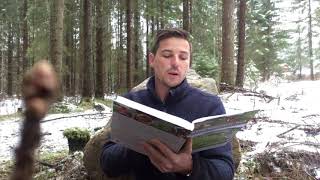
Richard Perkins announces Patreon gets videos a week early and will host Q&As. He's shifting to a profit-share model on his farm and needs better balance. The preface to Making Small Farms Work describes his integrated approach: permaculture, holistic management, and keyline design combined to scale regenerative farms.
Questions this video answers
One week.
To produce three videos per week.
Until his dinner time on Friday the 5th (announced on the video dated Jan 1).
Permaculture, holistic management, and keyline design.
Chapters
Happy New Year and welcome to season five at Ridgedale. I'm really excited for the new season and we're going to be doing things a bit differently this year.
So I wanted to just quickly explain it.
This is the first video you'll see here on YouTube for over a week now because we're launching our Patreon account, which means that all videos will be in real time for our patrons and then they'll come onto YouTube a week later. So if you're following throughout the season, you'll be following a week behind. We're doing that because of what we put out in recent videos. I'm going into the profit share model with the other profit sharers at the farm this year.
And so my time is really dedicated.
To running the Farm enterprises and all the work I do outside of that, which, which is riding and making videos.
Stuff like that, it's got to fit around that.
So I really want to honor that for the others that are joining this new model. And I want to make a clear distinction with my time. I'm trying to create more time for family, more time for rest and create that balance that's so important for, you know, a truly successful business and model.
For others to follow.
As you know, we're documenting all areas of life on the farm as well as the business and, you know, all the different things going on here. And I want to continue doing that in the same sort of no nonsense, practical, down to earth way. We're not going to be concentrating on fancy camera work and flashy editing as some of you have had concerns with. I've got no interest in that. I'm really interested in putting out really good quality information. And so the money that we're trying to raise through Patreon is to really account for my time. So I can really feel okay with putting time into that and bringing you more consistent and better quality content. Also, as I said before, if we raise the funds we're looking for, I'll be able to travel and go and meet other pioneering people and really extend the breadth and depth of what we share here on the channel. So you can see on the link below here, there's a link to our Patreon page. Please give us any feedback or thoughts on that and you can support us there if you wish. And videos will be going out to Patreons, as I said, a week before they go out on YouTube. And that's also where we'll be answering people's questions. We won't be answering questions on YouTube like last season. We just didn't have time to do that and so I'm going to keep that as a way to, you know, reciprocate for the support that people give us through Patreon. So it's a quick video.
Just to let you know.
There won't be videos coming up for over a week now, but if we reach our goals, I'm hoping to put out three videos a week really consistently and that will kick off.
As of now.
To celebrate the New Year, I'm offering signed copies of Making Small Farms Work for the next few days till my dinner time on Friday the 5th.
I'll be popping copies out in the post on the following Monday.
Thanks as always for your support and grab a cup of tea. I'm going to read you the preface from this book.
We believe it's possible to meet our human needs whilst restoring soils, ecosystems and communities. We've seen it's possible anywhere on the planet through throughout our work and we already know that we have all the technologies and knowledge necessary. We even now have all the decision making and planning processes needed to accomplish that, whilst accounting for the complex systems that we must work within. Scaling up permaculture to a farm does require pragmatic and profitable approaches. There are limited examples of profitable permaculture farms and so we can draw from and integrate practices from other ecological design methodologies.
For us, there's three main legs to.
The stool that we use in our work and besides permaculture we rely primarily on holistic management and keyline design. As we would define it, permaculture design is a conscious and intelligent integration of regenerative agricultural ecosystems with socially just environments that produce fulfilling, stable and ethically sound livelihoods through the management of whole systems reflecting natural patterns and flows and relationships. Permaculture design functionally interconnects diverse elements in highly cooperative and mutually beneficial arrangements that.
Display a robust energy efficiency and abundance of yield.
The ethic of reinvesting surplus into natural and social forms of capital promotes care of all beings and the planetary systems. To us, permaculture has always seemingly lacked a clear and effective decision making matrix. Yet as farmers we're inevitably bound to dealing with complexity, ecology, economy and social factors. They're all really complex and until recently there's not been a clear framework for making decisions based on the holistic context. Holistic management gives us this decision making matrix as well as specialized planning for the grazing of livestock and for farm economic planning. Keyline design gives us an organizing pattern for permaculture at a Farm scale one of the biggest influences in my work. It's also given us a topographic patterning for integrated layouts that work to optimize efficiency at all levels for the working landscape. Keyline gives us the specialized tools for rapid topsoil development on the field scale. You remember the video last year we demonstrated 25cm of soil growth in our pastures just from using the keyline plough and planning our grazing with livestock. Any tool that works is really worth including in our toolkits. And likewise anything not suited to the context of the larger landscape can be discarded. That's been partly my role in my career is just getting rid of bits of permaculture design that are fluffy or untested and put out there by authors or people aren't practitioning or farming for a living that, you know, there's a lot of idealism that we've just worked hard to get rid of out of our trainings and out of our context. You know, farming is a really different occupation to simply meeting your own needs. And as soon as economy or regulation appear, when producing for others, our toolkits need to be quickly refined. It's got to work as a business, it's got to work financially or no one's going to do it. And that's again been a big part of what I've shared on the channel so far. It's got to work economically or no one's going to want to do it. We hope you'll benefit from the approach shared in this book. We've tried to be fairly thorough whilst keeping things very clear and straightforward. Abstract theories and gross idealism only serve dreams. In the end, it's down to earth common sense that usually works best. The challenge for our generation is regeneration. Starting from the soil up, we're faced with our very survival as a species. And we need everyone to play his or her part in that story. All gifts, strengths and talents are poised to contribute in a myriad of potent ways at every level of life on this planet. That certainly doesn't need to look any certain way. The problems we face today are all extremely complex. And we all know that it will take the full spectrum of human ingenuity to step up, as well as the wisdom to step back when it's appropriate to allow nature to do her work alone. Healthy soils, functioning communities, thriving ecosystems and respectful relating is something we all want as the basis of civilization. Agriculture must play a large part in this restoration. It's why I've dedicated my life to farming and teaching other people about farming. And land management. I believe that regenerative agriculture can be scaled up or down to virtually any level or context in any climatic zone. And yet at the heart of it, the core tenants remain the same capture carbon and sequester it in the soil, reinvigorate local economies whilst restoring the pride back to land stewardship and reigniting the passion that we all share for real food, stimulating neighbourly and community connections. We all live in community and we all want peaceful, thriving, respectful relating in that there's incredible opportunities today in regenerative enterprise. Landed or landless, there's so many ways to tap into the regenerative economy. This book serves to share the beginning of our little farm in rural Sweden, providing a look into how we apply holistic design to creating the sort of future we'd like our children to grow up in. But a book is merely a snapshot. Our strategies, ideas and approaches are constantly changing, evolving and being refined. This marks the very beginning of our farm and we'll likely be adjusting our approach every year now, if you notice, if you've read the book and you followed us last year, you'll see things are changing so much all the time and that's the nature of how we must manage. Complexity must be flexible and the ability to respond is a large part of what makes farms function. This book is not intended to be just a simple model that others replicate. Our circumstances, skills, aptitudes, gifts, strengths and talents and markets are also very different. This is not a book about incredible theories devoid of context. It doesn't offer all the answers and it doesn't aim to please. There's no radical innovations that will make farming an easy profession. This is just a simple look at how and why we've done what we've done. Take it or leave it as you find useful. We value this approach and we're constantly seeking others and their direct experience because this basically, after all, is all that we have to share. There's much that we have liked to do differently given other parameters. That's not the point. We've designed and planned very carefully to fit our precise circumstances. And contrary to popular and widespread belief, we can make small farms work. In many ways, I felt deterred from beginning this story as our farm feels so new and in such a formative stage. But encouraged by others that I respect, I decided there's so much worth telling so far. We integrate several design approaches into our work, extending what permaculture has to offer, and this feels like a key to my own work as well as something I recommend to Others wanting to scale up their ventures to the farm. Farming is so very different to homesteading. The whole systems approach, the efficiency with which the farm has been established and the fact that we're creating a viable income from the land has made this farm an international beacon. Europe really lacks farm scale permaculture examples designed specifically to make profitable livelihoods whilst regenerating the land. Serving a local community. We've not exactly made it easy for ourselves here by establishing a small, diverse farm in one of the most expensive and conservative countries that I've ever been to. It's probably why there's not so many other young people moving out into the country, enrolling in this way in this region. It's not always easy, but it is doable. One problem with the human condition is that we're always looking for standardized solutions without clarifying our own context. There is no formula that anyone can pick up and apply without careful consideration via the lens of their own time, place and circumstance. If you really want to understand how to design your own farm or project, you may read all these books, you may watch all these films, amass information from the Internet, and all that may still avail. No action. All that could avail is a basic understanding of principles and elements of design in a way similar to an artist's palette. You could have all the colours and brushes, but unless you know how to paint, you're going to end up in a big mess. And that's where we got to in today's society, a big mess. There's no substitute for learning by doing. That great challenge we face as a species is going to be spearheaded by folks out in their fields, out there, in their communities, out there really doing it on the land. Information is only beneficial if it leads people to careful, considered action. I sincerely hope this book contributes in some small way. If when you've read it, you decide it does not, I suggest you soak it in good clean water, inoculate it with choice oyster mushrooms, and then post me the dried mushrooms that I might eat. My words.
So thanks so much everyone for your support and I look forward to sharing.
The season with you.
And again, feel no pressure to share beyond your means. You know, I'm working to my own means, putting out what I can, and the whole intention of the Patreon account is to enable us to put out more content, richer content, deeper content, and we'll just see where that goes together. So thanks so much and I look forward to seeing you soon.
Sa.
More from Richard


A review of short and intensive season on a mixed farm and restaurant/event space in Sweden






Alskade Kyckling Exploring complexities of poultry production in Sweden and what we stand for


