S5 ● E14 Blockchain Tech and scaling Regenerative Ag
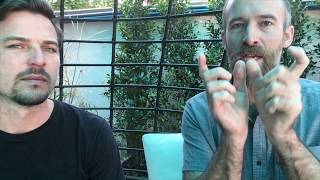
Christian Shearer moved from permaculture design to building Regen Network, a blockchain platform that verifies regenerative farming outcomes like carbon sequestration and reforestation. It uses sensors and machine learning to automatically pay farmers through smart contracts when they hit ecological targets, with plans to scale globally through the Savory Institute.
Chapters
So today's video is quite different. I'm not focused on making videos at the moment. I'm focused on riding. And I'm here in one of my favorite cities in the world, in Chiang Mai in the north of Thailand. And I happened to bump into an old friend that I made nearly a decade ago here, Christian Shearer, who set up his project Pannier here. It's a natural building and agroforestry project that I was involved with back then. And he also has been on the board of Weed Forest and some other interesting projects and is the head of Terragenesis. And we were talking the other day about how they're using blockchain in a really ambitious new project for monitoring carbon sequestration and farming. So I wanted to make a quick video where we asked him about that. Okay. So great to see you, Kristen.
Thank you, Richard.
Nice to bump into you here. Yeah.
It's been years.
Yeah. And, Kristen, I'd love if you could explain to our viewers what you're doing through Terrigenesis. I know you're trying to help corporations and parts of the industry go beyond organic, and maybe you could explain what that means.
Sure, yeah. We started out, our company is kind of a permaculture landscape design firm. And we were doing pretty well with that. We had a couple great clients. And the way I tell the story is that after a couple years, we looked at what we were doing and said, okay, we've done a couple thousand hectares of really good design work here. And we're like, shit. If we're going to really contribute to reversing global warming and getting this planet back on track, a couple thousand hectares in a couple of years is not going to do it. We need to be on a much larger scale. So we did it. Kind of whole design process around how. How can our company intervene into systems that will actually have greater impact? And the system that we landed on after a bit of a design process is existing supply chains, and specifically existing supply chains with. With natural products companies.
And they're obviously sourcing a lot from, you know, probably small scale farmers, but loads of them. No. In developing countries.
Yeah, that's right. I mean, for example, right here in Thailand. I mean, we're sitting right here in Chiang Mai right now. I'm working with a natural products company that has 2,300 farmers distributed throughout northern Thailand and Laos for one specific ingredient. And it's an exciting project because I got to travel up to the land, meet those farmers, talk to them about, you know, how has your farming impacted the Environment. They are all very clear that the contract corn farming that the, that basically the government and the normal systems here have been encouraging them to do makes them very little money. Sometimes it even just loses them money. Each season it destroys their forests, they lose the natural resources. The pigs are gone out of the forest, the trees are gone. They want to be doing something much more environmentally friendly. So with this client, we're working with a perennial crop and they're excited about that, that it's kind of less worked for them. But it also starts to reestablish the kind of perennializes their agriculture systems and helps to re establish the forests.
We've seen like a lot of greenwashing going on where big companies, like multinational companies trying to green up their image and that sort of thing. And I know you're interested in like showing people like, hey, it's much more than that. And maybe can you explain, excuse me, maybe you could explain the process of like, you know, what your clients are sort of expecting when you show up and how you lead them somewhere different.
Yeah, well, I mean usually when we first connect with a client for the very first time, they're expecting kind of business as usual. They're like, oh great, you're into regenerative agriculture, that's great. Can you just connect us with the regenerative supply? And the answer is pretty much absolutely not. At this point there's so little regenerative agriculture happening on this planet at any scale. So if you're a natural products company and you want to engage in regenerative agriculture, that means you're going to have to put your energy, put your resources into an engagement that actually grows regenerative agriculture.
So actually the western companies as it were, taking responsibility.
Yeah, totally. And so that's what we're, that's kind of where we specialize is, okay, there's kind of two areas we need to work with you and your company on. One is with your existing supply. So how can we work with existing farmers, existing distributors and find ways to engage with them that really, that allows those farmers and those, that network of distribution to think about their supply in a different way, to think about their farm and a whole system mindset to think about? You know, I mean, one of the, one of the things that's important to us is that we're not coming in as like the white guys who know a lot and like, I'll tell you how to grow turmeric in India. No, I don't know how to grow turmeric in India. But what I Can do. What our company can do is engage with a group of turmeric farmers and invite them to ask the right questions. So how's water working? You know, how. How could it work? You know, how. How's your nutrient cycling on your farm? You know, how's it currently working and how might it look? You know, how might we make steps towards that? How might we try some innovative things that may or may not work, but we can learn from them as a group? And then. So working with the existing supply and trying to upgrade their systems and get them to. To kind of like grassroots, grow their ability to engage in a different way. And then the second thing we have to do is actually work with the company itself and get them to be thinking about their supply in a different way. Because working with a regenerative business mindset is very different than working with what my teacher has called a do Good mindset, where she would say, this is. I'm talking about Carol Sanford as one of our. As one of our mentors for our company. When you're working in the Do Good mindset, which is kind of like the organic world, it's great. There's a lot of benefit to it. It's way better than the previous. But it's based on a set of ideals. So you've got all these old check boxes that you're trying to reach, and if you reach those, then we've done well, you know. But are we actually. Are we actually growing the capacity of this planet to regenerate itself? Are we actually growing the capacity of these communities to regenerate themselves and engage in their own unique context? And that's what we're really interested in. So how can a company like Newtiva or Lush Cosmetics or how can they help to grow the capacity of their stakeholders so that those stakeholders are more prepared to. To address whatever comes up in the coming years?
Awesome. And that really leads into the main bit I want to talk to Christian about here, which is a really ambitious, exciting project you're working on now, which I hope we're able to get the gist of in a short time here in this video, because. Quite amazing scope to this project.
Sure.
And it really connects in with that idea of incentivizing producers to go a step ahead. But actually, how do we measure that? And you were talking the other day about how it's very easy for a company to make a little green video. And, you know, you can make a horrendous company seem, you know, quite plausibly ecologically friendly.
Totally.
And so you guys are working with blockchain technology doing something quite unique.
Yeah, we're setting up something, we're utilizing a number of emerging technologies right now, including machine learning, IoT tech farm sensor technology, and distributed ledger blockchain technology to what we're. The main thing we're trying to do is be able to verify ecological outcomes. So if a company or a farm claims that they've achieved X, Y or Z on their farm, how can you believe them? They can make a cute little video about it. But like I said, anybody can make a cute little video that like, wow, look how we're working with our farmers and you know, everything's hunky dory on the farm and they can make all the claims they want. But how do you, how can you trust them? They don't necessarily know the science behind it. They don't necessarily have a backing for what they're saying. So our project is looking to be able to create a distributed, open source, scientifically backed system where, where claims from farms, claims from land managers can be put through these community sourced algorithms to then produce whether yes or no, that claim is actually valid. And so let's try to make it a little bit more simple.
And I mean, I guess a lot of the viewers, like people maybe become more familiar with blockchain technology with the big rise of crypto, cryptocurrencies and things like this. But for some people that might be way over their heads.
Sure.
But maybe you could explain that through.
The user, through the lens of this. Sure, I'll give it a shot. You know, I'm also still somewhat of a beginner in all this, but the incredible, the incredible use of blockchain technology in this sense is that it's distributed and open. So for example, when we make a claim, when we say carbon has been sequestered on Richard's farm, you know, hundred tons of carbon were sequestered through these actions. We're not actually verifying that that has actually happened, even though we call it verification of ecological outcome. We're saying we have applied these algorithms to this data that's come in, in this verified way and through our best thinking and the community of science scientists that have come up with this algorithm, our system concludes that that has happened. You know, and that's quite distinct from other ways that things get verified which are much, very centralized. So you might hire a carbon, carbon trading firm or something to come out to your property. You're paying them money to come fly out there to do a bunch of measurements and they use their own kind of potentially open or not open ways of trying to calculate whether that carbon has been sequestered or not. There's a couple drawbacks to that. One is a system like that could be easily gamed from the inside, which is basically like corruption and it happens all the time. Two, is that what we were talking about earlier, about the continuation of those who have money, continue to have money. So it doesn't make sense to try to apply carbon credits to, to any farm that's not like a thousand hectares or bigger, you know, because you have to send someone all the way out there and do all the measurements and it costs a lot of money. And so you want to find a.
System that like makes sense for like, like most of the world's farms are small. You could say it's only in our richer countries that we have industrial mega farms, but like the production you're working with here. So a lot of small farmers making up the same area.
That's right.
And you want to be able to support them.
And that to me is the most exciting piece of all this because right now we have these two things happening. One is the farmers of the world are basically getting shat on. You know, they're getting poor returns for their work. They're not really being hailed as important in our society. They're considered peasants. And you know, and if we can replace them by automated tractors and eat up all those small farms and turn it into a 100,000 acre farm, that's more efficient and effective, you know, and at the same time we're having this global climate change crisis where, you know, the amount of carbon in the atmosphere is going through the roof. You know what? Well, what? It turns out that sequestering carbon into the soil is the most effective way and the most viable multifunctional way to, to get our planet back on track. So if we can say, man, every one acre, one hectare tiny farmer out there in some way could be contributing to making this world a better place through the practice of regenerative agriculture. And we can incentivize them to do that. All of a sudden they're living better lives. Our ecologies are healthier, our, the economies of those of those rural areas are improving and this planet is putting the carbon back in the ground, which then supports a whole world of diversity of species.
So you at your end, there's the big tech operation to get that set up.
Yeah, that's right. Right now we have about 10 folks on our team and I'm probably not the best person to talk about the actual 10 technical specifics of this because we're working with, we're working with scientific organizations and universities to some degree to understand all the work that's happening in the world right now to come up with these different algorithms. There's algorithms for carbon sequestration, which we've mentioned, but there's also algorithms for clean water, there's algorithms for clean air. We want to be able to verify the planting of riparian zones, we want to be able to vary, verify the reforestation efforts. There's like it's going to be done.
A lot like you're talking about satellite monitoring for, you know, things that can be measured now in amazing ways.
Yeah, that's right. And the system is going to use a small number of highly censored farms, not censored, sensed farms, so that like tons of little IoT sensors, all of the farms, to help us understand to a great degree what's happening in those bioregions with those agriculture techniques applied. And then the vast majority of farmers in the world who can't afford to put a bunch of sensors on their farms will be able to input a minimum amount of data into the system which would then be fed through these open source algorithms and would result in a conclusion. Yes, you have indeed, by our calculations, you have indeed sequestered X tons of carbon or you've protected that waterway, or you've, you have in fact planted those crops which helps you achieve the, you know, the purchase agreement that you've agreed to. There's a bunch of use cases for this. We've had insurance companies approach us and say, man, if you can be verifying ecological outcomes, our insurance company is super interested in this. Natural products companies is where we started, you know, making purchase agreements with their clients, you know, all buy this turmeric from you at X dollars per kilo or, and if you're verified to have achieved these ecological outcomes, I'll buy it from you for 20% more.
So it's really putting the emphasis on the sort of corporate side to invest in improving their claims. And the outcome will be the incentive for the farmer will be a guaranteed price or a better price for the budget.
That's one of the exciting use cases, the last use case I'd like to mention, which is the one that our minimum viable product, our first beta version of the platform is using, is a bounty system, which is basically a system where anyone in the world, whether it's a government or a non profit or a philanthropist wants to say, wants to set a set of criteria and put some money up and say if anyone meets this criteria, then that money will be released to them. So using smart contracts, for example, on the blockchain, I could say here in Chiang Mai, anyone in the province of Chiang Mai who plants perennial crops and is verified to a sequestered carbon through the Regen network platform, you will receive this reward. So all that has to happen is that farmer needs to sign up on the network, input the minimum amount of data, and if the network then triggers a yes for carbon sequestration, then that smart contract automatically release releases funds to that person's wallet. The implications are huge. Yeah, like for example, Paris Climate Accord 175. Not my country hasn't ratified it, but every other country has ratified it. All those countries have committed to sequestering X tons of carbon. And how are they verifying that at this time? There's not really a good way to do it. Basically they're just hiring the best scientists and best models and saying we're going to invest into what we think will have these outcomes, which is great. I mean, that's the best we can do for now. But if we could actually invest into a smart contract that said we'll pay you when you've actually been verified to have sequestered carbon, then theoretically 100% of your investment actually ends up in sequestered carbon, which is awesome.
I mean, how are other people responding to. Because you've been told that this is perhaps the most complex blockchain project people have ever seen.
Totally, totally. I mean, a lot of the blockchain projects out there are totally digital. When you're talking about a gaming platform or a money system or a, you know, it's all a, you don't have to have necessarily ID identification in this case. We need to really know that you are actually the farmer that owns and manages that land. That in itself is a bit of a challenge and we need to be able to verify that you're, when you walk your boundaries, that you're actually doing your boundaries, you haven't also included your five neighbors that boundaries. And so how do you do that? And then how do we have a governance system that makes sure that those huge farmers that sequester a whole bunch of carbon don't then use their massive amount of tokens to then change the rules of the system to disadvantage the small farmers? So we're working on token design, we're working on governance, and we're working on the interface between the real world and the tech world. And that there's a lot of challenges there. But if there's anything important right now, it's a project like this. So we're up for the challenge.
That's awesome. It's super exciting. And I wonder like what sort of scale are you hoping to take the project? Like what's the implications that you can foresee at this time if it all goes really well?
Global. I mean, we're shooting for global, Richard. We have Savory Institute is really interested in teaming with us. They might be one of our first pilot projects. They already have hubs all around the world, including hundreds of thousands of hectares. So we might just be starting on a, at a sprint, you know, and if we can just continue from there.
Yeah, you're hoping to set like an industry standard in a way.
Totally. This is most likely we're going to incorporate as A non profit 501C3 in the United States or a Swiss foundation that's still working that out with our law firm. And so it's very important to us that the organization is a trusted, non manipulatable, open, transparent, accessible, you know, to the world's governments, to the world's corporations and to the world's farmers. My belief is that we'll get there. We're gonna, we're gonna push hard in the first four years and we're looking to raise a pretty serious amount of money in the next, in the next six months and we're gonna, we're gonna push that.
Invest in all them.
Yeah, we're gonna. If we can't make it in the four years, if we can't get more market penetration in that time, then we'll go back to the design table and see how else we can make this happen.
Super exciting and yeah, I'm really excited to follow it along, Christian and great to see you and I wonder where can people read up more and find out more about your work?
Yeah. As of right now, the project is called Regen Network. Like regenerative Regen. Regen Network is a URL that you can look it up. We're in the process of potentially changing the name but I think we'll always have a redirect from regen.network to wherever our project.
I'm going to put links in the notes below.
Great. Yeah, go check it out. We'd love to get you involved. We have a public riot channels for anyone who wants to get involved in the conversation. You know, if you're a developer and you want to contribute, please come in. We're, we're as like I said, we're going to be raising a bunch of money and would love to love to get you in on that.
Thanks so much for sharing.
Absolutely. Richard. Thanks for all you do in the world man. Glad to be connected.
So that's it for today. Hope you found that interesting. I'm really fascinated by these guys work and I know Christian and his team have huge capacity, so I'm really excited to follow this one and if it's a bit over your head, you can do some research. Follow the links below there. I'm not going to be making videos much for the next week's one. While I'm here, focus on riding. But thanks for watching and we'll see you in the next video.
More from Richard


A review of short and intensive season on a mixed farm and restaurant/event space in Sweden






Alskade Kyckling Exploring complexities of poultry production in Sweden and what we stand for


