S5 ● E2 Can Veg production be regenerative?
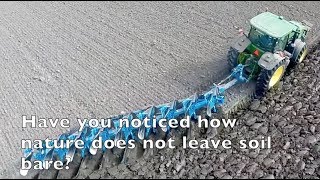
Richard Perkins says most vegetable farms deplete soil through bare ground, plastic mulch, and constant tilling. He argues no-dig methods, heavy organic matter, and mixed farming can rebuild soil and make vegetable production actually regenerative.
Chapters
I don't know about you, but if you look at some of the Facebook groups now in this field, you see like a constant thread of vegetable production, sustainable and good, meat production bad. And to be honest, that might be true of modern industrial ag, but in terms of regenerative agricultural practices, it couldn't be further from the truth. And so in this video I just want to look at annual vegetable production and is it actually part of the regenerative ag toolkit? I guess a lot depends on how we define regenerative agriculture. And for me in the whole sense of that term it includes regenerating ecosystems and soil as default, and regenerating community, local economies and also regenerating the farmer's pocket. It's got to work for the farmer. I think veg production does that on the social interaction level. Everyone eats vegetables. Obviously it can do it on the profitability level for the farmer, but generally most vegetable production on this planet is soil degrading. It loses carbon and that's a big problem. It is true that vegetable production is one of the most profitable per square meter agricultural enterprises you could get into, but it's also super labor and input intensive. For example, here we have very productive no dig market gardens. But I can produce the same profit just with a little bit more land, with one third of the input through for example, my laying hen enterprise. A lot of people don't know that and don't know how to put that into context. And I think one of the reasons we see market gardening has just grown and boomed in recent years is it's quite easy entry for someone without a farming background. And you don't need much land, which is obviously a problem for most young cash strapped people trying to get into farming. What concerns me though is that nearly all vegetable production is soil depleting. It's working on bare soil, working with plastics and just things that aren't good for the land and good for consumers either. But when you expose soil to the atmosphere, the carbon in the soil, and it's the carbon that makes soil function as we know it, it responds to the oxygen in the atmosphere forming CO2 and that flies off out of the ecosystem and that's global warming. And so bare soil agriculture is just not acceptable. It doesn't matter if it's organic, it doesn't matter if it's field grown or done by hand on a very small scale. We can't be doing bare soil agriculture anymore. It's not regenerative, it's degenerative. If we look at history, you see in the last 400 years, every single civilization that damaged its soil is now extinct. And we're doing that faster and faster today. We erode about 10 tons of topsoil per person on the planet each year when we only need 450 odd kilos of food each per year. Something that I got taught when I was learning to farm vegetables back when I was 18. Half my life ago now was the use of plastics as mulches. And I see that's become really popular, particularly in the states where there's been a huge boom of market gardeners as well as the sort of emergence of flame weeders. And these are tools that, yeah, I'm sure they're effective, but I can't imagine they are good for soil health. And ultimately soil is the thing we need to be building if we're feeding soil and growing soil. Crops take care of themselves. And for me, I just feel like those things are, you know, they're not part of the regenerative ag tool kit, they're part of a market gardening toolkit for sure. But I think there's better ways to do vegetables. And that's why I'm such a big proponent of no dig. We've got to find ways of growing our vegetables with, you know, minimizing oil and plastic input. The amount of plastics produced on annual crops is ridiculous. And it's throwaway stuff. It's not good for soil life to heat the soil up in that way. I can't believe that. And there's many other ways to deal with weeds. Like we don't spend hardly any time weeding at our farm here we get some weeds propagating in our no dig beds, certainly any weed seed blowing in. But I bet we spend less time weeding per year than any other vegetable production working on a commercial scale that you've seen. The benefits of no dig are huge. And I think a lot of people missed some of those benefits because of the bastardization of the term. I see people doing bare soil, minimal tillage and calling it no dig. And for me that's not no dig. Now I use a broad fork and I'll draw a line there because I'm not turning the soil over and I'm not disturbing the surface, but any surface tillage is not good. But another thing I'm doing is I'm using that as a short term strategy. I don't think I'll even be using it in a year or two. And just like the video we put out last summer where I showed how we built 25cm of topsoil in our pastures by using the keyline plough as a mechanical kickstart to, you know, getting rid of compaction and then using our animals to graze properly. That's exactly why I'm using a broad fork like this. I don't plan on using it in the future at all. I won't need to, but we started with compacted farmland that was meadow a year ago. These beds here that we farm now for the first year were just grass meadow last year. And we've had very few weed problems just by putting thick layer of organic matter straight down on the surface. And when we build soil from the top like this, we get rid of most of our weed problems. We've got couch grass here, we've got horsetail, all these hardcore perennial weeds that cause people a lot of problems. And the secret is just getting the material down thick enough. I think people fail at no dig because they don't put enough resources into it. With all that organic matter on the ground, we have very little watering to do. And by feeding the soil so much, allowing plants to selectively eat what they want, as it were, we don't really have any pest disease problems. We had a few fungal spots on some beet leaves and we get flea beetle and cabbage caterpillars. And that's our only problems here. I mean, it's just, it's a very different cup of tea when you're really focused on growing soil, not growing the plants. And people often ask me like, yeah, but you know, can this be done on a scale that can feed people? And it's, it's kind of the wrong question in a sense. What we've got to understand is some of the leading field crop growers in Scandinavia, they're taking 40 times more space to produce the same crops as us, mainly because it's plow based agriculture with machines and they're fixed width machines with fixed basings and harvesting tools, etc. It's a crazy amount of land needed to produce the same thing. And also a lot of those operations are relying on people still for weeding, etc. And it's crazy, it's bonkers. Why use 40 hectares of land to do something that you can do on just one hectare? It's that intensification that makes market gardening potentially so profitable and so easily manageable on a small scale. Just 1500 meters here can supply a family's income. And that's in a very short growing season. Up here at 59 degrees north, we've got three months without frost in a six month growing season. A really important element we practice here is leaving the roots of all plants in the ground, save root crops. People think you can't grow root crops in a no dig set up. And of course you can like carrots, pull out without ever digging them out. And obviously we don't leave the roots of any root crops in the ground. But for all other crops, we leave the roots in the ground, feeding the soil food web as they break down over many months. And that's no problem at all because we're transplanting nearly all of our crops to allow us to get more rotations in in our short season. And if we want to direct seed, we just put a thin layer of compost on top. Off we go. One element that I think people fail to recognize with vegetable production is the sheer amount of inputs needed to sustain high intensity productions. You know, all of the carbon material and all of the nitrogen needs need shipping in. And that's one of the benefits of diverse mixed farms. All farms throughout history had animals, perennial crops, annual crops, because you needed the nutrient cycling. And animals always have been the nutrient cyclers in our ecosystems. For example, we're using a lot of compost here. We put down 400 liters per bed in the beginning to form our no dig beds. Our beds are all 10 meters by 75 centimeters, so that works out about 50 something liters per square meter in the beginning. That's to mulch out all of the weeds, etc. We put down cardboard in the pathways between our beds and then put wood chip on top of them and then left them mostly over the winter just to sit down. But that's just to form the beds in the long run, we don't need that much compost. We're putting down 200 liters per year now per bed. So it's about 25, 26 liters per bed each year. Now that's got a lot of carbon, a lot of nitrogen in it. And so when I take, you know, some napkin calculations, I'm putting about 100 kilos of MP and K down each year. And to get that out of my livestock, I would need four or five cows to get that much nitrogen and potassium and phosphorus out of the manure, just the raw manure that's not even thinking about the bedding, but we're using peat moss, so it doesn't really have that much nutrients in it, or you would need about 500 chickens to achieve the same. So then when you break that down a bit, More. Well, to have four or five cows here, you would need five hectares of grassland or so. And to have 500 chickens, they're going to eat about two and a half tons of grain. So you're going to need at least half a hectare of very productive grain production to produce that. Probably more like a hectare in this part. But, you know, it just goes to show there's a lot of land needed to support the inputs to make a market garden thrive. And so unless we're thinking in the context of diverse mixed farms or supporting each other in our farms, in our communities, you know, utilizing each other's waste streams etc as inputs, then I don't think there's much of a case for annual production being soil building or part of the regenerative ag toolkit. Having said that, you know, I think there's lots of ways we can incorporate other elements into production schemes, like using diverse hedgerows, interplanning with trees and berry bushes, agroforestry systems. I'm a big fan of those good crop rotations, but really no dig for me is the answer. I don't think there's a better way to grow vegetables, which is something I've always said, but I've been looking at vegetable production all around the world now for nearly two decades, and I don't see anything that's remotely close to good soil care compared to no dig. Everything else is based on tillage and that's creating so much work. Like, I see people that supposedly practicing no dig talking about all the different weeding tools that save them time. And I just find it funny really, because we don't do hardly any weeding. We have a couple of oscillating hoes and that's all we need. And I think, yeah, you know, there are some weeds that come up, but it's nothing compared to if you till the soil. We say in England, where I come from, one year's digging, seven years weeding, and it's so true. And also waking up so many of the plant pathogens. And it's only when we add chemical nitrates or oxidize the soil by digging it that we wake them up. So it really is farmers making their own problems. And I really hope many more of you will be starting no dig setups. I think as long as you do it properly and put enough material down, then you can't really go wrong. We're building soil in the way nature's always done. It's. And I just feel like you can get rid of so many of the tools. We have a seeder, we have a broad fork which is optional. You don't even need it. But I think it's a nice handy tool if you're starting with degraded, really compacted land. We have one or two hoes, we have a bed roller that's great for direct seeding, but you don't really need it. Other than that, good cell trays for propagating and that's kind of all you need. We have a quick greens harvester for harvesting salad greens and that's an awesome tool, but other than that you don't really need any more. I guess the ultimate answer of does vegetable production fit in the regenerative agricultural space is down to you and down to your context of where you want to be in terms of your soil quality, in terms of your ecosystem processes and quality of life down the line. Like where do you want to get to? That's the important question. And all I know is seeing a couple of my favorite gardens in the world where you could reach your arm down past your elbow without any force at all, had both been built up as no dig Gardens over 3040 years. One was Jean Pan's garden where his nephew Etienne Bonfille lives now, and one was the man on the Isle of Man. I wrote about these in my book because I just feel like they're prime examples and pests and disease problems don't exist in places like that. And I feel like then you're on the right track. You know that nature's found its balance and really pests and diseases are constant litmus paper to tell us we need to improve our care and observation and interaction in our systems. So that's all for today. Thanks for watching our videos. You can find out a lot more in our book Making Small Farms Work. You can find that in the links below. See you next time.
More from Richard


A review of short and intensive season on a mixed farm and restaurant/event space in Sweden






Alskade Kyckling Exploring complexities of poultry production in Sweden and what we stand for


