S5 ● E20 (Building a working farm in 5 months) Starting the 2nd season...
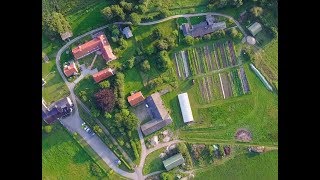
Richard Perkins visits Mikkel's farm in Denmark at the start of Mikkel's second season. They tour propagation spaces (microgreens under red/blue LEDs), heated benches with floor heating keeping trays ~22°C, newly erected caterpillar tunnels used for propagation and later crops, and discuss equipment upgrades (compost spreader, wheel-hoe, battery tilter). Mikkel is doubling vegetable and egg production, shifting to 100% wholesale sales, taking a 10-hectare lease, culling cows to seven kept for calving in May–June, and buying a second automated eggmobile (chicken caravan). Wet autumn/winter conditions have caused drainage and pasture management challenges.
Questions this video answers
April 3, 2018
132,000 Danish kroner
Turning 26
Around 75–80%
Switching from ~50% wholesale/50% market to 100% wholesale
Chapters
So an early start for me, leaving the farm at 4 in the morning and I'm just crossing the bridge to Denmark now. And Nicholas and Carla are looking after the farm. I'm on my way to the uk, but I'm stopping in at Mikael's farm. You might remember from the video last year, starting a farm in five months, linked up here. And it's Mikael's second season, so I thought I'd drop in and just see how it's going. He's got some ridge dalers helping him this year, Albert and Astrid, who's been looking after the farm this year over the winter for us. I'm really excited to see what's gone well for him last year, how he evaluated the season and how it's going this season and what's new for the year. There's the chicken caravan out on pasture and I know he's taking on some of the lands that's been leased out. So we'll hear about what he's planning to do with that. Nice to see the ground here, though. And here we are, Mikkel's place. The caterpillar tunnels are up. So we're back in Denmark at Miko's place. Hey, Miko.
Welcome.
And you might remember from our video last year, it's one of the most popular videos we put up. It's up in the cards here. Mikael just started the farm last year. Five months in, we came and made that video that a lot of you really enjoyed.
Alright, so in here we started doing some microgreens. I thought it would be very nice to have microgreens to bring in the van during the winter when we go and deliver eggs. So we have this room where there's a wood boiler that heats the house. So it keeps it at bug, you know, it keeps it between 18 and 22 degrees during the winter, so it's free heat. And we just have to build these shelves and put in some LED lights and then we're able to grow 30 trays of microgreens.
So you got sunflower, broccoli, peas, radish. Yeah, very nice. How are you finding the LEDs? Do you like them?
I love them. So they're very easy to install. They have here they have a male and a female, so you can just click them together and they connect in a series and you can connect them via wire and then we just have the switch on and off for a whole shelf at a time.
Super nice. So that's a red and blue LED mix.
Yeah, two red to one Blue.
And you've been using that for tomatoes and other vegetables.
We've started tomatoes in here, and I figured that it's about one light per tray. Then they get sufficient light. It's quite cheap. I mean, within a few weeks of microgreen production. It's. You made it.
It's quite wet at this time of year.
No, it's very, very wet. And we've had a very. I think we can get.
We're just coming into the gardens. You see how soggy it is here and it just starting. You've been prepping ground now for just the last week or so.
Yeah.
And you see there's a huge leg.
In front of our greenhouse. We' we had a very, very wet autumn, and all of Denmark is basically flooded. And unfortunately, the only place we could put our greenhouse was just in front of a lake. So it made like a pallet bridge to enter our greenhouse. And some areas inside are very wet.
Have you got some crops in?
We got. Yeah. Salads and spinach, cedars and radish.
And this will all be decked out with tomatoes again this year?
Yeah. I think tomatoes will go in in three weeks or so as small tomato plants. And then we will have. Still have lettuce in here that we'll harvest while the tomatoes grow tall.
These guys have been expanding this year. You can see an area. You'll see it better from the drone, but you're basically doubling production.
It's close.
Yeah. And tell the viewers about. Because you sell to the foundation that your parents set up here.
Yeah. That's just a small. That's just a small bit of the production.
Where does most of the veg go to?
So last year we were selling 50% to restaurants and wholesale and then 50% on the market. But this year we've decided to do 100% wholesale. So we're not doing the market anymore.
Okay. That's a big shift.
It is. The market was a big success, but for us, it's. There are so many restaurants and wholesalers that are interested in what we're doing and want to buy our produce.
So it cuts out a lot of work.
Exactly. It just makes so much better sense for us to just deal with those and have, like, big orders going up instead of spending time standing on the market using our whole Saturday selling vegetables that we're not really sure we will sell anyway. Sell.
Yeah. Yeah.
So it's.
Is that. Would you say, like, we're quite close to Copenhagen, obviously. That's a huge market. Is that a big factor in the ability to be able to sell like that.
I mean, the whole area, the whole island we live on is very populated. So there are big restaurants and estates.
Around us, like on the outskirts of.
Copenhagen that we will work with. And then obviously we have some in Copenhagen we work with too. But it's not that we're selling all of our produce in Copenhagen, but it's a very nice market to be close to because there's a lot of opportunities, but also a lot of people trying to sell in there. So.
Yeah. Yeah. So this is the updated germination space.
Yeah. And the team just spent an afternoon washing all the glass. So now it's really.
It's beautiful.
And you can actually see in there there's a lot of light coming through.
And you made some heated benches now for propagation.
This year we made heated benches and we put in just some concrete slabs to have a nice surface where you can broom and it's not getting super muddy and sucky when you're watering trays. And it turned out to be a very nice space, I think.
Tell us about the heated benches you've got here.
So right next to the glass house in there, there's a house where there's a small wood boiler. And because the house is new and very well built, it doesn't take a lot of energy. So the boiler is actually running on too low capacity in a way for the boiler to work good. And I figured that it wasn't very cheap to run an insulated pipe with hot water from that boiler into the glass house and then have a circulation pump pumping hot water in pipes in the tables. So it's just a simple floor heating setup that I build into these tables and then have 50 milliliters of insulation underneath. And that just keeps. Keeps the trays warm and it doesn't heat the whole room. So it just saves a lot of energy.
It's keeping it. I saw you posting on Instagram saying 22 degrees, something in the soil.
So we can. Here we have a. We have a thermostat where you can turn it up and down and you can regulate it. And you can close off individual tables or you can turn them down so you can keep them at different temperatures. And then in the night and cold days, we're keeping these row covers, double row covers on top. So it can be like 8 degrees in here, but the trays will be like 22 degrees. So it seems very energy efficient.
You had Anders and Katrine last year, who are old Ridgeddale folks, and they've gone off to set their own thing up.
Yeah, they're setting up an amazing operation in south of Fiume and I'm so much looking forward to see what they will be doing.
So they've taken. Anders is working. He was working on the established organic farm. He has now taken over some of their customership and setting up more intensive market gardening like this.
So they're leasing one hectare of that big vegetable production.
How does it feel not to have them on the team this year?
Well, it's sad. We had a very nice year together. But I'm sure that they are doing what's right for them now. And I'm very happy with the team we have this year. So I think it's all good.
So something I'm super excited about is caterpillar tunnels. We'll be putting up some this year as well. We just got to wait till the snow disappears. How's it been setting these up, Miko? You got three now.
Well, I think I've been really, really easy. But the thing is that I'm not really farming anymore because the team is so big. So I just gave them the instruction video from Farmer's Friend and they put it up in two hours.
So you've got the same. He's bought bits from Farmer's Friend too. You got a load of hoops for super cheap?
Yeah, I got them secondhand here in Denmark and I got the plastic quite cheap in Denmark. And then all the other pieces down.
Here, the carabiners and little clips that go on there. So this is very similar to what we're going to have later in the year. So it's nice to see these up here. And you're just using this as extra propagation space for now?
Yes. We're just keeping all the seedlings in here that have germinated. So we're freeing up the space on the heated benches so we can keep. Keep germinating vegetables now when it's a bit cold.
What have you got in here at this time of year?
Just onions, spring onions, chard, lots of brassicas down here. All sorts of different brassicas.
And will this tunnel then go on the beds later?
Say again?
This tunnel will then migrate to the beds once you've got through.
When we're through the. The peak in. In seedling production, this tunnel will go on produce cucumbers or something and be ready for autumn production.
And this model, you've just got the sort of purlin strap on the top and something. We've asked the manufacturers to. We're going to Experiment with is putting ridge poles, solid ridge poles, and testing them in the wind against, you know, testing different versions. So hopefully they can make a kit for people in Europe to have a kit readily available. Any experience with wind so far?
Yeah, for sure. I really like the purline strap, but what is challenging in with very high winds, which we have here sometimes, is the two end bows that they get pushed in, because the purline strap is not. It's sort of sliding.
Let's have a look, because that's at an angle now, the way you've said that.
Yeah. So we've been trying the first tunnel here, we just put it up straight. The next one we put it on an outward angle, which is alright, but it's not solving the problem. And this morning I just put in some ports that will. Like a bracket. Is that what it's called?
Yeah, end support.
And I think that's just the solution and that will keep it very stable against heavy winds.
The thing that we're doing with the manufacturers in the UK is testing both will have an end support across a single length, but also a double length one to see what difference that makes, as well as testing these against a solid metal centre pole. And the idea being that the tests that we do now, and I'll also be talking to Mikkel throughout this season, is to create like a kit with then a basic level and further accessories that you can get depending on your wind and different climatic circumstances. And hopefully that kit will be available in the UK for shipping all over Europe later this summer, which is going to be awesome.
I think a solid ridge pole all the way down the tunnel would be very nice to have, because then you can do successional cucumber plantings in these tunnels and you can have one cucumber succession in this tunnel and then the next tunnel you can have the next succession. So then you're not having any disease spread. And that's typically the challenge with cucumbers, that they are very susceptible to diseases in these protected climates.
And also it means you can have it much longer into the year, like they've been doing in the States, having it year round with the aid of a centerpole. So it's going to be a good one. I think it'll be hard to have it year round where we are, but for you, I think it's an option. Here it is.
We're not getting that much snow.
Garlic's coming up nice.
They're coming up very nice. And it's. It's always incredible to see how how tough garlics are. Yeah, I mean they've been out here all winter and they've been covered in snow and minus 10 degrees, but they're just growing.
It's been an unusually cold winter for you guys here?
Well, lately I've been very cold and winterish, but the rest of the winter have just been a very long autumn. Super wet and shitty.
And what's your. The team is starting to do bed prep. What's your typical bed prep here?
So it will be weeding the bed broad, forking it, depending on weed load. Then maybe we go through with the tilther and then put a lot of compost on. Maybe 700 liters per bed.
You're on 25 meter bed.
25 meters bed. I bought the Terratec wheel hoe which I really like. And then there's the other Swiss company called Glaser. They make these very nice stirrup hoes. And it's 32.5cm wide which is just 2 and a half centimeters wider than the pathways. It would just go slightly into the bed and then you're able to fit it on Teratech's frame.
So that's your path maintenance tool.
Yeah.
And you're liking the little tilter? The battery powered tilter.
I love it.
So you've made a few investments for this season.
Yeah, it was a pretty tough job last year spreading all the compost. I reckon we've been taking out between 80 and 100 cubic. Eighty and hundred thousand cubic meters of.
Compost and 80 to 100 cubic meters.
That's right. And that was a lot of hard work with wheelbarrows.
This is an awesome little machine.
It is. So that's the new compost spreader and just utility farm thing. It's 727 horsepower, four wheel driven and diesel engine. So it's strong as. Very strong.
Is it a little tipper?
It's a little tipper. So I got hydraulic, it can tip. So you load it with compost. And then we've got a blacksmith to make these for us. So you can put these in between the tire and the machine. And that will give us the width of our bed. So it can drive, straddle a bed and drive in the pathway. So we can just tip the compost in the beds.
That's very nice. You'll remember this is the wash station from last year's video where the guys are bringing everything in from the field. Some of the harvest tools up here and the wash station here with the Coolbot chiller over here. Obviously that's not up and running yet with the start of the season.
No.
You actually got rid of some of your cows this year. Yeah. And you. But you're seeding up more land.
Yeah. So we're taking over a lease which is 10 hectares and we'll put in a diverse grass and clover mix with an herbs which will be 18 different varieties and species. But we culled half of our cows just to get through this season and next winter without like super skyrocking expenses on winter feeding. And I made lots of mistakes last year with management of the pastures and I'm really learning from that now.
And can you give us an example? Like what sort of. Yeah, we.
I'm just sure we, we were keeping too many animals and that just ended up. We just had a very short season actually grazing and we didn't make enough winter feeding, winter fodder. So it just ended up being very expensive to keep all these animals.
Yeah. These climates up here, we're feeding for like five, six months of the year now.
Yeah. Traditionally you would be feeding for that long.
So it's quite expensive to miscalculate. Yeah, it's expensive anyway. Even if you don't miscalculate, it is.
But I really like my cows. So I've kept seven cows and they will all give birth in May, June and I'm. I think I'm keeping the right amount now so we can, we can have a nice, nice grazing season with this.
Extra land coming in the following season.
That's the following season. So one of the other mistakes in the management was that the grass was just taking too far down. I wasn't leaving enough. So the regrowth, it was too slow and the land was just not. It was just not improving enough at all. So that was a good learning and I hopefully will do it much better this year.
How is it farming like you're not in such a cold climate, but you're in a very wet, gray kind of climate.
Last fall was like the wettest fall on record for 15 years or so and that have been a major challenge for all farmers in all of them.
There's been a major crisis of winter feed and we've had people coming from Norway to pick up silage and hay and there's no straw for bedding.
Yeah, it has been challenging and it has been really challenging for the big farms to get there, like crops in like, like root crops that they typically would harvest in October, November.
Yeah.
And I reckon many have. Have made some huge damages to their fields.
Right.
From driving with huge Machinery and. Yeah, yeah, and stuff. And luckily we don't have that.
But.
But even though we're not, you know, having troubles with big machinery and wet ground, then it's still a nightmare getting around with your boots.
Yeah.
And your wheelbarrow and it's quite demotivating.
It's working in soggy conditions, isn't it?
Yeah. And you're not really. You're not really able to just, you know, get the season packed away nicely and just like get it all prepped for winter.
Yeah. So you laid tarps only went on this spring. Right.
So they've not a month and a half go.
Yeah.
So they haven't done much yet.
Right.
And because ideally you would have got.
The tarps on in the fall and.
Yeah, we would have been putting out compost in the fall and then put the tarps on.
Yeah.
And so we have a lot of work to do now in the spring because we couldn't do it in the autumn.
Yeah.
And.
Yeah, I can't wait to uncover my beds. I'm really curious what they look like.
They might just be totally wheat free.
They might be okay. Chicken caravan. And your birds have been laying well over the winter? No.
Yeah, they have been keeping pretty stable on around 20, 75 to 80%.
And what's your cycle look like? When will you replace your hens?
These will hopefully last until the middle of the summer and then we're getting the new eggmobile in May. So I want to have the two eggmobiles going unparalleled, so we are always covered. So that's why I'm hoping that these will last a bit longer, that you might ideally want to keep them.
How do you mean? You'll only have one populated at a time for now.
No, I will have them. I will not change the birds, all of the birds at the same time. So I'll have one in production while I'm changing the other one and then change the other one as the other one comes out.
Because you have that sort of month.
Period where they're not laying. A month to a month and a half.
Yeah. And what's your thoughts on keeping the white hens? Are you going to keep white hens as well?
No, I will never get white hens again.
Why do you want to say something about that for the viewers?
It's just my experience is just that they are not as robust and tough as the brown ones. The brown hen is a bigger hen. So for industrial producers who keeps them in a protected environment, then the white ones are maybe better because they use a little less feet. But out here, when the hens are living a natural life and they're exposed to the weather and elements and seasons, it just seems like the brown one are doing much, much better.
Foragers, I think.
Yeah. And I also just like the breed better. The white ones are very wild, you can't really get close to them, whereas the brown ones, they're quite social and you can be around them. So it just makes it a bit more enjoyable, I think, to be around them.
And you've had no predator issues?
Not really. I've had a few birds that have been taken by aerial predators, but it's only when there's a hole in the fence and there's a bird getting out and it gets stuck in the fence when it tries to get in again.
That's what we've heard when the birds get outside and they're easy targets.
They've been unpassured all winter and there have been some challenges with that too this year. That, again, compared to the weather. So if you turn around a bit.
You will see major super windy sound.
Might be really bad. But you see here the big tracks in the field that have been made by our tractor when we have been stuck with the Eggmobile. So a few times we. There is a. There's like a water course coming down the field here underground that you don't really see, but when it's really, really wet, you feel it when you're walking. And I wasn't aware of it in the beginning, so suddenly one morning when I was moving the Eggmobile in the dark with my head torch, I just sank in and it was just like quicksand and I got really stuck. So that has been really challenging with the hens outside.
So you're obviously happy with you're buying another one. So you're obviously happy with the design?
Very happy.
It seems like they should put double wheels on it. That would be a good design for.
Other environments than Australia. I think it would be useful to have either a European edition. A European edition, but having like balloon tires or double tires. So I'm thinking to when I'm changing out the flock, then see if I can change the chassis and put on, like, balloon tires.
Yeah, I think that would be so much better. I noticed you've obviously put the energizer now, something I've noticed this winter is the sort of portable solar energizers we use. They've stopped making them all over Europe now and the only portable mobile versions that you can buy now I believe you need a full size car battery, so they're really heavy. We had these beautiful units and they've just stopped selling them. They were very convenient to move, but I think, Miko, you got a larger unit that's not fun to move, obviously.
No, that's a huge car battery and a little energizer. So I'm just keeping it in the eggmobile and I'm running the cable out the side of it so I can just hook it on here. Yeah, it's on there.
If anyone is involved in electric fencing manufacturing, we need another solar powered mobile pasture setup that's powerful enough to run two or three chicken nets, which only one or two on the market have ever been able to do. And we're lucky that we have six of them. But when they break, there's not really any replacement in Europe now.
So my favorite engineers down in Australia, who produced this chicken caravan, they've been working all winter to make a fully automated design. So not only the egg boxes will be automated now, but also the big bird doors and there will be a small wind sensor on the top, so when the wind picks up, the caravan will close in a. So it'll give protection for the birds. And then I'll get a light kit installed. So it's not really to boost production that might be a consequence of it, but it's more for the birds to be able to find the nesters in nest boxes in the morning because I've had problems with them laying the eggs too early and they can't find the nest in the dark because it's so dark.
Yeah, so that's also. I mean, with the doors opening and closing, that's also going to protect the structure as well from high winds. No. Yeah.
And it will make it much, much easier to have double as many hens because you won't have to be out here early in the morning to open them and you don't have to go out here in the evening and close them in. And I've never had problems with the hens staying underneath the caravan, so I'm not really worried that they won't get in in time.
And that's just to remind our viewers, if you haven't seen the chicken caravan before, you can look at the video from last year and you see inside with the automatic, etc. But what sort of investment is one of these new to get it shipped to Europe as well?
It's in total, with shipping and custom and all that. It's 132,000 Danish kroners.
About €15,000, something like that. Maybe a bit more.
17 and a half thousand? Yeah. It's one and a half years and it's paid off and it will last at least 10 years. Yeah, 15, 20 years. So during the winter I've been moving every three days. But lately, the last four weeks or so, I've been staying for a bit longer just to. Because I've been so wet, I haven't been really able to move a lot around and I've just chosen to sacrifice a small area and not trash like the whole pasture. So I think if you see back there, then I think they stayed there for eight days maybe. And sometimes I've been putting out a bit of straw just to keep the ground covered a bit.
But it's going well. You're selling all the eggs?
Selling all the eggs.
And you've got some new buyers. So you can double production this year.
Exactly.
So you're kind of doubling vegetables and egg production. Yeah.
It's crazy.
Something that's amazing that our viewers won't know. Miko is a very young man. How old are you, Miko?
Turning 26 in the month.
Turning 26. So he's got a lot going for him. I'm very proud of you.
Thanks.
So you can just see how wet it is here and it's a big trouble at this time of year. But you're going to put drainage in this year?
Yeah, it's. This bit here is quite low and it's taking all the water from a huge area behind. So we'll put drainage in as soon as it dries out, maybe in May or so. And it's all made ready to connect to a manhole that goes into the lake. So it will hopefully be pretty easy, but it will just save a lot of.
It'll make a big difference.
Huge difference.
So a lot more vegetables, doubling production.
Yeah.
Super. Nice. You're going to be a busy man.
Very busy.
And is your role changing? You're sort of managing a team. You've got two workers from agricultural college who are on internships and then Albert and Astrid.
We're five people in total. So it's quite a big team. Well, for me it's quite a big team to manage and there's all the administration and all the sales I'm taking on. But I feel super happy about the season. I know Astrid and Albert, they are very, very good and we'll together be able to do quite amazing things.
Okay, that's it for today, folks. Someone back on the road again to get to the uk. Thanks so much for showing us around. Mikko.
Thank you so much for dropping by.
Yeah, it's always a pleasure. And for folks interested, you can see the video from last year, but also you can follow the Farm on Instagram and on Facebook and I'll put links to that below. See you in the next video. Don't.
More from Richard


A review of short and intensive season on a mixed farm and restaurant/event space in Sweden






Alskade Kyckling Exploring complexities of poultry production in Sweden and what we stand for


