S5 ● E27 An early spring update from a busy farmyard
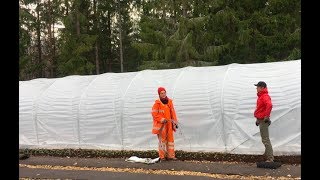
Richard Perkins walks through spring farm work: moving poultry to pasture, planting 60 more apple trees, starting microgreens in shallow trays, and preparing infrastructure. His region's last frost averages May 25-26 but can stretch into June, so timing everything is tight.
Questions this video answers
April 27, 2018.
About 60 apples being planted (a row between existing rows).
About 120 apple trees.
About 25 Katy apples.
About 1.5–2 cm deep (compared to 5 cm for the larger trays).
Chapters
So super busy days on the farm for me. Right now I'm getting up five, six o' clock and stop working about 10 o' clock at night when I put the hens to bed and come back down to the farmyard. And that's the way it goes in the spring. Lots to do, new animals arriving, new people arriving who don't know the way around the farm and don't know how our farm works. And so there's a lot of observational work to do and that's how it is at this time of year. I'll show you a few things that are going on at the farm right now. Sam. So the birds have had their first day on pasture and surprisingly, so many of them came out. They're mostly underneath the eggmobile. But last year, when we first brought the birds out, not a single bird really came out, just one crept down the steps and had a peek around and went back in. So one thing we do is have the feed and water just in the temporary thing right outside the door to encourage them to come out. Fixing up silos, there's been some water collecting. These are indoor silos and we just never got around to covering the little tops that stop water getting in. So just fixing up them today. We have an inspection right now for the slottery and also for the kitchen. So that's an annual thing. They come and check. And it's a lot about protocols, not so much looking at how the slaughtery is, it's more how we record data, how we manage workflows, etc. And we're tree planting, putting in another 60 apples in the orchard. So this is where we've been soaking the trees before we plant them out. Just got a few oaks to put up on the road. There's red oak and English oak and hazel whips there. And the last apples going in, these are actually Katy apples, the last ones going in, about 25 of them. And then the orchard's complete and the planting is done for the year. So we're busy in the orchard planting another 60 apples, so we're putting a row in between the rows. And this is also our camping ground, so it's going to take up some space over time. But we had a bunch of spare apple, so we thought, why not put it here where all the apple is? And we can't really graze chickens in here, it's too small. And it's been a pain in the past to keep animals out of the tree lanes. The turkeys have devastated some of the previous planting. It's becoming a more intensive orchard. Three meter spacings, all different apples. Some old Swedish varieties and some parent varieties of some of the Swedish varieties. Bees are all happy and flying around. And We've got about 120 apple trees now in the orchard. Just got the last couple to plant up tomorrow and they're just about to leaf out. They're opening up here. We bought these as young maidens that we can train in the way we wish. I think we haven't decided exactly how we want to manage this. As I said before, it's the camping ground as well, but it's not used for anything else. So we're thinking to really develop this as an intensified orchard a bit. It. Little twister. And then it was gone. Lucky that wasn't over the earth. See a plastic bag flying right over there. That was super cool. Haven't experienced anything like that before on this little micro level. And it's really nice to experience that. So we started using these boot trays for micros because we like how shallow they are. They're only about a centimeter and a half, 2cm deep compared to 5, which the big trays that we use are, you see here. But they've been working well so we're going to keep using them. They don't tessellate on our rack system but that shouldn't be a problem because in the winter we're not growing any other starts. And in the summer we just make space for them in the tunnels or wherever we need to. We're going to be out transplanting a lot of onions today. Lots growing nicely in here. Microgreens going on. Tomatoes have been developing nicely still a while till they go out, but they're doing fine under here. And we've got some peas we're transplanting today. It was too cold to plant them out. There's still snow on the ground when we got to that. Loads more spinach going out today. Lots of herbs and flowers ready for the gardens. So we'll have a look outside, see what's being planted in the beds. What are you guys transplanting? More spinach. What else has been going in today? Pak choy, peas, kohlrabi, cabbage, onions. Spring onions, Lots of onions. Are they around here? Around the back? Yeah. Still really wet on the ground here. Not too much, but lots of spring onions and onions going in. Still most of the beds well and truly covered. It'll be a few weeks yet till the gardens look full. Things doing well in the tunnel. All the garlic is coming up really nice and We've been doing onions over here today and here's a rainbow over the top of our newly planted onions. Some really nice packed choy going in and it's kind of winding down for the day. We're up to date with the garden calendar. We're up to date with tree planting. Really loving these caterpillar tunnels and had no trouble with wind or anything like that. They seem really solid and I sent the pieces off today to first tunnels. They seem to have no problem sourcing the bits I need. So hopefully I'll have some news to update you folks in Europe that are after tunnels like this soon. Pretty much the whole farm will be under row cover or insect net pretty soon. I mean, the weeks go by now and we're just planting out, planting out, direct seeding, transplanting all the time. And it's that time of year where we're considering whether to change the original planning plan and bring some things forward. But it's always a risk doing that because you just don't know around here. The weather is so unpredictable and it's, you know, it's unpredictable anywhere. But when you're up at such high latitudes, it really swings. And it could be snowing in a few weeks time. Typically last frost here on average would be 25th, 26th of May, but it can be into June, so you never know. And we had some beautiful, glorious 20 degree days. Today was quite a nice day. It's been raining a bit, but sun in between, but temperatures going back down to freezing at nighttime. So you got to be really careful with trying to push things forward too much. So we're sticking to our plan. We've moved a few things forward. We're doing the beans and peas all earlier and we're trying planting all the squash earlier too. And if it fails for any reason, then we can just seed them again. We have enough to not be risking it. And other than that, we're staying on our plan just to make sure we have a planned regular supply throughout the year. You can see a lot of birds have come out today, most of them, and they're just sitting underneath. They're a little bit nervous, they're very flighty. I mean, as soon as one freaks out, they all freak out. But it's very encouraging to see they're all out. Something I'm going to do now. It's coming up to dinner time. I'm going to put out some lights, just some LED working lights, and hang them up inside the coop to see if that encourages them to come in. Something I've done all day is leave the doors open just to expose them to light and, you know, get them used to realizing that there's a world outside of their shelter and that seems to have helped. Right now we don't have the fences electric because we know the birds are not going far, but that's something that we'll be putting on in the next couple of days along with the field lines, the water lines. I've just been giving them temporary water just to make sure they get used to it. But I've been setting up the field water lines and I just want to get them installed tomorrow and check they're not leaking, etc. So I've just got a lamp on here and I'm hoping as it starts to get dark, the birds will come up and come into the. You see a bunch of them are roosting already, but often in the past they'd like to gather underneath the eggmobiles and that's not ideal. We trained them in the past by putting them away at nighttime. It's much better if we can get them to come in on their own, so hopefully a light will encourage them and we'll see later on if that's working. So it's now 9:30 at night and we have lights inside there. These are the lights of the rhino shining off the outside. And there's few chickens outside, but really hardly any. So the lights, I see a couple on the one at the back there. Very impressed, very few to put away tonight. And the egg mobile we drove past seemed quite empty underneath too, so super nice. Bears have gone to bed. We'll have a look inside. So this is the lamp inside. They're mostly not on the roosts, but they are mostly inside. How many are outside, Nicholas? One or two? Two. There were just now, I think we jumped in. We like it. Birds are going to beds. In previous years we've spent a week pulling them out from underneath and putting them back in. There's one here. Good night, chicken. Wow. Amazing. So half past nine and it's. It's a lot lighter than it looks on the film, but it's, you know, it's turning into night and there's literally two or three beds under each one. Amazing. So I think a few days of having the light on, then they'll be trained up to going into the eggmobiles on their own, which saves us a huge amount of work in the evening putting the birds away. So day two on pasture and the birds have got the hang of it. So Fast. Last night we came up and as you see, it was really great. All the birds were in pretty much and we didn't have to really put any away. A couple here and there, but that's fantastic. And they're eager to come out this morning and they're already extending their range away from the coop. It's nothing yet, but it's a great start for these birds. I've got the automatic water on now and, yeah, increasing their feed daily. I think they're going to be running around all over their paddocks within a week. So it's now the evening, day two, about dinner time. And you can see the birds are a lot comfier. They've been out and about and I've been away in town, but I've come back now and I think I'll come back at about 9 and put lights in. Maybe 8:30, I'll put the lights on to get them going back in. But it's been quite wet today. I'm thinking I'll move the eggmobiles, keep the fence up, but just move the eggmobile along because they do impact the ground underneath it where they're all running around. But I'll probably leave the fence there for a few more days just to maximize the amount of time we can stay in this field. So you might be able to make out the stormy sort of clouds we've got today. Big thunder showers. We've been having a lot of hail as well, actually, and then relatively calm sunshine. But yeah, very impressed with the way the hens have settled in. Very different to the last couple of years flocks. So the buds are just coming on the black currents and trees are just coming into bud and the grass has actually started growing early this year and we're planning now to have the cows pasture for about three, maybe four more weeks and we'll be feeding hay. We might take them from the riparian into the forest paddocks and feed them up there. Someone was talking about cutting the trees where the pigs have been through. If they damage the root systems, you get rot. And that's correct. That can happen for sure. So putting pigs through forest paddocks is all about timing. But we're planning to cut all this forest this winter. We were considering doing it this winter. That's just been. But they need to change the road. So we're actually sacrificing a little bit of our cut forest up here. And the neighbour is also to make a big turning circle here, which the road Society will pay for. But it'll take a little piece of our land, but that's totally fine. But you need somewhere for the lorries to come in and you've got to have somewhere to put the timber when it's being cut. So that's all good. That's happening sometime in the coming weeks. We got a lot of work in the next few weeks. We'll be getting a mini digger. We're borrowing off a neighbor to do a bunch of jobs, putting in frost free water to places that we think will be convenient around the farm, sorting out a few of the access ways around the farm. And then next plan is going to be setting up the boilers, setting up the brooder. I'll do some videos of that as the first birds come and we'll see when turkeys come. It might be turkeys come earlier than we were planned due to the supply of the breeder, but really excited to see everything come into bloom. The hazel here, it's just budding now and everything's just about to pump into life. We've been having nice warm sunny days and a bit of rain and the ground really kicks off. You might be able to just see up at the neighbours. There's quite a big contrast between our paddocks and the neighbouring land that hasn't had the animal impact and nutrition. Obviously the fertilizer from animal manure. That will become clearer on aerial photo, especially as the grass really ramps up. You'll see quite a difference there. That's it for today folks. Little random update of different things going on at the farm. You might even be able to see there's actually pike in the shallows. Some of the mother pikes are coming to lay the eggs right up here in the shallows. And fishing season is about to begin. I love coming away and taking the boat down here and fishing for supper. Thanks as always for watching our videos and don't forget to share or like them. Subscribe to our channel if you enjoy that and it brings benefit to you. And thanks for all the encouraging comments from around the world. I really appreciate that. I don't have time to answer most of them, but I appreciate and read most of them. So thanks for that. You can find out a lot more in our book, Making Small Farms Work. It's available only through our farm store, which you can see in the links below. And check out the trainings we're offering this year. We've got a couple of spots left on our farm scale permaculture design course and we got spaces left for the one day event with Curtis Stone, the urban farmer in Stockholm. And a few spaces left on our two day pasture, poultry and market gardening training at the end of the year. So looking forward to meeting some of you there. Thanks as always and we'll see you in the next video.
More from Richard


A review of short and intensive season on a mixed farm and restaurant/event space in Sweden






Alskade Kyckling Exploring complexities of poultry production in Sweden and what we stand for


