S5 ● E4 Preparing to build a new Egg Mobile build & 1000 eggs a day
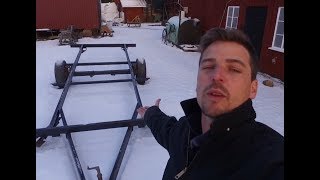
Richard Perkins walks through building a third eggmobile for his farm. He tours two existing ones to show construction details, ventilation, roosts, and nest boxes, then covers materials, costs, and how to negotiate with local regulators before building. Next season he expects to hit 1,000 eggs a day.
Questions this video answers
About 3.2 by 5 meters.
~400 birds; about 700 kilos total (lightweight layers plus structure).
4 by 4 centimetre gaps with 4 millimetre wire.
About 14 degrees.
Winter paddock: typically 10 m by 40 m (~400 m²). Tunnel used: 27 by 9 meters.
Chapters
It's a beautiful sunny morning, really cold again, and we're expecting January, February to be colder like normal here. But this time of year, as the daylight length slowly comes back, it's time to start building on projects. And we're going to be building our third eggmobile at the farm. Today's video, I just want to tell you about the pattern language of constructing your own egg moving. Now, I'm not going to tell you exactly how to build the eggmobile with all the dimensions, because you've got to look it up to your local regulations. They're going to be different in different places. It's easy to find online, but I'll tell you the pattern language so you can get started in making your own laying mobile, which is such a good, fun project to do and beautiful to have out on pasture, having done the work for yourself. So at the end of the season, we ripped apart this old caravan and it's going to be perfect. We might put double wheels on here just so it doesn't sink with the weight of it. You have got to bear in mind it's going to have 400 birds in here, so it's going to weigh 700 kilos or so, lightweight birds, these laying hens, but it's going to have a bunch of wood and metal floor on here. The overall structure is going to be about 3.2 by 5 meters, so it's going to have some significant weight that it's worth building your own double wheels. And we'll typically just build that on by putting an additional wheel strapped onto the hub here just because of the way the axles are built, and we'll modify the front end just to make this functional again. But caravan trailers are excellent because of their size and because they've got these feet stands already purposely built in there. So here's our two eggmobiles, and they're both a very similar design. One faces with the slant the opposite way. We build it with those slants for wind. It gets very windy here, particularly wind from the south. We're in a valley, we have ridges each side of us, so when the wind does come up here strongly, it's very destructive. It's blown the yurt roofs off before. It's quite intense. That design's worked really well for us. So is the black tin sheeting. I remember when we first built these egmobiles and put it out online, a lot of people were concerned about the black tin sheeting, saying it would be hot. But the way the roof is built, it's not sealed at the top, so all the hot air vents out. And to be honest, it's no hotter than any other metal sheeting. All metal sheeting gets hot and it's no concern at all. And you've got to remember the birds are never indoors during the day. They're only indoors to lay eggs. As soon as you open the door in the morning, out come the birds in full force. And then they only go back in at night when it's dark, which is one of the problems of laying hens. Up here at 59 degrees north, it doesn't really get dark in the summer. So we actually trained Miso, a sheepdog, to become a chicken dog to help put them away at night. So this is the original Eggmobile. I'm going to show you around both of them just so you can see some slight differences between them. They're very similar. We'll look on the outside first. This one's got the door with a little roof lap and some venting above it. And we leave this out in the field over the winter. And you can see we leave the door down just because the snow load will break the little rubber hatch here. So this is how we close it up at the night time. You can see the wooden structure inside. So this one's built of all free timber as well. And at the front is where we attach it to our atv. So we pull this with the rhino. We might be selling our rhino this year. This is a Yamaha Rhino, but we might be buying a little compact tractor with a loader just so we can take better care of our winter bedding. What's important here is you have a handbrake and some kind of connection to whatever is pulling it. But then also that you have a heavy duty winding mechanism. Whilst you can balance the trailer so the weight is equal, you can't predict where the birds are going to be sitting. So that's, you know, it can be very heavy tongue pressure to get it off whatever you're pulling it with. So that's quite important. You can see we've got double wheels on here and we just built these hubs ourselves. This is actually built on a car trailer, so it's very heavy. And our second Eggmobile is built on a caravan chassis which is a much better design. This is just our home built hubs on here and it works fine. Let's have a look inside. So this is the third season that we've been using this and we've never cleaned it out. And you see it's got a 4 by 4 centimeter gap in the mesh and it's 4 millimeter wire that's perfectly strong enough to walk upon, but lets all the manure out. And we've got some rock here just to balance the weight of the trailer. And then the roosts are up here. So this is going to be one of the most important considerations for designing the size of your egg mobile is how much roost length that you have. So there's regulations for the amount of horizontal roost space for each bird. There's also regulations about the height from the roost to the ceiling and from the roosts horizontally from each other. And there's also regulations around the amount of nest box space per hens in there. So look that up. That's going to be really important. Now you can see how we just built this frame. This is all free wood. And then we've just built a parallel set of stays that the roofs are on, and then just put tin sheet on the whole thing. Very simple to construct. Anyone that's got some basic carpentry, it's going to be fine with that. Same with the nest boxes. It's very simple to build and we use these sheets above it just to stop manure landing in the nest boxes. A bit overkill on this eggmobile. We went a bit lighter duty on the other eggmobile. We'll have a look in there. This eggmobile is slightly different in that the entrance comes from below, and we've done that just because of the way that the caravan chassis was constructed underneath. So it might be the third eggmobile. Similar in this way. Doesn't really make any difference as long as the birds can get in and out adequately. And there might be regulation around the amount of size needed for getting in and out compared to the amount of birds inside. So look that up. This works well for us. You've just got to remember to keep a bit wide on turning in and out of the gates to the field so you don't hit this construction on the gate posts. So that's also going to be a big consideration in the design is the actual overall dimension. So you can get between gate posts if you're moving between different paddocks, etcetera, or traveling on roads, etcetera. This works really well for us in this wedge shape, not just for wind, but because all of the roosts are up inside the roof. You know, if you put that onto a flat horizontal plane, obviously the eggmobile would be much wider. So it works really well for us like this in some of the automated model jewels. You see, like you remember, I went to Denmark where my friend Mika has the chicken caravan. It actually has the roosts on the floor and the nest boxes above. Some would argue that it's not so ideal because chickens are hierarchical and it's good to have higher and lower roosts. Some would argue the opposite. It's good to have them all on the same plane. I don't think it really matters so much. I think that would get in the way a bit in our circumstance where we're collecting eggs from inside. You could have your nest boxes with the rollaways coming to the outside of the eggmobile. I chose not to because it would just mean more additional panels and potential leak spaces for water to get in, but also because we're working with different people here with different levels of experience. I wanted something where you have to get in and observe things because as soon as you have a system where you don't need to look at it, people don't look at it and inevitably someone won't notice there's a dead bird inside or there's a problem with the wheel, flap over the wheel or whatever it is. I like people to observe what they're working with all the time, as it were. This egg mobile is a lot lighter build, probably two thirds of the weight of the other one. So let's have a look inside. So you can see this eggmobile is very much the same. It's got lighter duty timber to build the frame and less of it. There's less bars within the structure, so it's a lot lighter overall. It's got a chain to hold the door because that can start blowing in the wind. When you're coming to collect eggs, it's important to have some simple way to close the door when you are inside. Also to stop the hens coming in. If you leave the door open and start collecting eggs, they might all come in. They are very inquisitive birds. Same sort of nest box and that's chained against the side of the eggmobile. And it has a chain to stop it falling forward, but then it has some screws that we can lean it forwards or backwards to get the right angle of the roll away. The roll away is about 14 degrees to make sure the eggs travel away from the birds to keep them clean. Same mesh floor. Everything's the same except for the side entrance door that comes out from underneath and the lighter weight build and lighter weight chassis. And I much prefer this model. It never gets stuck, whereas the other egmobile if it's really wet on the ground, it can get stuck sometimes, which is a little bit of a trouble. But it's been great to build these. I think this next Egmobile we're going to build will be less than a thousand euros. Essentially, we're just paying for this tin sheet and the special screws that you use to screw this on, as well as this metal mesh that we put on the floor. We've already built the nest boxes and we have all the timber we need, so it's a good idea to use. We use bitumen to coat the wood on the very ground floor, as it were, below the mesh, just to protect it from the corrosive chicken manure. And we do that on the trailer as well. That works really well and it's pretty cheap stuff. And then we just take any old trailer wheels or car wheels to build the additional double wheels on there. An important element with the regulations is going to be the size area that the birds have. Now, obviously, summer and winter are very different and we use two electric nets for each eggmobile. So obviously the area inside those nets depends on the dimensions of the fence you put up. We're working in our silver pasture lanes, so typically 10 metres wide by 40 meters long, so about 400 square meters in the winter. Now the birds are grouped together and we have this tunnel is 27 by 9 meters, and so there's plenty of space for this many birds. I think next year, as we scale up again with the next eggmobile, we'll have to use our other tunnel as well. But check your regulations and bear in mind that regulations are written for conventional industry and they're not usually taken into consideration. Enterprises such as our own, where we're moving the birds every day in the summer. And so you need to bear that in mind and be able to talk to your regulators about that, because they probably haven't considered those kind of factors. Obviously that's different in country to country, but you need to build up relationships with regulators because they're just people like you or me, and they're usually interested in why people are doing things differently and they want to know that you understand the welfare issues, etc. And we found them to be really accommodating. I think basically you've got two strategies with regulators and it's either to try and find ways around them, like reading Joel Salatin's books. In the beginning, for me, I remember feeling like everything was about trying to evade regulations or work your way around them, and something we've done here is build up relationships with the regulators, like the people that inspect us, slaughtery, etc. And really treat them with dignity and respect and inform them why we're doing and show them that we know what we're talking about and what why. And that's been a much better strategy for us and I think it's a much better long term strategy in general. So do check your regulations. You can find that out easily enough in whatever country you're in and make sure that you know why those regulations are there and how you're meeting them. In here. You see all this free timber that we've collected from our local timber yard and this is what we largely build projects out of. We're super lucky to have this resource. It's what we've constructed most of the infrastructure at the farm with, from boiler pens to refitting barns and making accommodations. This is the sort of timber I'm going to use to make the egg mobile. I'm going to use what I've got. But you see, this would be perfect for the dimensional timbers. This kind of material is great for making roofs, etc. So working with what we got, we've got a free trailer from the caravan, we've got a free load of wood. All we're going to have to buy, we've got the nest box in the hens already. So all we need to buy is the tin sheet and roofing screws to put the skin on this eggmobile as well as the mesh floor. Whilst there's, you know, fancy eggmobiles on the market, you've really got to question if it's worth the investment. You know, these simple pieces of infrastructure, as long as you've got some basic handy skills, you can build them up for yourself in your spare time, certainly in the downtime in winter, and you can pay them off immediately. You know, you're selling eggs, so essentially you don't want to be investing huge infrastructure in relation to the product you're selling. I think it's a great project. I'm looking forward to it. I'll document the build of this one as well as the remodeling of our egg packery. You need an egg packery in Sweden if you want to sell to restaurants or shops, not to private customers, but we sell a lot of eggs. We'll have a thousand eggs a day this next season, so we need to be able to sell to shops and restaurants too. So we'll be knocking the wall down and putting up more perfectly built shelving for tessellating the week's supply of eggs within the egg packery. I'll document that too. Thanks as always for watching our videos. I hope you got something out of that. If you're planning to start your own layer enterprise, one of the most ecologically regenerative enterprises in terms of rebuilding pasture and putting back the nutrients and mineral cycles into degraded pasture. I really love it as an enterprise. Thanks as always for watching. You can find out a lot more in our book Making Small Farms Work. See you in the next video.
More from Richard


A review of short and intensive season on a mixed farm and restaurant/event space in Sweden






Alskade Kyckling Exploring complexities of poultry production in Sweden and what we stand for


