S5 ● E49 No Dig Market Garden update and other things
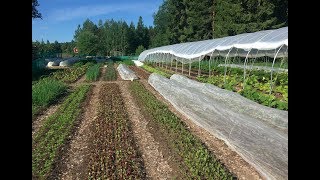
Richard Perkins provides a market-garden update describing a very challenging season caused by prolonged drought and heavy flea-beetle damage, which led to multiple crop failures and reduced veg-box orders. He tours the farm discussing microgreen production, trials with a cheap wood-based compost, pasture and poultry moves (cows, turkeys), irrigation and weed-pressure problems, cucumbers/tunnels, and a subtropical trial growing Chinese water spinach in paddy beds; closes with logistics (packing, deliveries), book/trainings and family notes.
Questions this video answers
June 27, 2018.
26 degrees ("26 degrees today").
Chinese water Spinach (transcript: "Ipamea aquatica").
59 degrees north ("we did get rice to set seed, which we're at 59 degrees north").
Chapters
Today's video. I want to give a market garden update. It's been a super tough year for us and we're below target with the gardens. It's been really hard because of the prolonged drought and a lot of crops fail through bolting and through an abundance of flea beetles. So I'll just give you a quick update from the farm today. Ham. So, 26 degrees today. The birds in the Southton pen are a bit older, but they are hot and panting. These birds are fresh. It's a lot more breeze obviously in a pen like this, but it shows. The birds are much comfier in this hot weather and likewise equally opposite. They're a lot more vulnerable when it's wet and windy. Quite interesting to see. I mean, they're very comfortable despite the heat. I mean, it's even a bit uncomfortable for us working today. Just checking the waterers because the other birds in the salad and pants are sitting underneath the water as there's extra shade and tipping the water out. Water, that's fine. Here's a good illustration of why trees were put up on some of these hill lands. You see they're growing on pretty much 15cm of soil. It's just a lens on top of rock and sand. This is just pure sand and that's what's left after a tree's blown down. This one's been trying to fall down for a while actually, but it's been caught in the other trees. We didn't want to cut it because it's under weird tension. But yeah, just illustrating how thin the soil is up here and how dramatic the change in our pastures where we've been bringing in animals and tickling the subsoil with a key lime plant. So bringing the shapemobile up to our neighbour's land. And we're going to be moving turkeys into here just as soon as we've got the cows through up here. We're thinking we're going to cut the land just to get it growing vegetatively again. It's not good enough for making hay. It's super sparse in here and by the time it's dried it'll turn into nothing, it'll just be stems. But we're going to graze through the first of the neighbours lands, then bring the turkeys into here, cut the other two, which is seven hectares in total, and let that just start growing again. So cows are on the move. Come, come, come, come, come, come. Yes. So all good in this evening room. It's pretty hot in here come mid summer. So we keep both doors open the whole time. Doing a lot of microgreens. We've experimented with wood based compost that we're seeing how we like that in the gardens and we've been growing microbes in that and they seem to germinate just as fine. It's very cheap compared to other compost. But everything going good in here. Been growing on some things larger, just some of the Brassicas to make sure we don't get so much flea beetle damage. That's been one of the problems this year is flea beetles just taking out all the Asian greens at the start of the year. What's in the week's vegetables, Callum? Peas.
We have so many peas so we can give like 300 grams. We have two Kohlrabis purple spring onion this week, the Daviol. These ones grow quite huge. We have big bunches of turnips, white turnips and red turnips. And we have these patty pans. So we're gonna give like three of the small ones and one big or like both colors. Garlic is getting big. A bunch of mixed kale and a butter crunch lettuce.
Beautiful sprig of herbs and microgreens and mescaline too.
Yeah, that's for the loose veg orders.
Looks really nice. So Hannah coordinates the sales with who's taking veg boxes and Florica orders. And that goes out to the packing station where they pack accordingly. So it needs to be put in the way. Strong, nice, beautiful boxes. So that's how the packing station works, having all the veg up here to be able to pack boxes. Beautiful boxes today, bags. But they go into the kanga boxes and get closed down so they stay chilled all the way. They've got ice packs underneath them and that allows us to get them to the market. Super nice and chilled without any refrigeration in the van. So we have loose sales at Rica and Toby's just compiling individual boxes where customers have a choice and they can select everything from microgreens. 220 of the veg that we're growing that week. Yeah, that's microgreens in peace to mesmerize. And one garlic. And then Olivia has romaine lettuce and microgreens. Chocolate fan is loaded. It's hot day, but the boxes work super nice. This is this eco wood based compost that we purchased because it's so cheap compared to what we normally have. But once we got it delivered, my first reaction was like I really didn't want them to put this on the gardens it looks like. It looks like a big part of it is decomposed toilet rolls or something. It's byproduct of the timber industry and probably paper making industry by looks of it. It's not entirely clear to me what it actually is. But it is sold as a slow breaking down carbon increasing material for agriculture. Now actually I came round and I said, you know, we've been testing it for the micros as you saw and germination is exactly the same and it seems fine for that. There is a bed of Homsai Thai gone into it here which looks fine. I mean I'm curious to test it. I don't know. I didn't want to go putting it everywhere in case that this is just, you know, something I end up wanting to remove. But we need the material. It's so dry that we need organic matter on the ground. And we didn't want to put a massive investment of organic matter on this year because we're trying to cut down on the budget. Some nice carrots germinating behind me. Things are doing okay but it's certainly been challenging. It's, you know, this has been the toughest year yet. We've had multiple crop failures. Things are looking good but it's definitely been the toughest year we've had in the market garden. Some beautiful fennel coming on here. But yeah, multiple crop failures this year. We've had problems with all the Brassicas. All the early Brassicas were damaged by flea beetle. There's some coming up now. This is some greens, agent greens that have potted on into the wood based compost that we've been using. There's a little clip about that but yeah, some great onions and lots of crops going off to restaurants. We've had less veg box orders than last year. We knew this would happen. Because of the development of reef. I made a few errors in my planning. I've put all patty pan squash in, no zucchini which is a bit of a pain. But that's the way it's turned out this year. But other than that just dryness and flea beetle has been the main problem. We've still got some really nice crops but we haven't got so much of the variety that we would normally have at this time of year. Which is a problem for us in that, you know, by this time normally we'll be on our third or fourth veg box and we'll have a full array of vegetables. But we're a bit behind and I think Everyone is, to be honest, it's been unprecedented weather so, you know, nothing you can really do about that. We've had the irrigation on as much as we can, but yeah, a lot of crops bolting and being lost early in the year. Pretty much all our spinach was lost through bolting and we even lost all of the broccoli, which I was gutted about because this is the first place I've actually ever been able to grow nice broccoli. I didn't ever used to grow good broccoli at home. I don't know why, maybe the soil is just better suited for it. But yeah, all the Asian greens, anything that's Brassica based, you know, you can see here we've got lovely radishes and turnips, but all the leaves of these are just absolutely insect eating and we always get a bit of that. But it's a shame to see so much. It's like the flea beetle loves cool, dry, sorry, hot, dry weather. And that's what we've been getting a lot of. And so it's been tough, it's been challenging, but I'm happy they've kept up them around. They've grown some beautiful crops which is, you know, we've got a lot more restaurant and loose orders this year than normal. So we've had a lot more weed pressure this year. And I want to just talk about that because you see, here's an ideal bed with the thick compost on. But something that's been happening over time is any crops that are pulled out with their roots exposes bare soil. Now that's going to be things like onions and leeks and any of the root crops. Typically we like to leave roots in the ground decomposing, feeding the soil food web as they break down. But because we've been pulling out and trying to do as many rotations as we can, we've started to expose soil again. Now this is a bed that will have had a lot of organic matter added to it over the years. But anywhere we've been exposing soil, we start to see weedier beds now. So we actually have higher weed pressure than we've been having ever before. So some of the beds turned over in here in the 30 meter caterpillar tunnel, still waiting on irrigation. We got the wrong piping and fittings so we're still waiting for new bits to come before we can deal with that. Got beans in here. You see, here's a bed that's been pulled out. There were spring onions in here and there's A bit of weed pressure. I like to keep our beds spotless. So, you know, for me, as if you've been following these videos, then you'll know that our gardens are, you know, pretty much the tidiest market gardens you've probably seen or amongst them at least. And so it's been a little frustrating for me. I feel like it's. It's just down to not having enough organic matter. We really didn't want to put down much this year, didn't budget it in because we were looking to save money by not making any big investments this year. But yeah, looks like we'll be doing a massive layer at the end of the season with the old animal bedding, letting that further break down over the winter. Here you can see some. Yeah, this is what happened with the broccoli. Super sad. I'm gutted we lost broccoli. Asian greens, cabbages went through okay and I think that's because they were big transplants before they went out. But there's some other very healthy looking crops. I'll just have a look at a few. So tomatoes looking great. They've responded well. It seems like everything's good. I'm glad we added. Have some salt on the other bits. I think everything is doing okay in here. So happy that we responded and there's been a bit more pruning going on. Keeping everything going up straight and training it up. Yes, beautiful green tomatoes already. It's not going to be long until we start having ripe tomatoes, hopefully. So many peas. We've been taking out peas regularly all the time now. Working really nicely. More squash underneath this melancha, celery and lettuce. These are just spare beds in the background. Super dry, especially in this little south facing niche where I've got a little experiment going on. So these are my little paddy ponds and those of us that have read our book or have followed us from the beginning will know we actually grew rice in these paddies. We got rice from the most northernmost Japanese islands and I think we set a world record. Possibly we didn't get rice to mature, but we did get rice to set seed, which we're at 59 degrees north, which I don't think you have outdoor setting seed rice anywhere near our latitude, to be honest. Now, you know, it's not so much of an achievement because it never matured. But you'll see photos of that in our book because that's pretty special in itself. Anyway, this year I'm doing something a little different. I'm growing Chinese water Spinach Ipamea aquatica. It's one of the fastest growing plants in the world. Now, I got it covered up because our duck likes to eat this kind of thing. But this is a plant that's typically found in the subtropics and tropics. I know it from Southeast Asia where you eat it in pretty much every dish. This is a plant that in the right conditions can go from seed back to seed in 21 days. It's incredible. It's, you know, it's a very common plant in those parts of the world and I know it's become a pest in parts of America, etc. But you don't really find it growing around here. So, you know, it's a pretty special thing. I expect there's not much of this growing this far north anywhere on the planet. So for us it's just a little fun experiment to have some nice stir fry greens. So we're still waiting on prices for caterpillar tunnels before we can let you know about that stuff. I wrote to them yesterday and heard today, but yeah, still don't have details for pricing yet. It's nice having these automatically opening vents on the tunnels. This is all down to cucumber. Now. A little bit late with cucumber. Got some herbs in on the sides. But first cucumbers forming despite being late. Now, you know, I say late just because we've been having such glorious weather, but on a typical summer we would have been at normal time and these folks are going to be pumping out cucumbers until the end of the year. Now we've got basil and cucamelons on the back there. Going on mesh. So late start in some ways but you know, as planned, looking forward to having a lot of, you know, traditional English cucumbers this year. So that's it for today, folks. A little update from the market gardens and some other things going on at the farm. Glorious sunshine, super hot days. I'm ready to take a swim in the lake. So thanks as always for watching and I hope you enjoy the videos. Learned something or find them inspirational. Find out a lot more in our book, Making Small Farms Work. We'll be seeing some of you at the trainings that we got in the coming weeks and looking forward to having my daughter Grace back at the farm and introducing Lucas who's coming all the way from Canada for his school break. So looking forward to introducing you to him. Thanks so much for watching. We'll see you in the next video.
More from Richard


A review of short and intensive season on a mixed farm and restaurant/event space in Sweden






Alskade Kyckling Exploring complexities of poultry production in Sweden and what we stand for


