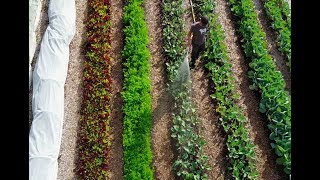
Richard Perkins documents Sweden's driest summer since 1950 on his small farm. Water levels in ponds and wells have dropped sharply, forcing him to hand-water gardens and move pump inlets. Farmers across the region are selling livestock and cutting hay together as neighbors share resources to survive the drought.
Questions this video answers
July 5, 2018.
"The driest summer since 1950."
About 28,000 liters per day.
Chapters
So it's the driest summer since 1950 and it's causing problems for agriculture here in Sweden. And just talking a bit today about some of the problems we're facing and decisions we need to make. So desperate measures. You see, the pond level is down and We've got another 10 days of super dry weather. But we've always taken out for the pump up here and it's quite shallow. The pond is very shallow here and it drops deeper and cones down. So the deepest point is over here. We've got a bit of spare 50 mil pipe and a couple of connectors that we're just going to add this on and see what we can take out from the pond, because we don't see any rain coming. I mean, we've never taken it down below this level, but we need to get water on the gardens. Our market gardens are super dry and we're behind schedule with a lot of crops and seeing the impact of that. But it's, you know, there's quarter of a million litres here, but it's not all accessible. It does recharge very quickly when it does rain, but the stream down there is totally dry. You can see the overflow here. So that's the plan tonight. Just extend this and get some watering done. But super hot days and super dry and it's. It's tough. It's a, you know, the hardest year for market gardening so far. So three hours at 72 pile isn't very consumed yet. But this is what I want for my bacon. And I'm actually going to take this out now and bring it inside, let it cool down, probably taste some and then I'm gonna slice it all and freeze it down so I can eat it throughout the year. Oh, my gosh. It looks amazing. Oh, my gosh. Kids are playing with elephants, dancing. This is our bacon. We've just taken it out of the smoker. We're going to taste test it soon, but I'm putting it in here just to cool down a bit without flies while we make sausages. Oh, my gosh. So over here, well, we're going to make burger sausages. There's a really fatty meat. It's really nice. And here we've got a lot of sage and thyme from the garden. Sugar, salt, fennel, chili flakes, black pepper, garlic, paprika. It's going to be kind of like a British breakfast sausage. But we're going to make little burgers. What do you think about bacon, Ragnar? You want to see the bacon? The bacon's here. Wow. You want to try? Yeah, you have to wait a minute. So it's all mixed up. We're going to fry some patties. Taste the bacon, taste the patties, see if we like it all. Oh my gosh. We're gonna fry this up. This is forest raised young female pig in this case. Ah, delightful. These are test patties just to decide if we like the blend and there's enough soap, etc. So this isn't like rubbish shot cord bacon. This is thick cut grilled bacon. Well, I just fried the bacon and I don't know how to describe taste in words but. Salty. But salty. Sweet, fleshy, chewy. The fat is amazing and you can't buy bacon like this. This is real bacon. I'm eating bacon and sausage tonight. And that's it. Vegetables are overrated. So you might remember a few videos ago I was talking about this wood based compost. We basically decided we've got to use it because it's holding enough moisture in the ground that it's allowing us to keep growing despite the lack of water that we've got in the pond. We've been moving the inlet for the pump right to the middle of the pond to allow us to extract some more water out of it, hoping and banking on the rain at the weekend to fill it back up again. Otherwise we're going to be in serious trouble. But the garden team are managing to pull together some really beautiful boxes still. But it's really tough. We're going down to hand watering. You can see Toby there. It's watering with the wand on the pump now. It's really not ideal to be hand watering at this scale, but needs must. We got young carrots and other little crops that need to get water on them and so we've got tunnels with the sides up most of the time now and just trying to conserve every bit of water possible to be able to get us through this spell. I kind of still have the feeling that we're going to have a long wet period later in the year, but you can't bank on it. And across Sweden now, farmers are selling, selling off their cow herds, giving away organic pigs because there's just a lack of forage and there's a lack of grain production as well. This year I've seen fields of grain that go in the seed at this tall. And so that's why we're using this wood based compost. It seems to be doing the trick. I think Toby's very happy that we've got some organic matter that can just hold that little bit extra moisture to the ground. Right now, you see, we've moved the inflow there. The pond sort of dishes down, gets deeper there, so we can take a bit more water out, but we don't have much left now. We've got, you know, they were pumping 28,000 liters a day before, if we let them, and that won't last very long now. So we're really banking on the rain to fill this back up. Also having problems up in the greenhouse that's running off our well. But we use that water for the slaughtery and also on the field lines that go all around the farm for the animals. And we're using it for cooking, obviously, so we can only use that in the evenings when we're not using much water for anything else. But even then, like an hour in the big tunnel with all the tomatoes is putting out 5,000 liters, something like that. So it quickly dries up the supply that we can then use it an hour at a time. It's challenging times. You know, we're remote. We're relying on natural resource bases around us. We don't have municipal water here like most places here in Sweden. So you've got to work with what you got. And it's a real limitation, you know. Thank you. Thank your lucky stars. If you're on a municipal line, you can just turn water on and expect it to be there at any time, because a lot of places on this earth, that's just not the case. So it just continues to be relentless. Hot and dry. There's a wind blowing every drop of moisture away. I'm really glad we laid down such a thick layer of mulch. Like, people have been asking how our land compares with the neighbors. Well, it's hard to see, really, because we're. I mean, we've been coming over here with the laying hands twice, three times already, and thousand boilers over the top of it, too, plus the cows coming over it twice. So it's, you know, it doesn't look like much right now, but there's a lot of material trampled on the ground everywhere. It looks a bit different up here. It's a bit more lush and green. Gets a lot of afternoon sun. But also it's had layers for the first time ever, because we put the little gully bridge there. So it's, you know, it's responding to that. But it's looking pretty sparse out here everywhere, really. Looks like we might get a thunderstorm on Saturday during the passive poultry training. But I'm okay with that. We need a bit of rain, but it's a severe problem all over Sweden right now. People have been getting together to, you know, connect farmers with any unused bits of ground that can be grazed or cut for hay. It's. It's a major problem. I've said before, like those of you in really hot, dry climates, this may seem like nothing, but this is really affecting things like the meat price is going to just fall out the ceiling because everyone's slaughtering their animals. You know, the slaughterhouses are booked, there is no hay available, there's no silage available. Everyone's kind of banking on a rainy season later in the year that we can get some second cut, as it were. But it, you know, it might mean we end up slaughtering all our cows. It's. It's really hard to know. It's been tough with vegetables and, you know, we've been getting quite low on the pump. We put the pump inflow in the middle and that's allowed us to use a bunch more water. But we're banking on it filling up again Saturday. If it rains, we're going to run out and make sure we're catching every drop that goes down into the stream. But you never know. You know, it's the reality. We're not in an urban environment where you can just turn on a tap and you've got this apparently unlimited supply of water. We're in the middle of nowhere. We have a shallow well and it refills at a certain rate. And we need that water for slaughtery, for animals, for people. And this is the reality of it. It's great in a way. It might sound a bit strange, but it's great to be connected to the fragility that we're facing. It's very easy to forget sometimes, you know, and coming from a western country, like probably most of you watching this, it's very easy to think, ah, well, there's a problem over there somewhere. Someone else can deal with that. I've got enough on my plate, you know, but it's not how it is. It's changing the face of agriculture and land prices, food prices. It will change the very fabric of our society. And it won't necessarily be pretty. Just for reference, this is the neighbour's land that's had no animals. You see it full of moss. It's not actually grass plants in most of this. And yeah, this is the way it is. It's really tough, but our land's responding a lot better than this. But it's you know, some people's pastures have been overgrazed for decades and they look like this and that's all they've got to feed their animals, so they're having to cull their animals. You see from the aerial footage here, the neighbourhood had plowed up his pasture to sow it again and it's just not germinated at all. And the grass that we'd put on our roadway that leads to our neighbor's land, only half of that germinated. It's just been drastically dry. There's not a lot we can do about it at this point. Might be able to see the level of dust that gets kicked up as we drive around. It's really quite smothering for everything. I was actually up at 5 o' clock this morning, having gone to bed with my daughter Grace, and so I'd finished chores at the time. We normally start chores moving the hens down here. As you can see on the aerial footage, the ground just isn't recovering. There's no way for it to recover with the lack of water that we've had. And so we're running out of space for, for the hens now and we've got to decide where to go next. Ideally, we could take them to the neighbour's land and start improving the fertility there. Right now we got the turkeys following the cows and we decided recently that we wouldn't cut hay from those fields because they're so poor, and we would take our time and go as slowly as possible through the neighbour's land to make use of every last bit of forage. Now, I've said before in the last few videos, for those of you in hotter, drier places, it might seem like we still have fields of green, lush growth, but it's a severe problem here that people are only just like the public, only just realizing how severe it is. Farmers are already acting accordingly. People are selling off all of their animals, which means the meat price is going to just slump, which means people are going to make severe losses now. And, yeah, there's no available hay or silage or anything to buy. This is like the time to start buying it. But basically everyone is going to be cutting for themselves or giving to their neighbors and friends. And the big issue is that everyone's banking on a second cut later in the year, but many farmers are just not relying on that and not thinking that that's going to happen. So right now we're going very slowly through Kent's first field, her neighbour's first field. We've got the turkeys following behind and we're taking it right down just to make the most of every bit of forage now. And rather than trying to trample too much, we want to leave something on the ground. We don't want to leave bare ground. But we've been advised by the local cow farm, they're in a panic. They have a few hundred head and they're basically cutting everyone's land that they can get their hands on, even tiny parcels. There's one little piece of land in the village that we might be able to have them cut and make haylage with for us, which we're working on right now because it's, you know, it's going to be a major problem. It could be that we have to cull our cows later in the year simply because there is no winter forage available now. We don't have hay, cutting gear or anything like that, so we rely on other people for that. And it's been part of our strategy to import nutrients to the farm to get nutrient cycles going again. But it's working well to go through. You see a high manual coverage here behind me and the turkeys are coming through and they really love foraging. Each day when they get moved to new ground, they make a peculiar sound and they go around just taking up every little bit of green they can. But yeah, there's a big movement happening in Sweden now where everyone is. Any unused parts of land is being offered up for farmers to come and cut to make hay. And it's a really serious thing. Like it's, you know, you can look at a green field and think, ah, it's okay. But it's causing major problems here for grain production and for livestock production. And the gardens are looking great. The garden team are doing an amazing job. It's mainly Carla and Toby and they're doing a great job despite the difficult circumstances. But it's, it's interesting. It's, you know, it can be frustrating on a day to day level to have a lack of water, but it's actually much bigger problem going on that's going to affect livestock primarily. And so we've got to really start responding now. We're going to see if we can cut the bigger fields here for haylage. It's not very good quality, but to not have any forage for the winter will mean a certain end to the cow herd that we are trying to build up and breed with beef animal. So it's kind of like this constant dynamic process of decision making and, you know, responding to what's going on. And, you know, we've been through several iterations of plans of what we would do for grazing the rest of the year, but it's. It's such a stark circumstance that it's causing us to readdress things over and over again. So these are the guys that are taking all of the land around the farm and Johanna's walking the dog home. We've just come back from town. They're looking at a new organic shop that might sell our products. But Johanna wants to find out if they have any possibility to come and cut the neighbour's land that we're grazing on and bale it for us as a haylage. So we go home, she's walking back and we'll see what we find out. So all of these fields that are on the road leading up to our farm, they're cutting all of these. They've already cut all of the ones on the opposite side. I don't know if you'll be able to make that out there, but basically they're taking everything because they have the largest farm around here. But it's been suggested to us to see if they will help cut and bale for us, because they have all the gear right here and they could do it very efficiently. And if they do that, then we've got another 10, 12 days, I think, in the little field of the neighbours that we're in with the turkeys and cows right now. And then we would just go around our forest paddocks and around all the little itty bitty parts of the farm to allow that grass to recover, which right now is just not recovering, but with a bit of rain, it should recover pretty quickly in these conditions with the sun and heat that we have. And yeah, we'll see interesting days. One thing we might be doing is getting the pigs off our farm. We've got a breeding boar and sow still, who I dearly love. But I. I want to have a rest from the pigs at the end of this year because we're cutting the big forest and we need to leave the land for several years without pigs on it. And so it might be time to get rid of them sooner. We've offered them for sale and reduced the price on them. They're out there very cheaply, but I think people aren't willing to take on livestock right now with the situation as it is. Animal feed is going to be getting more and more expensive and meat prices are going to be going down, so it's going to be super Tough for everyone to balance the books this year. There's some beautiful aerial footage. You can see the impact the animals have had on the ground. We're taking the roller boiler pens up to the top of Nutfield where only the laying hens have been for the first time this year. But the grass is not fully recovered. But there's enough fresh greens that I want to give the young birds an opportunity to graze on that because we're kind of running out of space now. We kind of need some rain very soon to get the grass recovering. And as we said, like farmers here are not banking on a second cut. Well, everyone is banking on a second cut with a bit of rain later in the year. But some people aren't believing in could be very stark consequences if this dry spell continues. It looks like the rain that was forecast for the weekend is pushed back a day or two, which often happens in the forecast here. And it becomes, you know, the weather is very variable here because we're in a undulating terrain and it's, you know, some little microclimate where we are. But if we don't get some heavy rain soon, we're gonna certainly be in trouble to be able to put the poultry on fresh ground and consequently we're going to be over impacting our ground at that point. We're going to be on top of forage that hasn't recovered. It would have recovered if we'd had adequate rainfall, which we normally have. I mean, our rainfall is historically is distributed quite evenly throughout the entire year. It's the unpredictability of weather patterns that affects agriculture the most and will swing food prices massively on a global commodity market. It's, you know, I'm very interested to see how poultry feed price changes because that's not a fixed price. It's pegged against the global market. And so it could. There's a possibility that it'll be. It will not be profitable to run a layer or boiler enterprises. I mean, I'm not expecting that to happen now. It's still normal price right now, but you got to keep an eye on these things because it's all about numbers and crunching numbers in the spreadsheet. If it becomes too high a cost, then it's just not worth the time and effort to. To do these things. So you've got to be aware and really think forward ahead of time to plan and make good decisions in a time and place where other people need to make decisions too and affecting the resource bases that you also rely upon. Now, if we do run into trouble and we end up cutting haylage. Then we've got all these other spaces around the farm that we can keep our calves happy. All of the forest paddocks that are regenerating into pasture species. The one behind me is not looking so much like that, but up where the P were originally. That's all coming back to grass and forb. So we've got little spaces around the riparians and between tree lanes and places where we can go and graze while the grass recovers over there. And I'm hoping that we'll get some rain in the next couple of months that all that grass starts recovering normally and we get to graze like tender young grass throughout the rest of the season. But we'll have to see. I mean, we have options and we're in quite a fortunate situation compared to some big farms stretching the limits of their land base that just have to make stark decisions like culling large proportions of their herd, etc. So that's it for today, folks. Just a quick update about the scenarios here and I'll be informing you what we decide to do as time goes on, because we're flexing into decisions all the time. If anyone's got a supply of powdered water and wants to send it our way, I'll be super grateful. Much appreciated. Thanks for watching our videos as always, and you can find out a whole bunch in our books. Making Small Farms Work. So thanks as always. See you in the next video.
More from Richard


A review of short and intensive season on a mixed farm and restaurant/event space in Sweden






Alskade Kyckling Exploring complexities of poultry production in Sweden and what we stand for


