S5 ● E61 Curtis Stone is with us at the farm
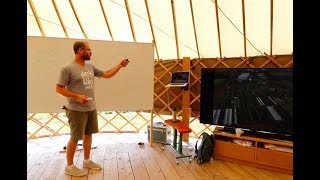
Richard Perkins and Curtis Stone walk through intensive vegetable production on a quarter-acre with 46 beds, covering crop rotations, pest netting, and water systems that pump 14,000 liters daily to the pond. Stone shares an on-farm remedy for blossom end rot: smashed eggshells mixed 1 to 5 with spirit vinegar, then diluted at 1 tablespoon per 4 liters of water.
Chapters
So we've had an amazing few days. Last day of the course today, and Curtis leading up the day, I wanted to put together some clips of Curtis teaching as well as different things going on around the farm. Busy time at this. You know, what's the busiest time of year for us?
So our farm is a quarter acre, 46, 50 foot beds on average. We make $1,600 per 50 foot bed per season. And I'm going to explain rotations and all that in more detail. We're just going to go a little broad here. That means that each of our beds are rotated on average four times. So there's four crops per bed per season. $73,000 is from the field. That means anything that's planted in soil, in the ground, $28,000 we do for microgreens, but we could scale that like we could almost 10 times that in our greenhouse. It would just be a matter of turning up the heat and bringing in some supplemental lighting. We've done it. But can you sell that many microgreens? That's what all this stuff comes down to. And you're going to look at, we're going to look at Jean Martin and Steadfast Farm. Steadfast farm can make $250,000 on 160 hundred foot beds. So that math is quite interesting, right, Because I'm going from 23 at 100,000. And if you followed the conventional logic, you'd say, oh, well, Curtis, that means you could do 4,300 foot beds and make 200 grand. You're right, if you could sell that much, but you probably can't in a local market stream. So what happens on a farm is your profit for production goes down on, on scale and diversity, and that's necessary to grow a farm in a local market. So we're all here talking about the local food movement. We're talking about CSAs, farmers markets, restaurants. We're not talking about selling to Costco and ICA and big franchises, right? We're talking about serving the local market. So what happens is it's sort of a curve like this where you'll go down. It's sort of a reverse bell curve where at a small land base, let's call it a quarter acre here, you can make $100,000, okay? With the best, with experience and the right techniques and the right crops in the right marketplaces, you can do that. Then you'll go to steadfast size. So what's happening here is this, right, is the size of the farm is going like this but the margin is going down. So it's steadfast. They are at 1.75 acres. So at steadfast, they're like this. And they can make $250,000 of gross profit. And Eric's profit margin is almost the same as mine. You go to Jean Martin's farm. This is Les ferme des cartes temps. This is 450, 100 foot beds on 10 bed blocks across the farm. So what happens here now? JM can do. This is. This is six acres. Okay, six acres, 500,000 gross. Way more crop diversity, like way more. Not the full polar thra. I would say the only thing as far as annual veg they're not growing is winter squash, cantaloupes, and potatoes. I think it's in the next couple slides. But. So what might happen here is this tarp might have only been on this for a week, but I like that because if we get rains in the summer, I don't want my soil being bare getting rained on because it compacts it and it washes away topsoil, which is a resource for us. I keep a tarp for that reason. I don't want weed seeds blowing into it either. There's many different reasons why we keep the tarp. But in this case, I might uncover that tarp and pull it out. And weeds are just starting to germinate. And you can just see the whole topsoil just peppered the tiny little weeds. We'll bring in the flame weeder, then flame and then plant. And so you'll see that when you look at the tools. But that's kind of how we do it on our farm, is we just like prep a bunch of areas like a loaded rifle. And then it's just like.
Then I'm just on my way down to the tree house and I just disturbed a mama. She flew off a bit, but these are baby curlews or something. Big long beaks. I'm passing through. I hope she comes back quick. I'm checking the inflow of the water going down to our pond. We've been having the pump on for three hours a day. 12 cubic meters going down to the gardens, which is like putting a 5 centimeter rain down. So we're going to go step by step through the garden now, giving everything a few hours a day over the next four days. But the solution we implemented a couple of videos ago is working really well and it's allowing us to get water back. Now I'm half distracted because I'm listening to Mama I think it's a curlew or some kind of bird. Like that, very long beak. I'm not so good with those birds. I'm not sure if it's curlew, but I hear Mama and she's distressed, but she'll be back in a second. I'm hoping her nest isn't right on my path because it's the only way I can come up here. But the chicks look really healthy. Quite fascinating. I've never seen them up here in the forest before.
Summer squash. Crookneck. There's crookneck. Summer squash is a broad category to be picking them in, like late April, early May. He picks them hard for two months and then he pulls out the whole crop when everybody else has summer squash. So we'll just fill up some big bins of water and then dump the radishes in there. We can put like 20 cubes kilos of radishes in one bin. And then they can sit like that all day. And then at the end of the day we'll wash them. And then they wash really easy. They just go back into the macro totes on the washing screen. Spray comes off really easy. We'll keep them in a macro tote overnight in the cooler so that they kind of dry a bit. But if I have to sit on them for two or three days longer, then I'll put them into a tote with a lid. And so you're just harvesting, forming a bunch with your hand. You've got elastics on your wrists or on your fingers and then you're bunching it up. And then you're. You're putting them in totes as a bunch. And then the washing protocol is different then too, because you have to handle the bunch and spray it. It takes more time. Takes about four times more time. That's why we switched over to doing the loose, because we mostly sold them the restaurant. And it was years after. We were always bunching them. The restaurants were like, we unbunched these anyways. Well, no shit.
So this is kalefos we've made from our own eggshells. We have blossom end drop in the tomatoes in the tunnel on one row of tomatoes. So one thing we can do as a chemistry application on farm is take our eggshells, which are high in calcium and phosphorus. Calcium is obviously a main. Constitutes main part of an eggshell and it becomes a waste product, essentially. But we eat a lot of eggs here, so we have lots of shells. And so what we've done is roasted them in this pan over the fire and smashed them as they roast. And what happens is some go white, some go black. The white ones are relatively high in phosphorus and the black ones high in calcium. And then we take one part smashed up shells to 5 parts spirit vinegar just from the kitchen, and that goes through a thermic reaction, it bubbles and foams. It's all grey black and it stinks. And then we get this liquid off it. And this liquid, we take one tablespoon to four liters of water. I've heard that's 15ml, two or four litres of water, and it can be sprayed as a foliar spray or as a ground application. So we have enough whole bunch here we're going to put on the end row that has blossom end rot. And then we might make some more, because we're eating about 150 eggs a day at the moment, so we can make more and preemptively supply calcium to the other rows. And what's important is it's also got phosphorus and that's really an important element in plant physiology. In the stage of fruit setting, both flowering and fruit setting, phosphorus is needed in high amounts, so it's going to give a nice little dose to the plants as they are setting seeds. So that liquid, the kalfos, it's one of many recipes I've written about in our book. I've written detailed manuscripts of how to make good compost, how to make calfos, how to do captured microorganisms, translating a load of these Korean natural farming recipes to our European sort of plant basis, just to get the pattern language for people so they know how to do it with what they've got. But look, we need to get that onto this row of tomatoes here because we've got blossom end rot appearing. It's a calcium deficiency. I'm not seeing it right now on these. We've got lots of beautiful cherries coming on here, but here you see a sign of it. So this is calcium deficiency. I don't know if you'll make that out or not. These plants have really come on. I mean, just look at this. When you saw a few weeks ago, they were half the size of these plants. But there's a lot of value to be lost now if we don't save these from end rot. And so we need liquid calcium and having so much eggshell is a really good way for us to reuse that. But we should be on top of it. It's a good sign now to put it on everything, because as things come into fruit, they need Extra phosphorus for setting seed and seed development. But I wanted to show you this. People asking what variety this is. This is ILDI I L D I ILDI. It's known for having trusses of like 80 tomatoes. I mean, just look at that. And four or five trusses per plant. It's a small plum type tomato. You see a few developing here, but you. I mean, I never seen nothing like it. I mean, look at this one small plant here, right? And we got a truss and truss. A truss, a truss, a truss, a truss. Another truss, another truss, another truss, another trust. I mean, it's just. Look at this row. It's insane. You've never seen tomatoes like this. It's a winner as far as I'm concerned. Now I can also see where they've mixed up the plant pots from losing some of the labels because this is in the wrong row. We're growing an orange type of tomato that has red flesh inside. Really beautiful. We're growing black opal, it goes deep black. And we're growing a couple of other F1 tomatoes, actually, just for good rampant production. And then tomatillo, which is rampant and wild. But I think it's a very profitable crop because it needs zero care, very little chance of disease. It's a big sprawling bush. But come back here in autumn, they'll be tomato size and we'll sell them at the same price as tomatoes. And I think they're delicious, actually, before they get fully mature. They're like a big, green, juicy, sweet tomato, but not quite as sweet. We've got some big sort of beefsteak tomatoes here that will be going well, but I'm very happy. I didn't expect the tomatoes to do very well this year just due to the conditions of how they're growing. But we're starting to get some. Look at the size of that one. It's a funny shaped one too. But, yeah, they're actually doing better than we thought. I'm just walking down the row of Ildi right now, just so you get a sense of the amount of tomatoes that are coming on in here. Just truss after truss after truss. It's a bit gobsmacking. Look at all that. So time to get that calcium drench on the plants.
And even with the netting, sometimes the cabbage moth will get underneath it and then it'll be trapped in there and then it'll just corrupt the whole bed. So, like, even the nettings aren't a guarantee. But if you're. If you're really like, if the protocol every Time is you plant a bed of hakari and the job isn't done until the netting is on. And you do that consistently from the beginning, you'll get good crops. It's when you start slipping up every now and then and somebody didn't close up the netting for one night, you know, that's literally what can happen. One night, that's all it takes. The moth goes in and lays a bunch of eggs that turns into the root maggot. That crop is done this size. They're doing them the same here. We can go in the caterpillar tunnel, the one that we were in. On the back left, they've got a bed of golden beets and I think shigogia beets or can't we call them candy stripe beets in there. They're a high value crop if you do them right. Ever since the paper pot transplanter came out, it's like the best way to do beets consistently because the best way to grow beets is to transplant them. Because beets have a 10. If you direct seed beets, they size up at different times and so it's kind of complicated. It's a pain to harvest because you got to thin through them and you'll get the good ones and then you go through and thin the next week, you'll kind of thin harvest them for like three or four weeks. Whereas if you transplant them you can get a better consistent yield. But hand transplanting beet sucks because you're doing four rows on four inch centers. It's a lot of plugs.
So I'm up here in the other larger portion of the neighbors land. You can see they've been coming through today cutting. It's very sparse in here. I mean there's not a lot of material coming down these roads. So I expect off this entire field, which is several hectares, and they've even cut the back paddock that we're hoping to move into with the cows. I would anticipate possibly only 15 bells, maybe 20 if we're lucky. And that would give us just about enough for the winter. For the current plan. With the amount of cows we have, we might take the two males and butcher them for eating. But yeah, it's tight, it's really tight. Now we didn't anticipate that they would cut what we call K4. We have K1, 2, 3 and 4. We were actually moving our way up there to go graze it. Now. This puts us in a circumstance where we're now going to be down to grazing little parcels all around the place and doing little microtechno grazing because you can see we have areas in the riparian. There's a lot of tree fodder they can take and edges to clear all around different fields. As well as our riparians we can crash graze and the forest paddocks on our land. But something I really appreciate about the cutting is that they've left it fairly high. When the neighbour used to cut this ground, it would cut right down to the ground, it would yellow out. You'll see it in old photos of the farm. But this will actually, you see there's whole ladies mantles left intact. But a bit of rain and this grass will recover quite quickly. I mean, keep saying if there's a bit of rain it'll be like this but you know, We've got another 10 days without rain forecast. Just for context, you know, we're worried about getting water on the market garden and dealing with grazing and stuff. But there's major calamities going on in Sweden and right now there's about 80 wildfires around Sweden. Over 60 million euros of forestry is up in flames. And says Polish firefighting trucks driving from Poland to here to come and help with the problem. And it's a big disaster this year and it's affecting a lot of people's economies. And yeah, you know, we're going to be able to scrape through. It just means a bit more work on the ground, but that's okay. We're just, you know, in some way I like I'm enjoying responding to the circumstance and it's. That's what we do in life, right? We just respond to whatever's going on. So we're applying Kalfos. We are doing 120 liters. So we're putting two watering cans as a foliar trench on each of these two rows that are affected by blossom end rot. And four cans just along the base so the plants can uptake it down there and we'll see how that goes. So we are filling our pond really well actually with the little supply line that we put down from the ram pump header. Now I think some of you watching maybe didn't watch it fully or got confused. We're not using the ram pump at all. We've taken the ram pump off and they're using the header pipe as a feed. So it's basically flowing from the river along a ridge to a sump tank where it's then draining off down and it's falling downhill all the way to the pond and it's filling at 14,000 leaders a day. And so we've been having to pump on three hours a day. So we're actually putting 5cm of water down on all the beds now, which is the first heavy watering they've had for months. So things are going surprisingly well considering the lack of water we've been putting down. But now we're really able to put a bunch of this down. I also wanted to clarify about the compost we're using. It's a wood based compost. It's the waste products of the paper industry, but also the timber industry here. It's not made of toilet roll. Looks like it's got bits of toilet roll in it, but it's wood fibre and parts of the wood before it gets to paper making. But basically now if the stream flow continues as it has been, we will have enough water to put the pumps on three hours a day, which is 12 cubic meters we can put down. And so every morning and night when the sun is low, we're putting the pumps on and we're able then to water probably about a quarter of the garden. So step by step like this. So these pumps are going on for two or three hours each evening and we're finding that now the water's settled. After the turbidity of bringing water in down the pipe and kicking up a bit of mud from the bottom, we're now getting the pump on for two hours without cleaning the filter, which is amazing because we had it on for about 25 minutes before the filter clogged up. Got.
Because what happens is the tomato grows up the string and then you've been printing it from the bottom and I'll kind of show that in a second you lower it down. So you go up on a ladder and you take this hook off the wire and you lower the string down. And the string basically brings the whole tomato down but then the tomato kind of bows out. So in order to do tomahawks you actually have have to have a bit more space between the rows. In Jean Martin's farm they have 30 inch beds. So 75 centimeter bed with about 30 centimeter walkway. And what they do is they do a tomato row in every second bed. And when they start the beginning of their greenhouse they've got greens in every second bed and then tomatoes in every second bed. So you need that much space if you're going to do lower and lean.
So that's it for today folks. Thanks for watching as always. And you can find out a bunch more in our book Making Small Farms Work. It's available to order from the Farm in the links below, as well as our online training and all the other resources linked there. Thanks so much for watching your shares and likes and comments. Don't forget to hit subscribe if you haven't already. Look forward to seeing you in the next video.
More from Richard


A review of short and intensive season on a mixed farm and restaurant/event space in Sweden






Alskade Kyckling Exploring complexities of poultry production in Sweden and what we stand for


