S5 ● E65 No breakfast 'til the cows come home
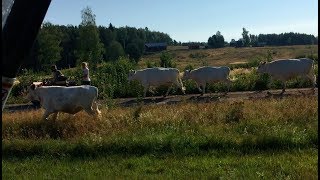
Richard Perkins starts his day chasing escaped cows led by Clovermay, then moves through poultry management, testing irrigation systems, and dealing with drought impacts on his pastures. He weighs rations per pen, discusses organic certification timelines, and shares plans for a European supply company.
Chapters
Cows have escaped. Can't see them within a few kilometers. So we've got a fun morning. No breakfast. So today the cows took a little trip down to the lake where we go to have barbecues. We found them right down at the beach later on. So we found our cows here at the forest. We are right down at the lake. Carla's coming in the van. Nicholas is on the quad on the track on the other side of here. But there's one cow at the farm a bit distressed, and the rest of them are all here now. So now we've got to work out how to get them back. Nicholas knows. He's over here. Ah, fun in the mornings. Well, Clovermay is always the ringleader and she's done this before. She's run all the way to the village before and I bet she instigated this and she just. She loves to run. So I bet that's what's happened this morning. They've been in the tree forage, but it's just not enough food for them. And so they. They decided what's best for them. Tough times, not enough forage. Very nice to see the cows in here, though. This is how these cows have actually been bred to graze. Forest strips like this. It's quite a nice sight, actually. Love and May. You hungry? Did you lead all this? I bet you did. Well, it's a long way home. Well, it might be an adventurous time to get home because there's cars, there's timber wagons on the road right now, but they're coming along at the moment. This usually happens once a year at some point, and that's just the way it goes. Come again, toby. So we're going to actually try and cut them across the neighbor's land through the riparian back to where they were. Maybe open a bale, just get them grazing on the haylage and get a fence up. Because we've definitely not got enough forage. We need to move them to a better paddock. I think it's good to just get them grazing and rested and relaxed. We try and move it. Okay. Good job, team. We've got them back to the riparian beneath the neighbor's land. I think this is the way they came out. We actually followed the hoof prints on the road to work out where they came from. It's a little bit of a adventure tour to get back through here. That's gone pretty smoothly so far, but it's not over till the end of fence in the evening. So I'm up early this morning and I've put in a misting system in this tunnel which has just turned on, so we'll see how it goes. Now, I'm not sure if I want it to be misting or raining, but want to test this out to see if we like it. As opposed to the spray, this puts down more water. It'll really change. The microclimate in here. Seems to spread quite evenly. It might be good to have the sides down for this operation just to enable us to keep. And you see water vapor coming out inside. It's nice and cool though, just whether it spreads evenly across all the beds. It's definitely doing good down in the middle here. But we'll leave it 20 minutes, half an hour and see how we think. Mr. P, you look like you've been in a drought too. Lost all his tail feathers. Happens every year though. Evening watering flashy trouts. We like this one. This is a replacement to Mother Stone that we had last year. And across the way here we've got this beautiful Lolo rosso. Very nice. Two tone leaf, a really dark claret scarlet color. Very nice. Carlos. Just pulling up carrots out of the. They didn't germinate so well, so there's chard in here, but beautiful. No dew. Carrots coming up. So the misting system is okay, but I think the emitters, the brown emitters we're using are better for this purpose. They're giving more like raindrops than mistakes, but better distribution across the tunnel. So I think we'll switch these out and you can just pull them off and whack the other ones on. It'll take two minutes. Might do that this evening when it cools down in there. Looking good. I'm just weighing out turkey food here. Gone off to feed the turkeys there last time. Today this is the feed weigh station where we weigh out food for the broilers and we actually weigh out per pen. Now it takes a bit more work than free access food, but it's much better to feed the birds with intermittent gaps so they actually forage better. We do that with both the layers and the boilers. With the boilers in the roller pen they get big old sacks of food. Obviously there's a lot of them in there. And then individual pens have three servings a day, they get five servings a day in the Buddha going down to four and then when they come outside they get three. But I've just been talking about this a lot with our poultry course and different management techniques. But I think it's much better to Actually really monitor how the birds are feeding and not just give them unlimited access feed. I think it's easier, takes less time obviously, but the end result is very different in terms of the birds health and what they've actually taken off the pasture. So really consider that and if it works logistically then I think it's a more optimal method of managing pasture poultry. So dry, so dusty. Just think it'll be over by now. But it looks, looks like there might be some thunderstorms this weekend, but just zero recovery on the paddocks. This is the field they cut. Oh, it's just relentless. Stream is totally dry now. These birds are so hungry and they're so heavy they can just crash the net. This is actually their last feed of the day and you see they're getting quite big birds now. It's. Well, turkeys don't follow my plans. I mean I've got a feed sheet that's worked well for this last couple of years but they're just so much hungrier this year. And you see they're hot, they're panting a bit like a dog but they're not following my feed sheet. So I've upped their feed rations which means they're going to grow quicker. But that's what you got to do. You got to observe and respond. It's, you know, it's no good just sticking to a fixed plan if you can see different things going on on the ground. And so I'm responding because they easily crash the fence if they want to. They're very heavy obviously and as I've said before, they only get stung in certain places on the electric fence. So if they want out, they'll come out. Now turkeys are very easeful if they do get out the fence. Sometimes if I come late for feeding, they'll just walk out and come and meet me. But they also walk back in. They're no trouble to get back in. They'll just follow the feed bucket. But really enjoying spending time with these birds. They're really comical. I'm becoming more and more vocal. It's time for them to move. Tomorrow I'll be moving into the shade of the trees. Now that's another risk of them wanting to push the fence down. They love to go and hide in trees and vegetation. So I might put strings up. You can see here. This is from when we had the net set up originally. I just have a bit of string tied to a post on the inside. It makes the fence so much stronger and that's pretty good for Keeping them where you want them. Someone was asking in relation to the previous video about organic certification, whether the broiler operation would be certifiable if it. If the birds were slaughtered over 84 days. And the answer is yes, I think. And they were asking specifically about the Salatin style pens. These are Salatin pens with wheels and roofs hitched up. But yes, I think so. A big thing that the inspector was saying was, like, for small farms, if you're setting up with, you know, good husbandry techniques, or wifery techniques, if you like, and, you know, care for the ground and care for the physiology and psychology of the animals you're dealing with, then you're much more likely to, you know, they're looking for that kind of thing. And so it's, you know, it's more. When an industry is looking to switch over from non organic conventional to organic, then they're asking a lot of questions. But the inspector was very impressed with what he saw, I think. And yeah, everything meets baseline standards for organics. So I think the answer is yes. Just look at this stream bed, totally bone dry. Now, the cows were in this big forest paddock, but they obviously didn't have enough to browse, so they went on a trip this morning. And it happens about once a year. And it's Clovermay, this one, she's the boss cow. She decides she wants to go and she runs and there's no stopping her. And so she took them all out for a little adventure today. So part of the difficulty we have is we've just run out of forage now, pretty much. You can see actually we're grazing some bits of old hay where the machine hasn't taken it all up. And so we've been bundling this with a pitchfork, getting it over there for them, but the ground here is just not recovering at all. I cut this a week ago. Nothing's really happened since. I do appreciate how they've cut it long enough that now if we get a thunderstorm on the weekend, it should pick up really quickly. But we're basically now taking this little strip along the edge of the forest and then we're going to head to a little strip. There's a little side gate, a pedestrian gate into our land through the riparian here. So we're going to hopefully get a day on the neighbor's land on the edge and then we should get about six, seven days on our land, not actually on the field surface, but down in the riparian and in medicine cabinet. That's like a super berry Planting that we have. And I'm hoping that we'll tide this over. And with a bit of rain we'll be able to get back up onto the top of our land in Nutfield again. But we have to see it's tight. We've got the forest paddocks we can get a couple of days out of maybe. But if the cows want to get out then it's very hard to stop a such a big animal with a little electric fence. So hard times, it's, you know, this is the way it goes. It happens at least once a year. And Clovermay is a really stubborn cow and if she sees something she thinks better is over there, then she's off. And they've run all the way to the village kilometers away before and it's kind of fun. It was a very smooth rescue operation. It couldn't have gone better really. And we got them back easily enough and they got a good bit of exercise size. But just look at this. It's, you know, there must be a bunch of fish and other aquatic animals that are suffering. Last couple of puddles and pools, that's all that's left. We really need rain now. If anyone's got excess, please send it our way. We'll be very grateful and thank you. In the videos we've just put the yurt covers on. It's wind picking up and the swallows are flying low in swoops which there's a sign of pressure changing and rain to calm. But we just looked at the forecast and it says just a few drops, maybe tonight and then a bit of rain, 4mil tomorrow and then dry again for days and maybe some rain next week. But it always says that and then it just dries up again. This is a random squash plant or two left on the compost heap and they're doing super well. Look at these beauties. Now that's a bit bigger than a chef would want. But if you're making lasagna tomorrow with your grass fed beef then I reckon that's what you need. Talking of lasagna won't be long. Look at all this. Beautiful. Now we put very little effort and work into all of this compared to some ways of growing tomatoes. But I dare say we're gonna have a lot of them. So Johanna's away, she's doing cooking this year. So I've got this leg of pork, salt and sugar, half as much sugar and I'm just gonna make up 10 liters of brine, soak this overnight so that we can have a beautiful Sweet and salty brined piglet leg roasted for lunch. Going to be awesome. So we've had a pretty useful week. Everyone's been really tired from the heat. I mean, it's up to 34 degrees and it just feels even hotter because there's no wind and the ground is really reflecting heat because it's so yellow and dusty and dry. It's quite unfamiliar. We're used to too much rain and beautiful green pastures here. But it's fun. I've been enjoying this whole process, as I've said before, just because it really shows you, you know, things are changing and maybe these are just bigger weather patterns that are changing and it's, it's, you know, who knows? But we got to be continually observing and adapting to what's going on and it's, it's just a fun thing. I enjoy that kind of dynamic challenge and it's been nice to have a quiet week. Everyone's been just catching up with personal things and resting a bit more and obviously gardens going on and animal chores going on. But it's been a lot more useful and that's been important. I think after a busy course and a lot of inputs, you know, stimulation. So it's going to be a nice weekend. Now we've got a few days off, just going to take a bit of downtime. Even after quite a week. I'm doing a lot of office work, catching up on things that I've been neglecting during the busy course time. And yeah, it's nice. I've been doing a lot of work thinking about the potential for this online tool and supply company for Europe and made some great connections with different suppliers that we want to supply products for. And thanks for your name suggestions. I'm keeping thinking of that and I think it's going to be really great. I'm really excited by the possibility to be able to support people to just get all the right gear in one place and just have, you know, a bit of knowledge and expertise and sell the things that we're passionate about and actually use. We're not just going to sell everything that people might want. We're going to sell the things we actually use and value and just help people get started up smart. So it's really cool. It's a nice creative process going on there. But thanks so much for watching, folks. I really appreciate comments and feedback and suggestions and someone said I should do a video responding to Curtis's recent video about permaculture myths and to be honest, I haven't watched it yet. But I'm thinking I might do that in an upcoming video soon because we actually share a bunch of criticisms of the permaculture movement. And I mean, I've been quite vocal about that always. And I think, you know, I'm really up for having more people out there doing excellent work on the ground and sharing direct experience. We need more people teaching and sharing from real knowledge, not book learned knowledge and these kind of things. And there's a lot of nonsense under the label of permaculture, but ultimately the reason we're still called Ridgedale Permaculture is that I think, you know, this is a beautiful set of principles, ethics, and approaches that actually integrate everything. I mean, keyline design and holistic management are a big part of what I'm known for, but they all integrate together in a way that I just find inseparable, actually. So that's coming up in future videos sometime, maybe this week. But thanks so much for watching. You can find out a lot more in our book, Making Small Farms Work. Thanks to all the people that have supported us by buying that from around the world and really enjoy sending them out still. And just reading the names of people in the countries that you come from. And I love hearing back from you when you, you know, people are always saying that it's influenced them and how they approach their business and farm design and stuff. So love to see pictures and references and websites. So send them in if you busy or put them in the links below like in the comments, because then other people can watch them too. So really nice if you. In fact, that's a great idea. You know, link your farm, link your Facebook or website or whatever it is so that other people can connect up. I think that's a really nice thing to do. Thanks so much, folks. See you in the next video.
More from Richard


A review of short and intensive season on a mixed farm and restaurant/event space in Sweden






Alskade Kyckling Exploring complexities of poultry production in Sweden and what we stand for


