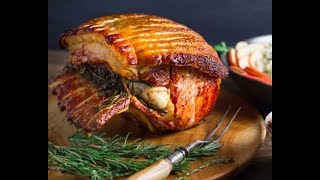
Richard Perkins runs a meat farm and explains why he's instituting a one-meal policy for vegetarian guests. He cooks grass-fed beef lasagna and roasts a forest-raised piglet leg while discussing his sourcing and farm operations, then talks with Lucas, a 16-year-old farm helper, about his sailing school program.
Chapters
Hey, what's that? It's raining for the first time in a while today. I want to just look at some serious eats and it's titled All Flesh is Grass. It's the title of a great book by Gene Lodgson. But essentially this come about for my daughter. We were eating beautiful brined forest raised pork the other day and she turned around covered in Greece and she was like, essentially this is just vegetables reconstituted and for a seven year old I thought that was brilliant. But we're a meat producing farm and I'm not here to like attack anyone with personal preferences and dietary things or whatever, but I am sometimes amused when, you know, we get people coming here who are strictly vegetarian and coming to or vegan and come into a meat producing farm and it's been a hassle. You know, we have to cook with different ingredients and we use broth in a lot of things and, and I've decided actually the policy of the farm next year onwards is one meal only. And if you don't eat that kind of food then it might not be the best place and that might seem severe, but it comes about after years of catering for people's desires and needs and it's, it's a lot of work goes into that. Like we go well above, you know, what you can expect when you're coming to a farm to learn about things and it's what we're actually doing here. So I don't want to get at anyone and you know, I'm really, I don't care what people eat, it's up to you and there's obviously good reasons for certain choices and everyone's at different levels of understanding about diet and ecosystems and all this stuff and that's, that's beautiful and fine and I'm not so, you know, interested in engaged debates and I just see the odd YouTube comment on our channel. It's just like, well, why are you watching our channel? Like it doesn't make sense if you have such strong views. You know, it's like we obviously demonstrating that sunlight to animal flesh to high quality storable food is a very efficient way to go and actually far more efficient than vegetable production, all these things. But Johanna's away at the moment. She's been cooking this year, amazing food. And I'm in the kitchen and I'm busy as always. So I'm cooking up slap up one dish wonders. But it's amazing food we have. I'm making beef lasagna from our grass fed beef, 100% grass fed, beautiful. That's the way it should be. And roasting a piglet leg. Forest raised piglet. And yeah, just wanted to show you some of the epic eats that we have. Look at these beauties. Nice and clean. Evening watering, flashy trouts. We like this one. This is a replacement to Modestone that we had last year. And across the way here we've got this beautiful Lolo Rosso. Very nice. Two tone leaf, really dark claret, scarlet colour. Very nice. So I'm cooking today and when I cook I like to do things a bit over the top because I like making big meals that we eat over a couple of days. So I'm taking scrap veggies from the garden, some of our premium grass fed beef, loads of cheese. I'm making lasagna. But this is not your average lasagna. This is a Ridgedale lasagna. Now we're quite lucky at the farm. We have this big industrial oven so we can actually cook whole pigs and things at once. Piglets, not whole pigs. With six of these burners. Now it's electric because everyone in Sweden uses electric pretty much. There's no gas connection. I do like cooking on gas much better. It's what I'm used to. But this is a unit that's about €4,000 here in Sweden. We actually got it for €600. I bought one for €1800 in the UK and went to pick it up on one of my trips to the UK and I found one in the warehouse damaged. It just had a dent on the back. It's safety checked everything fine, 600 Euro. So I got a refund on the other one and bought this one. It's awesome. Something we have that's also a real blessing is all these herbs from the garden which really helps with cooking. Beautiful food. So first up is onion and we're going to fry up the mince and the onion. Next part is premium grass fed beef. This is minced from our fiaoucu cows and I'm taking a few kilos here. Now we're feeding six people at the moment. But it's important it's grass fed. You can't get anything less. Only the best. Lay off all the rest. Got these lovely patty pans to go in. Load of garlic, bit more courgette from the garden. Gotta have some garlic in there. I'm gonna slice these thin like pasta almost. These are some of our sheep sausages and we them for breakfast and we didn't finish them. So I'm going to just add these in For a bit of extra flavor. So got the tomatoes in. Everything's in the beef component. Now it's time to make a roux. So I'm using ecological oil, this rapeseed oil, just because it's going to use a lot for this amount of sauce and I don't have enough butter in house. We go through about €2,000 of butter every year. Right now we're a bit low. Get the oil hot, then we need white flour and a whisk and we make the base of the roux and fill it up with milk. I've also got to start grading cheese. We use biodynamic products near Yarna, so we get organic and biodynamic standard. Everything. Doesn't make it cheaper buying in bulk in this country, but it does improve the quality and we get epic quality food here. I want the roux to go quite dry and thick. Then I'm going to start adding in 2 liters of milk. We're not milking the cows right now, so I'm using just milk from the store. We buy organic milk when we're not milking. We're letting the cows have time off now and then we'll be breeding beef cows onto them probably later in this autumn. This tea is awesome. Very nice. This machine really makes it easy to do large scale processing of vegetables, cheese, etc. It's a handy tool when you're cooking for larger amounts. Now. There's not very many of us at the farm right now, but saves a lot of time. As you can see, I'm not so used to being in the kitchen. My knife skills are better suited to chopping up chickens, to be honest. But I like cooking. I cook a lot in the off season. So the beef is ready and my sauce is thickened up. Once it thickens up, I add some butter just a little bit and just whip it in to make it all smooth and shiny. Now we can start making the actual lasagnas. Something that people don't often realise is everything we cook here is organic or better than organic. We don't use anything non organic here, from cheese to pasta sheets to everything. We buy wholesale things that we don't produce ourselves, but we do produce a whole human diet here. It's either from the garden or it's from a biodynamical organic supply. And it's expensive feeding people. You know, we spend a lot of money on food every year, including all of the trainings we run and the core team. We eat epically and I think that's Such an important element of what we're doing is why we're farming is producing epic food. And for people coming here, it's usually the best quality food they've had consistently, ever in their life. I mean, we don't slip up at all. We buy fully organic everything, and that's come to be the expectation. We eat like kings and queens and I think it's really important. This cheese is so good, I think I'm actually going to build two because a lot of mouths to feed. And we could put one aside for slaughter on Monday so that we don't have to think about it. We can just step out slaughter at lunchtime and eat an epic feast. That's where it's at. This is what we're producing and it's nice. Some people on the recent training recognize the key point. Think about it, Start playing cards. If you listen carefully now, you will hear. This isn't the top, by the way. This is a little surprise layer on the bottom. It does the time. Now, I'm not finishing with a white sauce layer. I'm going to do things a bit differently. I'm going to put eggs all over the top and bake it with the eggs till the eggs are cooked. Now, of course, eggs must be pasture raised. There's no point messing about at this point. Double Yolka. We like it. That might be a sign of good luck for rain. Double yogurt. It's gotta rain now. Okay, in they go. I'm gonna cook them at about 900 degrees Fahrenheit for about 12 hours and we'll see how they turn out. Next thing. Time to clean up, wash everything, sort it all out, clean the floor, clean the surfaces. A good chef always leaves the place spotless before the food is served, eh? Okay, so everything's tidied up and clean. Swept the floor and just checking in the oven. Looking good. It's gonna be about half an hour more. 45 minutes to cook or so. Nicholas is on the sourdough. This is Mr. Alfred Levan. I made him in the early months of the year. Smells really good. And this is for pizza night. There's two sourdoughs here and we're building up dough for cooking pizza Monday night after slaughter and clean down. We eat good here. You've got to eat good if you want to farm good. So 45 minutes in the oven. Here's the result. Look at that little baby. And one for tomorrow, too. Well, I'm cooking dinner and just heard lightning and thunder. I heard thunder right outside. Very Loud. But look at this, it's coming down. Gardeners are shouting. They seem happy. Wind's picked up. You see the water blowing off this roof here. Happy gardeners. Hey, I heard it's gonna rain today, so this is probably not gonna last very long today. But it's the first actual real rainfall. I mean, just look at the lawn now. If we get a few millimeters it will really pump the grass up. But it doesn't look like much on the forecast. So we just have to wait and see. But still no germination over here. We wait and see. I hope we get some heavy, heavy thunderstorms and some dramatic rainfall because I think we deserve it. So it feels like we're still digesting lunch, but I'm on dinner as well. Today I'm doing pig and just got this little leg in the oven. It's the leg of a piglet and I've had that in salt and sugar solution overnight. And now I'm making a marinade, kind of like a glaze more than a marinade. I've got organic sugar cane, molasses. I've got some old sticky marmalade that we made. Sambal hot sauce here. I've got apple cider vinegar and salt. I'm going to squeeze some oranges in there too for a bit of sweetness, bit of juice. I'm going to coat this thing. A bit of soy sauce. Forgot the soy sauce. And that adds a really nice caramelly flavour. We buy soy sauce like this and it's tamari, but you get the idea. Mix all that up in a bowl to a thick sloppy mash. I'm going to cook the pork. It's currently at 220 degrees Celsius for 20 minutes. Then I reckon it's going to take two, two and a half hours at 180 degrees C with the glaze on. So we'll see how it goes. Good splash of this tamari salt. Mmm, sticky. This will add some really delicious flavor. I'm gonna do some mashed potato with this. Funny. Often doing things one handed. It's a little bit funky. Nice. Added some orange juice in here. Only thing I think is missing is a bit of Dijon mustard. So I'm putting a big old glop of that on. Now we're talking. I'm just gonna do some mashed potato with this. Mix this all up and see how it goes. Beautiful. Now it's got a bit of a zing to it. It's sweet and salty. It's got vinegary touch it's also got a bit of spice in the background. I put some cumin and some orange juice in there. Very fruity, tangy. Lovely. So it's coming up to dinner. It's cabbage salad, olive oil, vinegar, beautiful. Roast pig. Like it smashed. Potatoes coming along. Very nice. Simple but effective. Time for dinner. This is Lucas. Lucas is just 16 years old. Is that right? Yeah. I can't even believe it. Lucas is epic. He's grown up on a beef farm that he's taken over with his brothers. And he's epic. Thanks so much for coming, Lucas. He's been amazing. He's a farm kid and he likes to eat. He's a good eater. Lucas is looking after. You're actually helping me with chickens in the morning now. We've rotated, and he's also looking after the cows and pigs up in the forest. And, Lucas, tell us about you going sailing on this epic year after school.
Now, it's a sailboat. That's a school that has. Is affiliated with Acadia in Nova Scotia. And it's. You can do your grade 11, your grade 12, first university and a gap year.
On the boat.
On the boat. And so basically, the students, there's about 40 to 60 students.
It's like a tall ship, no?
Yeah. 220ft. So 77 meters, but. And the students learn how to sail the boat. And then there's like three or four crew members, like proper sailors that teach the kids everything. And the kids basically sail the boat for nine months of the year.
So where are you starting and where are you going? To Amsterdam.
Down Europe. Down the west coast of Europe. The only coast of Europe. Mediterranean, eastern, western side of Africa, western coast of Africa, across to Gulf of Mexico and the Caribbean and then back up to Amsterdam.
Totally epic. This kid has a bright future. I hope you get to follow him soon. All right, guys, we need a taste test. So this is molasses with mustard and homemade marmalade. Orange juice, a little mango squeezed. I want you to just give us a taste test, maybe with a bit of glaze, and tell us what you think. Come on, Toby, get in there. Oh, let's do it. Facial. Your natural facial reaction. Supernatural. That's good. Good job, Bridget. Sometimes mango in there. Beautiful. The guys are all going out to town today to a little festival going on. I'm catching up with computer work and taking an early night. I'm pretty tired up. But thanks for watching. As always, you can find out more in our book. Making Small Farms works in the links below along with a bunch of other links and information. So thanks for watching. See you next time.
More from Richard


A review of short and intensive season on a mixed farm and restaurant/event space in Sweden






Alskade Kyckling Exploring complexities of poultry production in Sweden and what we stand for


