SHEARING THE SHEEP and other spring treats
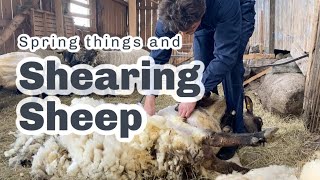
Richard Perkins and Pat demonstrate sheep shearing on the farm, covering battery-powered shearing machines, timing, and technique. They also discuss spring fishing and other seasonal farm activities.
Chapters
Welcome back to another episode, folks. Spring is on its way. The Medlar is in Leith, despite the fact that it snowed this morning. But in today's video, we're shearing the sheep. Our neighbour pear is here and he's a semi professional shearer who started eight, nine years ago, I think on his home flock. And he's been kindly shearing our sheep ever since we moved here. So see a bit about how that works today. Wow. Spider web in a giant wood ant nest. This is an old ants nest, quite old now, covered up with moss, with no ants. Okay, going fishing, Saku.
Hopping, Hopping.
We are going across the lake in search of a big pike. Do you think we're going to catch one, Ragnar? Nice. You gonna help get it in the net? We caught a clam. Why so many? This happens all the time. We catch shellfish. How silly. These are freshwater mussels. They're good to eat, but they're protected.
So we'll put it back.
Ragnar, you've got a pike. Whoa. Flapping fish. Let's stop winding. Now we'll let him swim. We'll get him in the net. All right. Lift it up a little bit. Lift it up. He's heavy, isn't he? Ragnar, you caught a pike. What? Look at that big fish. Unbelievable. Ragnar, that was amazing. Can't believe you caught that. You're gonna be a little fisherman. Fishing with dinosaurs. This is the new trick. Tie a toy dinosaur in the end. You never know what you're going to catch. No sheep shearing day. Battery powered shearing.
That's awesome.
What's the key things to approaching? Steering.
To take it slow and be careful with the animals.
And to go some sort of course or.
To get somebody who knows how.
To tp to teach you to get training. You got to be really careful around the others. Obviously that's a very vulnerable area.
Well, we can take a little shot. The belly is the most sensitive area here. You have no bone structure, no nothing. It's just skin and some muscles. And then you have the intestines. So you have to be really careful. And of course you have the. Yeah, help me.
The other.
Yeah. And also where these are especially sensitive when they are immature, like this one who has had a lamp. Normally that's no problem because the scissor won't go to cut it. Yeah, because it's so it won't go inside when. But when you have a lamb, for example, when you share it, you can cut them off. And that is very bad. I mean, for the pain for the animal, but also for the production, for the future situation.
How long have you been sharing, Pat?
About nine years now. But I'm a semi professional so I do this on. On spare time and free time. So I now I share only around 1500, 2000 animals a year. But the professionals, they do it around 20,000 in Sweden. This is.
Yeah.
Around the world they probably do a lot more. But so. So I'm a semi professional.
You've always had sheep yourself?
I. I started in that, yeah. That's fashion. Well, yeah. Back to the sherry then. You have the tits and so here you have the anus and the clitoris is also a very sensitive area.
Yeah.
As you understand. And you have. I don't know what you call this.
Like the connective tissue where the leg.
Joins also here, here. And then you have the. The neck and. And the throat, ears, eyes. Of course you're going to shear up here as you're going to see when I proceed here. So more or less. But when you start. I mean, the normal way to start shearing sheep is that you have them in a bench, as it's called in Swedish. I don't know what's the correct word to say it, but in a bench they stand up and you shear the back. But then it's really hard to shear the stomach and it takes a lot more time. But then you can take your time and the sheep will stand. So it doesn't have any problem breathing. Now this is. Animal is in good condition, so it doesn't have a problem with sitting. But if the animals fat or has a lamb in the. In the stomach, it will have problems breathing when you're shearing like this. So.
So.
But now it's no problem. The animal right now it's very calm. Yeah, it's no problem.
When would you choose to shear your own flock typically?
Well, I would share them before they have lamp, just to keep the area.
Around the teeth clean.
And yes, it's easier when they have the lamb during birth it's simple for the. The lamb to find the tits and so. And it's easier to clean the animal. The animal will be cleaner. You see here. Yeah, this.
Less risk of infection or.
Yeah, exactly. So. So that's also a. And also it's easier to shear the sheep before the sun and the summer time comes or the springtime comes because they set a lot of wool fat in the. Their. In their fleece and this makes it harder to shear. April, March, April, June is a hard time to shear normally because of the wool fat. But it depends whether they had been on pasteur and. So cool. Yes.
On pasture.
Yeah.
Yeah.
So, so. Well, so I would share them around. Yeah, depends on when they're going to have lamb. But five weeks before they have lambs is the latest, so I would take that and then I would share them in September, October, somewhere there before you take them in, because then you can get nice fleece to sell, for example. So it's more or less what I would do and I would, I would share them two times a year because this is more or less the best control of the animal, the health of the, the, how the, the feet look on them and, and, and it's a.
Chance to check everything out. Yeah.
To see the health and, and, and check that they are in good condition or if they have some sort of problem. And also you have the possibility to, to change their. If something has fallen out, the markings, you can replace them, you can check their feet and so on. And also you can check whether they have parasites and so on. And you can see if they're thin, if they're fat or so on. Mostly it's seldom that you have that sheep that are in production that have lamb, they're seldom too fat. It's more or less a problem that they are too thin and that they have too bad pastures is to go on. And here what I do, I just cut away the excess. No more, no less. If they go on a pasture that, that has a lot of rocks on, it normally doesn't need any trimming. But when they have, during winter time, they normally go on a soft bed like this one, and then they tend to grow. But in this case it doesn't to be so much. Yeah.
You'd normally wear felt shoes which help you grip the sheep.
Right. Well, the felt shoes are a tradition that is that you should feel the animal and so on. And, and when you, when you shear and it's dry, it's no problem. But normally when I shear, it's always wet somewhere in the, in the area where I shear. So I have a very soft or very. A pair of very soft rubber boots instead. And it's a bit, it's a bit safer in a way for me as well because then I am a bit safer when it comes to electrics. Now I have a battery shearing machine today, but otherwise I have something that is connected to the.
There we go. How do you like that? Battery powered.
It's much worse than the, the uphang machine, but it's, it's a bit More agile. So I don't need any.
What do you mean it's much worse. Is it less? Well, it's powerful, heavier.
It's less powerful, yes. Also it's weaker and the balance is a bit harder. So you want the shearing, the combs to go like this, but then you have to lift it up and it tends to through the weight to go like this. So you always have to lift it like this.
It's less ergonomic.
Yeah, less ergonomic.
You can tell.
I mean, normal handle is like this without that bit. Yeah. And it hangs. So it's just the handle. And now we have this part here which is heavy and it. It's not very well balanced, this one, but it does the job and for six years cheap, it supports.
What do you think about your new hacker, About the condition of the sheep?
It's normal, it's okay, they look nice. It's a lot of wool on them, so it's. You never know what you're going to find on underneath. But there's no problem with. They're, they're kind, they look nice.
You know what the world record time for shoeing a sheep is?
I think it's 20 seconds or something. 20 seconds.
Takes me that long to gather chicken. Run.
I mean, for example, now when I have this machine and, and put a lot of wool on them, this one takes five, six minutes for me to shear. But if I share the same sheep in the autumn, when it's summer wool, it will take me two minutes or something like this.
So what would a world record 22nd guy do? This one?
Well, I don't know, maybe two minutes. But the, the. When the world record is then they don't have any wool on their belly and they have sheer. The clean. Yeah. Clear this sensitive area. So they shear only the back fleece, more or less.
Yeah.
So, but, but I mean a really competent Australian or New Zealand shearer are. They are extremely fast.
That's the before and after. It's going to be a bit chilly tonight. Naked sheep Ragnar. Do you want to have a haircut? No. Right now he reckons he can get about 10 sheep with one battery with the wool in the condition it's in. But he has a friend who's a professional steerer who's a little bit faster, who in the autumn when it's summer wool, can get 30 out of one little battery, which is, I think quite impressive. Are you watching the sheep? It's very exciting, isn't it, for a sheepdog? Can't take your eyes off it. Well, we're gonna take them out very soon, so you'll be able to do your thing slowly. Slowly. Beds start getting transplanted now. Really won't be long till this gets transformed. Here under the kitchen sink. Sink. We got all kinds of mushrooms growing now. These are actually Akos was interested in mushrooms, so we actually took old spent bags out of the compost and crumbled up the material. And these already fruited and gave us mushrooms last year. So we crumbled up the old material and just added it. Probably 30 to 70 with new growing medium. And these have just been chucked in the compost pile over winter. No care taken for them. The old one, this has been hydrated and put in a few days ago. But the mycelium is starting to run. So let's see if there's no infection, we could well get another great big flush of edible mushrooms. These are all different oysters bundled in together. Looking good. Well, spring is really creeping along. The trees going green now. That's it for today, folks. Thanks so much for watching our videos and I hope you enjoy and get a lot from the content we put out. Making a lot of more interviews, including talking to the founder of the Rico Rings, Thomas Snellman, tomorrow as part of the Farm Like a Hero experience that we'll be launching pretty shortly. So stay tuned for that and as always, you can find out a lot more in our book and in Online Training, the most comprehensive manual and online training in the field of regenerative agriculture out there on the web. See more details in the links below. See you in a video soon. Bye for now.
More from Richard


A review of short and intensive season on a mixed farm and restaurant/event space in Sweden






Alskade Kyckling Exploring complexities of poultry production in Sweden and what we stand for


