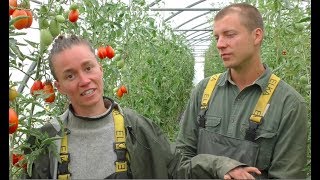
Richard Perkins (video upload Jan 15, 2019) announces the return of his farm's internship program for 2019, describing a redesigned 10-week (2.5 month) intensive combining farm-scale permaculture, holistic management, keyline design, agroforestry, market gardening and pastured poultry trainings (some open to the public). The season begins in May with permaculture and runs into July; Jean-Martin Fortier will teach an intensive market gardening course in August. Perkins is finalizing books and traveling to conferences; the farm will produce pastured broilers, turkeys, beef and run expanded market gardens but will not have pigs this year pending forest rest. The video includes an interview with former intern Jasper, who credits the program with helping him develop a business plan, build collaborations (eggmobile) and scale to 60–70 CSA shares; Jasper also planted ~400 trees and is considering organic certification for eggs.
Chapters
We're bringing back our esteemed internship program that's been so successful in getting a lot of young people started in farming. So I'm excited to share a little bit about that and the process we've been going through this winter today. So it's long, cold days here in Sweden. We've been taking a really restful winter, We've been very busy with other things. But it's been a really important time to really address our holistic context and address our relationship which has suffered from putting the farm and all the people coming here first for five years to the extent that, you know, we've sacrificed all our personal space and time. So we've been really carefully reconsidering how we're going to manage the farm going on into the future. But we've had such a lot of requests to bring back our internship program that we've decided to run that again for the 2019 season with a spring and then an autumn internship. And that's basically come about. I mean, we stopped doing it because it was such an exhausting process to give such input and energy to a bunch of people for such an intensive period. And I guess that's why there aren't really many similar programs. But I've always felt the value of it. And we've seen some of our past students go off and just set up incredible startups in a really smart and efficient way. And it's obvious the benefit of the program. And so we decided to bring that back in a slightly different format. We've got different guest teachers coming in and I'll be taking more family time than I have done typically in the last five years. And so it's a two and a half month program, 10 weeks of intensive hands on and theoretical learning where we go through farm scale permaculture design course. We do holistic management training with a holistic management educator. We do keyline design training, agroforestry training, market garden training, and we also do pastured poultry trainings. And some of those trainings will be open to the public. So as always, this place is a hub of people from all over the world coming and getting empowered and skilled up, ready to go off and, you know, start up their own enterprises. It's really become the internship's always been a bit of a springboard to start people on their own operations. And so I'm excited for that. We're going to be receiving people starting in May and that kicks off with our renowned farm scale permaculture course and then runs on into July and then in August we're really excited to have Jean Martin Fortier here and do an intensive market garden training here at the farm. And then we'll be jumping into our second internship program. I've been busy this winter. I've been writing heavily. I'll tell you more about but I've been off at the Oxford Real Farming Conference. I was a keynote speaker there and these amazing old buildings. Oxford's a very beautiful city, there's a thousand people there. It's a really great event and met a lot of familiar faces, including people that have been through our farm and met some really inspiring new people. Spent some good time with Charles Dowding which was great and trying to get him to come over to Sweden so that we can do a real hands on and theoretical no dig training. And so we're seeing if we can come up with something for that. And it's great to meet him and Steph also. And I've been sending out tools, it's been amazing. People are literally starting their entire farms from the farmers tools and sending off pallets all over Europe. Seems like there's a real groundswell in Germany which is what I felt when I was there with JM at the end of last year. And so it might be we're discussing doing a training in maybe April in Germany. A sort of hands on farm design and educational practical at a farm in Germany. So there might be details of that coming up for those of you in Germany. But really I've been riding a lot and my plan is to get this book finished. I've got February and March scheduled for intensive riding and basically what I'm doing is updating, making small farms work and getting it professionally edited. So it's going to be a lot more sleek, loads more extra photos and the data is going to be complete. It's going to be a massive section on market gardening and a new chapter on forest raised pigs and pastured turkeys. There's going to be chapters on dealing with people and the people side of it and managing family and all the back end stuff behind that as well as more extensive financials and things like that. So I think that combined with the book I started writing last year, which is a comparative analysis of all enterprises including things we don't do at our farm, like small scale indoor mushroom growing, micro dairy, micro beef, etc. And putting all that into a context that people can then start comparing different enterprises because that's been a big part of my role here is helping people get started with a business plan that fits their time, place and circumstance. And so I feel like that's a massive missing piece. And I know a lot of our viewers are excited to read that. So that's in the process. A lot of work's been done. It looks beautiful so far, but there's a huge amount to do. So I'm penciling February and March to that. And I'm off to the US soon to keynote at the Michigan Small Farm Conference there. And then I'm going to be deep in riding until the season begins. And so we'll be still producing the range of foods that we do. We're going to be doing pastured boilers, eggmobiles, pastured turkeys, pastured beef. And we won't have pigs this year and we won't have pigs for many years because we need to. We're having a forest cut soon and that will have to rest before we bring pigs back into that ecosystem. And I've talked about that in a bunch of other videos and amazing the work the pigs have done. We'll be doing the whole gamut on the market garden. We'll be using the paper pot transplanter this year and just ramping up productions further in the market gardens. So busy time at the farm again. We've got a busy season ahead and really excited to bring back the internship program in a new format. And I thought it might be nice just to hear from one of our interns who's gone off and done exceptional work. And that's Jasper. So, Jasper, thanks for joining us today. Cool. Yeah.
So, yeah, I wanted to ask you, Jesper, like, I know the, like the, the internship had a big impact on.
You from what you reflected back.
Like you said to me, like that you said two things that I want to look at actually. It's interesting, but you said that it really set you up to start your operation. I know you've had an epic first year and I know you've worked really hard for it, but it looks like it couldn't have been better. And I just want to hear your perspective. What did the internship do for you?
Before the internship, I just had a load of ideas in my head. Didn't really know how to pull them all off. Wasn't really sure about all the details and everything in between. And I'd never worked in the market garden.
Now, what was your farming experience? Were you coming into farming as it were? Like, had you had.
Well, I grew up on a farm in Ireland, on a farm beside a farm, so I had quite a bit of farming experience. More with cows and dairy and few other bits and pieces. But I just wanted to come and pretty much I had the idea but I wanted to work on the business plan. That was my goal when I was commandeering. And it worked very well through all the courses and through all the bits. On my plan and looking at how I could relate around to myself. And it also changed the plan quite a bit. I fell in love with layers. I thought chickens are really cool. I want a few chickens.
Yeah. And you went off and collaborated with Albert to build that amazing eggman built. I've put in the cards up here like the, like for anyone that's watching that doesn't know about your startup. Like we made that video with you. So people can see that in the cards above. But you made an amazing egg mobile and maybe you could speak about. Because I think something that's valuable about the internships, not just the training that's happening at our farm, but also the collaborations that have happened between people that have met at the farm across not just the internship across multiple years. And I wonder if you have anything to say about that. Like what? Maybe tell a bit about your experience. Like how would you sum up your experience to someone that would consider coming to the internship really.
Especially at the start with the 10 day permaculture farm scale Permaculture course. It was a really big group of people. It was really cool to meet lots of people with lots of different ideas from around the world and then getting into the internship and getting really deep into it and that was really cool. And then you got to build relationships with some of the people there. And like you're saying some of those relationships were still really important to me. Like Albert, even some of the people that I didn't even meet at Dredgedale, for example, you were in Kew and then I was talking to a few other people that started Market Gardens that also got inspired through you and just that whole network is really good to get into.
Yeah, I started to understand that network, like the value of that network. And just seeing people over multiple years of, you know, cross connections that happen. The connection is really bad. Jasper. So sometimes you might sound like. But I've been really impressed with like you basically bounced out of the internship and went off and planned your season and you had an epic season.
Now pretty much I don't think I could have went. I could have planned it to go that well. Didn't really know what to expect. I just thought I'll try my best and see what happens.
I mean, you Obviously also worked extremely hard. I know you did, but the other.
Bit that I wanted to pick up.
On is when I came to visit you, you said something about, like, now I, like, you always talked about being busy, and now I know what you mean about being busy. Something about that.
I didn't know the middle of until I started a farm.
What's your.
Like, what would you.
How would you speak to someone that's like, you know, like, what I feel is our internship programs become like a springboard for people going into setting their own thing up. And I feel like that's the deepest value it offers. It's like, hey, it's a reality check. Like, can you do this? Can you handle it? Can you manage this? And. And that's been like, a theme that people have fed back every year, actually. And, like, what would be your. Like, having left our program, set up an amazing startup and had a really great year that. I agree. I don't think it could have gone better. Like, what would your feedback be for people, like, considering doing this program who are then going to go off and start for themselves? Like, any words of wisdom from you?
Anybody that wants to start a project, maybe they're not 100% sure or even they just want a bit of help planning or whatever. I think it's definitely the best opportunity that there is. That's why I told you to do the internship again last year when you dropped it. I was like, for me, it was such an important thing. I wouldn't have been where I am today if it wasn't for the internship. And I think it's also important, the mindset you go into it with for sure, rally just to give everything that you have and learn as much as you can along the way. Really good thing.
Yeah.
That's about. You're not gonna learn much. You probably are, but it's about. For me, I think you've seen that. Well, I seen that year I was there, the people that really got engaged and really got into it really took a lot out of the internship. And I think that's important is the mindset that you go into it with.
Yeah, yeah, exactly. I've detailed that a lot in the information there. I think it's. I think you're spot on there. Everyone I've seen that's flown out of the program has come with the mindset that you came with also. And just like burying yourself in it and getting as much as you can from it. Do you have any last words for people that are considering and not sure in terms of the place as a learning environment and what's going on here?
I think it depends. It has to be right for a person to do it, for sure. They have to want to start a project and they have to have inspiration to do that. But it's what I really liked. It was so, so widespread. Like you're obviously a learning farm or somewhere where people can learn. So you have all the different enterprises and you can have a little look at each of them and see what's right for you or what's maybe not so great for you. And that's what I really liked about it. Yeah, we're so diverse aspects of farming, but also diverse through the people that are there. There's people from all over the world and then there's ship that I was in pretty good.
Obviously a chunk of money to invest and we've priced it based on the trainings that are happening and the cost of having people in Sweden for 10 weeks eating awesome food. And it's expensive to run this program. Just. Any thoughts, your realistic appraisal of that investment? Is it worth it? And how would you quantify that in your own experience, in your own words.
Beyond my contacts? It was definitely worth it. I mean, I probably saved a lot more money on the farm because of the course that I've done. I don't know how to set it all up and do it the way I done it if I didn't go to the internship. But if I did, I probably would have spent a lot of money on other things that I learned not to do because I went to an internship. So I look at it as I saved money by going. But like I said, it depends on your context. If you're really looking to start a project or something. I think it's super awesome. But if you just want to go and check out farming, then maybe, I don't know, maybe it's a bit expensive.
Yeah, yeah.
No, it's. I mean, and our intention is putting out for people that are actually going into this. That's what we've always, you know, aimed at. Hopefully I'll come and see you some point this year. But what's your vision for the year? Like, what can people expect from your farm?
This year I'm making the garden a little bit bigger, trying to get up to 60, maybe 70 CSA shares, trying to get a few restaurants involved. This year I planted like 400 trees in November, so I planted a big hedgerow and lots of fruit trees. Doing a bit of agroforestry in the market garden. What I was planning when I was in Ridge still.
Yeah, yeah.
So.
How did it go with you? I wanted to ask you about. I'm sorry, the connection was funnier. I wanted to ask you about your hens and the certification because I know people across Europe are having, you know, trouble with what does it look like? What's your perception of it right now?
It's hard in Germany. Germany has some crazy laws, don't make any sense.
But you're able to run your eggmobile as it is?
Yeah, I have to put water, I have to put like water inside it so they have access to water the whole 24 hours. But apart from that, I think I can run the egg mobile as it is. But it's certified organic. I think it's a different story working on it.
So you're choosing to operate non organic as it were.
That's one thing I'm looking at this year. Maybe to certify but it has to fit in my. For me.
Right.
Thanks so much for joining us and sharing your experience, Jasper. I really appreciate that. And Jasper, if you haven't seen his video, you saw it in the cards up above and there's links to it below. Also amazing year he's had in his startup and he works incredibly hard and has taken and taken it and run and that's exactly what we want for our interns. So all that information for interns and upcoming courses is in the links below and any that are blanked out at the moment, we'll be filling in as soon as we have the details concrete. And so we look forward to meeting some of you in this incredible learning hub that we've created here and a beautiful summer in Sweden. Looking forward to it. So thanks so much for watching. I hope you found that useful and informative in some way. You can find out a lot more in our book Making Small Farms Work for now. And our online course is huge amount of information. For a small monthly sign up fee you're in control of your sign up so you can choose to stay as long as you like. You can take the whole course immediately in one month. It's by far the widest, broadest, cheapest amount of information you'll find on the regenerative agricultural subject. So I'm glad so many of you are enjoying that and I've been enjoying getting the feedback from that and those of you on the full training. We're starting with questions and answers for January tomorrow night and that's recorded and put into the program so we can watch that at any time. So looking forward to seeing some of you there. Thanks so much for watching, folks. We'll see you in the next video.
More from Richard


A review of short and intensive season on a mixed farm and restaurant/event space in Sweden






Alskade Kyckling Exploring complexities of poultry production in Sweden and what we stand for


