Stephanie Hafferty; No Dig growing and eating...
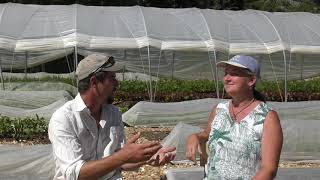
Stephanie Hafferty runs three gardens using no-dig methods, co-wrote books with Charles Dowling, and built a Facebook group of 16,500 no-dig gardeners. She discusses managing multiple growing sites, gender visibility in gardening, and practical experiments like using comfrey and nettle feeds instead of mulch.
Questions this video answers
A kitchen garden for an art gallery restaurant in Bruton (Hausram Wirth / Roth Bar & Grill), a home garden with a 12x40 ft polytunnel, and an allotment.
About 11 years.
Known each other 11–12 years; together for seven years.
About 16,500 members.
The Creative Kitchen — a mostly plant-based, garden-focused cookbook; she mentioned it had 59 Amazon reviews at the time.
Chapters
So in today's video, I'm having a chat with Steph Hafty, that's Charles Dowling's partner. But she's a forefront food and no dig advocate and writer in her own right and runs three gardens separate from Charles and has also been the author with Charles on the organic no dig home and garden, as well as this lovely book, the Creative Kitchen that she left with us very nicely. We've got a lovely signed edition. Thanks for that, Stephanie. I just thought it'd be nice to get into questions of what it's like to work alongside someone with a big social media presence and following and be somewhat in the limelight sometimes as a leading female figure in the movement. It's something we talk about a lot. You know, there's a lot more male domineering figures in the space and. Yeah, just wanted to reflect on some thoughts about that with her. So I'm here with Steph Hay, who's just Charles partner. And I wanted to really spend a little time talking with Steph because Steph is a celebrated writer and chef and no dig well in her own right and has done a huge amount to spread no Dig around. And I wanted to talk a little bit about what it's like being a partner of a sort of celebrated online figure and how that actually plays out in reality. So you've been. I know you've been. You wrote a book with Charles.
Yes.
And you've written your own book that's more focused on the cooking end.
Yeah.
And I know. Can you tell us a bit about that? You're running multiple gardens and you actually garden separately to Charles, don't you?
Yeah. So at the moment, this year, I'm running a small, lovely kitchen garden for an art gallery restaurant in Bruton, where I live, which is a really interesting aspect because you're growing for a restaurant which is totally different to market gardening and to domestic gardening.
So growing to order for the kitchen.
And it's quite a well known art gallery owned by some Austrian art dealers called Hausram Wirth. And so we get tens of thousands of visitors and my garden's the first thing they see. So it's a visual thing as well.
And okay, so quite a unique context.
It is. It's really interesting. And it's interesting for me also as a food writer working in a different way with chefs and because what I write about is far more family scale writing of food. And it's interesting hearing how they see food and what is grown from a running a business point of view.
So is it quite demanding? Are they demanding or are they quite.
They're fine, they're really good. We meet, we tend to talk once a year about the kind of things that they want. It's not a huge space. Yeah, As I said, it's not massive. So we can't grow everything. So it's what would work best in that space. They also have other places that they get vegetables from locally, it's all locally sourced and then I'm generally left to it, which is really handy. And I also do my own garden. So I've got a semi detached ex council house in Bruton.
So this is Somerset in the southwest of England, near where I grew up, which is Wiltshire in the next door county.
So one of the interesting things about rural ex council houses, this was built in about 1930, is that they made the gardens big enough to keep chickens and a pig, fruit trees and to grow vegetables.
They were smart.
Yeah. Poor families. So after work you could still raise food to supplement your income. So it's about 30 by 100ft. So compared with homemakers, it's small.
Yeah, but there's plenty. Oh, it's an allotment, essentially.
Exactly. And I have an allotment as well, up the road.
Yeah.
So my back garden, I've got a 12 by 40 foot polytunnel.
So you've got three kind of different types of gardens.
Exactly.
And they're quite different from homemakers. So most of you that follow these folks already, but some of our viewers maybe don't. And so Charles's home is homemakers and you actually live apart and keep your gardening a little bit apart. Can you speak a bit about that? Because I think it's really cool, like something that's going on for me this year is hearing back from some of our past trees trainees and interns that are starting up businesses as a couple and having this sudden learning curve of like, well, you know, we got together for romantic reasons and now suddenly we're running the business together and it's like, well, we have really different ways of working and this isn't what we got into this for. And there's a whole hurdle to jump there. And I think it's really, it's really like something in that that you are keeping your. Because you obviously both driven to garden. It's very important for your. For your whole being that you, you need that space to express yourselves differently. Is that what's going on with them?
Yeah, I think very much. And also, I mean, the key thing, I think with Charles and myself, we've known each other 11 or 12 years. We've been together for seven. So in our lives, we've actually been together a small amount of our whole lives so far. We've both got families with our previous part partners, so that's an important thing as well. And all our children are young adults, both sides. And so when I. When Charles moved to Homemakers, he already had very established ideas of what he was wanting to create. I was involved in setting it up, but that, in a way, was quite nice. At the time, I was running kitchen garden for probably the world's most famous theatre producer, Cameron McIntosh, and I made his garden no dig. So that's what was my main job, that was paying my mortgage and raising my kids. But I was helping Charles set up Homemakers, but it was his vision. And actually we discussed a lot of things. But for me, it was really nice having one job that was somebody else saying, I think this should be over here. And he's open enough. And you can say, actually, he sure, because. Because maybe this tree will do that. But that was rather nice. So the dynamic is slightly different. And so although we do talk a lot about Homemakers and he'll discuss ideas, he also discusses it with whoever is working with him at the time. It is his project and my garden is my project and I grow things, which in a way, Charles might think, why are you doing it like that? Because it's not. It's not profitable, or it wouldn't work as a market garden. But it works really well for a family. So it's a different. It's great. We've always got something to talk about.
Because whether it's observations and.
Yeah. And also he might say, see my garden at House from Worth at Roth. The restaurant's called Roth Bar and Grill. And he might see that and go, why have you done it this way? Like some of your close plantings. I do that because it works really well in the coffee context of this kitchen garden, but it wouldn't possibly work as well in the way Charles is doing at Homemakers. So it's. It's great. We kind of COVID so many different bases.
It sounds like it's really important for you to have like that space for expression in different. Because it's something our viewers might not realize. Like, I know a bunch of you watch the combined outputs of all of us, and whilst we're all into no dig, we all do things very differently in some ways, in some ways very much the same. But it's even Steph And Charles have different methodologies and different approaches to little bits.
Totally. Absolutely. Last year, for example, at my allotment, I didn't mulch, it didn't at all. I made comfrey feeds and nettle feeds. Anything I could get from the hedgerow around the allotment. And I did. And it's heavy clay where I am and I did. And it was the hottest summer anyone could remember. So I bit rubbish timing in a way. And I did that because I was imagining I was, I don't know, pregnant with a broken leg or some situation where it would be difficult to mulch. Yeah. And to see.
What do you mean? Instead of putting. You've put more. You've put compost and made no dig in the past. In the past, instead of adding new compass, you're just doing liquid feeds.
Exactly. To see how it would go and because also that's interesting for people coming into no dig with allotments, maybe they don't have compost. And it was. Okay. How would it work if you already had a weed free plot? Because you've been, it's been your pot for ages, but you've been digging or whatever and you don't have enough compost, how will it go? And there's stuff on YouTube from Charles of him standing in my sweet corn, for example. And it was fine. We still got more than we could eat from that crop just with these comfy feeds. And I have mulched it this year. But so yeah, we do do some things a bit different. We try different experiments.
Do you have any advice then for young people, like that scenario I just mentioned? Young people starting out as a couple, getting into business together, as it were. Do you think it's good to have that separation of roles or even separation of parts of the garden you're managing?
I think it would depend very much on the person and the couple. But I think one very clear thing and what you're saying about women and farming is we travel a lot and we meet a lot of people and quite often we meet couples who are doing a market garden and they're both equally involved, they're both equally driven. But it's most of the time it's the bloke who is getting the notoriety or commended for it. And it's I think, working out together how to make sure both voices are heard. Some people don't. I mean, some people have a garden and it's run by one of the couple and the other one's doing something entirely different. And that is fine too. I mean Charles and I have. We both run the business together.
Yeah.
We have far more defined roles now because I'm doing other stuff and different things that we do and we discuss that and we work out what works best.
I imagine you get busier and busier.
Yeah. So it's fine. But I think it is very much having a clear idea and talking a lot and making sure you're both on the same page, really. I mean, I think for sure at Homemakers. If I was to step in there, it would be.
There'd be trouble.
It'd be trouble. Yeah. I'd be, oh, you don't want to do it like that. No. I think that was a different situation because it is his gardening and it's absolutely fine it being his garden.
So communication.
Communication is the key thing and I think a clear idea. And also if you're going to have children, working out how that fits in. And there's lots of different things to consider and. Yeah, it's the main one, communication. And if you have a row about it, go off and turn the compost heap and then talk some more.
There's always something to do. Yeah, but it's. Yeah, it's an important topic, I think, like part of, like. So tell us a little bit, just for context, like you. I want to get into this idea about, like, you know, possibly being sometimes in the shadow of someone next to you. Even if it's un. Even if it's very conscious, you know, having like a superstar partner, like how that is. And. And I know it's like something we talked about is like, you co. Wrote a book together.
Yeah.
And often, you know, and I don't think it's any maliciousness on anyone's part. It's just a lack of awareness. But people can credit Charles for that work without really noting that your name's on the front cover. And hello, I wrote half this book. Two of them. Like, how does that make you feel? How do you deal with that?
It wasn't great. It was. Neither of us expected it to be as strong as it was. We knew people would pick Charles up. His Heat was his ninth book. It was my first that we understood would people. His name would be picked up more by the media. What we never expected because we made it clear in the blurb and Steph is a kitchen gardener. Put that first. And we never realized that people would totally. Not everybody, but a significant number of people would think Charles did all the gardening part. Steph put some recipes in. And I did do all the recipes in the book. Except for one. And I did do all the recipes for the potions and things you can make with herbs. But there are. We. We co wrote the gardening parts and some of the gardening sections. Far more Charles than me. Some of the gardening chapters are entirely me. Didn't write a word. But it's tricky. But interestingly, from discussing it with people, and we were asking people, really lovely people who just hadn't tweaked, what gave them the idea that there was this divide. And one of the things they noticed was almost all the photos of the doing is Charles. And that's the simple reason that either I was behind the camera or I mostly work on my own. And there's no one to take the photos. So we looked through and actually they're absolutely right. So really a reprint probably needs a few photos of me picking the salad or stringing up the tomatoes or something. Just so it's a reminder it's both of us. And it was so it was.
It's like a. It's a common thing. I've seen it with other people where, like meeting JM in. In Germany last winter and just seeing how people sort of flock and gravitate is, you know, it's like one of their heroes in a way. And it's just a lack of awareness, like who this is. This is my wife. Hello.
Yeah, Irene. To be fair to Charles, it's. He's been doing this now for 37 years. I've been gardening always, as long as I can remember, and particularly as long as I've had a home. Once I stopped being a student, but I've actually done it as a job for 11 years or so. And so Charles, 37 or more years. So I'm fine with him having more notoriety. He's worked for it, he deserves it. And he certainly is a lot more knowledgeable me for the sheer fact he's been doing it longer. But. And it has other advantages. We get to go places. People invite him to Sweden and I get to come along.
But you do a lot of the support work in getting the word out right. And you do blog writing and work with radio and stuff.
Exactly. I'm a speaker. I go. So a lot of the things, I go to the big shows in the uk, I've just done Gardeners World Live talking, no dig on allotments. And so I go out there and spread the word and I'm promoting both of our work.
Do you feel like the. That you get the acknowledgement for that or is that growing as people understand?
I think it's growing. And I think also I notice sometimes at the end of talks, some women come and give me a hug and it's like they follow my blog or they follow my Instagram. And because I raised these three kids on my own donkey's years, and because I've raised children and worked and done this and done that, and I make sure in my blog I write when things are going wrong as well. And they're like, oh, it feels like they feel like it's a normal person because I do it on a normal scale as well as the market gardening. So I know it's nice and a surprise and you realize you're kind of touching people that perhaps that would certainly admire what Charles is doing, but maybe not feel it's attainable on their allotment. But then they look and go, oh, well, she can do it.
And that makes it real for someone.
So it's. It's a good balance, I think. And a lot of our marketing for our business, that's pretty much me or years ago when I was a kid, my dad, his job. Every holiday I worked in the sales and marketing department. I think I got it back in osmosis watching these people. And so, yeah, a lot of the. That kind of thing for our business, it's my.
It sounds like you're a real powerhouse behind because you guys are doing a lot of online stuff and it's on YouTube and all these things. And I wonder about, like, you're meeting a lot of people, obviously, as you go around doing your work. And I'm sure you meet many women farmers too. Like, what do you. What's your perception of why. Why they're less at the forefront of YouTube channels or whatever. Do you think that's just a male, female thing where women are less inclined to just, you know, shout about themselves?
I think certainly it is more difficult. And we, we've noticed. I mean, one example is Facebook. And I run a Facebook Facebook group with four other people on no dig gardening, about 16 and a half thousand members. And if I suggest something, it could be something that I've learned from Charles. It could be almost exactly what he would say for word. And I can get put down for it. Charles, we've done it as an experiment. He will then say exactly the same thing. And they go, thank you very much, sir. Yes, absolutely. And so women have that problem. I've had male market gardeners who have been growing just a few years. I mean, I've been doing it 11 years. It's not a lifetime. But it's quite a while.
Yeah.
One of them even told me to get back in the kitchen and make pretty salads. And it's like it was the age of one of my sons. I was like, I was your mother.
No, no, you're not allowed to slap.
No. I took a screenshot though. I've got it filed. But. And I think that's one thing it's not all the time. And there's a lot of progress being made. For example, the new permaculture convergence in Oxford. The first lot of information out there with the speakers, all of them were women and now there's the men getting on the app. And it wasn't. No, they didn't say, look, our all women line up. It was done actually. This is a normal thing. These are the women speaking. And so there is a progress. But it is. Does feel a bit. Two steps forward, one step back. And yeah, I know something like a.
Real problem society in a way, isn't it like there's just old fashioned expectations of how things go. But I see it in other fields.
As well and I think there is a bit more of an expectation with videos, YouTube type things that though I know it's affecting young men more now of the whole image thing and how you would look. And whereas Charles sometimes asks, you know, does my hair look okay? But he's more just checking it's not on end. He just gets on with it.
So I think the younger generation have grown up in a massive pressure that I'm just learning about it. Being around some of the youngest students here is like they live in a very different world to I grew up in. And that's another age from yourself.
Exactly.
Yeah.
So it's. Yeah, it's. It is a tricky one. And for sure, I mean there's been one of the terms for permaculture. It's often referred to as spermaculture because it's so dominated by male voices.
Yeah, yeah.
And I know lots of very good and very experienced women gardeners and speakers who have been on panels and they.
Barely get a word shout about, you know, is that a male female? Is it fair to say something like that?
I think women do. There's not. I think that. I think they do.
It feels like women are less ego driven though.
I think we're encouraged from being little girls to be back. And it's vocabulary. It's like the same situation with Charles and I giving the same advice. I might be seen as being bulshy or out of place and he would be Being assertive.
Yeah. And the patriarchal pens.
Yeah. And so. And it's. It needs a conscience because we can all accidentally slip into them because that's how society is structured.
Yeah. And it happens the other way in some circumstances too, for sure.
I mean, it's certainly, I mean, of my three children, I've got a daughter and two sons. So I'm very aware of how life is for young men as well, from their perspectives. So it's not, it's not all like one way or the other. It should be. It's more of a balance. But again, another aspect is non white people in farming, you know, and that is another huge area that really needs looking into and how voices from people of color, how they can get out there more.
Because I think it's. And it's breaking down like the echo chamber that's created by, you know, certain voices having prominence and certain ideas just being promulgated. And it's. Yeah, definitely. I feel like something I'm really aware of watching participants come to trainings here is people, people are looking for standardized solutions or in most things in life, because they just want like, do like this and you'll be fine. And that's what they're looking for. But it's with farming or growing, it's like, it's. You can't have standardized solutions. And I'm really aware of the danger of, you know, my, of people coming here and projecting onto me. Like I know the answers and, you know, the role of a teacher and the role of the responsibility of being in front of people and what you say. And I treat it in different ways at different times. But I like sometimes being a bit of a jester. Sometimes I have to be strict and, you know, draw things into line. But sometimes I like being a bit silly and just making sure I get a bit lower than people to make them, you know, really understand that. It's not like this person knows something that I don't know, you know, something like this.
Yeah. You don't have that kind of guru thing where it's these sort of. This is the one way of doing it and there are no other ways.
I think with growing and farming, that's so dangerous because it's like even just amongst yourself and Charles and myself, we're all focused on trying to build healthy soil, vibrant plants and do the best we can. And yet there are many ways to go about that. And they're all fine.
And yeah, I mean, it seems something like this. The woodchuck on the floor. If I did that on my allotment, I'd have every slug and wood louse in the county moving in. But here, in this bit, it stops sinking into the mud and it's. So it's everything you need to be using your initiative and common sense. Yeah, exactly.
So you've got. Now your. The book you did on your own that's more focused on turning food into beautiful meals.
Exactly.
Can I say a little bit about that?
It's called the Creative Kitchen and it's based a lot on the food I make at home and for the courses I do with Charles.
You're catering basically for all of that when they come.
Yes. So. And everything on the courses, everything apart from things like black pepper or olive oil or lemons, everything either Charles or myself has grown. And it's to show this is the kind of stuff. So even in January, you know, this is what. We've either grown it or it's homegrown and stored or whatever.
Preserved.
Exactly. And so this is a lot of those recipes. So the book is entirely plant based, but it's like my friends, some of them put fish or chicken or whatever with it if they want. But it's. The idea is that the meals are complete. You can make it from what you're growing in your garden, make your own food. And I did it also in a way that you can also go to the supermarket and buy the ingredients because not everybody has a garden. So it's kind of lovely vegetable based food for everyone. And also I made sure that any of the pulses, I say all the ones that you can grow really easily in the garden and dry really easily, but I made sure the quantities for all the. The recipes are the same as opening a can of butter beans. Exactly. Because that's real life. And then it opens it up for more people. So that's that book. And it's doing fine, actually. 59 reviews on Amazon today. That was good. Not that I check every week or.
My website and so what's your plans now? Like, what does your next three years look like? Are you running more books?
Yeah, I'm writing another book that is gardening mostly and some I like, makes and do. So garden based. Things that you can make that are practical for your allotment or whatever.
How do you mean? What sort of.
If I tell you, then people won't buy the book. But the kind of things that you can make very simply. I'm not a great skilled craftsperson, I'm not a carpenter. But things that are helpful to have.
Like tools or things to Help you with chores, things to help with garden.
Chores or practical stuff, that kind of thing.
Things to move things from A to.
B or, you know, things to help grow your crops so things don't come and eat them. But that kind of allotment thing, isn't it? You're using what's around to make stuff. And it's partly because, I mean, I've just was broke for years with all these children and just me bringing them up. So I'm quite a thrifty person. I don't spend money unless I have to, and so it's got that. But mostly it's gardening. It's how to grow year round. It's called Book.
It's called Book.
It's called Book at the moment. But yeah. So I write for several magazines as well. I do features for those, which is great. And I at the moment, very much promoting the talks more. Going out and giving more talks. I like teaching side of things very much. Back in the day, I was an English teacher, so, yeah. So it's that kind of thing. And I like doing, obviously, the work I do with Charles of promoting those courses and interesting ideas of how we can develop that side of things as well. Marketing. Marketing is a sort of funny word, isn't it? It's basically just getting people away.
You've had to relearn how the whole digital era is working. Right.
I'm getting tuition.
I feel on the outside of it, possibilities there are.
It's nice because, like a Welsh blogger who. I'm a more experienced grower than he is and he's got advice from Charles and myself, myself on growing. But he's been fantastic for helping me, actually. The two people from Wales.
How to use chat.
Yeah. And what the point of Instagram stories is and hashtags and that. So there's a really nice sharing where you know the things that just from being alive longer and a bit more experienced, you can say, oh, I found this has worked quite well. But they're like, why are you not doing this?
What? That's really cool. It's a nice way that, like, things can be cycled rather than just handed down, which is more what was happening when I grew up.
It is quite a traditional gardener thing that you are. I mean, gardeners would often share cuttings or seedlings and things. Now it's actually this. This is how you do a video. Yeah. How you do your app. And so that is really helpful, actually. Yeah. Because things are going so fast when you spend most of your time looking at carrots. It's easy to miss them.
Sure. So it sounds like you've got pretty busy years ahead. You're not slowing down, moving around with Charles?
Yeah, we tend to. All the trips we tend to go on together, which is really nice. But, yeah, no, we're not planning on slowing down. And there's new ideas and Charles has lots of ideas for the kind of online stuff, stuff that he does. And he writes all those himself. My involvement in that often is little more than, oh, yeah, that's a good idea. Like being a sounding board. But I'm being encouraged to do some videos. A bit of a similar thing with the tripod. It's more showing some of the food aspects as well that I've got. I'm gonna do a channel. Yeah, yeah, get round to doing a channel. I've been practicing it. I mean, the daft thing is I've got this all singing, all dancing camera. It's really nice. And then I was thinking I better get a remote control for it. And it was only when I was looking up remote controls, I'd had this camera a year and found out I can operate it with my smartphone, with an app. You know, it's things like that.
Yeah, yeah. Oh, wow.
The whole.
I'm just getting a new camera, actually, I think next week. And it's something I funded on Kickstarter. It's a fully automated camera.
Wow.
It's AI controlled. It's cheaper than a phone. But if we walk off over there, it'll follow and zoom.
And that sounds like my kind of.
Camera for setting up and doing your own thing. And I can show you in the soil over there. And I'm over here and.
Amazing.
It's gonna be cool. Yeah. It's moving a long way.
Yeah. You think? I still haven't worked out emojis, but I can let that pass me by. I even. Sometimes I write them in log hand. Yeah, I know the one I'd want to use, but I have no idea where it is.
I don't know much about them.
No, they're weird.
But look, thank you for being. Yeah. For being a strong woman's voice and for supporting, because it's a big thing for me too. And I've been doing my best to get people on the. On the commercial scale is my focus. But it's. Yeah, I think a lot of people that I meet have obviously followed you folks, but what about where people can follow you if they want to see your specific work? What's good places to touch base with you?
Well, fortunately, my Surname's quite un usual, so Stephanie Hafferty usually will bring you to me with a ph. With a ph, yeah. My blog and website are on the same platform, so it can either be stephaniehafferty.co.uk or no, dighome.com which is the blog. But it both takes you to the same place, same homepage, so that's fine.
And are you documenting all three of your gardens on that?
Yeah, yeah, mostly mine, but I do all three and I've just done a blog update about my home garden and I tend to do a lot of photographs and sort of just a bit of the story of what I'm doing there.
So that's a great place to find out about what Steph's up to. And you can see that in the links below. And books, you can find them easily.
On Amazon or my website.
Leave a review. Better to buy off the website, but.
Even then leave a review on Amazon. And they are fine with that, I have discovered.
Great. Well, thanks for joining us. We're going for barbecue at the lake. It's the end of the course and just going to finish up for dinner time. We're having barbecue with Chef Elan at the lake. It's going to be awesome.
It's going to be fantastic.
Yeah. Great to have you here.
Thank you.
All right, thanks for watching, folks. We'll see you in the next video. Bye for now.
More from Richard


A review of short and intensive season on a mixed farm and restaurant/event space in Sweden






Alskade Kyckling Exploring complexities of poultry production in Sweden and what we stand for


