The SIMPLEST way to grow oyster mushrooms
Richard Perkins demonstrates a very low-tech method for producing oyster mushrooms using horse-bedding straw pellets and pre-colonized mycelium (spawn). He explains materials, precise hydration and inoculation ratios, incubation and fruiting conditions, expected yields and flush cycles, and contrasts this simple approach with industrial sterile production; he also mentions scaling, suppliers, and a companion book with more details.
Questions this video answers
2.4 kg straw to 3.6 kg water (≈60–65% moisture).
500 grams of spawn per bag (demo); author suggests target ~6% but start at ~10% for low-sterility methods.
A 6 kg bag yields about 1.5 kg of mushrooms (4:1 conversion stated).
Around 18°C for incubation (acceptable range ~15–25°C noted).
About 7–12 days of incubation before observing and moving to light for fruiting.
Chapters
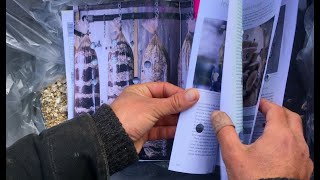
Today we are doing super low tech oyster mushroom production. On our way to the neighbors. Got a little alleyway down the track here. Normally first. Mmm. So we are essentially making a bunch of these. Now this is straw pellets that are used for horse bedding. They turn out to be super cool for mushroom production because they are the heat and the pressure forming the pellets actually sterilizes them. Now this is the lowest tech mushroom technique you will see. Most people on the low tech meth would take straw or coffee grounds or whatever it is, wood, and then use lime, which is a really high pH, to sterilize it. But then you have to neutralize that water. So you do that like a couple hundred kilos of straw in an IBC with lime, but then you have to neutralize that water with acid to then pour it out on the field because it's the ph that's dangerous. But this method means we can just bulk order straw pellets, bulk order mycelium, add water, mix it together and we get a 4 to 1 ratio return on these. If we have a 6 kilo bag, we get a kilo and a half of mushrooms out of it. So it's pretty good. This is third spawning of these oysters. I dropped them, so unfortunately they snapped, but you can see when they've come out. So our job today is hydrating the straw to about 60, 65% humidity. And we add 2.4 kilos of straw to 3.6 kilos of water. And it should be clean water, no chlorine, obviously that will kill things. And then we'll put 500 grams of this mycelium. So this is blue grey oyster, mushroom, king oyster, Indian oyster, which is a different type of oyster. It's a tropical oyster. So it says on these, store the mycelium at 1 to 5 degrees in the fridge, but Indian oyster wants to be at 10 degrees, so not in the fridge. That's the same for the blue. So the yellow and the pink oysters, which we don't have any mycelium, so these are inoculated onto millet, usually grain or millet or whatever. And then a mushroom bag that has a special spore filter to allow gas exchange, but no mushroom spores in. These are nicely colonized. But what we will do is crumble these up because obviously at the bottom there's still mycelium in there, but it's not so thickly colonized. So we'll mix and crumble this together to evenly distribute it into these bags. So the way like these have Become really popular as bedding for horses because they are absorbing such a large amount compared to their weight. So rather than having thick, deep bedding for the horses, you can get away with a really thin layer. So we have to add water at that precise ratio and it takes about 15 minutes for it to soak up the water. So we have to leave it, let it soak it up and then we're using this lay flat tubing. Now lay flat tubing is used for different things in different industries. But it's basically a circular bag and it's sterile due to manufacturing. So we have, you know, we are essentially able to run this enterprise without any more sterility than this. Clean hands, clean mixing bowls, mycelium that's ready to go. Clean bags and straw pellets. That's it. So it's super, super easy way to do mushrooms. And when you're not working sterile, you get moulds, you'll get like blue green molds. It come into these bags. But we've got, there's a tiny little bit of mo. Now this is on the third fruiting. So you see that's, you know, this has just been sat in the yurt. Blueberry oyster. That's pretty impressive for the lack of sterility. Like commercial mushrooms are grown in labs with white coats and pressurized filter systems. So there's always air coming out of the building. And you know, a lot of small growers do low tech mushroom production, but this is by far the simplest way you could possibly do. So we're going to cut this into meter lengths, put a cable tie on the bottom, put in layers about 2 or 3 inches thick. We'll have weighed out 500 grams of spawn for each bag and we'll just sprinkle a handful every few layers. And it's best to have layers like that because the colonization is much better than if you just mixed it through totally. So little intense patches that will spread out and you'll see bands of mycelium as it starts to come colonize and then that will spread and colonize all over. And then we put holes in the bag, little cross shaped holes to allow gas exchange. And the mushrooms will always pop out of these holes because that's. Imagine this is like a log. And so where the mycelium hits oxygen, that's where the mushroom fruit. And so we're tricking them to fruit where we want them to fruit. Now oysters are such opportunistic mushrooms that they will start pinning or fruiting under the plastic. If you're not careful. And that's just a sign of how ferocious these mushrooms are. They're the easiest mushrooms to grow by far. You can do this with shiitake. Obviously we've seen them up the top and then we just table tie the top to make a little handle that we can hang these up. But these need to be warm. Now, different mushrooms need to be kept at different temperatures for their incubation. So incubation is in the dark and that's certain temperatures. But for oysters, you can get away with around 18 degrees for all of them. So we put them in the lean to a greenhouse in the dark. They don't need light at that point. And they are turning a huge amount of this carbon into carbon dioxide during the process of eating it. And so that's a perfect place to grow mushrooms, is in your nursery where they can be pumping out CO2 to plants. So it's a great way to connect a CO2 producer with a plant and want CO2. Once they've incubated for about seven to 12 days, we'll be observing them. Then we bring them out into partial light for fruiting. These bags can get up to 35 degrees Celsius while it's incubating. They're sweating, there's a lot of life force going on in them. And then we'll bring them out partial lights. The yurts has been fine during the summer, but it's a bit cold now. So we'll probably put them indoors somewhere, maybe up in your loft or something and hopefully get some fruiting before you go. And we'll get one flush, then we soak it in water for 24 hours, then we get a second flush and this is now the third flush coming. So one thing that's really important in the economy of this is the rate of inoculation. So industrial productions will go down to like 3% inoculation rates, which obviously saves money in spawn. But in this low sterility method, you can't get away with that. You would ideally like the target should be about 6%, but you would want to start at about 10%. So that would be 600 grams for a six kilo bag or whatever. We're putting in 500 grams, but you start higher and work your way down to the lowest you can reliably get away with. But if you like, you can't compete with the industry that's using sterile rooms and, you know, wearing hazmat suits, stuff like that. So that's an important point because the more mycelium we put in, the quicker it runs, the less infection will get, but the more expensive it is to produce. So the model that is featured in our book is 56 of these a week, producing about 84 kilos of mushrooms a week, which is a lot. That's a full time job. Okay, one, three times. Now we are working. This is the extent of how sterile we are working. We're being precise with the amount of water. So 65% humidity is. Once this is soaked up water, you'll be able to squeeze it into a ball and it will hold the ball, but if you it pull press it, it'll fall apart in your hand. That's about 60, 65% too wet. This thing will mould out too dry and it just will not run properly. Working clean with alcohol hands. And we're spraying with the disinfectant spray before we start, but that's about it. Now obviously if you were doing this as an enterprise in a wagon and in a book paper detail how to make a family income from three of these wagons doing it about 80 kilos a week of oyster mushrooms of different kinds, you would naturally have a HEPA filter on the outside of the building, pumping clean air without mushroom spawn inside. And you'd be working in a lot more technical way. But we've been extremely impressed with the results we've had with these different strains of oyster, as well as pink and yellow oyster, more tropical ones, just growing them out in our lean to greenhouse and hanging up in the yurts where we have dinner. No sterility at all, but they've been working extremely well with a 4 to 1 conversion ratio without even perfect conditions for heat and humidity. Now obviously if you were doing this commercially, buying spawn in small consumer packs is not economic. And also buying the straw pellets in this way, you would set it up a little bit differently. And there'll be details of how this enterprise can be run in our book. But you would be buying this from a company called Mycelia in Belgium and they supply in very large quantities. So you would be buying like four to six to eight weeks worth of supply. You would need a walk in chiller to be able to store this at the correct conditions. But you would buy in bulk in big pallets. You wouldn't be buying it as a consumer pack and that would bring the price down. If you do a gross profit analysis. It's cheaper to buy spawn from a lab and get high quality every time than it is to propagate your own spawn on the farm, which Also cuts down the workload of this enterprise to get it to a sensible full time operation capable of producing, you know, decent family income. You might remember from video, before we grew shiitake like this. Also we just did a little bag of it. We didn't test it out like we've been doing with the mushrooms. We're thinking because I've dropped this now and the conditions getting colder, we might rip this bag open and use it to inoculate something like a pair of jeans. Anything that lived before will live again through these sacrifice. So maybe we'll inoculate an old T shirt or something so everything that lived before can live again through sacrifice. So this is a copy of the book. Now I know some of you are waiting for this and you'll be upset that I'm making holes in it, but I thought it would be rather fitting. 10 page 260 and inoculate this with choice ice mushrooms. We'll use the same angle grinder attachment. This is what we use to inoculate logs with sawdust spawn that you've seen in other videos. And for good measure, we'll inoculate this T shirt as well. So breaking up the spawn just to get it even that we can distribute it evenly throughout the growing medium. And everyone's got washed hands. But that's as far as we're going with the sterility. So pretty simple way to do it. Okay, that's looking pretty soaked. Now I did say in my last book and I'll say it again, the reason I'm doing this is that if when you read this it's not useful, you can do the same. Post me back the dried mushrooms and I can eat my words. So if you look at these pages, it tells you all about the growing conditions of different oysters. But it is the blue grey that we're growing this time, not the pink or the yellow. And here's all the details you need for conditions, etc. Now it doesn't teach you how to grow them in books, but that's all right. We're basically just going to fill all the holes as evenly as we can with blue gray mushroom spawn, making sure that we follow the chapters and sequence. And the book's nice and soaked, that should go well. And I'm going to put a bit of the old bag of spawn in here too, which is a blue grey oyster. So this is already. The Mycenium has already run through here, so we'll just put a bunch of this in the agroforestry section. For good measure. Lovely. That should do it. And we're just going to keep this moist in a warm place in the duck. All right. Now I'm gonna have to keep this moist. This is full of spawn. But keep the book nice and moist over the next weeks. So a little handful of the broken up spawn and then a few inches and another length 3 inches. And then we. If you're doing a lot of these, you would build a simple form at an ergonomic height with a bit of 150 mil pipe. You can tuck the bag over so you can just work with both hands filling. And you get much better inoculation when you have big fat lines of spawn as opposed to mixing the spawn all the way through the silver. And to finish these bags off, we're putting holes and there is a formula in the book for working out how many holes. But we basically put 1, 2, 3, 1, 2, 3, 1st, 2, 3, and a couple around the top and bottom. And that's enough for good gas transfer. Too much gas transfer is not good and too little is obviously not good. E. Harvest day. Microgreens, nice rockets. Cajun greens, Spicy mustard. So low cost cool bot chiller project is gonna happen. We are driving quite far north to get some secondhand panels and we're going to build it out of used chiller panels. It's cheaper than buying insulation here in Sweden. So that's the way to do a low cost chiller. We've already got the unit, the AC unit, the split unit, and we'll talk all about that when we do a video on this as we build it. So we're hanging these up here now they've got to be not touching, but you can hang it off this one if we squeeze them up together. And then these need to be in the ducts. So we're going to wrap them up with the little market garden cloth and they will sit in here, hopefully 18, 20 degrees. It's actually sitting quite warm today in this September day with the sun out. But with oysters, they're so opportunistic. You can be, you know, within 15 to 25 degrees. They will do fine. And you, you can really get away with quite a lot with an oyster. So Hardy mushroom. Okay. Fun day. So it's the end of the video and I hope you enjoyed and got some information out of that. There will be a lot of information about growing mushrooms in the book. There's a whole chapter devoted to that and it's really drawing a lot from the work of my friend Adam Saner, who's an excellent man and a mushroom grower too, and he runs Grow Cycle in the uk, so you can check them out in the links below if you want more information about intensive oyster mushroom production, but hope you found that interesting. And we'll be starting to make route trainings tomorrow, and then I'm heading up north to pick up some panels to make the Cool Bot Chiller for the veg station, so stay tuned for details of that. And I'll be launching the crowdsource campaign next week, so you can pre order the book. Bye for now. Sam.
More from Richard


A review of short and intensive season on a mixed farm and restaurant/event space in Sweden






Alskade Kyckling Exploring complexities of poultry production in Sweden and what we stand for


