THE VIRTUES OF SMALL DIVERSIFIED FARMS S4 ● E7
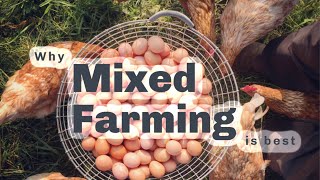
A video by Richard Perkins arguing for small, diversified mixed farms that integrate animals and plants to recycle nutrients, boost production, and provide diverse, nutrient-dense food for the farm household and market. Perkins describes practical strategies used on his farm (deep-litter wintering, rotational grazing, shelter belts, ponds with trout, bees, market gardens, on‑farm processing) emphasizes learning and rootedness, and frames profit and pragmatism as necessary to effect change within modern economies.
Chapters
Throughout most of history, most farms around the world would have been small and diverse, that is with both animals and plant systems. So the outputs of one enterprise could feed into the inputs of another. And some of the beautiful benefits that come with managing whole habitats. Today we live in a world of monocultures and commodity farming where producers often don't even eat the things that they produce. So today's video is about some of the virtues I see in diverse mixed farms. At our farm, we are working on a whole menu farm approach where we produce our own needs first and then sell at a profit. And that's one of the big reasons that we farm is to make a profit. And I think that that brings with it some implications. Now if we look at some of the most well known production models in this field, we'll see that all of the high producing farms are also high input. And there's no two ways about that. I think there's a myth in the permaculture world of low input, high output farming and it doesn't exist in my mind. I've never seen an example of that. So I think it's got to be seen in context that, you know, a lot of high production relies on off farm inputs and so that needs to be factored in to the scale of the operation to see its true input and output costs. And that's okay. You know, we don't need to be 100% off grid sustainable on our own. It's not fitting the reality of working in modern economy and the way society is structured. As producers, we have to be pragmatic first and you have to be in the game to be able to start making changes to the way that system works. So our strategy has been to build up a customer base producing products that people are familiar with and eat regularly. And once you become a price setter because you're doing something unique and interesting in a better way than most food is produced, then you've got the opportunity to become a trendsetter. If you're not even in the game, then you can't really start playing. There are no animal free ecosystems on this planet and animals have always been a crucial part of maintaining fertility cycles. On a farm, you know, anything that's not truly pastured, like a ruminant raised on grass, fed by sunlight and water, requires inputs. Our hands rely on external inputs. But I'm okay with that because in our context it feels like we're using this as a tool, importing nutrients to kick start the nutrient cycling and water cycling in our pastures. Which have been degraded through lack of animals and management in the past. Another benefit of mixed animal species is utilizing the same space for multiple production forms so we can run sheep, cows, tigers, turkeys, chickens, laying hens all over the same land base and produce additional profits whilst boosting our nutrient and water cycling. What we find is there's so many beneficial interactions between the different enterprises. We can, for example, we're right now in the middle of winter and our animals are inside on deep litter systems. And those deep litter systems provide the mulch and nitrogen needs for our woody crop, our tree systems in the first five years of them being established, we mulch them annually. And then the way that we move our livestock around with the ruminants cutting the grass to make way for our egg mobiles and the electric netting that needs short grass to function properly. And then the chickens in return scrape through the cow manure and eat the bugs and distribute the manure evenly across the whole ground whilst adding their nitrogen to feed the pastures. And radically build up our pastures here from our slaughtering facility. And nutrients that are kept on farm wastewater can be put onto the windbreaks.
That protect our crops.
And then those provide woody biomass that can be chipped and put back into pathways on the gardens or as mulch.
For our tree systems, etc.
And then we have shelter belts and forage for animals within the fields in our silver pasture systems. They also provide shelter for the early buds on the fruit trees. We have bees to be able to ensure good pollination at the farm. Another example is the irrigation pond we built for our market garden, which reflects light onto our cold climate vineyard. It's not a commercial element of what we're doing, but it's something that will give us pleasure and produce something that's unusual at this latitude. Also, we keep brown trout in the pond, which add fertility. That goes on to the market garden. Learning is a big part of why we're doing what we're doing. We're very deeply engaged with our learning process and it's amazing the skills you need to run a small farm. One minute you're a carpenter, next minute you're welding, next minute you're a biologist or a chemist making compost, you're a physicist. And really that's the joy of it all for me, is to be able to work with all these diverse processes. And this idea of lifelong learning, it never ends. You can never really get to the edge of understanding these complexities. So learning is a massive part of it for us. And the sense of rooting in place. That comes when you start to build up a site permanently and have the ability to watch the results of your actions over years to come. For me, it's a joyful lifestyle that, you know, it's also a perfect environment to raise children in, so they're totally in tune with the cycles and rhythms of the natural world. One of the biggest reasons we farm is food. And we're unlike most farms in that we produce all our own food first and then produce for a profit. And I wanted to show you this picture that's featured in my book. I've included it there because it's the stories we can tell as small farmers. Why are we doing this? That intimacy that we can cultivate with our customers that forms the basis of small farm marketing. In my mind, people are incredibly curious of what drives us to do this. You know, why are we stepping out against the current and working hard to produce a different way of making food? So I'd like to recount that story here.
So it's sitting down to a meal like this with a total food meterage of several hundred meters. We've got home baked sourdough bread from the farm kitchen, with homemade butter from our Fyoku mountain cows, and cheese made from milking in the pasture. A relationship built upon years of getting to know our animals intimately and milking without restraint on pasture. And then aging this cheese in the cellar beneath our house. And then pastured eggs that have been collected just about half an hour before eating. And duck liver pate made from the ducks that enjoy our pond, that feeds the market garden with irrigation water, and some cured lamb ham that we aged over the winter in one of the barns. And then a main dish of pastured broiler soup with leeks and other vegetables from the garden and some pickled vegetables saved from the year before. So we have this beautiful abundance of whole farm food that you really can't buy in shops. And this is what makes it all worth it, to see all the different products from pig to lamb, chicken, turkeys, guinea fowls, beef, now this year, making our own cheeses to put on fresh pestos and tomatoes from the greenhouse, and all the berries from our silver pasture lanes, as well as some of the wild foods that we can collect, the berries and all the products we can make out of that, and putting flowers in our salads, making our own breads, making our own pastries, etc. It's really beautiful what can be put together with things from right outside the back door. And then we have all these wild foods here in Sweden too that kind of make you feel ridiculous for farming in the autumn. All the apples and pears that go unpicked on people's trees as well as forest berries and mushrooms and other salads and perennial herbs that you find in the wilderness and the lake close by where we go to relax and swim. We also fish and eat freshwater fish as well as having some of the best salmon fishing in Scandinavia about an hour's drive away so we can have fresh line caught salmon not raised in industrial manners in the fjords. Really toxic food that people are becoming aware of now. So it's really this element of being able to produce whole farm food, eating totally fresh, totally from right outside the back door that makes it all so worthwhile for us. And the greatest joy of farming in my mind is sitting down and sharing incredible food, nutrient dense fresh food with awesome people from around the world.
So thanks for watching. Leave any comments below. Hit subscribe Share the video if you enjoyed it and you can find out more about our farm in our book Making Small Farms Work. See you next time.
More from Richard


A review of short and intensive season on a mixed farm and restaurant/event space in Sweden






Alskade Kyckling Exploring complexities of poultry production in Sweden and what we stand for


