THIS IS HOW REGENERATIVE AGRICULTURE WORKS
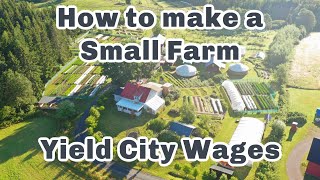
Richard Perkins (Ridgedale Farm, Värmland, Sweden) presents a practical, numbers‑focused account of running a 10‑hectare (25 acre) regenerative farm with the goal of building topsoil while generating reliable cashflow. Key themes: mimic nature (holistic management, high‑density rotational grazing), landscape design (keyline plough, water capture), a diversified set of high‑value, short‑cycle enterprises (pastured broilers, layers/eggs, turkeys, market garden produce, heritage pork, lamb, preserves), and low‑cost on‑farm infrastructure (approved small slaughter facility, smokery, packhouse). He emphasizes direct sales, local customers, and scaling models usable on rented land. The talk includes multiple concrete economics and infrastructure figures.
Questions this video answers
10 hectares (25 acres).
About €90,000.
4.5 hectares of pasture used primarily in six months of production.
About 300 birds per week; broilers sold at approximately €9–11 per kilo.
One eggmobile (build cost ~€1,500) yields about €35,000 of egg sales per year.
Chapters
Hello everyone and good morning. Welcome to our second session on our second day of the Oxford Real Farming Conference 2019. My name is Nessie Reed. I am director of the Global Environments Network and a long time lover and ex program manager of Oxford Drill Farming Conference. But I can't stay away as you can see this morning. I'm delighted to introduce and welcome Richard Perkins. Good morning, Richard. Richard's going to be speaking about his experience of making small farms work and specifically from his experience from his own farm in Varmland, Sweden. Before I go on, can everyone hear me? Great fab. So speaking from his experience of Ridgedale Farm in Varna, Sweden and how to make actual profit from farming. I think there's so many ideals and dreams when we enter into farming, but to actually make profit is incredibly difficult. I won't say too much because I know Richard has so much to say and to pack in into an hour. We will try and have some time at the end for questions, but just a couple of moments or questions I wanted to posit is what you've mentioned from your videos and a lot of your work, Richard is how can we copy nature and use it to grow food. I love that idea of how do we be stewards of the land and really use natural processes to their best advantage and work as farming in that sense. And also you talk about putting nobility back into farming and how to rebuild ecosystems and building soil. So I'm sure we all have many, many questions for you. But without further ado, welcome and yeah.
Thank you so much. Great, thank you. Okay, so I have a lot of slides to get through and does everyone here okay with the mic? Yep, a lot of slides to go through and I'm not so familiar with not seeing the next slide, so I will, I'm hoping to end in time that we can have questions because I think that's a very valuable thing. I'm going to basically give a very concise overview and context of our farm and then focus primarily on our primary enterprises and get really into numbers and facts and figures because I feel like that's something that's not transparently talked about enough and it's the only thing that makes a business work and farming is a business. And so I'm actually from Wiltshire in a small farming village and I actually moved to a much more conservative, more expensive, colder place up 59 degrees north where a lot of people would say it's impossible to run a small farm. We have a 3 months frost free growing season which varies 15 to 25 days every year. It's a very harsh climate and not many people are moving out to the countryside and making farms in this part of the world. But what we've shown through our very small farm is that you can make a very good living by doing very good work that restores ecosystems, builds soil and feeds people much higher quality food than they can buy in the supplies around them. We're a very small farm. It's 10 hectares, that's 25 acres. And that wouldn't be considered as a farm in many ways, but this farm is. We bought this farm for about €90,000. So we benefit from having much cheaper land in Sweden. But we also, it's juxtaposed against a very high cost of living and high taxation, et cetera. So it kind of equals that in some ways. We've spent in the last five years about a little more than that doing the farm up. And the farm turns over more than that every single year, primarily off the four and a half hectares of pasture in six months. Production and selling averages out throughout the year. And so I really want to focus in on what we've done to cash flow and to make farms work, because I think that's something that my work focuses around, is getting more young people, entrepreneurial people into farming with models and modes that are applicable and scalable to meet different people's needs. And many people around Europe are starting to emulate these models Now. This farm is a little small, holding a couple had been horse drawn, growing, growing grain and living self sufficiently for decades. We had a list of about 50 goals of what we were looking for in a property. And we found this place after a long search around Sweden. And we designed up a farm that is meant to be viable in the long term through primarily perennial crops, grasses, trees, shrubs, et cetera. But they are not things that give you any kind of cash flow. They are long term systems. And so we needed to put in enterprises that make money quickly to pay off our farm as quick as we could. We set out to pay off all debts in five years and make good economy for ourselves from the beginning. And so Basically we spent five years, basically 3D, printing this onto the landscape. And this little farm has an incredibly high amount of productivity and revenue driven through it by building ecosystems and building soil, which we'll see in some of the slides. So it is possible. And if it's possible in the middle of Vamland, in the middle of nowhere, in a very small market potential, then it's definitely possible all over the place. What I would define as regenerative agriculture, by default, is agriculture that must build topsoil. We all eat about 400 kilos of food a year, and agriculture uses about 10 tons of topsoil as a resource to create that food. That's not good enough. Right. We all know that even if it's organic agriculture, it's not acceptable to be losing topsoil. And history shows us what happened to all civilizations in the past that damaged that resource base. So building topsoil is fundamental. And you can't really, you know, sustainable is a useless objective. We need to improve ecosystems. We need to leave farms in better conditions than they were. Otherwise kids wouldn't naturally want to take on a farm. And Sweden's pretty much like every other Western country in that Farmers are averaging 65 years old and all of their capital is locked up in immovable infrastructure. And they tell their kids, hey, don't farm. Go to the city and get a real job. And so my mission is trying to put nobility back into rural stewardship. And the only way to do that is by restoring land, making it better, and making good livelihoods. Because I'm working particularly with young people going into farming, and the only thing that I can do to empower them to start is, is show them that you can make a good living doing this. There's no other reason someone would want to work incredibly hard. But it must build soil. And we can do that with pasture, with animals, with trees. We can do that in our vegetable production also. So we know how to do all these things, and we just need a lot more people doing them. And so a big part of my work is getting young people started with enterprises that pay back immediately and make profit from the beginning. Another key element of our work is holistic management. I'm referring specifically to the work of Alan Savory, and I don't think there's anyone here representing the Savory Institute. Maybe next year that's someone you could invite. But that's fundamental, I think, like to have a management system to deal with complexity, because humans have never been very good at making decisions in the face of complexity. And as farmers, we deal with economy, ecology, society. These are all complex by their nature. That is, they predict in ways we can't, they evolve in ways we can't predict. And so that's a key piece for the success of my farm and something that I highly recommend people look into for themselves. Most people come across holistic management as something to do with grazing animals, but it's actually a primarily, it's a decision making framework to help us deal with complexity. And in all of our work we're trying to mimic ecosystems in what we do. How do animal herds behave in nature? What do tree ecologies look like? How does nature build soil? This is how we'll see this coming out when we look through some of the enterprises. I'm interested in a future where there's a lot more small farms supporting communities, villages, towns rather than, you know, it's kind of against the tide of how things are going where farms are getting increasingly larger and less people on the land. And yeah, part of that nobility piece is like farming as you know, used to be a very noble profession and it now has the highest suicide rate of any industry on the planet. And so that needs to change, I think. And I'm interested in supporting entrepreneurial folks who don't necessarily come from a farming background because they're usually more malleable in their mindset. They also have a very steep learning curve as a result. But that's part of the work we must do. And everything's based around localizing inputs and outputs as far as possible. I'll show examples of how we close nutrient cycles and things like that on our farm and using less oil, less money, less debt and technology and infrastructure. So getting people. I'm interested in people scale agriculture, people observing natural processes and doing things intelligently in a way that's good for land and good for their pocket and good for the consumer also. And so I'm not actually a big advocate of organic certification. We run our farm organically. But I'm more interested in having an open farm gate and educating my customers to actually grow the customer base that I want. And this idea of the Pareto principle is like there are lots of customers that you don't actually want because. Because they're a pain in the ass. So basically we're growing our customer base by education and outreach. And that's the basis of food security, is when I look at my customers in the eye and I know their name and they know how their food is raised. I don't need organic certification. It does nothing for me whatsoever. I charge equal or higher to organic prices. And yeah, the whole basis of this is farming should be fun, it should be a good lifestyle. There's a lot of benefits that we've been hearing about to living a farm based lifestyle. So that's a little of the framework of what this means to me. So we took some really good mapping of our farm. I'm sorry if these slides don't show up so well. But the larger layout of our farm is very influenced by keyline design and understanding how water moves in landscapes. We like to fight symptoms, not the core of problems. And something that we like to do in the Western world is drain landscapes of water to grow something that wanted to die. That's not a very good strategy for farming. So we're taking quite a different approach. We understand how water moves in relationship to the shape of the land. And we actually lay out farms based on a topographic pattern that makes water do the most work for the benefit of most life, water being the limiting factor of all agricultural production. So this is an unusual tool called a keyline plough. And it's a rigid tine, non inversion plow that we use primarily for pasture development to build topsoil radically. And we also use it as a tree planting, as part of a tree planting mechanism. And it's basically a subsoiler like you find in all countries all over the world, but it's a highly refined one and it has this, what's called a wombat point that mimics the spherical tunneling motion of a wombat moving through the subsoil. It was developed by Pierre Yeomans, who gave us the whole keyline design framework. But what this does is it allows me to explode subsoil. The only difference between topsoil and subsoil is life, air and water. And when I went around my farm, I noticed a plow pan from the previous land use. This is what it looks like being pulled through the soil. It's has very minimal disturbance on the soil surface, but the impact of it underground is immense. And when we combine this as a mechanical kickstart to turning subsoil into topsoil, and we combine that with the correct grazing of animals, we radically transform our farms very quickly. Yesterday people were talking with this idea of things are impossible, like being told that things were impossible. We heard from some of the older generation, like, you know, fighting against norms. Agronomists still think this is impossible, and they did 70 years ago when Yeomans was developing these tools. So when I went around my farm, I had a penetrometer, and that's a tool that measures the rate of pressure I'm pushing within the ground. And I can measure how deep I'm pushing so I can read a picture under the ground. What does my land look like? And here you could see basically all root mass was within 18 centimeters of the surface. And they had created a plough pan, that is compaction on the horizontal plane by Pulling a plough year after year. And when compaction reaches a certain rate, plants can't penetrate that with their roots. So what we do with the key lime plough is time it very carefully for the soil to be in the right condition, bust up that layer of compaction, and now there's air and water movement in the subsoil. And now plants can root. And when plants root, they release short chain carbon polysaccharides. And so this is the creation of topsoil from below. And then, if we graze that correctly, with multiple species at high densities, landscapes transform very quickly. Now we must understand what animals in landscapes looked like in the past. When Europeans first went to North America, there were 100 million bison running around. When Europeans went to North Africa hunting antelopes for the pleasure off the back of their elephants, they would shoot through 3000 gazelle in a weekend. Well, if you fire a shotgun in this room, you'll be out of here pretty sharpish, right? So if I can shoot 3000 Gazelle in a weekend, that gives you an idea of the magnitude of the amount of animals on these landscapes. And it's animals that co evolve with grasses. And this is where poultry has become such an important enterprise for us. I never set out to be a chicken farmer, but it's one of the most profitable enterprises that regenerates land the quickest on a small farm, because you can have a lot of chickens in a small space. And so I ended up becoming a chicken farmer in the middle of nowhere in Sweden. But by having all of this density of animals, thousands of animals moving constantly, we're building topsoil in a radical way. And we saw the results of that dramatically this year. We just went through 120 year record drought. And all of the slaughterhouses were booked up for a year in June. People were selling off half their dairy herd by June. And we had pastures with timothy and cocksfoot growing up to my face when everyone else was yelling. And that's the result of our intelligently planned interaction. And to be able to move animals around, how they function in nature. Animals are always on the move. And so we need to be able to move water around the farm. Now, all of this stuff that I'm showing you has been done at extremely low cost, like our farm. And the cost of doing up our farm is less than the average person spends on a house in this country. And simple low cost solutions is, you know, you can always find a solution. We drive water around the farm through this reticulated network of plastic pipe and it means we can move animals anywhere on our farm and they have water. So it facilitates this easeful motion. We have lovely portable energizers and netting. It's very easy to do this work. It doesn't take long in a day and the impact is amazing. And then we've patterned this whole farm around tree systems. So putting agricultural, putting in tree systems above the pasture, you get about 1.4 to 1.6 times the productivity in European agroforestry systems. And so what we've done here is pull the key lime plow really deep in the ground like a ripper. So that's basically digging an 80 centimeter deep hole under a fruit tree which if you ever plant by hand, you probably don't dig your holes big enough. So this is a very rapid way to put in these systems. We then pull a vegetable bed former over the top of this to make a nice planting surface to facilitate the rapid implementation of tree systems. And this creates the skeleton, the long term pattern of land use on this farm that facilitates us to build soil in a way that distributes water optimally, evenly across the landscape. Now there's about €30,000 of crops sitting up above our pasture, taking up very little room at all. But they're not going to yield that money for quite a while. So we can't plant these lovely ideal systems and sit back and wait for some fruit to form. We need money, we need cash flow. And cash flow is obviously the hardest part of a farm business to manage. But all the things I'm going to show you in our main enterprises are all things that are scalable, replicable and can be done on rented land. They can be done on someone else's farm to improve their ecology. You don't even need your own farm. And that's what makes them potent. You can see here we've been pulling the keyline plow through between the tree lanes and then all of our animals move through grazing on this pattern. And so even once we're gone, someone, unless they've got a big bulldozer, they're going to have to use the land in an intelligent pattern. Also, these tree systems are mostly berries and standard apple, pear, plum, cherry. We only have 25 species of tree in Sweden, so it's limited what we can do. And they're growing up fast. They've received benefits from the fertility from our intensive poultry systems and they're starting to yield well, but they're still a sideline enterprise. But they really create this pattern of land use for More intensive enterprises. Half of our farm is actually like this, and Sweden is mostly like this. 95% of trees in Sweden are monocultural spruce. And all the forest is privately owned. And it's a bit of an ecological. I mean, this is not the forest system. This is a vertical desert, you could say it has a diversity of one, which is never a good start. But when we bought the farm, a lot of the land looked like this, so it was pine needles and brash and blueberries. And so what we've been doing on this side, because we're making most of our money from a very small bit of the farm, and we're turning this bit of farm into something else. So we brought in pigs who are the ecosystem trigger for forest systems, and they turned that all over and we started to see a flurry of succession where we start to see annual and perennial species that you don't find around. And then what we started to do is import the gut flora and fauna from the pasture, from our ruminants, and we're turning this back into silver pasture. And we're seeing the proliferation of ash and oak and tillier and all these wonderful hardwoods that you do not see in the landscape around us in Sweden, because no one's ever let a forest grow. But these are much more valuable in the future for our kids or grandkids, and they're much more resilient in the face of changing climatic patterns, et cetera. And I can generate about 150 times more per given area each year than by doing it. Monocultural forestry. There's big problems in Sweden with hydrological cycles when they do mass clear cuts. And it's, you know, they take such big machinery now that they have to run 24, 7, 365 days a year to keep the economy. And it has incredibly poor results. So these are little sideline things that we do, and they vary each year, but These generate between 30 and 50,000 Euros a year as sideline things. And that varies each year because we do a bit of this and we do a bit more of that, and next year we do some of this. And there we're like a homestead that produces commercially too. So we produce all of our own food also. And that's been a big part of. If you look back at history of the last few thousand years and read old accounts of farming 2000 years ago, farms were always mixed. They had tree crops, they had annual crops, they had animals, and that's what led to sustainable villages and settlements. So we do that as well. And, and these are not large enterprises, but we produce heritage breed forest raised pork and we produce lamb and mutton. We built a smokery on our farm, so we have an abattoir and a smokery. A very low cost way to achieve the value of the work we do, basically, and cut out all the middle people. Everything we're doing is direct sale to customers. And I want to end this talk by talking about selling, because that's half the work of being a farmer is selling. And if you're not selling directly to your consumers, you're not in control of your business, probably. And that's not a very good place to start from. And I've been working now with what I think is the best sales model I've ever seen. And so I want to end by talking a bit about how we do that, because it's very important. We produce charcuterie and beef. This is the only sort of heritage we have. The only Swedish pigs and the old Swedish mountain cows, which are highly sought after by chefs. And it's very well adapted to our climate and very delicious. So these are things that we do on the side. We also harvest a lot of mushrooms some year because we get these incredible berry yields. I think last year there was 5 million tons of blueberries that they estimated wouldn't get picked in the forest. And yet we're importing superfoods in our supermarkets and all this sort of nonsense. I walk out my back door into the neighbor's forest. In one hour I can collect 50 kilos of porcini and chanterelle and I can sell those for €30 a kilo without trying. I'm saying everything in euros because 10 Swedish crowns is €1, roughly. And so it's easy for me to translate to euros. And I guess you can translate that to your context. We also do a lot of preserves and ferments. We have a commercial kitchen from the beginning so that we can add value to things and store the gluts of growing vegetables. Because we have such a short growing season, we can really overproduce in the middle of the season. So we want to spread our sales throughout the year because we have other products like eggs that we sell year round. So that's making up sideline. That's a bit of money that we might scale this one up or down to make some money to spend on that thing over there. But they're not significant to us. They're not the bread and butter of our business, as it were. So I want to spend mostly our time looking at These primary initial enterprises and walking through how we do it and looking at the economy in more detail and what that looks like. Because these are all things that I think are highly applicable to anyone starting out in farming that needs a cash flow and needs good economy. And I've seen a lot of people coming out of ag school. I also went to ag school myself. It was, it left me quite wanting. But I've seen many ag students come to our farm who they're taught to make business models that lose money for the first few years. That's crappy business, whatever way you look at it. So I'm not really excited about that. So our first enterprise that I think is the most important for cash flow balancing is pastured boilers. And the reason this is such an important enterprise is that in eight weeks I can produce something of extremely high value. And so I can balance the cash flow throughout the season very easily, which is the hardest thing to do. If you're planting a crop at the start and you don't get income till mid season or late season, it's very hard to do. It's extremely profitable. There is very little competition for good organic chicken in Sweden because it's all mass produced industrially. And many people are starting this model now based on what we've been doing. We basically adapted Joel Satterson's model. We're buying day old chicks. They are industry chicks. That's all you can buy in Sweden. But it's also the only thing that will compete economically because you're now playing when you're a food producer, you're playing in essentially a globalized market. So you have to play within in the bounds of that. This is a model pioneered by Joel Salatin. We just adapted that to our climatic setting, which is a little bit more extreme. These birds go on pasture when they're three weeks old and they're moved daily. And you see everything's been nicely organized on our farm so that things tessellate and they work. And this is the beauty of keyline design is everything works in parallel. And so do chicken mobiles and fences and tractors or whatever. We don't actually have a tractor on our farm. The whole farm is run by an atv because we, we don't need a tractor. So that also saves us a lot of cost. These are moving every day. You see quite a high impact of manure. Two weeks later. If you look at aerial photos, you see this big green poof and we're putting a lot of nitrogen down. We're essentially using grain from a local farmer to reboot our fertility system because it's not had animals here for 50 years. When you take animals off a grassland, it decays. It doesn't look so bad in our humid climates because it still looks green. But if you look down at the grasses, they're very sparse, they're stunted, they don't grow very much because their roots can't penetrate through this compact layer. And there's moss everywhere. Moss is a sign of acidification, compaction, waterlogging or any of those combination. When we first got to the farm, this top of the field was just moss. There was no grass at all. We don't have any moss on our farm at all. We now have the best pastures in the village and we started with the worst pastures of all. And that's largely thanks to the animals. Sweden has a total zero tolerance policy on salmonella. If they find salmonella on your farm, they will cull everything on your farm. So we have to do our own testing for every batch of birds. That adds a bit of cost, but it's not significant. And these run through the tree lanes here. You can see there's a couple of eggmobiles, there's 800 laying hens, and each of these pens here is worth €2,000 in eight weeks. And so it's a really important enterprise on that level. And we've been experimenting with different ways of raising the birds. This is something you'll see if you follow our farm is we take a lot of aerial footage with drones and whenever we take aerial photos, you won't see many chickens because I train the chickens to hide from predators with my drone. So when the laying hens first come to the farm, they've never seen grass, they've never seen an egg mobile, they've never seen an Englishman, and they don't know what's going on. So I take my drone out and I just fly it at them really fast and it freaks them out, but it gets that little awareness going of keeping an eye out in the sky. And so there's actually €25,000 birds in here. This is a model we wanted to improve the amount of space they get, so they get 30% more space than the Saladin style model, which is based around assimilated nitrogen. That's what that model is based around. These are heavy, you know, fast growing, heavy meat beds, so they do not forage very extensively. They're not like a laying hen, which still holds a lot of its dinosaur qualities. You know, these are. They're high production meat birds. This is not the density that they're raised in. This is how we move the birds. They're trained to move themselves because all livestock and animals have wings and feet and they can move themselves. So what we do in the morning is we come and set another fence up here and they're all coming to this end because they know it's feeding time. So we lay out feed along the ground, we open a net. 1000 birds in two minutes are now in a new pen. And these pens we've just adapted by putting wheels on and we just pull them over the top of the feeding birds. So in 5, 10 minutes, one person can move €25,000 of birds. And then when it comes time for their one bad day, they're collected in small batches in crates here. They're driven with the ATV up to our slaughtery. This slaughtery was €10,000. It's one of Europe's cheapest approved slaughteries, which means our food miles are measured in meters. All of our diets, my diet comes from about 350 meters outside my house. And I have eggs and dairy and meat and all this wonderful stuff. Now, we set out as. This is the kill station outside. And I set out looking at the regulations for how to build a slaughtery. Well, they're not written for small scale, innovative farmers. They're in for industry. So they don't make any sense for a start. And there's no one that can really interpret them for you. So we were like, okay, let's just do it and see what happens. So it was me, an English man, and this German man and a Portuguese man. None of us could read Swedish regulations and we just built a slaughtery and then we phoned them up and said, come and inspect it, we want to start slaughtering. And they loved it. The lady who inspects us was very nervous because she's never had to inspect something like this. So she bought the head vet and the head vet was visibly moved to see people, not a machine going see people skillfully doing this job by hand. It really touched her and you could see it. And that made our regulator really relax because she was like, ok, this is good. But they brought out a new regulation in Sweden that working cabins, like porter cabins, they had to have 4 inches more headroom for health and safety. So suddenly these wagons are only worth taking €200. So we bought a wagon and we just kitted it out with scrap and put in a nice blast chiller for reducing carcass temperature. And this is how we process on farm Birds come in, they're scolded and plucked and then we eviscerate them, we quality control them, we chill them down. We have to meet all these regulations and there's all this paperwork, but it's very easy. And then I can produce a little booklet and give it to you. And now it's very easy for you to do. It's one of these things that once you've done it, you're like, ah, that was kind of easy. But it's overwhelming before you start. Like, how do you build a slaughtery? But there's no one you can really ask. So the more people doing this, you know, it facilitates more people going. So we do about 300 birds a week. These birds we sell for 9 to €11 a kilo, if that gives you any reference for here. And that's cheaper than organic certified chickens in the supermarket. So it's a very good price because these birds have a much different quality of life. And so this is a really nice element where we've taken something and produced an entire product direct to the consumer. And it's a very nice process. And what's facilitated really doing this is this wood supply that we found in our local timber yard. Because Sweden people don't work so much. Machines work. So the timber yard doesn't have any employees. It just has one guy in this massive Volvo thing that picks up industrial pallets of timber and sometimes he knocks them over and then they just chuck it in a pile and burn it. So we go along, we're like, can we take some of your wood? This pile is about 100 meters long, 6 meters high, and it's all 6 meter lengths of different dimension timber. There's nothing wrong with it. I go, in the beginning, I was going with my little trailer in my car. I was filling that up, driving back to the farm, unloading it. I worked out it was the equivalent of getting paid 2 million euros a year. So it's like screw farming. We're wood collecting and we basically built yurts, we've built barns. This barn cost €600. We built slaughteries, we've built infrastructure for animals. You know, all of our chicken pens, everything is made in a super low cost, easy way. But. But now we can house people, now we can educate people, now we can wash people in beautiful sauna. We swapped this little wagon for three meat chickens and built a beautiful sauna that washes everyone that comes to the farm at very low cost. And so we make a lot of use of other people's waste and that's one of the benefits of living in a really rich country is the quality of the waste is fantastic. I found a still chainsaw that it just had a dirty air filter and someone had thrown it in the skiff. So yeah, we have a lot of fun collecting other people's trash. This is our lean to greenhouse where we do all our starts. We have to start vegetables when it's minus 20. And so, you know, it's allowed us to build up infrastructure really quickly at super low cost and not getting into debt or not getting into debt that we couldn't afford, which is more important. This is a smokery that you can't see, but it's basically a very simple wooden building that's insulated with a sauna heater. And this allows us to take our damaged birds. Like if a bird has a rip in the skin from the plucking machine or something like that, we can take that bird and double its value. So our waste becomes even more valuable than our premium products. And so that's something that we've been doing a bunch of. This is what this enterprise looks like. We've put about €24,000 into building a slaughtery facility which was like all the machines and converting it. And we use kanga boxes. You might see them later for delivery. These are just polystyrene insulated boxes. And we can deliver frozen chickens. They can stay frozen for 12 hours. So we don't need a refrigerated van. Well, that's a silly cost if you don't need one. And everything we sell is within 50 kilometers of the farm. I heard some people yesterday talking about selling everything within five months. That would be even better. But where I live, there is no people around. We live in the middle of nowhere. We have the largest wolf population of anywhere in Scandinavia because we're in the woods in the middle of nowhere. And I think that's one of the great things that I can share about our farm is like, this is working in the middle of nowhere in rural Sweden. We're not outside a big city where if we were, we could easily sell a lot of product. We're making it work in a very rural community where our biggest city is 70,000 people and that's an hour away. And around us there's very little. So I think that speaks a lot to the hope of making that work. Chicken crates, waterers, feeders, ibc, that's the slaughtery water goes into an IBC that's then distributed onto our non edible tree crops. And that's Certified and allowed. And you have to know what you're talking about. It's like when my inspector comes. I know about the. The life cycle of E. Coli and listeria and I know much more about it than they do. And if you can dance rings around them and they know what you're talking about, they're confident that you know what you're doing. And that's how we get away with things. That might be very untraditionally Swedish. Like most people in Sweden would just spend 100,000 on some stainless steel thing that goes ching or something like that. But it's. Yeah, we can do it in low cost ways. We max out about four and a half thousand birds. We can't sell much more than that unless we started selling all over a much wider radius. We average about 2.2 kilos. We sell mostly to private people and then we sell wholesale, not much cheaper. And that nets about €60,000 in a thousand hours. The feed cost is the biggest cost obviously of this operation. We feed organic feed, but Interestingly, up to 10,000 birds is not even considered farming in Sweden. It's classed as no farming. That person obviously never stood in front of 10,000 birds. But you could do that on five hectares in six months, with six months off for winter building a lot of topsoil, you would yield €120,000. I have better things to do than chopping heads off chickens all the time, so I don't do that many. But it would be very easy to if you had the market, obviously. We also do pastured turkeys, but this is still a sideline enterprise for us. It's even more profitable than doing broilers. But we don't have a tradition of turkey in Sweden. It's just coming, but it's hard for us to sell more than a few hundred. That's something that would work very well here. I don't know what prices are, but we sell for €14 a kilo and this is them on their little gobbledygo and they're moving in two poultry nets daily. They're ferocious foragers. You can't really see so well, but they really graze. So they take about 40% of their diet from the pasture. And if you've ever had real turkey and brined it properly, you know it's a million miles from what you can buy in the store. And so we actually have a very good conversion ratio getting vegetarians to eat balanced diets again. And that's part of my secret agenda. But you see how simple this is how we raise the eggs as well. It's just simple, portable solar energizer and poultry fences. We have no predator issues and these are essentially effective against all the predators you will encounter. And so it's, you know, 10 minutes work a day to move them and then a processing. And yeah, these are. We typically produce like five to six kilos because that's all people can fit in their ovens. And that's obviously quite a small turkey, but that's a sideline. And then another big one for us is our pastured eggmobiles. And so this is. I've been quite excited to see loads of eggmobiles popping up around Europe, obviously copied from this, but I've told people not to copy it like this. I've built it in this shape for a very specific reason that isn't necessarily appropriate to anyone else. But I guess people like standardized solutions so they start to do the same. But it's cute. So I see like these little eggmobiles pop up. This eggmobile is €1500. It's built out of scrap timber on an old car trailer. It kicks out €35,000 of eggs a year and it takes me very little time to move it in a day. And you don't need fancy solutions to do these things. We make roll away nest boxes, so there's an incline here where the eggs roll away because you need to have clean eggs. You can't wash eggs in Europe, but you can see how simple this contraption is. And then we use these simple gas hoses. They're 100 meters and they plug into the main line so we can basically take water wherever the hens go. We have three of these eggmobiles with 1200 hens and produce about nearly half a million eggs a year. And it's a great enterprise. But eggs is one where you've got to have your market sorted because eggs pile up really fast. We integrate this with our ruminants because we did a lot of pasture surveys when we moved to the farm. We spent the first year crawling around doing pasture surveys and insects, invertebrate studies to see what are these animals getting from the pasture, what are they eating, you know. And we saw a direct correlation with this is the population of dung beetles, which are very beneficial. They carry organic matter down into the ground and bury it. And then the fly larvae hatch at 96 hours. So we pull these behind the cows to be able to feed our chickens in high omega oil larvae and they really build grass. And this is hard to see, but basically At a time when everyone was going into drought and culling their animals, we were in full rampant pasture growth still. And as a result of basically building topsoil from below, deeper rooting plants that obviously don't struggle so much for, for water. This is how we collect eggs. And we turn this little contraption that we swapped for three chickens, again with a neighbor. And that's a certified egg packery. So again, it doesn't need to be expensive infrastructure. And this is the winter view where the hens actually move indoors and the eggmobiles sit out on pasture. My clicker doesn't seem to be working as good as. So this is a vegetable production in the summer. And then in the winter we have a peat swamp. So we take peat moss, we mix it with straw, we make a deep litter system. And they just have natural light, they don't get artificial light in these tunnels. And then at the end of the spring, we take a new flock. So we have flock for a year. We then sell them as stewing chickens. We're surrounded mostly by older people who actually prefer stewing chickens, or we sell them as live birds. And then this is cleared out and it makes about 50 cubic meters of compost a year. And then we fit 1,000 tomato plants into that tunnel. And so that tunnel is actually making more money in eggs in the off season than it makes in vegetables in the on season. So infrastructure's got to have multiple uses. It's a super low cost enterprise to start up. If you build your own egg mobiles, it's very cheap. You can run it with an ATV. And we get about 85% average laying throughout the year. We sell eggs $0.33 xvat the birds sales or the meat sales kind of work out to cancel out the cost of buying the birds. So it kind of just neutralizes that in the equation. It produces €105,000. And the reason I've excluded labor here is the people that we employ do not do one thing. They do a bit of everything, because we all like to do a bit of everything. So it's easier to equate it that way, if you see what I mean. It doesn't take so much time in our farm. It could scale, you know, a little bit larger. And this one actually has EU organic status now. So it's a reference. If you're having trouble in the UK with eggmobiles, you're welcome to point to our farm as an example of a certified organic thing. Now, I realize time is getting short and I want to talk about Market gardens and sales. So I'll start moving a little faster. Is that okay? Yeah. So the other main. So it's pastured layers, pastured boilers and market gardens. These are the three systems that are making our primary income for now. So we've taken the best market garden planning and just put the best soil care and married those together. And so it's a bit different to market gardens. You might be used to. In that it's totally no dig. This is how we started gardens in the beginning by just laying compost on the ground. And we've also made beds where we tilled it first and done the same. These beds are actually weedier, so that tells you something. But we don't spend much time weeding. This is a very energy efficient way to go about market gardening. Something that's really critical and I think some of you lot are. Market gardening is there are certain pattern languages to what make market gardens functional. I came into farming through growing veg and I left growing veg because it was always crappy work and really hard work for crappy pay. But I've come back to it through good planning techniques that make it very profitable. So everything's standardized. All beds are built around. Elliot was talking yesterday about 30 inch beds. All the tools are built around this width. It's also very ergonomic to walk across beds. And standardized length is vital because you can't make a good crop plan if you don't have standardized beds. And you can't build a rotation into that either. And pretty simple stuff. Market gardens need to be clean. A profitable market garden is probably very clean and tidy. That's what I've seen going around watching some of our students setting up. And so everything is highly organized and highly structured. It's built a lot from the influence of Elliot Coleman and then the further development of that work through people like Jean Martin. Very intensive spacings where there's living plants covering the ground as long as possible throughout the year. And these are. We started as a csa, so we grew high value and low value crops. This is one of the highest value crops we can grow. And it's just a mescaline salad mix that creates €150 net per square meter in our little tiny growing season. So choosing the right crops is important. All of our garden is focused around these tunnels and caterpillar tunnels and these blocks of beds. And then we have our pack station and chilling space here that we'll see in a moment. And to irrigate that we needed a water supply because all Houses in the rural situation in Sweden have their own water supply and we didn't have enough water. Market gardens need 3-4cm of water a week. And if you don't put enough water down, you don't get any performance. So we built a lovely pond using GCL liner, I think. Jay, you were talking about this yesterday. Amazing liner for building ponds. It's €5 a square meter delivered and you can simply cut holes in it, stick an overflow pipe in, stick it together with some bentonite clay powder and it seals up. So this is. It must be covered with topsoil. And this is it. Six weeks later it's a functioning ecosystem and that supplies all the water and nutrition from birds and fish that are in there onto our market garden. So we started as CSA boxes because we wanted to sell in advance. So we started pre sales selling chickens up front, sell selling vegetables up front to give us cash to invest in the stuff because we had to start from nothing. But that isn't the most profitable way to grow veg. So we're moving away from that. And we've been analyzing our veg production. These are very high value crops. In our context. It depends on your market. Obviously it might vary a bit. And these are all low value crops. And whenever I go to market gardens that aren't making good money, they nearly always are growing mostly this. So if that's the case for you, start growing more on that. And we built this. This is a lean to greenhouse that basically is made of free timber. We needed somewhere to start plants when it's minus 20. And so we took down the bulletproof windows from the Stockholm police station in exchange for taking them with us. And this is. So it's bulletproof on the top, it's sunken into the ground and you see it's just buried in the ground a bit to keep the temperature stable. And with one little. We basically have a little fan here that kicks out heat from our wood stove and generates some heat in here. And we have one little tiny heater that allows us to do all our starts, all of our trays tessellate, we use trays that are 40 x 40 cm or a meter by 40 cm or 60 x 40 cm so we can get maximum stacking in this small expensive space as it were. And that works really well for us. And these are some of the basic tools that I would recommend you invest in if you want to make the sort of numbers I'm going to show you. We always have a standardized way of creating beds. We board, fork beds before each crop. And this is like an equivalent to a keyline plow. It's a handheld keyline plow. You're not breaking, you're not turning the soil and you're not destroying the soil structure. You're creating some air movement within the lower soil. And I don't think we need that in nearly all of our gardens now. There's places where I was very happy to use it, but in most of our beds now, because we keep adding compost, it doesn't produce any benefit anymore. Using simple tools, buying rakes that are the same width as the bed means you don't have to run up and down twice. If I can do things twice as quick as you, we're in a very different work capacity. Right. Bed rollers. This is things that Elliot Coleman has developed. This allows us to create good tilth for seeding or to mark for transplanting very quickly. We use the six row seeder, which is allowing us to plant 12 rows of baby carrots on one of our beds in four or five seconds, which these little time savings, like market gardening has become the most popular enterprise that people go into in my experience, because it's got an easy. There's no barrier to entry. You don't need to know anything about animal psychology. Nothing's trying to like kick you in the face and like, it's easy to get started.
You have 10 minutes.
10 minutes. Okay, I'll wrap this question quickly. But the trouble is it's the most work intensive of all enterprises. I've kept incredibly detailed records of time and motion studies and I'm working on comparative analysis of all the different regenerative ag enterprises because it's a lot of work to make a good living with veg. This is the Jiang Seeders. Really good at singulating seed and they come in one to six rows. And transplanting, there's good ways to. There's good pots and there's bad pots. So I won't say so much more. But having the right tools makes things fast. This is the, the Farmer's Friend greens harvester, which means we can harvest salad mix at walking speed. That thing costs €600, but it pays for itself in a few days of harvesting high value salad greens. And so I started a tool company this year selling all these tools that people find hard to get in Europe because they're all from America or Japan or whatever. We bunch all our vegetables in the field to avoid traffic jams at the wash station. So everything's planned out to have optimal workflows. Around the farm that's been a big part of our job is just finding the most energy efficient way to do things using the right tools. This is a push cut knife for things like lettuce, so that you do this rather than this. But if you do this 20,000 times in the next three years, you're going to have funny wrists and a bad back and all these different things. So there's a reason for using the right tools. These are our tool boards where all the tools are stored right inside the gun so they're right where they're needed. And also so that the gardening crew do not bring mud into an engineering workshop. And then we do work with season extensions. Very low cost ways to do season extension, tunnels within tunnels. And I've started supplying caterpillar tunnels, which I think are the best way to do season extension for market grower. They're cheaper than big solid tunnels. And what's important about them is they're very quick to put up and move. So they can move with your crop plan. And they're developed in America, but they're now available all over Europe and they're about €12 to €14 a square meter. So it's a very cheap way to put up extra growing season. For us, that's very significant because we have such a short growing season that it kind of effectively doubles it. Then we use fleece. This is the cheapest way you can do season extension. We just use 1 1/2 meter of 4 millimeter galvanized wire. That's perfect for covering a 75 centimeter bed. It doesn't cost any money, so you don't need to spend money on cloche hoops and things that are overpriced. And we use it for germination, but also for microclimate. You get a 3 or 4 degrees Celsius change in temperature under those. And then basically our insects, we don't have any pest disease problems. We have flea beetle really badly in Sweden and we have caterpillar butterflies. So we use insect nets. So we don't need chemicals of any kind. Poisons of any kind, even the organic poisons are often quite toxic. And so it's important to research those things. And this is our pack station. This is actually a car park for the winter to avoid snow on the vehicles. And we have a very simple central wash station. You can see this is where veg comes in in bunches from the field. It's washed, it's dunked, it's dried and it goes into a chiller that's out the picture. And then this is our packing bench where we do custom orders. So all the veg gets brought out of the chiller and is packed into these crates. And these are the kanga boxes I was talking about. So we can take cold veg out the chiller. And it's with a customer in an hour. So even in a hot summer's day with a black delivery van, we don't need any refrigeration and that saves a lot of money. Wholesale vegetables go. All of our wholesale customers are within 10 minute drive, so we don't need any refrigeration at all. And microgreens is something, ooh, I'm running out of time. Microgreens is a super nice one to look into. Is the most profitable thing you could do per square, whatever. And so we do peas which are yielding like one of these trays that fits on our racks that aren't in use in the summer anyway or in the winter with basic lighting, they're yielding €44 in 14 days. And I can fit 40 of these in my lean to greenhouse. Radish is a little bit higher, sunflower is a little bit higher. This is a great enterprise for cash flowing. If you're starting up and you have a restaurant network nearby and there's now tools being developed, this is an ankle for the greens harvester. It means you can push microgreen trays under here and harvest them in a couple of seconds. And it's a very profitable thing to do. Consumers are willing to pay €50 a kilo for this. And in Sweden, in the winter, there is no fresh green supply. So it's a very lucrative thing. Chickens get all of the waste to have fresh nutrient in the winter. And this is what it looks like a bit. Financially, it cost us quite a bit because we had to put in the pond system that made up about €7,8000 with the irrigation. But we're doing about €40ameter square meter. And the additional sales of microgreens, if you were down in this climate, I think you could be achieving 40 to €65 this square meter. You have more than double the growing season in a way. I know people in Germany and down these parts that are doing that, but they're doing it in the same way. Standardized beds, standardized tools, and all the best growers are using these things for a reason. This also meets EU standards for organic certification. Thanks for listening and yeah, hope you find a mess. Sam.
More from Richard


A review of short and intensive season on a mixed farm and restaurant/event space in Sweden






Alskade Kyckling Exploring complexities of poultry production in Sweden and what we stand for


