THIS NEW PASTURED POULTRY PEN COULD CHANGE EVERYTHING! S4 ● E91
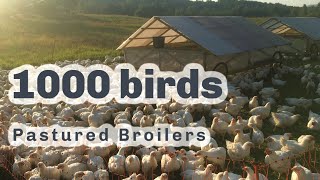
This is a first-person farm update by Richard Perkins (with Grace) describing recent improvements and experiments on a mixed small farm: modifications to the slaughtery (plucker lid, water-channelling pieces, foaming cleaner, knife sharpener), mushroom foraging/identification, logistics for processing and packing poultry and vegetables, and a prototype ‘wagon’ pastured poultry pen designed to give birds ~3× more ground space while being lightweight and towable. The video mixes practical how‑to details (equipment, weights—e.g., sample turkey 4.8 kg—cleaning method) with on-farm storytelling, team updates, and a call for name suggestions for the new pen design.
Questions this video answers
August 8, 2017
10 by 30 meters
About 6 kilos (live); anticipated dressed average ~4–4.5 kg, some up to 5 kg
4.8 kilos
Chapters
Someone wanted a quick farm update, so here we go. So, in the slaughtery, things are changing. I've got a lid to put on the plucker that I made up and some side pieces. And these are designed to. We have a feather bucket here, but water spills out the sides and feathers collect up. So I've built some pieces to fit in to help water shunt the way we want it to go. And just going to work out how these are going to fit. But they'll go up the sides like so and bolt on like this to help channel water in the right direction. And then I've got a foaming system and this is for cleaning, so I'm changing. We've always had a little tap here, but this is going to have a permanent spray nozzle and we'll be foaming the unit down to see if we can save time cleaning. I've also got a knife sharpener. I love to sharpen knives on a wet stone, but it's inconsistent if different people are doing it. So this is actually a polishing stone. With these kind of sharpeners, they don't take the different geometry of blades into account. They only sharpen at a fixed geometry. But I feel like I can sharpen the knives to this geometry and then this will help people keep their knives sharp. Inexperienced people will blunt their knives really fast by cutting into the spine or whatever. So that's the step that I'm prepared to take just to keep things more efficient. But I've got a bit of work to do here. Fitting this in a way that's hygienic and can be easily removed for cleaning. So the lid's on, fits very nicely. And I'm surprised they don't make this with a lid, because the same brand, German brand that we had the turkey plucker for, it had a lid. And it's against regulation to have particles flying around the place. So I don't know why they don't make it with a lid, but I've got a simple. Just bolted it to the side. That's going to work very nice. And then I've added a lip here and cut down our feather bucket that drains out in the drain there to see if this will help. These are temporarily put in place. We were going to bolt them on the sides, but I want to see if it works better with them underneath here because the water is coming out from under here. So it's the temporary setup for this week, just to see if this format works to keep all the water going the right way. And if it is, I'll secure it permanently. Just talking last night. We were just talking last night about moving this silo into the old chicken barn that we dug out just to mulch all the trees because we're not going to keep hens in here anymore. We've got a 10 by 30 meter polytunnel coming at the end of the week, which we're going to possibly dismantle a part of fence here and put in this block here. It's quite a big tunnel and we're running out of space to put it. But we want this barn open, really, for keeping the atv. So just as we've decided we'd move it. Thanks. The local grain farmer phoned to say he's coming in the morning, so we dropped that plan. We'll do it next time. What's here, Gracie? Mushrooms. Yeah. Mr. Spice and Mushrooms.
Lessenum scabrum, another Lessenum scabrum, which has been partly eaten by some slugs. And no more chanterelles.
Found a lot of chanterelles yesterday.
Lots and lots of chanterelles. This is the wood tuft, but it's very slimy, which I'm. I'm the first time I found, which. This distinguishing feature that makes it different from the funeral bell, which is the Galerina marginator, is the fact that it has a scaly bit underneath the annulus. So let's see.
This one is edible.
This one is edible. I'm gonna say with 99% certainty this is what I think it is. Hoping that it's not the funeral bell.
Funeral bell. Sounds ominous. Sounds ominous.
Which I need to. Yeah, I'm gonna do a bit more research into this to make sure that I'm happy to eat, but it's supposed to be delicious, so hopefully it is. What I'm thinking. What this is an orchid, which has given up producing chlorophyll, which you can see from its really light colour, has no green in it at all. It doesn't even seem to have, as far as I know, it cons the mycelium into giving it food, which the mycelium must take from other plants. It must have carbohydrates that the mycelium borrow from other plants in exchange for phosphorus and other things that mushrooms are very good at collecting. And this plant somehow either tricks or does something. We think it's a parasite. What I've heard is it's a parasite.
So it's not actually giving anything in its stink. It doesn't seem to be sneaky. Orchids. So I've installed a hose here rather than we set a little pokey hose and we're using a foaming unit which is definitely more chemical based than we've been using in the past, but guaranteed to dissolve all fats and germs, it kills all the germs and it's very diluted because we're using it in such small proportion. So that spray is foam that we then rinse off with the nozzle here and it should give us a much nicer result. The clean down has been going really good, but this will cut some time out of the clean down procedure, which I think will be very nice. So this is the King's Triferia patch we put in. I'm just checking. Mycelium is renan. Very nice. So it's Monday again. Quick palm update today, but we are starting with slaughtering and we're going to be splashing today as well. Grace is here, but she's leaving today. Tomorrow. She's leaving tomorrow. And we got sharp knives, three design stories ready to go. So all done before 11 o' clock today with only two eviscerating and two on clean out, which is really great. Here's where we record all the data from the birds, when the birds come in, etc. So we can monitor the cool down, which we do by probing beds. But these are actually getting packed today now, in fact, and we're doing half the turkeys tomorrow morning. Bit of a logistical challenge that Matt's been organizing, how to process the birds and get them to the chiller along with all the veg deliveries, etc. It's a bit of a logistical challenge that he's made a good job of. So nice job today. So I'm off now in the early afternoon to deliver a restaurant order. So some beautiful carrots and some baby leeks and beautiful salad, turnips, courgettes, microgreens and half the books. Do about this many books twice a week all over the world. So we had a really nice open day yesterday. It was raining quite heavily and we didn't expect more than 10, 20 people to show up and 130 people showed up. And it was a really nice tour, actually. Really enjoyed showing people around and talking a bit about our context and why we do what we do. Some people traveled, you know, across Europe to be with us and a lot of new faces that haven't been to the farm before. So it's really nice to see and everything's looking great in the farm. The gardens are doing great, the animals Doing great and people are pumped. It's really nice to have a smaller team at the farm. It's the most enjoyable period so far of the year for me because we really whittled it down to the people that are super up for it and really clear about why they're here and what they're aiming for. And for me, that's perfect. As someone who has to organize all the different workflows and projects that are going on in the season, it's really nice for me to sort of have a smaller team who are much more committed and focused and the attitude and the communication just feels a lot better. And, yeah, it's moving the way I wanted to go. It's always been busy here in the summer and it always will be farming in the short growing season. But for me it's really, you know, next year marks a really different chapter in the future of the farm. So this is my local town, and if you order a book, you can only buy our book from us. And this is how it gets to you. I packed the books myself, print all the labels, take them to my supermarket and drop them off with our lovely helpers at the supermarket. And that's how it gets to you. And these go into K boxes to be transferred to the freezer mill. Yeah. So the turkeys are coming up to the barn. What were the average weights of these birds? At six kilos. So we're anticipating four, four and a half kilo dress average, maybe some of them five kilos. And that's what our customers were feeding back to us last year. We're bringing. There's about 60 we're bringing up today just to speed things up in the morning. And the chickens getting packed tonight and taken to the freezer room and everything cleaned down, ready for an early start again tomorrow. But the beds have turned out really nice. Gobbledygo's been fantastic. And lots of big healthy birds. And we'll be growing on the others and leaving some of them to grow on much bigger. So. I'll wash you first. Yeah. So it's a little different. You only need one bucket and same at the front end. We'll do all glands. Yeah. The organs is a bit more submerged, so it's same sort of principle. But it's harder to get out when the chicken one is down in there, as it were. Yeah, yeah. But it comes out and we'll need some buckets of crawling. So same at the front as a chicken. Yeah. Except the crop must come out 4 winter. Because it's quite a Big crop. Yeah, but you need to. It's got a lot more connective tissue on it so you really need to like tease it away gently otherwise you'll rip it. It's a much bigger sack and there's a lot more tissue there, see? Yeah, yeah. Same process as chicken. You go under the windpipe, the succus under the neck. But we have to just remember to come back to take. We'll cut through near something that's been tapered up. So that was done. But the back is very different. So you cut under the peel without going through the guts and then pull out a bit and then I use my fingers to get away from the guts and I'm cutting down. And same with testicles. The heart, Check the heart. Good. Lungs are much bigger. Basically. I think we don't order the boxes and the neck. No, I'm. We're going to get those cardboard, those wood framed one. We weigh the first turkey and they're coming out at 4.8 kilos. So very nice size and not too big to fit into people's ovens. Oh, what's this? I hear you say. Well, this is the start of a new trial we're going to run with just over four week old birds as well as some of the older birds that are six weeks old up at the top. And the aim is to put a slanted roof and make field pens big enough. Two of these would give enough roof space for 400 birds moving in an electric fence with three times more ground space than they currently have. And predators is the first thing I hear you say. Well, foxes are around, but not so many and the fox could break through these pens as it is and they never have. So to have an electric fence around them with a little portable energizer like we have on the hens. Don't see a problem with that. The only problem I see is with aerial predators. But we're going to have the pen set up so that it's not extending far past the roof which will overhang the edges here. Some bike wheels. Everything's up off the ground, everything's protected from the weather. Birds get a lot more space, move daily in the same way, but with three times the ground. Interesting. So I had been talking with a polytunnel manufacturer in the spring to design a new product, four pastured boilers on a larger scale. And I boarded that because it just was too big a piece of infrastructure to be practical in our scale farming, especially with the tree lengths we have. Here's the basic concept developing and the aim is that it's light enough to be pulled by, you know, a 10 year old kid. It takes all the fatigue off the frame and it gets dragged through bumpy ground Here someone was saying how does the dolly work in lumpy ground? Well, it works fine and the trick is if you hit some bumps is to zigzag. But you can see the pens over there have just come down the front of that hill over a big lump. There's no problem with the dolly. But what I'd like, actually this all came about last couple of days because I came up one morning and the birds over in the top of this field that are six weeks old had made a hole in the chicken mesh and there were about 50 running around the pasture and I was really touched. The summer's just coming up and they looked so, so happy and really, you know, enjoying the space that they had. They don't range far like the egg laying chickens here, but they do, you know, they can use a bit more space, that's for sure. And so I just came up with this idea of lifting these pens off the ground that the birds, you know, even a full sized bird can get back under the roof and using the material we've got. Because this roof sheet's not cheap, you know, to buy enough to cover this. This is a 3 by 4 meter pen. But to give it a 4x4 roof, you know, it's a chunk of money. So we're going to reuse all the panels from the pens and I'm going to put a frame roof on this. Now once I've got the wheels on the other side. But I like the model of the birds having three times more space. It will require going over the same land multiple times in a season and our farm in this circumstance. But then the manure load will be three times less concentrated so it's really no issue. But it takes all the stress off the frame, it lifts the frame off the ground so it will last a lot longer. The whole frame will be protected by a waterproof roof. So it just, it's an all round winner. The only concern I'd have is predators and if there's an issue with shelter because it's up off the ground, then we would just drop some curtains off the sides when the birds are really young. And yeah, I'm curious, you know, it's an innovation to see how we can do these things more efficiently, better for the birds as well. And yeah, I like that sort of challenge. It's fun and I'm going Away for four days now. So I'm off to visit a few of my past interns who have set up amazing projects, see how they're getting on, take a little break after a busy internship. It's not the best time for me to leave when a new experiment's going on. Because one thing about doing it like this, this is going to be a mini test with the young birds. So 200 birds here in a half sized pen. So our aim is to convert five of these pens, or about 400 birds to two of these wagons that will have bigger roofs and one electric fence. And so this is a half test because my concern is that this young birds don't really understand what electric fence is. Bigger birds I think will have no problem, but I'd like to be around for those tests. But we also have awesome people here that will keep a good eye on for me while I'm away. So, got the basic wheel stretch on. The beauty of using a big wheel like this is that I can pull this along with my little finger on bumpy ground. I mean, it's just ridiculously light. I mean, a little child could pull this along. Hasn't got the roof yet. That'll add a weight. But it, you know, it's going to be so easy to move. And one of the big benefits of doing larger batches now, I must say I, you know, I expect some unintended consequences of raising 400 in a single batch. You know, it's just impossible to tell anything at scale. Brings problems you didn't anticipate. However, one thing it will do to ease up the workflows a the moving. So the intention would be you set up the next day's net and then the feeders will all be on a skid board and they'll be in the center of the pan. So you open up the net in the morning and then pull along the skid feeders and start feeding and the birds will start moving themselves and then you can pull this pen in over the top of them. So we can have automatic waters and we can have bulk feeding. You know, rather than measuring out different buckets for each pen, we'll be able to feed everything at once. So it could be revolutionary. So I've been working on this for about an hour and 20 minutes and this is how far I've got. Now this is one of our new boiler pans. Remember I made videos early in the season. We bolted everything, used very lightweight wood, 28 by 45 mil. And yeah, I really like it. I mean, this is stupidly light. The only risk of a pinching the bird is under the wheels there. But you can easily put, like plastic sheath around the wheel to scoot them out. The beauty of it is that it's very strong still. I can sit on here, no problem. Out in the middle of the frame, it looks a little wobbly because the bike wheel's got a bit of give. I've had to angle grinder a screw down 180mil screw to get through the bike hub. But if I climb over here, I can still put my full weight on here. So here I am on top of the pen and there's a little wobble to it, but I like it. So some thoughts so far in the build. I don't, you know, this is a test run. We're just testing out concepts. It's cost me very little to upgrade this pen. I haven't adapted the pen in any way. So if it doesn't work, I can turn it back into a boiler pen. All the roof sheets will be reusable, etc. Just a little bit of timber. And what I plan to do is put a sheet on here for a bit more wind protection. And wind protection on the sides, too. Weak spots in my mind are the axle for the bike wheel. But there's very little pressure on this frame now because it's being pulled. On big wheels, there's very little pressure ever going to be on the frame. Whether or not this is bolt is strong enough for high winds, we'll see. That's an easy thing to remedy, though. I just fashion this together before I go away. Other than that. So I'm up on the frame putting the roof sheets on. I need to climb up to get access, but it feels really strong. Really not concerned about the wheels, actually. I think it's just gonna be epic. Pretty neat, Pretty easy, no? And it was holding my weight. I stood up in the middle to do the roof. So now it just needs plastic on the side here and at the other end. Might leave one side open just for good airflow. And there's a little rain cap on the top there. That's the prototype and the main. As I said, the main concerns for predators would be to keep the fence in quite tight. I'm not concerned about foxes. I'm concerned about aerial predators. So by keeping the fencing close to the roof, I think it'll be good. I like it so far. This will save us thousand hours a year, usually probably more than that. Just filling up their water. These waters need to hang so the Weight of the water in the bowl acts to close the valve. Now we've finished fiddling around. Fill it up. Very nice to see the birds outside of it. Gracie's going. Where are you going, Gracie? England. And then you're going to America. Aha. You are a global girl. We've been to, like 30 countries. Okay. Mercy this. I just found an escapee who's been living up at the neighbour's garden. Haven't you? You can go back with your flock. So I'm just coming back to check some nice shade created here. It's important to really check things when you make any big changes. But the birds are enjoying the sun. It's a nice warm day today. Salad and different brassicas to make a new salad mix. So we're gonna have a new salad mix in a couple of weeks that it's gonna have a lot more leaves in now. Yeah. Like a lot more variety. And you'll definitely want to try some of that. We grew it at the end of the year last year, though. At the beginning of the year, Peas are almost done, but we're having a little tour around the farm with the chefs from Selma's bar, who are awesome customers of us, just to show them where a lot of their orders come from. Like, I think in the beginning of the year, we were giving them to you. And you guys know this one? Oh, this the one. Because we had a chef here work in the gardens last year. And actually, if you leave these to grow, they'll be quite big. She was saying this is when she. Here's an example of leaving the roots in the ground ready for the next crop to go on top. It looks like some old beans have come up, but this will be seeded into carrots or something. More of this beautiful mortar stone coming up. Really impressed with the team. Matt and Carla have just been rocking the garden. It's looking super nice. Nice to have the chefs come and see where some of their supply of food is coming from. It's really important to me to make those links, you know, so that people really understand the thought and care that goes into things. So that's all today, folks. It's been really fun. Few days. We've been working really hard. I've been having a great time. Really loving the smaller group we got now. And we have a couple of our interns coming back to stay with us for the rest of the season in the next couple of days, which is awesome. And, yeah, it's been a very interesting time. Some of the videos I've been sharing, you know, shows the ups and downs of things, but it's all part of the whole thing. And you know, I love it all and I'm very excited. Today I got a box in the post from our dear friend Olivia who's been sending out Gracie's Backyard. Super nice and I've seen it a few times, but I've got a few copies to give away. What I'd like is suggestions for a name for our new boiler pen. And if you want to leave that in the comments below, I will get the team to select the favorite name and that's what we're going to call those pens from now on. And the name that we like the best, we'll send you a copy of this wherever you are in the world. So that's awesome. So thanks for watching as always. And next time I put up a video I'll be in Denmark and then in Luxembourg. So I'm hoping to share some really nice videos from some dear friends of ours. Projects in the height of their growing seasons. So thanks for watching as always. You can find out more in our book Making Small Farms Work. We'll see you next time.
More from Richard


A review of short and intensive season on a mixed farm and restaurant/event space in Sweden






Alskade Kyckling Exploring complexities of poultry production in Sweden and what we stand for


