TIME AND MOTION, working in flow states, and winter prep...
Richard Perkins built a walk-in chiller for €2,000 using a Coolbot and AC unit, cutting energy costs by 40%. He uses time-and-motion studies to optimize farm workflows, like packing eggs from 1,200 hens in an hour, and demonstrates how to eviscerate a chicken in 25 seconds.
Chapters
So last slaughter of the year is complete and birds are chilling down. I wanted to make a video just updating a few of the projects that have been going on as we draw the season to a close now and talk about time and motion studies and the importance of challenging yourself. Well, I haven't been making videos much and the primary reason is regenerative agriculture. The book has been consuming all my free time around the interns, managing the farm, etc. It's been epic. You know, it's just been so much work. I just look back at some of the original layout ideas I had three years ago now and it's been a long road. It's looking like the end is in sight. I just sent the book off to the editor again and I will get it back hopefully in a week or so to go through any last little issues in the last few days before getting off to the printer. It is obviously the best way to get the book to support the Kickstarter campaign, which is in the links below. That's the quickest way to get the book. And if you support with the book, I'll post them hopefully in December when I get them. And if you support with an ebook, you'll get it even sooner. I'll hope to be posting those out in November. Other books won't be shipping till March or April because they'll be away on family holiday. So do check out the links, see what some of the leaders in the field have to say about the book. And yeah, thanks for supporting us in that way. Making way for the hands. Tomatoes coming out. Green tomato chutney to be made. This is turning into the winter house for the hens. We're going to start bringing the first flock in next week, then we'll bring the other flock in with a few days separation just to minimize the stress. Okay, things are getting ready for hens coming inside. Tomorrow we are going to bring the hens up to here, make a paddock that ends on each side of this door so they can come in still keep their nests in the egg mobile, but give them a paddock here where they can come in and explore this space. Then after egg collection we will shoo them all out, make them all come this way. They'll sleep in here that night and we'll come and put the nest boxes in here ready for them to come in. We're just bringing one flock in to start with and then later in the week we'll take the other one just to minimize stress. These are roosts that we just about to lift and tie up into the ceiling. Then we have feeders that are hanging off the ceiling. We're going to let them in just straight on the beds to clear up these little green tomatoes. We've taken hundreds of kilos of green tomatoes but we'll let them take the rest. We're constructing a platform for the nest box. There's two nest boxes we'll be installing frost free water coming in under the side here. And we'll build a door so that we can access inside especially as the litter goes up. So we'll have a board blocking the bottom of the door and then a door that you step over and we'll start putting in peat moss. And it'll be 50cm deep by the end of the winter now. So these beds will be sacrificed. You'll remember if you watch videos at the start of the year. These were just board forked into the Here you see hard pan clay. This is the subsoil that the pad is built out of. I just brought back in the composted peat moss with chicken manure and made the beds. They've done really well this year. So nice system that works well. It's gonna be the first night in for the hand. So we've had a couple of frosty nights. It's time to drain the field lines. These are the water supply lines that run around all the edges of the fields. And conveniently if I get down here in the bush, the lowest point is here right above the stream. So all I do to drain this line is top off the pipe. This is water that goes under the road here through to Nutfield and I just stick in a quick release key. Now these are amazing fittings. They're very cheap. It's what you find in municipal supplies and that's what we use to draw water out to all the animals. Now I'm just going to let that drain and go up. Usually I go up to the top of the systems and just open up the very end of the pipe to facilitate it draining. Also got to turn off the market garden pump and fully drain that you can see out in the field. Those of you that aren't familiar, this is points that we have all the way along marked by posts so we know where the water is. It tends to be in the middle of a tree lane so we can draw water off to all the animals. So it's a monumental day. We are closing down the water systems and I'm just going to make sure the market garden pump is also drained. That obviously can Create big problems if it is left open. So to close up the market garden pump, see all the alders that we prune back, I basically lift this inlet which has got a weight and a float to keep it about 40 centimeters below the surface. I just got this tied into the middle of the field. So I'll just undo this string, lift this out the water and drain the pipe and drain the pump. Make sure all the water is out the pipes up in the market gardens too. Okay, that went pretty smooth. Basically pulling this out the water now so we can drain the pump end. You see it's already icy on the edge of the pond here in the evening time. So this is a footer valve that allows air, sorry, water to only go in one direction. I just leave that there all winter and now I head back to the pump and I can drain that off. Beautiful growth on these red lilies. These are the ones that look a bit like lotus flowers. Seen an incredible life in the pond this year. It really doesn't take long for an aquatic system to establish itself. So can drain that line there. And then I want to open the bleed screws on the actual pump and they are located if you can see here, This one needs to be.
Open.
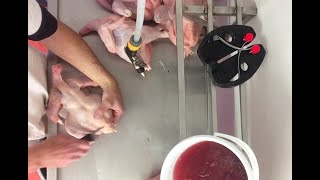
Let the system drain. So I've just opened the tap here right up at the top of Nutfield. So there's a loop that goes under the road back to the drain point up this side of the field, up on the other side of the road, up into the forest, right up into the forest paddocks. So by opening all these, the system's drained, everything's safe, ready for next sp. So we've been really busy with a background project building a walk in chiller. It's a cool pot chiller and it's about as big as you can possibly make with a cool bot. It's running on a split AC unit which I will make a more detailed video about in the coming weeks. It's 19 cubic meters. So it's really big and it's pushing the limits of what an AC unit and a Coolbot can do. We're not going to get to test it in the summer's heat obviously. And so it'll be next year until we go through thorough testing and we built it in a way where we can drop the roof and reduce the volume if it happens to be too big. But it's been a fun project so far. It's not quite finished and wired up and I'll make a detailed video. As I said to look at that process, but we ended up buying secondhand chiller panels and a brand new AC unit. But all in all, with the free timber that we're using to clad the whole thing, it's going to cost about €2,000 for a chiller that uses 40% less energy to run than a compressor based version. And to buy a chiller that size here in Sweden would cost 3, 4, 5 times the price that we've managed to build it for. So, really excited about finishing that up before the season ends. Well, most of you know of me, I guess, through this channel, through speaking out publicly about what we're up to and sharing information. But whilst I've alluded to it in the past, perhaps you don't know is that I actually like to spend most of my time pretty quiet and introspectively. Now, I especially like working like that because I love to find a zone where I can work in the most efficient way possible. Now, I've spent a large part of my life watching other people work and teaching people skills, etc. So I have a very particular interest in observing how people function and have done very extensive time and motion studies here at our farm that used to involve walking around with a notebook and a stopwatch and testing myself, partly for pushing my own limits to see what's possible, and partly for educational or employment reasons to be able to set benchmarks, etc. Now I've built up a very detailed record of what it takes to do everything. And I thought I'd share a little bit about why I feel like these things are important and then also walk you through that with an example of processing a chicken just because that's something that you are familiar that we raise on the farm. We just finished our last slaughtery of the year this year. But the same thinking I apply to that job is the same thinking I'll apply to anything. Writing a book or packing eggs or transplanting or harvesting a bed. And I've worked out the optimal minimal motion to do adequate or better than adequate job with as least effort and stress on the body as possible. Now, some people are naturally like that and I think that's a really useful skill for farming. Farming is a lot of repetitive work. It's a lot about remembering to take something with you every time you go anywhere, or remembering to pack the right tools if you're going off to build a fence or whatever it is. And I love to challenge myself, to push myself to see how far I can take those things. And I set benchmarks with that, for example, to Pack the eggs of 1200 hens should take an hour, including the record keeping, which is keeping a note on the flocks and their laying percentage, any notations from the day, etc. Now, we have interns coming here and part of my job is challenging them to challenge themselves because it's not a race, it's. It's not about how fast you can do everything. Sometimes people want to challenge and race me, and I'm up for that because I want them to push their edges. But I've naturally done these things a lot longer and many more times. And so it's, you know, I'm not here to compete with anyone. But it is interesting to encourage people to push their boundaries and edges because ultimately, you know, if I can say, look, here's what I do, takes me this long in a day, here's the things I have to do, here's the optimum way I found to do them. Now translate it to your time, place and circumstance and in that way someone can say, ah, yeah, I can do this. And now this is a bit too much for me. I can only do half of that. So what does it look like to build a business plan around doing half of this in a day? And that's really important stuff, that. Stuff that can only be eked out in your experience over time. That's why I've said many times it's so important to go spend a year working at the sort of place that does the sort of things that you want to actually do and push yourself, throw yourself at it. The people that have got the most coming to our farm are the people who just threw themselves in, all in. And that's exactly the type of spirit and attitude that they show up with anywhere in life. Doesn't matter whether it's a job over here working in oil and gas, doesn't matter if it's helping out on this farm there or, you know, whatever they're doing, they probably throw that same energy in. And I think that's an important quality and characteristic of people that have the ability to make a success of running their own enterprises, especially in the rural farming sector. But I like to, yeah, that's been on my mind a lot, is trying to demonstrate to people optimal workflows, optimal placements of things and explain the thinking behind everything and then encourage them to, to push themselves to discover where their own limits are. So I thought I'd like to take a look at slaughtering chickens, which I've got down to 25 seconds or so consistently over many hours. That's the evisceration part of a chicken. So there's many processes that have happened beforehand. But like I said, I can apply this same approach to any job that I'm doing. And I do regularly, every day, apply this to everything I do in my life. It's something I like to do, challenge myself with, but it's all about working out the absolute optimal hand movements or body positions or tool positions to get the most leverage to use the minimum effort to do a decent job of whatever you're trying to do. So I'll show you how it works in real, and then I'll break it down really slow so that we can go through, and I'll really try and elaborate what key little things are going on in my brain and in my fingers and the position. I have things to make sure I work very fast and very safely and can keep that up for five, six, seven hours. And I've been processing 120 to 150 birds an hour in this way over many, many slaughter sessions, over many years. And you too can learn by very careful observation of these very considered movements and actions and see what you think about that. So this is a typical process of.
Eviscerating a bird that's been plucked well and that's been scalded at 63 and a half degrees for about one minute 15.
Plucked in our plucker for about 45 seconds.
It takes about 25 seconds per bird, so I can do two and a bit bird every minute if the birds are coming in in a constant stream.
Now we're going to slow that down and I'll walk you through the process.
So notice the angle. A bird is facing northeast away from me. My finger is parallel to the knife blade, so there's no danger of me cutting myself. I'm cutting down through the fascia that separates the spine from the tissue. And then, you see, I pinch up the oil glands and then pull my left hand back to make sure there's no danger of that knife slicing the end of my finger. I'm removing the oil gland because that taints the meat when you bake the bird. Most birds have an oil gland to keep their feathers in good trim. Now I flip the bird at the same angle but the opposite direction. Now it's upside down. So I'm pinching up the skin in the thoracic cavity away from the breast meat and away from the neck so I can just cut only the skin. And when I've done that, I put my knife down to the side and with my right hand, I will secure the bird with my finger between the breasts, holding the bird tight. And I pull down with my left hand the neck skin so I don't rip the breast skin. And then I can reach and I have to grab the slippery crop and I tear it down off the breast meat, switch hands. And now I'm holding the neck skin and pulling the crop off the neck skin. Then I tuck it into the back of my right hand. You see the little finger switch, so my forefinger is free. That enables me to go under the esophagus and windpipe and separate them from the neck skin. Now I go under the neck and separate that from the neck skin. The whole front end of the bird is loose now. And I put my palm on the keel with the start of my fingers at the keel, and then slice between the anus and my fingers to get through into the abdominal cavity. And I turn the bird away from the table so that if any feces or any guts split or anything like that, I can pull it straight off the table. I separate the fat from the gizzard.
With a flick from my finger.
Now I can reach my whole hand in on the right hand side, and I reach and pull all of the innards out in one go. Off the table, away from the table. If anything split at this point, it would be easy to drop it in the bin below. I quickly switch this to my left hand where I'm aiming to separate the heart and the liver, check the bird's health and separate these by pinching the gallbladder and pulling the liver, teasing it away gently. If I confirm that the health of the bird is good, I put the liver up into a collection pot there, that gets put through to the chiller every 50 birds. And now, keeping a bit of tension on the colon, I can now follow that down with my knife. A straight cut down to the spine on both sides. And then I go back to the right hand side, turn the knife 90 degrees and slice under that, leaving no trace of intestines and minimizing the amount of removal so that all the fat on the pubic bone remains there. The guts are now dropped into the bin below. And I will go back in and I will take the lungs, just lining the bird up, and I scoop with my first three fingers into the ribcage. I pull out a lung. If there's testes or any other innards left that weren't removed the first time, I take those out. That bird is now clear on the inside. It's important to Find the perfect point to take the lungs because if you split them, it's much harder to get the little pieces out. We want the birds to be totally spotless on the inside. I'm just reaching for the testes now. I pull those out, I drop all that in the bin below and now I reach for the neck and I'm going to pick the bird up by the neck and I like to cut the neck off at the height of the breasts there. And by having the bird under its own weight, that gives me the perfect cutting point. I put the secateurs in the middle so they're accessible to everyone. Just pulling out the last part of the windpipe that was stuck up at the front. That bird is ready for clean down and it's good to go. It's a perfect A grade bird.
Now, obviously these type of activities require some skill and muscle memory as well. And I do not recommend trying to rush around with a sharp knife. Bear in mind, I have done this hundreds of thousands of times now and I can do it literally blindfolded, quicker than most people can do it unblindfolded. That doesn't make me a hero. I'm just saying this is not the sort of thing you want to mess around with. You start slow, with precise, measured movement, and over time you can speed that up like anything. You know, you don't jump on a, on a bike the first time. You learn to ride a bike and go straight down the biggest hill, you learn all the ins and outs and nuances that you'll never forget again. So I can apply the same muscle memory and thinking to any other poultry, any other bird. As I eviscerate, it's all feeling based. So these are transferable skills. All of the little skills you learn in farming are transferable to life in any way. So these are fantastic things to work upon and I hope you enjoy processing, etc. Without chopping your fingers off. That's it for today, folks. Hope you found that interesting in some way. Don't forget you can check out the Kickstarter place halfway through the campaign. We've got 14 more days to go. We've raised €225,000 now with 2,000 people back in the campaign, it's absolutely incredible. I would love to have more people involved and take it over a quarter of a million euros, why not? Thanks for being involved, folks, and I'll update you in a video soon. Bye for now.
More from Richard


A review of short and intensive season on a mixed farm and restaurant/event space in Sweden






Alskade Kyckling Exploring complexities of poultry production in Sweden and what we stand for


