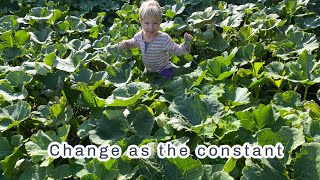
Richard Perkins documents his regenerative farm while wrestling with burnout after seven years. He and his partner Johanna are considering restructuring the farm as a cooperative, pausing livestock, or stepping back during winter to reassess what they actually want.
Questions this video answers
September 10, 2020.
Richard Perkins.
Seven years.
starttherightfarm.com (Start the Right Farm).
Chapters
Okay.
Welcome back to another episode, folks. Autumn is coming. Colours are changing in the landscape. Everyone's got a cold, it seems like, and things are really slowing down. Been speaking with people on the farm like a hero tour, and a lot of people still in mid season. One of the benefits of farming up here so far north is the season wraps down in about a month from now. We'll be wrapping up the whole year. We're just driving out. Look who we've seen.
That is only Mommy out.
That's the mummy and her two babies.
They're coming to us.
Wow. Look, there they go. Gangv runners. Oh, they're gonna not know where to go now. Off we go along the road. There they go. I think it's two little girls. Oh, look, they found the apple tree. That's what they love. So cool.
This is what we have in our back garden.
Blueberries. Got a bad one. Show us where you find them. Pumpkin patch. What is in there, Ragnar? Oh, my gosh. Halloween pumpkin.
Orange pumpkin. And I'm a pumpkin.
There's lots of green ones, isn't there?
No, I know. Giant green one.
Giant green one.
That'S going inside.
There's one here, two here.
Not that big. Go in here.
Everyone.
Big one here. We look. Huh?
Wow. One there, one there, one there, one there, two here. What a pumpkin patch. So this time, cucumbers are out. There's fungal problems with them. And we had a bit of problems with bitter cucumbers. Bit of problems in here generally this year. There's a lot of tomatoes in here. Yeah. We're not totally sure what's happened in here this year. This was meant to be Ildi, which, if you've watched our channel for a while, you'll know this is not Ildi. And in fact, it's not a very good tomato that's coming out of here. It's very bland in its texture. Not particularly nice to eat. So we don't know what went on. But I've heard back from the comments that a few people bought Ildi this year and didn't get what they expected. We cut the tops off the plants a couple of weeks ago now because got to get all this ripening up. And we've been harvesting as we go. Obviously funny year in the greenhouse for us. It's always been pretty useful, and this year's just been not as productive as we would have liked. So the sheep, the males are in here. And that's because Winston's got some funny ear problem where he's got blood in his Ears. So he's having a bit of antibiotics because it'll go away and he'll reabsorb that back in. But it's not been so nice for him. So it started with a little ration knots. Ragnar wants to show you the ram with little horns.
He is really lucky.
Where is he?
Here he is.
Ah, there he is. So with the last slaughter comes the packing down of the boiler pens. You can see the saladin pens and the roller pens. They've had bits of plastic or mesh fixed up and stored like this for the wintertime. And so the fields are empty. There's no more boilers at the farm. Ragnar's noticed there's no aronia. Seems like the birds got here first, didn't they? They've taken every single aronia. Still, we're looking in the pond for toe biters and diving beetles of different kinds. Beautiful dragonfly there. The pond is now full up again. I've turned this siphon on. I can turn the siphon off now. That's siphoning from the other pond on the other side of the road. It siphons over the lip of the other pond, down under the road and back up here. But Ragnar recently found a toe biter.
It's a giant water beetle.
And I've never seen anything so big. It's probably about 4 or 5 centimeters long. And they can bite and they inject a kind of enzyme that it's very painful. It dissolves other small creatures.
It's actually.
It's the only one I've ever seen in my life, actually. So I thought I'd talk a little.
More about what's been going on for me in the background this year. And also over the last few years, I've noticed discomfort with some of the elements that come with leadership and being a spearhead for some part of this movement at least, and where our context is changing, as well as whether or not we'll stay at this farm. That might sound shocking to some of you, but yeah, I'm really opening up my process. So. So I've talked a lot about exhaustion and I think certainly setting out to set up this ambitious farm very quickly in a foreign country and having a baby and doing a lot of high intensity work and high intensity documentation, education as well has been exhausting. I think in some way, the people element has been. Well, I'd say only the people element has been exhausting, really. And that's included our relationship behind the scenes. It's been tough. There's been a cost that I could talk a little bit about. I don't think I've fully formulated my thoughts around this, but I could share a bit of what's been going through my head. I think Johanna and I have very different approaches and working capacities and insights and life experiences that have always been positive balancing force. I will be the one that takes risks, wants to go move faster and Johanna will put the brakes on and balance things out. And in some ways I see there's archetypal male and female characteristics at play. I would say generally speaking it's true that women tend for holism, you know, taking care of a social life, taking care of family, taking care of a household. I mean, that's enough to keep anyone occupied. And you know, of course there's exceptions, but I'd say that's generally a more female approach to look at the whole as opposed to the sort of, more typically, I would say male approach that I've had of one pointedness that has led to the. I'd say largely led to such rapid implementation here as well as the documenting on YouTube and the books I've written and all of the outreach work that I've been doing. And I've just been reflecting on the psychology of that. It's quite interesting because it, I mean, I started a career in this field where there were no career pathways and I sacrificed a lot to create a pathway in this. And I feel like one thing that we've done here is share pathways into farming, but we've also shared pathways into other aspects of that, documenting things in the way that we do and self publishing books. I think there's a lot of people who have been inspired to start different elements of business as well as farming enterprises from what we've done. And I'm not saying that to gloat in any way. I'm just taking stock of the situation and letting you know that there's been a big cost for that. I think, you know, I've sacrificed a social life and it's had damaging effects on our relationship too because of time, essentially time and prioritisations and focuses. And I've tried to maintain balance with that as far as I could, but we've taken on huge responsibilities. And I think one of the difficulties with this farm is that we're starting with new people each year. And so Johanna and I take on an unnecessary and non sustainable burden with that. And I really want to say, just frankly, I'm not here to look for sympathy or to be a victim. We, we've chosen this life and I've particularly chosen a lot about how things develop on the sort of outward face, looking outwards, and how we run certain things, and that's been really important. I also came here with more experience and a whole career in education too. But every year our context has been lacking in time and we've done little tweaks here and there. It's not addressed it. And this year I really wanted to take a year out. I got burnt out. I went on the carnivore diet last winter and that really helped bring back energy and thought, clarity of thought and memory. And that ended because of our sailing trip. I knew I'd be in a boat for two weeks with not a wholesome range of food and just. It's a bit antisocial also. But yes, the. The difficulties that has brought up for family. And I also have a daughter abroad and that's challenging to not be able to spend time with her. And especially this year with COVID it's been, you know, she's been over here for a few weeks and that's been it this year. So that's been really tough. And I think Johanna and I have sacrificed pretty much all our private space for the last, certainly the first six years. And that's had some unintended consequences that I feel need ironing out. And so I really wanted to get a break this year to get perspective because I find my thought process is just one pointed. When I'm here, even if I don't want to be thinking about the farm, I'm constantly visualizing, planning, making decisions, talking to people. So I really wanted to take a step, step back this year and get some rest and perspective and get the inspiration of seeing what some of our incredible participants from courses, online trainings, etc, have got up to in the farm, like a hero experience. And yeah, we've been all over the place. We've kind of been through the wringer. It feels like trying to think of how to move forward. And I never really set out to get to the top of my field or whatever, but I can relate the psychology of my approach and focus to that in that if. If you want to get to a position where you've built up a farm, paid off your debts really fast, written books, built a YouTube channel and a global audience and a whole additional business to that, I think it's. Yeah, it costs things and I'm sharing it for the rounded perspective because a lot of people will or do, I know, look up to us and look to what we have and, you know, we have what most people would dream of. And we have amazing thing here. But the cost of the approach to that has been hard on Johanna and it's been hard on myself. And it's not. I can't do that in the same way anymore. And also my other business is, you know, it's a full time job, plus I have a collaborator, plus I need another employee for that. So it's. It's a lot to juggle with this. So I've been toying with should we continue at this farm we've both been talking about, should we bring in collaborators and should we change the format of the whole thing and turn it into more of a cooperative? And then that feels sticky because we own the land and this place will always be associated with me and us. And so it's very hard to change that. So I feel like our context are changing a lot, especially as we desire to put more time with our child. And really, I think the hardest thing about the way we operate now is having new people each year. It's such a lot of work just to get things up to speed. And what Johanna and I would really like is to be working with people who are fully autonomous. We've been talking about buying all the little houses up at the top of the farm so that people could be here longer term and just live on their own, do their own thing and run a part of the farm so that we can take our workload down and spend a lot more time with our kids and share the responsibilities and workload in a. In a way that we can't do, in the way that we operate now. And in the building up this farm. I felt like we offered exquisite and unparalleled learning opportunities. To do this stuff in an integrated whole from scratch and put it all out in the landscape has been incredible. And I don't regret that in any way at all. I think that now as we shift over into sort of maintenance phase where we've built up all the systems, the dynamic is changing and we feel the burden of taking new people each year. And it's obviously got the capacity to teach people a lot. But yeah, it comes at a cost that we're no longer willing to pay. And so we've been thinking of all kinds of different things and my thoughts are not clear, but I know that my context is shifting more towards Johannes and wanting to take care of better of the whole. So we're not sure we've decided not to keep the hens over the winter. I've even been talking with Johanna about not having the other livestock. So we can just totally take time out and really focus on relationship and on getting clear about how our contexts have changed and what things might look like in the future. I always want to live on land and farm, but we discussed maybe running a family based farm where we don't need additional people or doing something totally collaboratively where we don't even own the farm, we're just part of a whole. And that's been difficult. The leadership element is. I'm very aware of the psychology of leadership, of people projecting things onto you. And I try and still dispel that here by you know, being a jackass sometime and like, you know, like not buying into people's projections onto me. People come here with all kinds of expectations as I'm sure you can imagine. And it's just impossible for us to always fulfill that. And people do get disappointed sometimes when, you know, we're just normal people that we're pretty clear about what we're trying to do. And sure we know a lot about these subjects but it's, you know, it's felt like a bit of a one way funnel for the first years and that's been exhausting and it's very hard to create nurturing, genuine friendships A, because the isolation we're in and B, because people are coming for, you know, six months season and that's not even half the year typically. And it's, it's difficult. However much you try and de armor that relationship, it's inevitable that people expect me to know the answer, etc. And I feel like I also have observed over the years that people's feedback and criticisms tend to go upwards to leadership. So it's a kind of thankless task. You often take a lot of blame and rarely get thanked for the things that you do or sacrifice or whatever. And again, I'm not saying that to be a victim. I'm very aware of the psychology of it and I've chosen it because I'm also very effective at it. But I think that it's. I've got to a place, I've been here seven years now and I don't have the social life that I need to sustain life up here. And I want to put more time into that. And the only way to achieve that is radically change the way that our lifestyle looks. We're too busy here and have too much responsibility to be able to invest in those other things. And I've got by on taking little fishing trips and doing little things here and there and spending A lot more time with our son this year, but it's not enough. It doesn't feel balanced. And so we really want to invite people in in a different way or start some. Something different at another place. And I don't know what it looks like. We haven't formulated it, and there's a million different thoughts happening throughout the season. But I just thought it's interesting to share some of that process with you. And, yeah, it explains a bit my absence in documenting this year, because I'm. Yeah, I'm just thinking a lot, taking rest, and I'm really engaged with the farm, like a hero experience, which has been super stimulating. And really playing into some of these thoughts, hearing about some of the people that have started true collectives and the benefits that come with that. And of course, there's troubles that can come with that, too. I don't think it would be easy to move in the pace we have, but we don't need to move at that pace. And so it's interesting and it's certainly been shaping my thoughts this year. So I hope many of you have been getting a lot out of that, too.
That is a rather large cockfoot. It goes up and up and up and up and up and up and up and up and up and up and up and up and up and up, up.
It's as tall as me, look.
Beautiful sunshine. Now it's getting cold and had a few little frosts, just light frost at this time. But it's definitely one of my favorite times of year, seeing all the colors come on the trees, and the pace of life really goes down, and that's much appreciated. And it's always the start of a new chapter in the season as the days start to get short and we start to see beautiful night skies every night. Ragnar and I have been talking about getting a telescope so we can look at stars and planets. He's been very interested in microscopes, looking.
At tiny things, but he's also interested.
In looking far away, aren't you?
But.
If I look at star, I see small spikes.
One thing I found difficult about this lifestyle is the fact you've always got to be planning a year ahead, putting in our seed order for next year, ordering hens already, and committing to the number of hens already this year. Whilst that's not a big burn, it doesn't really honor the need for rest and total transformation of our context. So I've really been clear that I want to not order hens right now, not worry about planting the garden right now. And really take a season if it takes that, to plan a different way of operating, be it here, be it somewhere else. In some ways, I can't imagine not living at this farm we've created. But in other ways I feel like there's big enough intention to change things that might just be proving too challenging to actually change it. And so it's something I'm really wanting to consider. But I think it takes a long time and to have a winter out to consider that is important. One thing's for sure is I don't think either Johanna or I could possibly imagine putting this much energy into another place. And so it would have to be a collaborative project if we were going to pull something else like this off. I gotta say, this is, you know, obviously a massive topic and my thoughts are not totally formulated about it.
And I'm in the process of not.
Trying to have the answer, as it were.
And so, you know, I'm just sharing.
A bit of my thought processes which.
Have gone all over the place this year and I don't, yeah, I don't need any sympathy in the sense that.
You know, I've chosen the pathway that.
I have and I've been very clear.
What I've been doing with that. And yeah, that context is changing. I'm no longer up for working in certain ways and I don't need to work in certain ways that, yeah, I just wanted to share a bit of the process and I expect I will formulate my thoughts more clearly through the winter and keep sharing with you. But this is in no way meant to represent everything that's gone on for me. And yeah, it's a deep process and it's a process and I want to respect and honor that process within me and not have to come to any conclusions. Okay, birds are working their way down top field. Other egg mobile is over here now and the cows have jumped through to the neighbour's land, Cave Wall 3, which goes up to their house. Now, oddly enough, they've decided they are going to plow that field up and plant grass, which from my perspective just makes no sense at all because the grass is actually recovered. We'll go over there and have a look. But this is the way that people have been trained here, is to keep your grass nice. Every few years you plow it up, seed it again and put NPK fertilizer on it. Obviously we've clearly demonstrated more efficient, cost effective ways of doing that. But it's their land and that's what we're working with. So, yep, we're grazing through K3 and then we'll head back round down the bottom of it, either into K2 and one or straight back into Nutfield across the road there and start just grazing what we've got left until the winter. We got loads of winter feed. Good jump. Here they are. We're through to the neighbor's land and the cows are up on the hill. Now there's been a lot of lightning storms this year. In fact I've seen more lightning this year than ever before. It's been erratic weather. I'm sure everyone watching has had pretty erratic weather. But I just want to show you the regrowth quickly. This is what they've been grazing on today. But look, the grass. This is what the neighbor wants to plow up to sow grass again. And it's not too bad. This is where the winter feed was cut. And I would see no need to do anything here other than plan the grazing and keep going. The only thing that would radically improve it is obviously bringing our poultry onto this land. But yeah, that's what we're working with. So Alex and I went off near towards Uppsala to do our hunting theory test with our friend Joe and had crayfish from the lake. Wonderful. So basically, yeah, that's how you do it. You start like this morning coffee. We're now going back this weekend for the shooting training and then the test. So looking forward, if we pass that we can apply for weapons licenses and hunt which entitled to do on our land. I'm allowed to shoot roe deer on here as well as one elk calf possibly every few years in a very short time window. But exciting for me to get into that part of the culture here. So last plants going in the ground already and there's beds even starting to be put away for the winter now. And so they've been board forked. Bit of compost on put away. This year we're going to be much more careful covering up all the beds because of the spruce seedlings that we've had trouble with all year, coming obviously from all these trees in the background. But hopefully we will get all the beds cleared and covered this year, which we didn't manage to do last year. Every other year we've managed to put it to sleep nicely. Now you don't necessarily need to cover beds like this. I think it does help to keep earthworms and soil microbiology active under here much later and much earlier in the year. And you remember a few winters ago I peeled one of these back when there was snow on top and off on half the garden and they actually were worms right active under the surface at pretty much zero degrees. But it certainly will help with weed seed blowing in. And we definitely haven't had trouble with spruce popping up in our beds ever before. But it's something that we saw a lot of this year. You can see one here and so covering them up will help deal with that.
Look how big these are.
Look how big. On a last night some people have been asking if I've been experimenting more with the carnivore diet. I've been back on very high fat, high meat content diet for a while now and I feel really good about that. It's not exclusively carno. I'm eating eggs and dairy and a little bit of carbs but but not very much at all and avoiding sugars etc. So that's feeling really good and I intend to keep doing that. I'm also saunaing every day at the moment, which is really beneficial I'm finding. But that's it for today folks. I just wanted to share a bit of thoughts and processes going on because I've been a bit absent other than the Hero Tour. Please join us over there if you want to hear from some of the best regenerative farmers around Europe. It's really inspiring and it's been super thought provoking. It's really making me look at our context and situation in different ways. And yeah, it's fun to have the space and time to allow that to go on and just think and allow things to be as they are. So we'll see you in another video soon. Don't forget you can buy our book and our new online training. It's a short course. Start the Right Farm is available now@starttherightfarm.com Bye for now.
More from Richard


A review of short and intensive season on a mixed farm and restaurant/event space in Sweden






Alskade Kyckling Exploring complexities of poultry production in Sweden and what we stand for


