A July 2021 walk-and-talk video by Richard Perkins giving a farm update: business impacts from COVID (training cancellations and revenue shortfall), book and Kickstarter news, a tour of garden beds, tunnels, tree lanes and livestock (eggs, pigs, cows), and his decision to scale back farm operations to spend time with family and pursue other work. The video mixes practical cultivation notes (varieties, pruning, pest control) with reflections on farm scale, community uptake of his models in Sweden, and upcoming family plans.
Questions this video answers
750 pages.
About 1,000,000 SEK (a million crowns), approximately €100,000.
Over 95 countries.
About 150 kilometer range and a top speed of 70 km/h.
Originally 10 hectares; now around 13 hectares.
Chapters
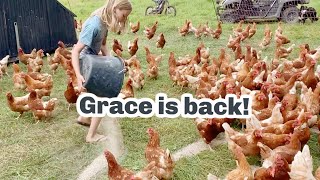
Welcome back to another video folks. I'm not on the farm much at the moment. I'm taking summer holidays with the kids for the first time in ever. And so I thought people have been telling me they've been missing the regular style walk and talks and vlogs. Gonna get on my trusty Siron and sit around the farm, show you a bit what's going on at the end of July. So a lot has changed around with the year plan this year and we've cancelled all the trainings with ongoing Covid and complications here. So that's led to a million crowns shortfall in the economy. That's €100,000. Best way to support us, if you get a lot from this channel and have done over the past years, is to buy our book Regenerative Agriculture. This is a 750 page manual that most of you that follow us will be well aware of. But this has literally changed the scene of small scale farming and regenerative agriculture. So that is the absolute best way you can support me because it's a massive amount of value and experience compressed into a university style textbook. But in exciting news, Ridgedale Builds is apparently on its way from the printer and will arrive today or tomorrow. And so we'll have a big work to get out the Kickstarter copies first and then we will put this up for sale. But the PDF copy is already available for instant download. You can check the links below. But as I said, buying either of my books is the absolute best way to create mutual support. I can offer a lot of value in those formats at a very well priced book without going through a publisher. That means that money goes into my business, which helps me make videos, do stuff to benefit the farming community. But as always, no pressure. If you want to just share, subscribe, click the like button. That helps tremendously as well to get this message out to more and more people. But if you want to support us, this is the way to do it. And I'm excited to be able to see the names and places that these books end up in. They've sold to over 95 countries all over the world now and it's amazing to see the ripple effect in people's farming. Through Instagram, Facebook and YouTube, I see the influence that we've had from this small village in the middle of nowhere in Sweden. Okay, the trellis is growing. Fantastic. It's reached the ends of its poles. I'm not going to actually. Normally I would have been through here, taking off side growth, etc. I'm just going to leave it, let them grow well till the end of the year. Now, you see there's unwanted growth that can be bent down onto this wire, but I'm just letting it go. I'll take off branches like this, but I'll do it in the autumn. Now the ones behind the packing station, which obviously get a lot more water from the wash and pack, they grow very differently. Just look at the trunk, the size of the trunk here in comparison. The limbs are all looking beautiful. A lot of apples coming on these. Now these are actually all Beauty of Bath. It's a variety from where I grew up. There's goji berries creeping through. I'll need a bit of pruning later in the year, but for now happy just to let them grow. We've got underneath a lot of rhubarb and herbs. So it's a nice little linear forest garden, you could say. Let's take you around this side again. It's died back now because it's late in the year. You can see there's herbs and different flowers that come up throughout the season. But I love this little way to differentiate the driveway where we've just got stuff and the beautiful gardens on the other side. Now we haven't had many mushroom logs for a couple of years now, but I just noticed the first dried up shiitake, which means we're going to get a flush from these few logs here. We're right underneath the big oaks here. So these logs need a bit of soaking. If we soak them, we can force these to flush. So I might well do that. So on this side of the garden we've got an absolute abundance of beautiful flowers. And this is the asparagus that's going to be cut down at the end of the year. This side of the garden is down to rhubarb and strawberry now and I've got a lot of strawberry in the field that I might put over into the gardens. I'm scaling things down next year and I won't need so much market garden space. So I'm thinking to put strawberries from up in topfield where you've seen them in these silver pasture lanes and actually dig them out and bring them down here and they'll benefit from the regeneration process there. Got some beautiful potatoes, celery in here. Onions are getting harvested, Onions are just drying out in the sun. Potatoes have been harvested and there's brassicas gone back in there and plenty of potatoes left to harvest. This raspberry patch is something else. So this is actually wild raspberries. But this is a patch where we used to have this amelantia tree that was bigger. It broke off in the storm some years ago. But we always used to put surplus compost around here and plant squash that we had extra just for home consumption. But this is what happens to a wild raspberry when you give it fertilizer. They grow absolutely beautiful and much bigger. Really tasty variety. Feel good. It's like wild raspberries on steroids. Yeah. So that's what I'm thinking. Take some of the garden beds out of production by putting more perennials in. And I'll talk more over the winter months while I'm planning. But there's a big scale down happening because I've got too many other things to focus on. And it's a chapter in my life where I really want to focus on my kids and really educating them and working on my other business. And there's plenty to tell you about few meddlers here. But I'll be updating you over the wintertime when things calm down here. Eggs, eggs, eggs, eggs, eggs. You saw the packing video recently. We've got a huge amount of eggs coming in, coming out. Best eggs in Sweden. And it's amazing just to see how many people have taken on our models and in times evolved them. But there's a whole Facebook group in Sweden started up by our friend who was on a training here, people taking this model and making it work for them in similar eggmobiles to us. Simple low cost setups like this. It's amazing to see how many more people in Sweden are mimicking these models now. Because for all the years that we've been here, it's been predominantly people from abroad coming here. But more and more in the last few years there's been a lot of people in Sweden and we've seen the proliferation of our market garden approach as well as our egg mobile approach. And that's fantastic to see. Keep it up, folks. Now you folks haven't seen so much of this bike, but this thing is epic. Now they're not the cheapest, but this is more of a motorbike than an electric bike. It's very off road capable, it's got a 150 kilometer range and it goes 70 kilometers an hour, which is pretty scary. You wouldn't want to go much faster than that. The reason I got it is that the ATVs are so constantly in use here at the farm that I need some quick way to get around, be able to just Check things up all the time. We got full batteries, so off we go. Plenty of carrots and further successions of brassicas under nets for the flea beetle. And there's a whole lot of stuff going on in here. We've got chards, lettuces, fennels, more squash still. Always plenty of squash at this time of year. And we can sell flowers as well as the actual squash. Beans are in full swing as well as more squash here in the 40 meter caterpillar tunnel. Over on this side, the peas are getting done now we've got leeks, bush beans, lots of kale, more carrots and beets. Some people have been asking if it's weird not being on the farm in the middle of the production season. And yes, in many ways it is. It's always taken a very fine line to manage this place and keep it really well kept. Things are slipping here. There's a very small crew, there's only three without me here. And so some things are not maintained to the standard that they typically are. But that's something I'm going to address in the autumn when I'm back from holiday with my kids. But actually it's perfect. I haven't had a proper summer holiday with my kids. They obviously have a lot of freedom around this space and it's an amazing place to be in. But we've worked so hard every summer that it's really high time that we got out and about. So we're actually off to the west coast as soon as the books are unpacked with myself and the kids and we'll stay out there for a while and then we'll be heading off to the east coast. We're going back on the pirate ship and seeing other friends there. And that's something that's been really important for me, is creating a space to build a social life. Now we've had a lot of people coming through here, but it's a really strange psychology when you're sort of the face and the leader of a place and people are coming specifically to, to glean from my experience and knowledge. And it's all beautiful. That's what I set out to do. But it's been very hard to just make friends on a neutral basis, which is something I've really enjoyed going, connecting back with old friends or meeting new friends on the West Coast. People that don't know anything about what I do, who I am, don't care about farming and I really miss that in my life. It's been a part of things that are out of balance here. And so it's something I'm really focused on now as I start to quieten things down. And so, yeah, it's a bit weird being away, but it's also really needed and necessary and my kids are having a fantastic time and I think they deserve an epic summer and that's what I'm planning to do. So I'm not sure what I've said in previous videos now, but Grace has made an epic plan to be able to come to Sweden for the last years of primary school. She's been doing research with Brexit and she really wants to get a Swedish passport. So we've made a plan. Her mum's in full support and favour of that. And so Grace is now here just for a month for holidays, but she'll be coming back at Christmas time and starting in Swedish school again in January. I am so excited. It's something I've wanted for years now. And Grace came when she was six with her mum for a year and so she went to school then and learnt pretty fluently in Swedish, so she's probably a bit behind with vocabulary, but she's a very, very smart young lady, so she'll pick that up really easily. And I think she's already ahead at her age group in school, that the focus on language will not be any detriment to her at all. So that's going to be amazing to have both my children in one place and spend the next couple of years really focused on them. And that's a large part of why I'm scaling down things at the farm, just to be able to focus back in on the things that excite me about farming in the first place and be able to have ample time and sensible working hours and balance my other business outside the farm. So that's a big jigsaw puzzle that I've been working on all year and I think it's going to be the right choice and fantastic and I'll be able to still stay in touch with you folks here on YouTube and through the other means that I have, but I'll be doing a lot broader content, looking at other elements of our lives that I think are equally valuable and many beautiful things to share there. A lot of people have been asking about the tree upd, so maybe we'll do that. I'll go around and show you what's happening. Yeah, I'll go around and show you what's happening with some of the silver pasture systems, because they've grown a lot over the years. And I don't necessarily see it all because I'm here all the time. But lots of things have changed. So let's have a look at that. We were watching Grace's backyard. Grace wanted to see when she was younger. We watched that last night. And you see then we've just put in little saplings here. This is the windbreak or hedgerow, mixed species. On the side of front field. You can see trees loaded up with plums here. Lots of gooseberries. Now, I didn't keep the grass down in these fields because what I specifically wanted was to test out whether it keeps birds away from the berries. So we got gooseberries, We've got cherries ready to go. Beautiful cherries. The kids go crazy for these. Lots of blackcurrant on this side. And so they're hiding away in here. But there's plenty of beautiful berries. Pasture is coming back nicely here. We haven't had much rain recently. That's up to my knee. Looking very nice. We've got pears aplenty. Have a look at all those pears. Just loaded. And These are on 12 meter spacing. Specifically designed around broiler pans. Have a look at all these plums. It's an embarrassment of plums. Unbelievable. We've been taking the. These are blackcurrant on this side. But then we've got honeyberries. They've gone over now. We've mostly eaten those along this side. Looking good. So many plums coming this year. That's going to be a real treat when they come through here. You can see if I just make this wider angle. You can see the classic eggmobile spot where the eggmobiles were last. You see a massive difference in the regrowth. Wherever eggmobiles have sat, the next one's back in that little spot there. Plenty of berries coming. Plenty of plums coming. We've had the strawberry season now up on this next row we've got more cherries, more plums and lots more berry fruit coming. And that's nice with the grass because once the berry bushes are established like this up to my head height, then they're away from the grass. This tree is suffering a little bit. Look at this pear tree. Beautiful. There's a few randoms in here. This is a random willow that will probably get cut out of here. Plenty of beautiful fruits to be picking in the next couple of weeks. Beautiful. So that's how Funfield's looking right now. So verdict's still out on whether I like having the long grass here. You can see lots of stuff, stinging nettles. And I think, again, that will really help us with birds because they're just not so visible. It looks like the birds haven't taken many berries yet. While we're up here, I thought show you in the tomato tunnel. Wow. Have a look at that. Things have moved on in here. Got some beautiful tomatoes coming, basil and nasturtium on the side. Got different varieties of cherry here. Things are always a bit slow in Sweden, but growth is really coming along now up here you can start to see some of the idli, although this is not idli. We'll go further up the row, see how it looks up there. Basil is going to flower now. Ah, we're on the wrong road for Italy. Idli is through here. So this is a purple tomato that we're walking past now. They've really put on a lot of this growth just in the last weeks. Got some chilies at the end here. Just filling up the row, looking beautiful. There's a weed. Here we go, look. This is idli. Now this is one of my favorite tomatoes because you get trusses with 80 odd flowers and you'll get six or eight trusses on those. Unbelievable. My favorite tomato of all time. Just look at the flower clusters on this. It's raucous. It's out of control. Now, to aid pollination, you can smack the wires with a stick just to get pollen moving around, but they typically have been working out fine just like that. Here's some lovely. Yeah, nice. And then look, got all the cucumbers on the back. Just traditional English smooth cucumbers. We're growing varieties that have done well for us in the past and we're pulling out a huge amount of cucumbers out of here. Just two rows this year. People aren't overly excited about cucumber here, which is surprising because it's just one of those things that is totally awesome when the cucumbers come, as I've said in lots of videos in the past, for me, tomatoes are not particularly high value here in Sweden because they're so slow. And by the time that they reach the top wire here, end of August, we typically cut them off to get everything ripening up. And unless you've got a heated tunnel, it's just not really worth it. I would say nice with the nasturtiums and basil, just take you down these rows so you can see the cherries developing here. These are a little under pruned. I would say it would be nice to prune a little bit heavier. Certainly on this row. This row looks fine, but I like it to end up at about waist height. You see, we've got a lot of lower leaf that's not letting any air flow through there. And that's a big potential disease problem. But they're short handed so doing what they can. But other than that looks fantastic in here. So that gives you a view on the other side of the hedgerow. So it's really starting to block things up. You can't really see into the field now. And we've obviously got the big windbreak on the other side that really shelters that up. We've got an avenue of birch along the top of this hill now, which is really nice. They suffered a bit from the extreme dry conditions there. You see the windbreak towering above the top of the tunnel there is providing a lot of shelter for these tree lanes. And that's, you know, ever since we moved here, what I wanted to do is just block this land up into smaller and smaller segments. So you can't really see more than 20 or 30 meters. And then you walk around the corner and you just find all different activities happening, whether it's a batch of boilers or an eggmobile or woolly mammoth here in the riparian, which has grown a huge amount since we came here. Down at the bottom of funfield here, this is one of the robina pseudo acacias that I put in in the first year and they grew from a 40 centimeter width to about 3 meters in the first year but then died. Back then they looked like they were dead for two years and then it grew another sprout. But over on the other side there's a couple that flowered. Check out the bulrushes. Super nice. So we missed the flowering. I posted it on Instagram before, but this one has grown tremendously. Well, that must be 5 meters tall. There's another one in here that survived and there's another one over here. Oh, and there's another one over there that survived there. So they're doing well. They don't typically grow here, but it's a wonderful tree for making fence posts and the blossom smells divine. So super nice to see that they've survived all these years in our extreme winter environment. That gives you a sense of how tall the windbreak is. Now it's well over 10 meters. And these alders, eventually we'll stand up above the willow to make a ramp sending wind right over the farm to meet the riparian. Pretty amazing to watch this grow. It's really towering now and if we go in there, these were willows that we put in as centimeter thick cuttings and you can see they've really grown into thick old trees now. Pretty amazing. Got a line of spruce on the inside that is pretty shaded but then that gets light during the winter when everything's losing its leaves and seems to be growing. Okay. And that's also to give winter protection up between the two layers of trees. Pretty dense and doing a fantastic job. Okay, I'm going to take you up to Nutfield and top field and we'll go check out the pigs as well. Okay. So we're up in top field and this is actually where the tree lanes have been hammered the most by sork or voles. And this is all planted originally as hazel on the back with fruit trees every eight meters. But you can see here's an apple we've had to replace and there's another one the sork have been unbelievable. We've got things growing in wide baskets that seems to work out. Although they did ring bark the orchard trees right back at the top of the farm by climbing over that in the snow. So this is, you know, they've had a. We've had a real hard time with the stalks and I talked about that in earlier videos. But we've got berries along the front. Here's black currant. Some of the rows you have red currant, gooseberries, etc. And still some hazel. A lot of the hazel has been taken out by sauk further up in the field. This next row is really devastating. But have a look at these beautiful black walnuts that we put in above the strawberries. So just for reference, that's how big I am. Some of these are growing fantastically and you can see like this one has put on a meter of growth this year from this point onwards. Unbelievable. Very nice black walnut and mammoth silver pastures. So at the bottom side of top field this is where the chickens have just come through. Fenced up to the trees here. These are the contour strip plantings we call the medicine cabinet. A lot of amelanche and the amelanches been harvested and the last berries are drying out now. And then below that we've got aronia and we've got two different types of elder. It's a medicine cabinet just using this funny amphitheater shaped piece of land that you can't really do much else with. We strip graze through here. But they're growing quite nicely now and they've got away from the grass. It's native trees are growing up fast. So probably next year or this winter, I'll be taking out some of the natives that grow up randomly in places that we don't necessarily want them around the edges like this. I'm all for it, but we'll be going through clearing out the very bottom of Topfield, where they've got a bit out of control there. Okay. Down at the pig paddock. So this is the end of our farm, and we've just got that energizer running on four top wires here. I can see one piggy right at the end. Now, we've only got four pigs, so we're not rotating them so much because they're not doing so much physical damage. Let's go and have a look. They're putting on some weight now, and I'm thinking to take one of them early just to have some. Some food in the freezer, and then I'll take the other three at the end of the year as the team are leaving. Hello. Where's your buddy? Hey, there you are. Coming over last. You're looking good. Are you happy in there? Oh, I love pigs. I've missed having pigs. I think I've said every year since we used to have a lot of pigs, that next year I'll get some pigs. But really glad that we've got these. I interrupted their feeding time, I think, and they realized they didn't bring any food, so they're off. But they've been wonderful. They've not done any attempt to escape. Now, obviously, we've got a few thousand volts going through the wire, but when pigs are smaller, they can easily fit through the gap. So they've been really good at not trying to get out. So nice to get out and about and really walk and observe. A big part of the work I've always done here is walking around fence lines, checking for damage and inspecting animals, looking at them very carefully to see how their health is. Singing songs to the pigs. Keep them happy. But it's so important to get out and about, and that's why having that little electric bike is so important. You can zip around places you wouldn't normally go to because they just feel too far away. And it's those observations that really lead you to critical management decisions. So I highly recommend it. Constantly going around, documenting, taking photos. Because things change so fast in an ecosystem, it's important to always keep your eyes everywhere, as much as you can. Now, I've also said many, many times before, 10 hectares that we started out with here, it's now 13 hectares with the new forestry, that's about as much as I can keep my head around with the intimacy I think it requires to manage this place in the way that you've seen exemplified on YouTube, in our book, etc. How small can you go? We're running our online training at the moment and it's something that I just constantly come back to is how little can you do? How small can you go? What don't you need to do? It's so easy to want to bite off more than you can chew. And it's become an unintended consequence of Ridgedale. I've said stalwartly since the beginning, this is not a farm that I would set up in order to make a family income. This is a place that's set up to show a new generation of farmers how all these different enterprises work together and that yes, we can make a living farming and we can do it with style and grace and dignity. It's not what I would do if I was just trying to make a living for myself. I would do much less. And I think it wows and awes people to see this amazing symphony in the pasture with the tree systems and animals and vegetables. But don't take on too much. And that's the key takeaway from all my time in education and land planning. See how little you can go. And I'm taking my own medicine now as I start to wind this season down and start to plan for a much more easeful life that creates balance that I've been looking for for some years now. Okay, so we're up at the turning circle and this is a place I've compared many times before to show you the difference that animals and ecosystem services do. Now they've actually cut all the brash at the front of this patch, but at the back there you can see how it was two or three species, still forest understory and a lot of brashwood that you see lying around from the cut. Blueberries, etc. Trees 3 meters tall. Turn over our side, we got 6, 8, 8 to 10 meter trees, space in between. And the cows have just been moved up here temporarily for a few days just to graze it back. And we'll keep them in there until they start showing any signs of damage to trees. That's what we're talking about. Bringing pastoral gut flora and fauna up into the wood section and it's opened out by the digging of pigs. Now it's all pasture species. You don't see very much brashwood at all. Just the odd stump like here. But this is a beautiful silver pasture patch and you can see the cows get a lot of shade. They've got scratching posts all over. This is a beautiful habitat for native sjelku, the native Swedish mountain cow. Hey, looking good, you lot. This is one of my favorite spots on the farm, as you know, if you followed the channel. It's really nice to see them relaxing on a warm afternoon. Feels like it's going to rain here soon. You can see the sky is getting grey behind. I think it's got that closeness in the air that I'm expecting rain, possibly thunder. Been having quite a lot of thunderstorms this year. We'll leave these ones to it and we're going to have a look in Nutfield. Beautiful. As I've talked about many times before, they've really open the space up by pruning the lower branches and that allows a lot more light through so you get the forbs and grasses growing up. Really nice to have these additional spaces. And that's what I want for the whole hillside. Eventually turn monocultural spruce totally back into mixed broadleaf forestry where we've got oaks and rowans and ash and birch and poplar and tilia and ah, love it. So this is how Nutfield's looking. Different species of chestnuts, walnuts, pecans and some of the original Kazakh apples I've seen. Gracie's just gone up with Malta to do the last egg collection. So we'll intercept them, see if Gracie still remembers how to collect eggs properly. So this was grazed through by the cows most recently. There's an original Kazakh apple. Hens are expecting some food. Are you collecting the last eggs? Can we follow you in? Spy will feed in. Chili egg. Don't break. And remember. Good job, Gracie. Second egg collection. So this was grazed a couple of weeks ago. Grass is slowing down now. Obviously we've been through mid summer, but there's some nice regrowth to take the impact of the chickens. And then we won't be coming back around here for a while. Okay. Water inflow to the pond is basically stopped now because the stream is dried up. The inflow is just down here, but stream dries up on very hot, long, prolonged periods that we've been having. Life's going on and now I've been watching the trout. I still need to get in here and just pull a lot of the plants to create a bit more space and flow. The level of the pond is down about 2 inches now, but it's just starting to spit now, so it might get some rain. Just need a couple of heavy rains and then the stream picks up again and we get fresh water in there. Obviously the market garden takes quite a lot of water on dry periods, but it's only been in the major drought year that we had real issues. So that's a job for some time when we're back from our holidays to get in there and just pull a lot of plants and try and open up space for the trout. Some grapes on the alders here, but most of the grapes have had to be replaced so they're pretty small. You can see a couple here. So I always said I'd retire when I got my first bottle of wine, but I think I might retire before that. So up above the pond you can see the hedgerow that we put in to circle this kind of amphitheatre shape. Thin in spaces on the other side. Further along it's a lot more dense, but it's growing up nicely enough. Alder are doing great. They've been pruned high and left for the last couple of years. You can see vines on the base of those trees quite young. They need some mulching and care taking of them, but they're surviving the voles. Okay, grey clouds are coming, so signing out for today. Thanks for watching our videos as always folks, and don't forget to find out a whole bunch more in the links below. I'll take some shots on holidays and share some updates with you then see you in a video soon. Bye for now.
More from Richard


A review of short and intensive season on a mixed farm and restaurant/event space in Sweden






Alskade Kyckling Exploring complexities of poultry production in Sweden and what we stand for


