We got our birds out on pasture! Exempted from bird flu...
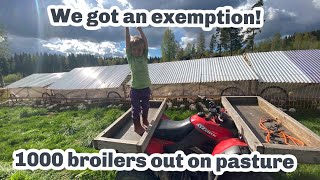
Richard Perkins moves 1,000 broilers onto pasture in Sweden under a bird-flu exemption, using roller pens and netting to protect them. He's planning multiple 330-bird slaughters across successive days while also planting tomatoes, rotating pigs, and managing a cow with a potentially infected udder quarter.
Questions this video answers
May 20, 2021.
Three and a half weeks old.
About 1,000 birds (recommended minimum usefulness at 500, best at 1,000).
About 300 in the trailer.
330 birds per slaughter (multiple days: Sunday, then Tuesday and Thursday across the week).
Chapters
Welcome back to another video, folks. It's a glorious day and it's an even better day because we've got an exemption to be able to get the birds out onto pasture. Now we live in an area of Sweden that is considered low risk and we've applied for an exemption for welfare reasons because it's getting too hot in these tunnels to sufficiently take care of these birds in this manner. And we've also got broilers, the second batch in the barn here which we're taking out today. And we're leaving the original batch number one in their tunnel because we start slaughter on Sunday. We've got a week of back to back slaughter and packing days, the six days. And so we've decided just to keep them where they are. However, this batch, three and a half weeks old, they're ready to go into the roller pens which is what we're doing today. And then we've decided tonight we're going to take the Eggmobile 1 and 2 up into top field and so they can open up early in the morning on pasture. And I think that's less stressful for them and less stressful for us to take the infrastructure apart and move them up in the morning. Okay, so their stay was short lived and that's good. They're totally happy in here. It's totally fine space at this point, but they're going to be much happier outside. We've got a few days of really good weather and then rainy over the weekend, but that should be fine for them to acclimatize. That's so good folks. We're gonna have all the poultry except batch one on the grass tomorrow and that's a major, major relief for the well being of the birds, for the well being of us as well. And we'll see a response. I'm sure someone asked about mortality rates, whether we'd see more mortality rates with having the birds inside. Answer is no, very much the same as every other year. And they've actually been really comfy inside because it's been pretty cold and wet this spring. So I think they' really benefit from being indoors. We're coming out onto the roller pens. Amazing. And it's first time we've had a thousand birds in this setup for the last couple of years because we've been doing smaller batches in the last year. Right. So plan is back. Birds in. There's about 300 in the trailer. So we've got three runs to do. Get them under here so we can pull this pen back over and then we'll be able to do the same at the other end. We're going to feed them. It's feeding time now, so then hopefully I'll move in and let us get the third batch in. So when the birds come out like this for the first time, we keep the nets really tied up. One of the stipulations is food must be covered from wild birds and that's the case. No wild bird is going to come in here. And while the birds are really young and small, we keep the fence really close to the roof, like so, and so no predator is going to get in there. We've got new fences, new shop box. That's going to work fine. We've put a drinker on each end and then we have automatic water in the middle of the structure and that's going to be their only water source later down the line as they get bigger and so a thousand birds going in here. Perfect. So this is a model that I recommend generally for minimum 500 beds, but a thousand birds is where it comes into its own. Four adapted Stylatin pens with simple roofs. And this is detailed in our builds book. Those of you that backed that and those that want it, it will be available as a PDF very shortly, hard book later in the summer. But this is a nice way to do it because it's very simple to create and this is enough shelter for a thousand birds. As they get bigger, we widen the nets. You can see they're taking up half this tree lane, which is about nine meters, so it's about four and a half meter wide. As the birds get bigger and quicker at moving under shelter, it's much easier to have bigger nets and they get used to the rhythm of it and they're still able to run away from predators, etc. We've never lost the bed in these setups. And we've got buzzards, we've got different predators like foxes, etc. As long as you've got a good net, you should be fine. You can see our grass is growing up relatively quickly compared to the neighbours. It's quite long for them as they're such young birds. However, we're not going to graze our land with cows or sheep until a few weeks time, so they'll get used to it. And at this time, when the grass is so soft and sappy, they will just flatten it essentially and it will spring back up with all their manure. We've been waiting for this day a long time, so keeping the bears occupied has been an issue. They get stir crazy in an indoor setting like this. Branches with fresh leaves and fresh greens. Things like this will keep them a little bit occupied, but it's a constant battle. And it's very hot in here. It's clocking 30, 35 degrees. On nice warm days they will be extremely happy to be out on pasture. Now we see some feather picking. You can see like on the back of these birds. This is typical winter behavior. Just because they're so bored and with young birds like this that are still growing, it's just not ideal at all. It's been okay, all things considered, but definitely it's a relief that they can finally get out on grass. It's much better for the birds. I do not believe that we will represent a risk of spreading bird flu around. Plus it's also that time of year where we need to get stuff in the ground. Tomatoes can come out. It's quite compacted on the surface here, but I think it's probably surface deep. As I've said in past videos, we've concentrated on not putting too much bedding down. So essentially we can mark out where the beds used to be. Because this was all formed beds before we put the birds in. Hopefully we'll just be able to board, fork over the old beds, tilth it with the tilther and then put some new compost down. Off we go. We'll get tomato crops in and it's about 25th of May is when we normally get tomatoes in. We get iron nights here in Sweden, first week of June. You can typically have frosts or certainly very cold nights below 10 degrees. That is not favourable for tomatoes at all. So exciting times. Very, very happy and relieved. Just in the nick of time. Look at the size of these tomatoes. They have gone rampant. It should be just fairly simple to turn the tunnel around and we'll be able to get basil, tomatoes, etcetera, in and that will clear out a lot of space in here soon. Time to plant rice as well. Oh, and something else is happening tomorrow. We're off to pick up a few pigs, homestead pigs. We're not going to do them commercially this year, but I've missed having pig in the freezer and so I'm really excited to raise a few pigs without having any breeding animals on the farm and they'll make some good work in our forest paddocks and fill the freezer for the winter. How do you boys feel about all this? Good. Brilliant. Nice to get them out. Yeah. Okay, getting the slowly together now. I'm just testing this today. And putting on Scalder, putting on the chiller to see if that is working. Just to be ready ahead of time because it's always a big day till it's getting cold. That's nice. Going to leave that arm straight, couple of hours. If you follow our channel, you see our setup in use multiple times. I probably won't do much filming. Big addition this year is we've got better speakers so we can bang out tunes while we're doing the job. Better close that down. So massive week next week. We'll be doing 330 birds starting Sunday, then packing on the Tuesday. We've also got deliveries. Then we'll slaughter again Wednesday, sorry, Tuesday and then Thursday. So slaughter pack, slaughter pack. 330 birds each time. And we've really tried to compress the broilers this year into two slaughter weeks, essentially. So it takes out, you know, a big chunk of work in a condensed period. And it's something we haven't done. We've always done 18 slaughters throughout the summer when we're running it for production. But that's. It's a lot. And it felt like we'll try it out as a condensed production this year, partly because we have no birds in stock and partly then we don't need employees on the boiler team past the end of June. We'll have shut down the enterprise by the end of June, so it's going to be a long week training up new stuff and making sure it all runs smoothly and looking forward to it, actually. It's going to be great. And looking forward to having beautiful birds will be smoking birds as normal and getting those out to customers starting next week, which is awesome. So fixing up water systems. We've got new fencing to go with the new energizers to power these poultry nets. It's about time. After a few years of rough wear and tear, they all start to fall apart. One thing that needs fast improvement is small wheels for mobile water setups and wheelbarrows and things. I don't know why they don't just make them out of foam core nowadays, because these little wheels tend to last half a year and then they could put. Now, with the laying hens, we have got the exemption to take those outside, but we must cover the feed so we always have fed on the ground. See, the nests are closed now, but we're taking them up tonight just to save us a bit of stress in the morning. What we want to do is count the birds out in the morning and make sure we have equal Numbers in both eggmobiles because they're joined as one flock in the tunnel. It means there are way too many in this eggmobile because we're getting two thirds of the eggs in this nest box. So we'll take them out wherever they choose to sleep tonight. We'll sort them in the morning by counting this eggmobile because it's got too many. And then we'll just crate some of the birds and pop them into the new Shelton. There's quite a lot going on during slaughter week because we've got a cow that needs milking out and assistance. Violet's had her beautiful calf, but we need to get up early to help assist the calf in drinking. She was so full, as you might have seen on Instagram posts, that we're just helping her out for the next days. But we're gonna try and see how we can make it easier for ourselves. Maybe we'll move the egg mobiles at nighttime so that we don't have those chores in the morning, that we can get straight in the slaughtery early and get into a rhythm with the new crew with that. Now, unfortunately for other producers in our region, they did make very clear to us that they would not be making exemptions in general terms and that they wouldn't make those exemptions in the future, and that we would need to provide the facilities in case of this kind of event in the future. So that's worth really reflecting on. If this is an enterprise that you're running long term, you need to be prepared for more and more cases of bird flu to happen. That's the reality that we face as poultry producers. And who knows, in the times we're living in today, you just can't tell. So you've got to prepare for it. We've been very lucky. We feel a massive weight coming off shoulders with birds outside. It's never something we set out to do to raise birds inside. I've talked about the reasons we've felt that we had to make those choices. It's a big economic part of what we do, but not something I really ever want to repeat again. And so either we have to plan differently or consider not running poultry enterprises or delay the arrival of birds on the farm to adjust to the typical pattern, which is that the bird flu band lifts once summer really kicks in. Hopefully it'll just be a couple of weeks now, but you can never be sure. So one thing that's worth reflecting and thinking about for anyone when pastured poultry is to get together with other people in your country to start communicating not only between yourselves, to help and share best practices, etcetera, but to start talking to authorities. Our friend Kristin has set up a pastured poultry group here in Sweden. And what Johanna's been trying to do when talking to the authorities is get other producers to start talking together. Because something that became clear straight away is that the authorities don't know about this whole movement of passive poultry that we've kicked off here. And so they don't know that we're facing the problems we are. And obviously we all know that the regulations are written for industry and they need thinking about in terms of small scale producers. And so it's really important to get together and make cohesive voice that you can then talk to the authority, say, look, we are a group, we have this in common. We raise birds on pasture, in mobile structures. This is why we do it. And this is some of the problems that are unique to the way we produce. And we want to talk to you about it so that as these things come up in the future that we can have open discussion about it. So something really worth bearing in mind and I think it's really important because it's really worth considering that the authorities do not know about these innovative models because they're just in a niche. And so as more and more people take on these models, it becomes critically important that we make a critical mass and start getting through to the authorities. And that might look different in different parts of the world, but forming some kind of body, you know, in the wider profession there will be a body representing all the indoor poultry producers. So. So why not make one for the pastured community? Same. Think about, folks. So birds in the big tunnel are okay. We've used tarps to reduce the heat, but as you can see, that is a lot of chickens. Now this still meets organic standards for raisin. And as you know, we feed organic feeds and we try and do better than organic standards. I think I can safely say I will never raise birds like that again this year. We've, you know, we knew what we were getting into, but we had to because of the economics of it. But I think in the future I have different means for producing income that I don't want to go through that again. It's definitely psychologically impactful to do that. Got some strawberries planted while I've been away, but yeah, this batch will not go outside. We will start slaughter very soon now that it doesn't feel worth the big amount of work and there won't be much benefit for those Birds, they've been comfy enough, as I said, mortality rate did not increase. In fact, they actually, you know, I think were protected in the early part of their time in the tunnel because the weather was so poor and so wet that they wouldn't have fed so well on the grass comparatively. That actually could have lowered mortality. But the big thing is heat stress now the temperatures are warm. You know, on a hot sunny day, it's too much. And yeah, it's certainly not something we could have handled for much longer, particularly the laying hens. I think, you know, a few more weeks and we'd be in serious trouble. So very happy for the outcome and for Johannes persistence with communicating with authorities, etc. It pays to have dialogue and open communication and hopefully help pave the way for others of you out there. Bumpy, bumpity bump, bumpity bumpity bump. There they all are. I think the fence is. Fence is not on yet. Maybe when the fence is on they'll get a little zipper. Well, that is definitely a better sight to see than a tunnel full of birds. Pasture poultry, as it should be. So as this model opens out, as the birds get bigger, it gives them about 60% more space and saves us a lot of time with individual feed measuring as well as automatic water, which saves a lot of time in the height of summer when you've got many salad and pans to service. That's where this model came about. And it works very, very well for batches of a thousand birds. First few moves are going to be slow because the birds need a lot of jostling along to make them travel such a long distance. But after about three days, they are off and they move themselves within 10 minutes flat. So one person can move a thousand birds in ten minutes. Hey, dad. Yeah? It's coming. A thunderstorm. It's coming. A thunderstorm. I heard a thunder. What? What are we gonna do? Go on the. Look behind you. Whoa. I hope it's not gonna rain on these little birdies. I hear the thunder too. You're right. Look how many dandelions there are. Beautiful. Oh, I've been waiting for green grass so long, my love. Why? Because it's been so windery. It is summer. Soon it will be. Okay. Sheep have moved on to the next forest paddock and we'll probably bring the pigs in here. So we're thinking we'll move them on according to the amount of feed they've got. Hey. But probably they need to move on tomorrow up to the top of the hill. So this is a winter Paddock. This is the lane that leads up to the top. Probably we could graze them into the lane a little while. Yeah. Okay. So cows have come through to K2 now, so they want big paddocks. And Viola's got such big udders. We think she's got mastitis in one of the back teats. So we brought up the shade mobile and some gates so we can milk her out. The thing is, with mastitis, either you got to milk them out several times a day or just not milk them out at all. And watch for any fever that you can get antibiotics because of our slaughter schedule, etc. For us it's just gonna have to be leave that quarter and hope it sorts itself out and we'll just keep a really close eye on her temperature. So they've got about nine days through this whole big paddock, then onto this middle section and then the field that goes up to the neighbour's house and then back to our farm. Oh, it's beautiful on an afternoon like this. Hey, pretty one. Well, for all the emotionally challenging days this spring, it really makes up for its see beasts out on pasture again. And that's what we do here, build soil, build habitat through the appropriate intelligent grazing of livestock. Hey, that's it for the video folks. We're going to do a late night move of the eggmobiles probably about 10:30, 11:00 clock so that they wake up onto fresh pasture, take some clips. But it's going to be a super busy week now with slaughters back to back of the first fresh chickens of the year. Hey, but yeah, the raspy tongue of a young cow. Hey, you're a beautiful one. You're a beautiful one. You got flies coming. That's it for the video, folks. Thanks so much for watching as always. Don't forget you can find a lot more in the links below. See you in the next one.
More from Richard


A review of short and intensive season on a mixed farm and restaurant/event space in Sweden






Alskade Kyckling Exploring complexities of poultry production in Sweden and what we stand for


