We got the keys to the farm 7 years ago this week
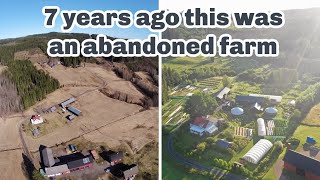
Richard Perkins marks seven years on an abandoned Swedish farm he and colleagues moved onto in 2013. A sold circus wagon funded the deposit; a €40,000 loan promise and bank borrowing covered the rest. The photo tour shows the transformation from derelict buildings to working market gardens, orchards, polytunnels, and livestock operations.
Chapters
Welcome back to another video, folks. Seven years ago this week, we moved on to this empty and abandoned farm. And I thought it's high time we look back at some old photos from when we first saw the property, which was in November 2013. I thought it'd be great to take you back in time.
The story begins with this circus wagon.
Which I bought a few days after.
I finished the course, which is where I met Johanna. I'd only intended to come to Sweden for a couple of weeks to teach a training to help someone out. And I fell in love with a lot of people and the landscape and the fact you could buy a farm with cash. And the story begins here because it was the sale of this wagon that actually formed the deposit for what's now Ridgedale. So this is an old circus wagon came out the German circus. Really heavily oak framed wagon for pulling around ghost train rails. And it reminded me of a narrowboat. So I kitted it out with all of the sorts of things that I'd had in the narrowboat. Had a little workspace with hot air blowing up from the fire under the floor to keep the, the big holes that you see under the floor here to keep them from freezing. So I had a water tank in there and the hot air would rise up on my feet. Under the bench I had a cool cupboard like a fridge with wire baskets on the very right of the photo with cold air coming in the bottom and venting out the chimney. At the top here you see the bed and at the back of the bed there's a trapdoor that goes into the sauna that heats up super fast. There's a cute little gypsy style bed.
And I had 12 volt systems running off solar on the roofs.
I had lights and sound system charging for computer. And I was just moving into the country and just wanting a temporary place to live to see do I want to, you know, buy a farm and invest here. I'd taken this wagon back to bare wood. I'd taken all of these bolts by hand. There was about 50 kilos of brass bolts. I pulled them out to strip the wood and treat the wood with oil. After sanding it all down, here's a little view of the sauna in the back. It would heat up in 10 minutes flat. Really nice for two to four people in the back of there. Now you see the solar panels. It was running on these flexible solar panels that just stick onto the ceiling. Then a little couch area. And this served me well over the summer while we were looking for properties and I Was working outside of the country. We sold this and made some money on it, having done all the work myself. And I think I built it in about two weeks flat, needing somewhere to live as it got cold, and then used that money to pay the deposit of Ridgetown. Here you can see actually there's a pipe that goes down under the floor into the basement bit and back up under my feet when I'm sitting at the desk. And this little fan would help blow air through there. And I had gas cooking and solar charger here. It's a pretty cool space. I love that little wagon. And that's what led me to start living in Sweden. Oh, This is actually in November to 2013. We came from Stockholm to view the property for a couple of hours and just looking around the landscape we knew that this was a property that we could do something with. Now we had the money for deposits and we had about €40,000 that an old student had promised to loan to us with a sort of low risk kind of agreement to facilitate us getting involved in a project. Then we could borrow a similar amount from the bank. And that's really pushing our resources at the time to the extreme. And this place had been up for probably about five times the price. But they'd sold off a lot of forestry and so the price got cut dramatically. I had seen photos of this in the real estate and I loved the look of the land. It was lumpy, the buildings are old, not worth very much. But I knew the landscape was interesting and it didn't take us long walking around to really see that. Yes, we could do what we wanted to do here. This is the magazine here where we have the yurts now and the market garden on the south side. Here we have shower blocks and the sauna and the herb garden in the foreground here. This would have been horse drawn grain production. This tree, the apple tree is still there and obviously the oak trees outside our house, but pretty blank slate when we turned up. Here's the long shadows you get at that time of year. This is front field looking down towards the riparian here. Obviously there's no fences or anything at this time. And that's a view from what's now the paddy ponds and the east and west beds. This has been lawn for hundreds of years. The root cellar here. And where Johanna is standing there is where the fence line used to go. That partitioned off front field. This is now where the big polytunnel stands. It was kind of last big space that we could actually put there. And here you'll recognize this is where the pad for the big polytunnel is. And we've built the lean to barn very cheaply on the side of this as well as a tree bog compost toilet system. It looks very different there. Now obviously this is the animal barn and here we are in the orchard planting. So this originally got put down to see buckthorn and it's for camping for people coming on trainings. Turkeys absolutely decimated the sea buckthorn by trampling them in the first couple of years. That's now in apple orchard and the riparian has grown up significantly. Now it looks very different to this. Now this is the birch beside the road that's still a prominent feature. And this is looking inside the barns that had a load of old clutter lying around and a lot of old wood. Still got that grain mill that works well as well as this spark. That's a way of getting around on icy roads here. Some old timber lying around but basically not been used for a long time. This was the brooder where we raise our pastured meat birds. It had been set up for pigs and cows in the past. Pretty run down. This barn hadn't been painted since the 1920s with a chemical that you're not allowed to use these days. But obviously quite effective. It's actually concrete blocks on the bottom and then it's mud infilled with logs that make the main structure and then wooden frame the rest of it. Some beautiful old hinges here. That was the original compost toilet that most Swedish farms have as little outhouses. There's the oak trees outside our house there. And my, oh my, that looks remarkably different. So this is where we have a covered space. Now we've built the lean to greenhouse on the south side of the house. We've got the veg washing station and big chiller here. And we're putting gravel driveway all the way around the garden. Now hopefully finally now we're going to get round to painting the house. This is where the lean to greenhouse is here and dug into the ground here. And this is the point where the well that serves all the water on the farm is taken from looking down over what's now the corner of West Beds, That's our workshop and freezer space. We have an egg packery in this empty space. Now this is our main yard where the yurts would just be extending out here at the end of the veg beds. And we've got our slaughtery standing in the foreground. We've obviously fully renovated these Barns. We've got windows and doors and steps up here now looks remarkably different only seven years ago. A lot can change in a short space of time with a bit of hard work. These rooms have been renovated. There's windows upstairs and rooms up here. And this view has completely changed. This is where our big yurt is that this year we're putting up 13 meter wide teepees here and still got our veg beds on the slope here. This is now turned into our saloon that we call it. It's like a market garden. Office space that used to be used for horses. And this is the upstairs of the barn there. That's now converted for a human. It's been fully insulated and clad and tidied up with the floor. And it looks very, very different now. That would have been that old hayloft back in the day. This is us telling our neighbor who they've been so kind from the beginning. Just helping us out as we moved in. And we're telling them about our crazy plans. Not sure they really believed what we were going to do when we when we showed up. And you see the old. This is the old shingles made of pine still below the metal roof on all the buildings here. Some of the barn storage space. There's a lot of old horse drawn tools. Lots of space, lots of potential. And we could see that as soon as we moved in. And this is just inside the house. It's all been decorated now. This is the view. I'm actually sitting in this room looking out this exact window at the market garden. And now we've bought this piece of land in the forestry. So excited to show you more about what we're doing with that bit of land when the weather thaws out. But pretty remarkable. We paid mainly for the price of the land and the forest timber. The house is valued at €14,000 I believe it was. And the barns are about €6,000. Obviously you could never build infrastructure like that again. This little window on the stairs actually opens into the lean to greenhouse. Now this is a cellar below our house that they used to use for laundry etc. We use it for storing produce. That's where the water pump sits. Pretty amazing to see these old photos. So back in the beginning years we built our vertical rack systems for vegetable starts and we had them in the living room for a long time. This room looks incredibly different now. And this was our fire room. So we put a fireplace here. We've got the lean to greenhouse here. So there's a big door here in the corner now. And I actually smashed a hole in this wall the first night we moved in, which was seven years ago this week. And I realized that this must have been an open door at one point, because in the old houses where you only had a wood stove in the kitchen, the heat must have been able to circulate all around the house. So I smashed a hole, didn't get around to opening it up. I was correct, there was a door in there, but it took me another year to bother opening that up. This is a porch where I put my office in the summer months. Get the evening sun. It's very beautiful bit of private space. This is our kitchen before. We've transformed that. This is looking out my office window down on what's now the market garden wash and pack station. There's a big pond here. We've got the trellised apple trees here and then the garden beds and yurt here. A little utility room. Yeah, pretty remarkable. It's so fun to keep records. I've got probably 200,000 photos and thousands of hours of videos of everything we've done here. Now, I'll probably never look back at all of it, but it's so fun to look back at changes that you just forget this is a beautiful old machine. It's a massive wooden drum with this axe head on with a little string here that's feeding to a motor behind that spins this round at a rate of knots. And it's got a huge amount of momentum and it's for creating your own kindling. So you cup a log loosely in your hands and it splits it multiple times in a few seconds. It's very effective tool. Very dangerous. We don't let workers go near that one. You can see what it does here. Very cool old tool. This was the workshop when we got here. This is the upstairs in the magazine. That's little accommodation rooms. Now, this is where they would have stored stuff and grains. And this is looking out the magazine. It's now insulated and glazed, looking out onto what's now the market garden. This is downstairs. That's also accommodation. Now. This is where they stored their potatoes. And they would have actually hung pigs and bled them off these hooks. You can actually see the stains in the floor below.
This is going up the road back to the farm.
This has obviously got a big fence and hedgerow and all the tree plantings. And same on the other side, the riparian at the bottom of front field. This is looking out across nutfield. So this was where the pond was built. This Riparian is now really tall and bushy. I mean it's. You can't see through here. Then we've got our sloped amphitheatre, plantings of alder with grapevines growing up and a hedgerow behind that. And then all the nut trees in nutfield. That's the riparian looking south, investigating the water drainage under the road here. This is coming up into Top Field. So this is the gate for Top Field. And obviously we've got fencing and nut trees and oaks along the avenue here. Now you can see a great view of the amphitheatre where we built the pond. Pretty amazing. It's so fun for me to look back at this. I mean, just look at that view of nutfield. Oh, brilliant. And after a couple of hours walking around, that was it. We fell in love with the place. We knew. Yep, we can do this. This is at the top of Top Field. This is all fenced. This is a sort of rocky mound with trees on top that you still see regularly in our videos. What a change. That's looking up at the forest land. Wow. There you go. Well, I hope that was interesting. That's the stream at the back of the farm. So that's between the pig paddocks and this is the far side of the nut top field. Sorry. So our perimeter fence comes alongside this birch and down the slope and this is where the cows and sheep are kept in the winter, where pigs run through also. Wow. I went aboard straight after this and we came back in March and I think I'll do a little video series showing you some of those views of the first weeks on the farm because there's some unseen photos before and I think it's just, it's such a wonderful treat to look back on and just see how things have changed.
Well, I hope you found that interesting. I loved looking back at those old photos and I think it'll be a really cool little mini series to show you some of the early developments just to see how much things change in a short space of time. And we really hit the ground running here in that first year. We basically laid the skeleton for the whole farm development and did a huge amount of work. It's been a total non stop thing.
The whole time that we've been here.
And it's been amazing. And I just think that it's so good to keep records and take good photos and video just to have something.
To look back on because it's just.
Mind blowing how quickly things change and grow and. Yeah, I hope you enjoyed that? Well, it seems like the Kickstarter failed and maybe it was inappropriate timing with people having financial hardship with COVID etc. I don't know. But for now I'm dropping that project. I think we might offer it as an ebook later in the future. I'm not sure, but I'm busy working on a lot of outdoor projects and I'm also working on the Ridgedale Builds book, which is a lot of work and it's inspiring and super interesting. So I want to stay focused on that and I'll keep you updated with things as we go. I was a little bit disappointed because I feel like that is an amazing resource, but hey, that's the way it goes and it's a really informative thing to do to see what the market looks like before taking the risk of printing a very expensive print run of books that aren't necessarily going to sell. So it served its purpose and that was my intention, so I'm grateful for that and the ability to be able to connect and interact with you on that level. Anyway, that's it for this episode, folks. We'll see you in another video very shortly. Bye for now.
More from Richard


A review of short and intensive season on a mixed farm and restaurant/event space in Sweden






Alskade Kyckling Exploring complexities of poultry production in Sweden and what we stand for


