WEED FREE BEDS AFTER WINTER AT 59°N S4 ● E21
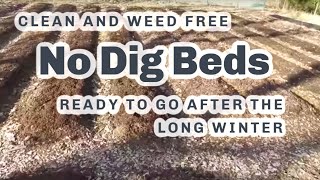
Richard Perkins shows no-dig beds in Sweden after winter, comparing beds built different ways and different ages. He explains why organic matter beats machinery, what compost to use, and how to prep beds for spring planting.
Questions this video answers
April 5, 2017
400 litres per 10 by 75 cm bed
About 100 litres per bed
200 litres per bed
About 10 tonnes of cow bedding
Chapters
Getting pretty full up here in the lean to greenhouse. We've got all the cabbages and kales in, tomatoes are in now. It's still about 10 days until we actually start seeding outside direct seeds. So I want to go and show you the beds we've been uncovering and take a look at what no dig beds look like first thing in the season. We have a different mix of beds here, beds that have been dug first and then turned to no dig. And they're beds that were just made by putting compost straight onto the grass. And we have different age of beds from one to three years. So I want to show you some different composts and different beds and look what's happening in the ground. These are the covers we've been taking off. It's a non woven geotextile, much nicer quality than the sort of cheap woven plastics. And we put these down over the winter just to protect the soil surface from the elements. The most common mistake people make with no dig is not investing in putting down enough organic matter. You really got to smother those weeds out because once you do, it makes life very easy and it's far less work and far more productive and better for the soil than any cultivation method I've come across. And we've put quite a bit of money into buying in compost purely because we didn't have time to make so much ourselves. We do make some, but it's a massive amount we're putting down in the beginning. But if you put that down well and put the path material in well, it saves you a huge amount of time in the long run for the pathways. We're using spruce wood chip because that's all we've got access to here in Sweden, where there's only a couple of tree species. If you could get access to broadleaf trees, it would be much better. You could inoculate those wood chips with with some kind of edible fungi, which would add an additional yield and benefit to the garden. If we can see on the camera here, this bed is just lovely and loose and as we get down to the soil, it remains in a lovely condition, lovely crumb structure. So all we'll need to do to sow into this bed is scratch it over with a rake. We'll bed roll it to give it a bit of surface compaction and off we go, we can seed it again. That's all the preparation that's needed. If it's a heavy feeder going in, we might put down some chicken manure or some more Compost, but if it's a light feeder, it can grow fine on last year's compost. We get no compaction in our beds, even after a long winter with heavy snow sitting on them, which is not the case if you dig your beds. Digging and tillage lead to compaction because you're burning off organic matter and breaking up soil structure. Here with the no dig approach, we're just building, building soil structure every single season. And that's something that's really worth the investment of organic materials. In my mind, you're either going to invest in organic matter or in machines and oil. And in our context, that just doesn't make sense. When you dig the soil, you create your own problems. We have a saying in England, where I come from. One year's digging, seven years weeding. And that's because you're creating the perfect conditions for these earth repair mechanisms to do their to their work. Everything in ecology has a very clear function and most of the things that we call weeds are there to hold the soil together and keep it covered. Nature doesn't do bare soil. These are beds we've just uncovered in the north beds. And you see they're very clean. This is a bored in compost. And as we move over, this next bed on the left is our homemade compost. But you see, it's a very clean starting point. Now, we do get some weeds, but typically they come on the edges between the pathways, which are just wood chips, which you can deal with by just putting the wood chip thicker. We'll be adding more wood chip this season just to get the pathways up more level with the beds. In the future, we won't be adding so much compost, so it'll remain just a maintenance load of about 100 litres per bed. These beds were made with 400 litres on a 10 by 75 centimeter bed. And all the beds that have been established already will just have another 200 litres this year. Matt's over on the new north beds putting down compost. So these are the new north beds and they look a bit messy because we've been putting wood chip down on top of the geotextiles here. This has had a little application of homemade compost which has been breaking down over the winter. And on top of this, we're going to put a few hundred litres of bored in compost. And off we go. Here's the new beds Matt's been working on. So these are the beds. Once we've applied 400 litres of compost directly onto the new beds, in the north, and this is ready to go. You could direct seed with any seeder into this and obviously transplants, no problem. Just got to get the windbreak around this new area of beds and then we're ready for the season. Another thing that tilling does is it breaks up mycorrhizal fungi. And I think fungi are something that haven't been thought of in annual vegetable growing because tillage has been such a common thing to do. But really it's these underground networks of mycorrhizal fungi that help ensure the health of plants to ensure their water and nutrient supply. Here we're on a bed with homemade compost on it and it's quite lumpy on the surface. It's got a lot of the straw residue from the compost making, but as we get down in there, it's broken down really nicely over the winter and it's a lovely loose texture. This just needs a little bit of a rake over and we could transplant directly into that, no problem. If we wanted to direct seed into this, we'd put a top dressing of the finer bought in compost and just work straight on top of this. Here we're looking at a bed that's got the stems of an old crop still in it and the roots have been breaking down over the winter and they stay in the ground. And that's one of the great benefits of a no dig setup, is that we can keep building organic matter on top of the ground. We can leave roots of harvested crops in the ground and so they're just continually feeding the soil food web as minimal interaction as possible. We don't need any machines to run this garden and we're using a Broadfork currently in our bed prep, but we won't use that in a couple of years. Behind me is a good 10 tonnes of cow bedding that we dug out from the deep litter system in the barn. And this is the nutrient cycling on our farm. We can put this onto our field lanes to mulch tree crops, but we can also put it through the compost reactors you see here, which both produce about 150 kilos of really nice compost every week. Here we're in the south beds. These are beds that have been cultivated for two years now and we had them set up the year before in a different setup. So two years, no dig here. And you see they're lovely and clean. It's a really nice way to start the season to uncover the beds. And off we go. Here we are in the east and west beds on the south facing slope. So these are the oldest beds at the farm. Here you can see the residue of a chard crop that we just didn't clear up before the winter and it's just breaking down on the surface, but the roots have been left intact and they're breaking down inside beds. But this has been no dig for three years and if we start pulling away the surface here, you, you see that the ground is so easy to work and underneath it is just a lovely structured soil. It doesn't need tillage. A simple rake over it looks quite dry and brown on the surface. But just with a little rake over this bed is ready to go again. No weeds, no troubles. Because the soil remains in such good condition all the time, any new weeds that do develop in the surface can really easily be raked out and don't have time to get hold. I hope you found that interesting to see the beds as they get uncovered and see what they look like before they are full of vegetables. If you want to keep up to date with the season at the farm, click subscribe below and you can find out more about the farm in our books available in the links below. Thanks for watching. See you next time.
More from Richard


A review of short and intensive season on a mixed farm and restaurant/event space in Sweden






Alskade Kyckling Exploring complexities of poultry production in Sweden and what we stand for


