WINTER HENS TO SUMMER TOMATOES Turning around the big polytunnel
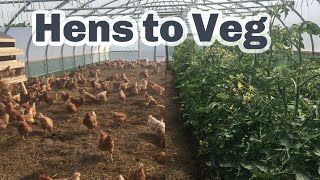
Richard Perkins walks through converting a polytunnel from winter poultry use back to summer cropping. He describes removing hens, reusing winter bedding as compost, topping beds with mature compost, installing drip irrigation for tomatoes and succession salad plantings, priming a pond-fed pump and disk filter for irrigation, and minor greenhouse repairs. He also acquires two young peacocks (~6 months) as replacements and discusses the value tradeoffs between winter egg production and summer crops in their northerly climate.
Questions this video answers
About 500 litres of mature cow-and-chicken-manure plus peat-moss compost per bed.
A 75 centimetre rake.
Tomatoes are planted at approximately 22 centimetre spacing.
30 centimetre emitter spacing.
About half an hour every second day.
Chapters
What's up, YouTube? Welcome back to another episode. Today we've finally transformed the tunnel that's had the layers all throughout the winter. So a little bit about that process and we finally got some replacement peacocks at the farm, which I'm super excited about. So our salad's all up and big. First tomatoes coming in. Things are looking different in here. Flock is gone. Look at that. So we've got one set of nest boxes to go into one of the egg mobiles. The other is a spare we use for winter. But we have got rid of the hens. We got a new flock coming. Early morning birds are looking pretty relaxed. It's been cold nights, just touching on zero, but they're fine. They've been. We haven't actually added any additional bedding or anything and they seem okay with that. Spring is on the approach. Broad forked over. This is ready for some tilting, I think. Certainly this bed has had till fin and we're gonna then add some of the old, well composted material back top, dress it with some mature compost and then we'll be set eight beds. We've got crops to go in here long before the tomatoes come in. So we have two drip lines for the tomatoes, which allows us to grow salad on each side. And we'll be doing succession plantings of those every week now. So that's the run over with the tiltha deleted the video by mistake of a little time lapse of me doing it. But we're ready to put back on compost. We'll do that as a big group effort tomorrow morning. Get this up and ready. So this space still characteristically grows more value in eggs in the winter than it can in summer in crops. And that's just the way it is. Eggs, you can fit 800 hens in here and lay quite a lot of value of eggs, 30, €40,000 of eggs in the wintertime because our winters are so long, which is much more so than the tomatoes in our climate. Tomatoes being, I don't think, actually a high value crop here in the northerly.
Countries, we actually grow more value of salad crops than we can with the tomato crop underneath. But that's because we're not heating the tunnels. Now, to be competitive with tomatoes, you would need to have them at a time of year when not everyone else has them, which means starting them early, which in this climate would mean heating.
The tunnel with fossil fuels, which to.
Me is just, you know, just seems really stupid. It's not, you know, we all like tomatoes, but they're not nutritiously dense. So it just seems like a. Yeah, I'm not prepared to do it. And then you're competing with big industrial scale producers who do heat their greenhouses.
And do it on a big scale.
So you can't really compete anyway. So for me, in these northerly climates, tomato is a low to medium value crop. Certainly we could produce two or three times the value just in the salads run under succession on each side of them throughout the season.
So bringing back in compost. This is the older bedding from the winter. So it's been on the ground six months. It's pretty broken down already. And then we'll top dress this with more mature compost. This is what a bed looks like. Top dressed with 500 litres of more mature cow and chicken manure and peat moss compost, which is. Is similar to what we're putting on our beds typically. So that's how the finished result should be. And it's just out snowing. Wonderful. Weather. Okay, job done. Coffee time. Now. Working with a 75 centimeter rake to keep the beds consistent. I always work diagonally along because you get over spill on the sides of the rake. So if you were just to pull this along, the over spill would just push all the compost off the beds into the paths. And we want the paths and beds to be of the right size for us to be able to seed and crop and use tools properly. Looks good, gang, don't you think? This is a job that I've normally done on my own probably half the years because I'm doing it before people get here, but it normally takes me half day. It's taking us two hours. That's awesome. So we're going to put in the drip line now and get this, we're going to start the succession plantings and then this will be in this way till mid August till tomatoes are cut on there or pruned from their growing stamps. And then come end of October, this will be back to ground level again with birds coming in. Okay, drip irrigation. This comes from our house. Well, and so we have limited water supply, so we're down to about half an hour every second day. This was just an old setup that we were given that happens to fit. These are all stacked up from last year. So we'll run all these out. We have two rows along each bed, either side of the tomatoes and that allows us to grow a salad crop on both sides. So for the end of drip tape, what you can do is fold it over here. We're Folding it five times. Take a little bit of drip that you've cut and just poke it into there and that way you can seal up the end without any extra bits. Very nice. So and that's how it looks. We just pegged them down with little garden pegs, two on each bed. Then we'll give it a test. What are you up to Akos? Show what. What are you up to? Ah yeah, I'm using this special tape to fix this greenhouse. Some holes in the top there, that's from where we've cleared snow in the past and we've used two methods. One using a rope with one on each side of the tunnel which works well certainly for fresh snow. But sometimes we've used this telescopic handle that you use for clearing roofs here. Flatter roofs, that's about 9 meters long. Trouble is with that is it cakes up snow and you can see I've made a hole with that tool here. That was from when we didn't have livestock in here for a year. Now if you've got animals in the tunnel, even chickens that don't seemingly put off so much heat. We've never had to clear snow once. So multi use infrastructure is beneficial in many ways. Not only is this space earning more in eggs in winter than it does in crops and summer, but we also don't need to clear it once we have livestock in and we don't need an additional animal shelter. Okay, pretty nice for mid morning. So this one is connected up to the pipe here that just runs up to the sheep in the barn there. So we want to test it. Now what can happen with these is they blow out because this is just an old crappy system that we got. These are a bit fiddly. They've just got a back plate inside this hose and sometimes they can work loose during the year. And these are just anti, they've got the opposite direction screw but they can be fiddly. But then once it's all set up and running it usually goes without problems all season. So turn the water on, test it out. Hello mama. Look at you little guys. Didn't mean to scare you. Just wanted to get you on film. Okay. A couple of leaks detected. This stuff is best stored on rolls. But we have had it just folded up because we're in a rush to close down everything at the end of the year. Luckily we got this large amount from the chap who left it for us. So it's all good. But yeah, it's best not to have it lying kinked in Storage and we just were a bit neglectful with that. But seems all ready to go. Now. This is a 30 centimeter spacing drip. So we're going to end up planting along the actual emitters. You see there is one there. So obviously drip comes with different emitters, but this is perfect for tomatoes. We put tomatoes at 22 centimeters typically. And so this works well when you drip water in the same place. It does a V underground, so it waters much deeper, much wider, with much less water. And that's why it's handy. Just generally in our context, drip doesn't work for high rotation cropping, but because we're in here all summer with tomatoes, cukes, it's perfect. I would never choose to do this in beds outside unless I lived in a very hot, dry country like Spain, Portugal, where water is the limiting factor. Here it's often actually too wet. Despite the drought years we've had more recently. And so drip and the time moving it because we have up to 12 rows of crops on each bed, that it's just not worth it. For me. I prefer the ease of overhead watering in our context. Yes. First frog spawn of the year. Look at that. We are down at the pond trying to prime the market garden pump. Now it's freezing night, so we're turning it on and then draining it again. But we want to just get the system filled up. In order to prime the pump, we need to fill this long 50 millimeter pipe that goes slightly downhill all the way to the pump. We have to fill that with water with no air. And then you can see the filter has been set here all winter. It's a disk filter that allows it to filter out very small particles, ideal for drip system. Even though we don't use drip. Now we've got the pipe filled, we're hoping if this flow of water can keep going, then we know that we filled the line. And once all the air is out, it's good. But look, the flow has stopped, therefore it's not siphoning. So this is one way to work with ponds is with siphoning water over. But we know now that there's air blocking the pipe. We have to do this again, make sure there's no air gaps in the pipe. Until this water runs clear, we can't think about putting it into the pump here. So what we're doing is using a watering can and just filling up the pipe. But because air bubbles will trap water flow in the pipe like this, it's a bit of a process. Takes half an hour every Year to get this set up down here at the pump, we have a tap that goes into the filter. So what we're trying to do is just push the water through by filling it up on the pipe and having the force of the water coming in, push out the air bubbles. Because this whole. You can feel this whole half of the pipe is empty, even though it's slightly downhill. Okay. Looks like we've cracked it. So air is trapped in here. It's just stopping to get down. It's falling downhill. But air can build up pressure, obviously, as it gets compressed and really does amaz stopping water coming through. This water is now flowing. So we have a siphon from the middle of the pond running down around to the pump. So what we have to do, clean the disc filter, get that back in, bleed the pump of air, get it pumping up, and we're gonna water the small tunnel with it. Ragnar, show us your hat. Still the art of cool hat, dude. Ragnar's got style. Today I'm getting a big surprise. So we're here at an alpaca farm to have peacocks for sale. And the funniest thing is, I saw these peacocks come up for sale the day that they came up on blockage, like a local sales site. And I emailed within a few hours of it coming out, and all the peacocks have been sold. But apparently. Yeah, phone that first. So we don't want any breeding because they cause trouble to the neighbors.
But what we're after is two Mr.
P's replacements for Mr. P's farm hasn't.
Been the same since Mr. P went.
One year in August. Okay, Junior P. 1 and J. So look who we've got here, Junior P. I don't know the name of the other one, but these are young birds, only six months old, so they will start getting more feathers this year. But it'll be a couple of years to layer full size with their magnificent tails. Such a special thing for me. I've always loved having peacocks here. People have always asked why we have peacocks here. Well, frankly, they're just incredibly beautiful, and why not? And when you've got a big open space like we have around the farm, it's quite well suited. I personally, I don't mind the noise the males make. Some people really don't like it, but it really resonates around the farm, and it's been part of the lifeblood of this farm for years, and it's something really special for me. Okay, so that's it for this episode. Folks. Hope you found that useful multi use spaces. Super important in any farm and particularly important when we have such a long winter down season as it were. But thanks for watching and don't forget to click subscribe. Click the notifications bell so you get updates when we post new content. And you can find out a huge amount more about what we do in our book Regenerative Agriculture 750 page manual of how to do all of these different enterprises that we showcase at our farm as well as a comparative analysis of 14 different enterprises. So help you get started farming right. You can find out all about that in our online training as well, which is in the links below so you in the video very soon.
More from Richard


A review of short and intensive season on a mixed farm and restaurant/event space in Sweden






Alskade Kyckling Exploring complexities of poultry production in Sweden and what we stand for


