Bonus Episode: Welcome To The Neighborhood of Solitude with Eileen Hunt Botting
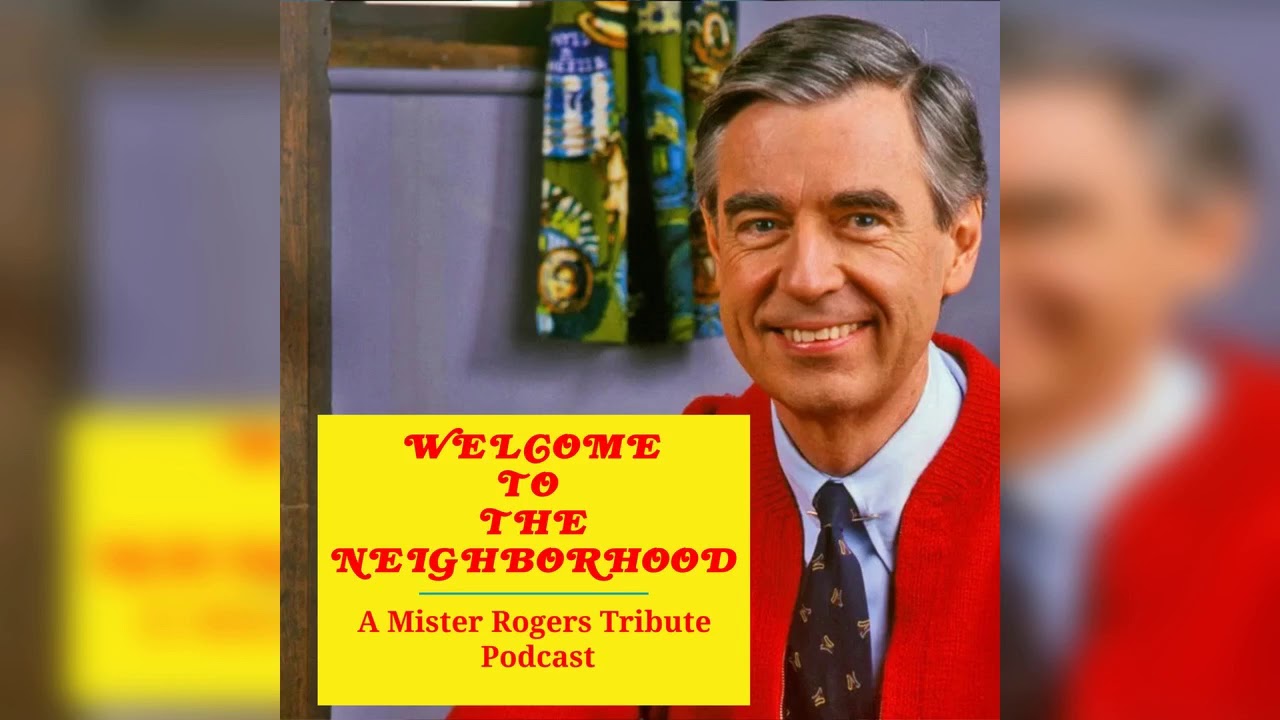
In this bonus episode of The Neighborhood, host Rick Lee James interviews political theorist and Notre Dame professor Eileen Hunt Botting about her recent essay “Welcome to the Neighborhood of Solitude.” Botting recounts her childhood experience of watching Mister Rogers’ Neighborhood, emphasizing the show’s land of make‑believe and the trolley as a portal to imagination. She argues that Fred Rogers serves as an unsung pop‑cultural hero of love during the COVID‑19 pandemic, positioning his message of unconditional love and imagination as a remedy for the crisis. The conversation then moves to philosophical parallels: Botting links Rogers’ imaginative space to Slavoj Žižek’s concept of the “Desert of the Real” (post‑9/11) and the red‑pill/blue‑pill metaphor from The Matrix, suggesting the trolley functions like a red pill that reveals a harsh reality but also empowers transformation through love. She discusses Žižek’s recent book “Pandemic,” noting his call for stronger social safety nets and a socialist response to collective trauma. Botting also outlines her scholarly work on Mary Shelley, highlighting Shelley’s pandemic novel The Last Man and her own forthcoming book “Artificial Life After Frankenstein,” which connects Shelley’s ideas to contemporary debates on AI, genetic engineering, and pandemics. Throughout, Botting shares practical lessons she draws from Rogers during quarantine—patience, background presence of the show, and using imagination to teach children. The episode concludes with recommendations for accessing original Rogers episodes and a brief promotion of Botting’s Mary Shelley scholarship.
Chapters
Welcome to The Neighborhood, a Mr. Rogers tribute podcast. As always, I'm your host, Rick Lee James of rickleejames.com, and I run the Mr. Rogers Quotes Twitter account found @MrRogersSay. As we again walk into this podcast neighborhood, I want you to know that no matter where you are from, you are welcome here. I'm glad to be your neighbor. Every daughter, every son, every tribe, and every tongue, in the spirit of Fred Rogers and the life of welcome that he lived, welcome to the neighborhood. This week in the neighborhood, we're going to be talking with Eileen Hunt Bodding. Eileen is a mild-mannered political theorist, an author, and a professor of political science at Notre Dame. Aileen recently published an essay called "Welcome to the Neighborhood of Solitude," which looks at Mister Rogers' Neighborhood through the lens of the COVID-19 pandemic. Aileen stopped by for a visit today, and I'm so glad that she has. Aileen Hunt Botting, welcome to the neighborhood.
Thank you very much. It's such an honor to be here.
Well, I am very glad to be able to have a visit with you today, and you're Your piece is so well written, and so I can't wait to talk to you a bit about that today. But before we actually talk about your article, everyone seems to have a story about a way that Fred Rogers has touched their life personally in some way, especially the guests that come on this show, it seems like. So I want to begin today by asking you, Eileen, what is your Fred Rogers story?
Well, my story is that I grew up watching the show. I was born in 1971, so you could say I was born at the peak opportunity for becoming a fan of Mister Rogers in the United States of America. And my parents were huge believers in, in propping me and my younger brothers up in front of the TV with pillows and basically compelling us to watch Mister Rogers as much as was physically possible., and I probably watched it twice a day because I believe on PBS, uh, in those days it was on every morning and every afternoon, uh, I think before Sesame Street was on. So I watched it twice a day, probably for the bulk of the 1970s. But my— the most formative dimension of this experience of growing up watching Mr. Rogers was his idea of the land of make-believe. And what I love the most about Mr. Rogers' Neighborhood, the show, was how he would use the trolley to enter into this magical, imaginative world every episode, which was essentially the core of every show. And so in some ways, what he taught me at a very young age, maybe as early as my toddler years, was that within each and every one of us is this imaginative world that we can choose to enter at any time and find solace, resources for combating boredom, resources for relearning how we ought to relate to one another as neighbors in our families and in society.
Well, thank you for sharing that with us. And so many things that you said, I know that all of our listeners who have watched the show are probably thinking, yep, I feel that way too. There's an interesting camaraderie that we all, I think, feel together with our Fred Rogers stories. Well, you recently published an article called "Welcome to the Neighborhood of Solitude," and you can find it online if you look up your name or if you look up that article. And in the article, you say the real Mr. Rogers is the unsung hero— I'm sorry, the unsung pop cultural hero of love "Love in the Time of Corona," and I wonder if you could elaborate a bit on what that means for our listeners.
Sure. Well, as I'm sure everyone knows, very early in the COVID-19 pandemic, people started using the phrase "love in the time of corona." Of course, this is an allusion to the famous novel by Gabriel García Márquez, "Love in the Time of Cholera." And I noticed this on Twitter and Facebook and other social media, including the news media. I noticed that Gabriel García Márquez's son wrote an op-ed in The New York Times using the phrase and reflecting on why his father's novel was so powerful now for us in the age of COVID-19. So, I was writing my essay on Mister Rogers during this time, I started writing my essay in April, so while I was still in quarantine. And the phrase "love in the time of cholera" and the phrase "love in the time of corona" called to mind in many ways the culture of the 1970s that I grew up in. My parents are boomers. They were born just after World War II. They're in many ways could be described as Catholic hippies. They're, they're, uh, Roman Catholic, uh, and so for that reason have some socially conservative views. But overall, my parents are, are remarkably similar to, um, the everyone else who grew up during the '50s and '60s in the sense that they have a kind of belief or faith in the value of life itself, um, and in a sense that we should respect life, whether it is human life or animal life, plant life. We should respect the entire ecosystem that we inhabit. And so my parents raised me to be a kind of crunchy Catholic or kind of hippie Catholic in that sense. And, and I think Mr. Rogers in many ways reflected that ethos. You know, he was Presbyterian. He was a minister. But he came out of that post-war experience, right, where young people had to figure out a way to affirm life in the face of grave injustice and death. And he affirmed the power of love in virtually everything that he did. You know, one of his most powerful phrases, which you quote many times on Twitter, and I appreciate that so much because it I think it's a message we all have to be called to remember every, every day. And that message is we should love everyone just the way they are, but we should use our love and our imaginations to reform society and the broader world itself to make it more just and safe and healthy and caring for everyone and everything. So that's why I think Mr. Rogers is the unsung pop cultural hero of love in the time of corona, because I think if there was any time in my lifetime that we all need to be called to love the world yet seek to reform it as best we can, it is now.
Well, those are true words for sure, and it's, it's hard right now. I think a lot of us are— well, probably all of us are feeling a little uneasy. We're hurting. We're experiencing, I think, grief in many ways. We've lost a lot in these times. We're experiencing new ways that— maybe a new awakening of ways that we are able to enter into a new anti-racism conversation that maybe a lot of us haven't been ready for until recently, and there's just so much going on right now and I love how Fred Rogers also would remind us that love is at the root of everything, and then he goes on to say love or the lack of it. And so thank you for elaborating a bit on what you were talking about in your article about Mr. Rogers being the unsung pop cultural hero of love in the time of corona. We're going to enter a little bit into some philosophy this morning for our listeners, and if they haven't read him— I have to be honest, I haven't read I haven't read a ton, but I have read some of the works of Slavoj Žižek. I always have trouble saying his name when I have to pronounce it, but you write about him actually in your article as well. And in the article you write about Žižek's response to 9/11, and he wrote something called "Welcome to the Desert of the Real." And I wonder if you might give our listeners a bit of insight into Žižek's thought in that work and how Mr. Rogers' Neighborhood compares with what he calls the desert of the real.
Yes, I had been reading Žižek because he wrote the first book of philosophy concerning COVID-19. The book is called Pandemic, but it has, um, dem in parentheses so as to emphasize the way that the concept of panic is inherent to the concept of pandemic.
Hmm.
And so I had been reading his work as part of my own preparation for teaching a graduate course at the University of Notre Dame in the fall on the political philosophy and literature of pandemics from the ancient world to the present. But as part of the process of reading Žižek's new work, "Pandemic," I recollected his earlier and equally famous work, "Welcome to the Desert of the Real," which he published in the wake of 9/11 in 2002. And in that book, Žižek talked about how the experience of seeing the Twin Towers come down was a bit like going down the rabbit hole in The Matrix. Now, I'm sure your listeners are familiar with the 1999— or 1998 film, I believe, The Matrix. And in that film, there is a famous scene in which the rebel leader or resistance leader Morpheus tells the hacker Neo that he has a choice. You know, he can take the red pill and go down the rabbit hole into a world that will reveal to him the true nature of his reality. And the revelation of that true reality will hurt. It will hurt to realize the truth. Or Morpheus says to Neo, you can choose the blue pill and you can stay where you are, basically. You can stay comfortable. You can inhabit this pristine world that you live in now. And not question your reality. Just accept it for what it is and take its pleasures as compensation for any trouble it may cause you. Neo, as we know, chooses to take the red pill and to escape down the rabbit hole. And in the rabbit hole, he finds the bombed-out desert landscape of reality. So he encounters the desert of the real. In other words, Neo sees the world for what it is in the way that all of us in the United States in some sense saw what our country was and what our political landscape was after the two towers came down. Okay, so he has this tremendous moment of disillusionment, right? Sure, sure. And so what Žižek does, I think quite cleverly in this essay that becomes part of his book, Welcome to the Desert of the Real, is to point out to readers that in some sense we all go through these processes of disillusionment as we grow up. We went through such a process of disillusionment as a country, I think, after 9/11. And he captures that collective sense of political disillusionment that all Americans, I think, faced in different ways at that particular moment. We realized in some sense, you know, that the real world is actually this bombed-out landscape, but we also realized that it was in desperate need of our rehabilitation, okay? So we realized what we needed to do is transform that desert landscape into something better, more just for everyone through the work of love and imagination. Or some of us did, right?
Yeah, some of us, sure.
I think Žižek's point is that we ought to have that realization. We ought to be working toward a more just order for everyone. Now, he's a communist. He endorses socialism as the solution. You know, I think in some sense he has a point there, especially during the pandemic, because we've seen the ways in which our current crisis, which many people have pointed out is a kind of parallel to 9/11 in the way it's really traumatized our nation, right? Kind of overturned many of our assumptions of what our country stands for and what it's capable of doing, whether its forms of government are enough to protect its people and so on. I think what we're faced with now, and this is the point Žižek makes now, is that, you know, We need to think about whether our society in its current kind of bombed-out desert landscape needs something more in terms of a social safety net for people, right? You know, how do we provide for people who are put into situations of economic and healthcare vulnerability as a result of COVID-19? And so, you know, He and other political theorists on the left have pointed out that socialism, democratic socialism, and, you know, in his case, communism, provide a social safety net which, which may provide greater security overall to people than what our current mode of capitalism can do for people. And I think that's a valid point that we all need to consider. Consider as we go forward. In what ways should we be strengthening our safety nets in society so that each and every one of us is protected, whether that is from the disease COVID-19, or whether that is from war, whether that is from racial prejudice, and so on. I think Mr. Rogers would probably, interestingly, be on board some of what Žižek is saying. I didn't have time to go back to go back and research whether Mr. Rogers had ever responded to anything Žižek had ever said, especially as a result of 9/11. But I think the spirit of Mr. Rogers' Neighborhood is one in which there is a robust social safety net, you know, that no neighbor left behind, you know, and we should all be working to help each other, you know, not simply look for the helper, but to be the helper.
Exactly, yes.
Yeah, and I think that what Régis Jacques' work does is make a kind of surprisingly similar point to Mr. Rogers' Neighborhood. So let me just tease out the metaphor a little bit further, or the analogy a bit further for the listeners out there.
Please, yes.
If we think about the trolley in Mr. Rogers' Neighborhood as the force of the imagination, that can take us to a reimagined version of our present reality. We can think about the trolley as the red pill, right? In some sense, right? It takes us into this world where the scales fall down, right? We see the bombed-out reality for what it is, but we also are empowered because what happens to Neo once he chooses to go down the rabbit hole, he realizes he has this transformative power. Transformative power of not only imagination but love, right? Because remember, it is his love for Trinity that literally saves the world.
Right, yeah.
That is in itself a profoundly Christian message, and I think that's one that's at the core of Mr. Rogers' Neighborhood as well. Hmm. And so if we choose to go down the rabbit hole, to go into the land of make-believe, take the risk of that journey, to use our imagination, to tap into it, to reimagine what it means to be a loving neighbor, not only in that virtual world, but in the real world, and thus remake that world in a way that is benevolent and just for all, then we will have done the right thing. So I would argue that the land of make-believe is like the Matrix, when we enter it with our eyes open to the need to transform our realities, whether that's our social realities, our political realities, or our environmental realities, through love and imagination.
So that's very interesting, and I like the idea of— and maybe I'm not saying it exactly right, but in my mind, how I see it a little bit is we're taking the trolley into the land of make-believe to what may actually be an escape to the real world, you know, the world as the way it should be and the way that we ideally would like it to be. You know, we're learning these lessons about what it means to care for each other, but also I think it's interesting the way too that Fred Rogers always made space in his show to talk about very, very hard things, you know, and whether it was in the land of make-believe or whether it was you know, in his home, which was a really a fictionalized version of Fred Rogers in his home, in his neighborhood. And you talk about that some in the article as well. What's so interesting about him and his philosophy of life was when people would meet him in real life, you know, they'd say he's even more like Mr. Rogers in real life than when he was on TV, you know. And I really do think it was his use of imagination, of trying to help us live into that as the real world, and where we really do care about our neighbors like that. And I really appreciated your analysis and the way that you cover so many really interesting things in your article, whether it be Žižek or getting into The Matrix or the way that Fred Rogers was in that neighborhood. And I'm just sitting here thinking as I listen to you today, your students at Notre Dame must, must just feel very fortunate to get to sit and listen to you in the class, whenever they have the chance to be in class. I know it's been some time for sure, but you have quite a gift for being able to explain things in a way that— very complicated things in ways that make it very easy to understand.
Well, I'm hoping with all this experience I'm getting with doing podcasts like this that I might be able to publicly post some of the lectures from my class in the fall. So that people beyond Notre Dame can enjoy some of the points I'm making about the relationship between literature and television and film and the ethics of not only surviving a pandemic, but even potentially realizing justice and good in the pandemic for every— and so I'm hoping to make some of my lectures public. And but I really appreciate the kind words. I'm pretty sure watching Mr. Rogers taught me how to do literary criticism of things like television and film. In fact, one of my earliest memories of, of learning how to critically interpret text was from a very young age looking at television shows like The LUMBOAT or Fantasy Island, some of those shows that I graduated to after watching Sesame Street and Mr. Rogers for the first decade of my life, and realizing that every single episode had virtually Essentially the same story, you know, and but I think Mr. Rogers' Neighborhood, watching that show, it's, it's, it's self-conscious, meta-theatrical, and, you know, it's, yeah, it's self-conscious, meta-theatrical dimension. The way in which every single episode of Mr. Rogers was framed as an episode, right? An episode within an episode, as it were, and right.
Yeah.
He called to children's minds the way that everything is not just a story, but in some sense everything is a story within a story, and you are the narrator of that story, right? Just like he is the narrator of Mr. Rogers' Neighborhood. And so I think he empowered me as a very young person to, to see the ways in which human beings have this amazing talent for telling stories, but we also have this incredible talent for interpreting stories, and that interpreting stories is something we can do no matter the form of the story. So it's as powerful and philosophically interesting to analyze a television show like Mr. Rogers, right, as it is to open up a philosophy book by Žižek, right? And Žižek himself makes this point over and over again because he always uses pop culture to explain philosophy, including films like The Matrix.
Wow, yeah, that's, that's really interesting. And, and I do think Fred Rogers did think on several levels like that too. I think there were a lot of layers he was trying to get into that show. And there are some articles written somewhere too that people have written about how careful he was with words that he chose and the rewriting he would do and how concerned he was that his message would be perceived correctly. And there are all of those layers that you're talking about. It's very interesting the way that you're laying them out. Well, you know, in your article, you encourage the readers to skip the recent movie and the documentary made about the actor and to go to the original episodes of Mister Rogers' Neighborhood if you want to get a real feel for him. And I agree with that too. I love I love the movie and I especially love the documentary "Won't You Be My Neighbor?" but there's something about going to those shows and I've been rewatching them again as a father and trying to share some of those with my son. And there's a lot of value there that I think as children I know that I missed as a child, that I'm going back now and thinking, "Wow, this is so deep and powerful and there's so much helpful— there's so many helpful things in these episodes." I'm wondering, what are some of the things that Mr. Rogers' Neighborhood has been teaching you personally in this time of pandemic?
Mr. Rogers has taught me a lot about patience and what it means to be patient in quarantine, what it means to be patient with my society during a pandemic, what it means to be patient as a parent. I have a son who is 5. And to be patient while we homeschool him, to be patient with my city as it grapples with ethically difficult decisions and economically difficult decisions about how to open up during the pandemic. I started putting Mr. Rogers on sometimes during the day. I found him, he's streaming online somewhere, I'm not sure which app has him, but he's on there. You can find him.
Yeah.
And I had him, I had him on the TV and I kept him on in the background one day as I was helping my son make Legos and do puzzles as a way to pass time. And I realized the power of having him in the background, having that soothing voice, his songs, the way that he teaches parents and children. To see the power of music for giving us insight, creative insight, and how to become more patient and loving in our everyday interactions with one another, how to overcome frustration with something as simple as putting together a puzzle or a Lego set, teaching your child how to become more patient how to take a rainy day and turn it into something meaningful and fun. So I wish I would do this more. I have to say, if I had any advice for myself during the pandemic, it would be to put Mr. Rogers on in the background more.
Excellent idea. It is amazing the way that, you know, I still feel like I'm learning every time I turn an episode on. And we don't watch it every day around my house, else, but I do know that if any of our listeners are wondering where they can watch some of the episodes, there's a lot of them on Amazon Prime if people subscribe to— I don't know if it's Amazon Instant Video, I guess is what it's called, but they have a number of the episodes there. And then there are free episodes you can watch on YouTube as well. And sometimes just going to some of those are such an encouragement to me and a reminder of the world I want to be in and the world that, you know, I want to be one of the helpers. And I'm so glad that you stated that earlier, that we really can be people who strive to not just look for help around us, but I think that Fred Rogers was especially trying to teach us how to be those helpers too in times like this. Well, we're getting close to the end of our time together, and Eileen, I just want to thank you so much for being here today. You're such a great writer though, and you have some new material that's coming out as well, and I want everybody to know I'm gonna put links on our website at Welcome to the Neighborhood. Actually, if you just go to fredrogerspodcast.com, that'll take you straight to our website, no www. But I want to put links there so people can find out more about you and the books that you have written and just more about who you are as a person, because I think you're putting out some really wonderful things into the world. I wonder if, just very briefly, maybe if you could do it in a couple minutes, I'm interested to know more about your work and your writing on Mary Shelley's Frankenstein, because that's a book that I came back to a few years ago and just got so much out of reading it, and even have a friend who wrote a play that is becoming very popular in parts of the country where he made a new version of Mary Shelley's play on Frankenstein, and I'm hearing just really wonderful reviews about that. So I wonder, could you tell us a little bit about your work with that and your upcoming book about Mary Shelley's Frankenstein?
Thank you very much. That's very kind of you. Yes, I started out my career primarily as a Mary Wollstonecraft scholar. Mary Wollstonecraft is the mother of Mary Shelley. Mary Shelley is the author of Frankenstein. She is also the author of the first great modern post-apocalyptic pandemic novel, The Last Man, published in 1826. And I recently published an op-ed in the philosophy column in the New York Times, The Stone, on that novel, The Last Man. In fact, it came out, I believe, 2 days after the pandemic was declared. So that was a momentous occasion, I think, in many ways for Mary Shelley studies, because I think what I have been able to do in my recent scholarship is show the ways that Mary Shelley's philosophy of living with the artificial dimensions of human life, is not only present in her first novel, Frankenstein, which of course features the making of an artificial man, right, through science, but it's also present in her great pandemic novel, The Last Man, because in The Last Man, she argues that the plague which sweeps the earth and wipes up out seemingly all but one human being That plague was man-made. It was a product of human artifice. It was a product of human violence and war in particular. She argues that the plague originates and spreads due to a war. So I think Mary Shelley was quite visionary. She in many ways anticipated the contemporary political theory of pandemics, which points out that pandemics are not purely natural or purely acts of God, so to speak. Pandemics are created by, or created and exacerbated by, human behavior. And so, in other words, we're all in some sense responsible for the pandemic that has beset us this year. And so what I'd like to do in, what I have done so far, and what I'd like to do further in my scholarship is emphasize the way in which Mary Shelley was quite a prescient and far-seeing political thinker. Through her two great works of modern political science fiction, Frankenstein and The Last Man, she calls all her readers to understand the ways in which our behaviors, our actions, our works of artifice as human beings shapes our realities for good and for bad. And like, actually, much like Mr. Rogers, she thinks we also have the power to use love and imagination to transform the world for the better through our, through our artifice. And that's, that's probably the final philosophical message of my work. In the two books that I have on Mary Shelley, the first was published in 2017, that is called Mary Shelley and the Rights of the Child. Published by Penn Press, and the second book is coming out in December that's called Artificial Life After Frankenstein, which looks a bit more at how we can apply Mary Shelley's insights to debates in artificial intelligence, the genetic engineering of children, and also pandemics as we enter the new age of pandemics in the 21st century. So, but basically, the basic insight is that we have the power to use our artifice for good or for ill, and we ought to use it for good by using our imagination and our capacity for love to transform the world around us for the better.
Wow. Well, thank you for sharing with us about that. It sounds fascinating, and congratulations on the new book. I think many of us don't realize how much work it takes to write a book, let alone several books, and I'm sure I'm sure it feels like a huge victory with everyone that's published. So congratulations, and I just want to tell you we're very proud of you and the work that you're doing, and I'm so grateful that you stopped by for a visit today. And if you can hold on for just a minute, I'm going to do the outro of our show, and then we can, can say goodbye off the air. Well, thank you for joining us here This Week in the Neighborhood. Music featured on the podcast today was Nouvelle Noël by Kevin MacLeod, and all other music is by Benjamin Tauset, found at bensound.com. I want to say a special thanks to my guest today, Eileen Hunt Bodding, and to the Mr. Rogers Say community on Twitter @MrRogersSay. You may make my day very special every day. I'm your host, Rick Lee James. My personal Twitter account is @RickLeeJames. My website is rickleejames.com. Another podcast I host is called Voices in My Head: The Rick Lee James Podcast. And I look forward to being with you again next time. But until we meet again, remember, you make each day a special day. You know how? By just your being you. There's only one person in the whole world like you, and people can like you exactly as you are.
More from Rick

Voices in My Head (The Rick Lee James Podcast) Episode 628: Truth, Justice, and the Way


Rick Lee James feat. Phil Keaggy - Heaven Is Full of Criminals (Official Lyric Video)







Heaven is full of criminals — bold opening and musician story #substack #shorts
