Welcome To The Neighborhood: A Mister Rogers Tribute Podcast - Life's Journeys According MR
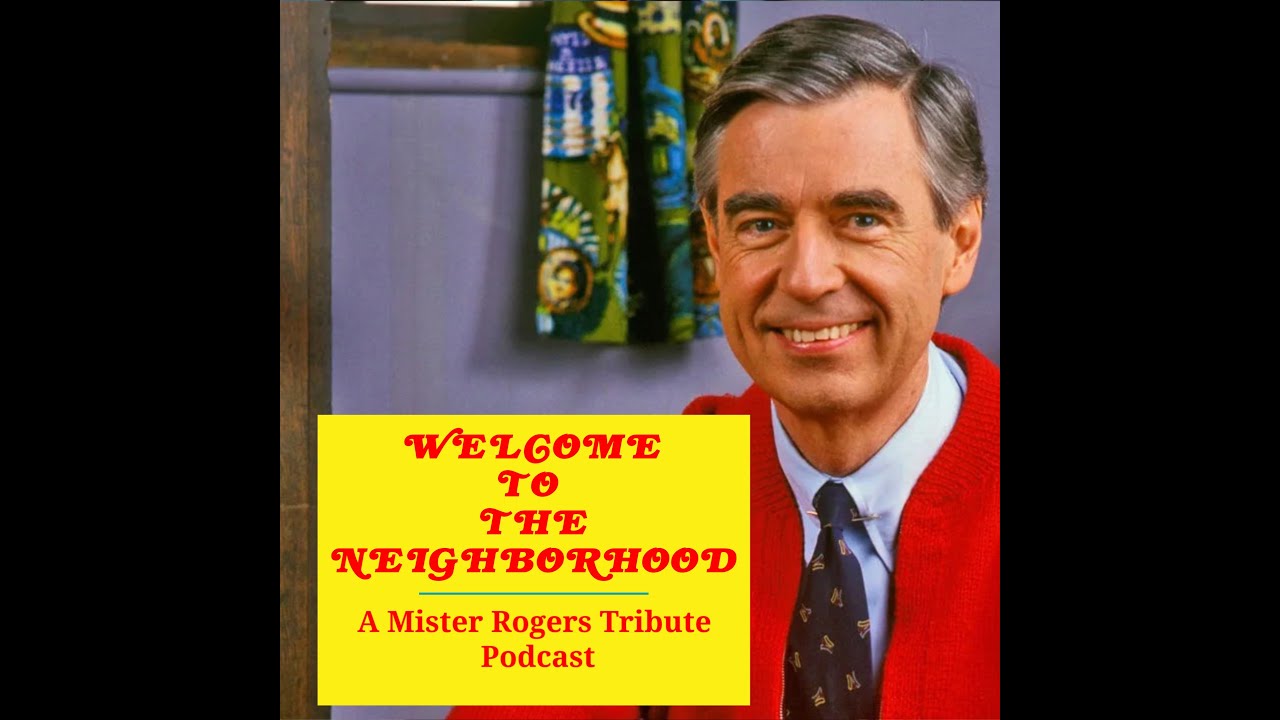
In this solo podcast episode, host Rick Lee James offers a comforting tribute to Fred Rogers during the COVID‑19 quarantine. He introduces the episode, explains his Mr. Rogers Quote Twitter account, and frames the content as a “neighborhood” where every listener is welcome. The core of the episode is a reading of the foreword written by Joanne Rogers for the book Life’s Journeys According to Mister Rogers, interwoven with selected Fred Rogers quotes and a short song from the show. Throughout the reading, James highlights Joanne’s memories of Fred’s compassion, his dedication to using television as a positive, spiritual medium, his habit of answering fan mail, and the ongoing work of Family Communications, Inc. and the planned Fred M. Rogers Center. James then shifts to personal reflections on grief, self‑acceptance, childhood bullying, and the importance of allowing oneself to feel and process emotions. He shares a Dalai Lama teaching that resonated with Fred’s philosophy, and concludes with a series of uplifting Rogers quotes and the song “I’m Still Myself Inside,” urging listeners to care for their neighbors, stay safe, and remember their unique worth. The episode ends with calls to action (links to the book, podcasts, Twitter, and website) and a heartfelt farewell.
Chapters
Welcome to The Neighborhood, a Mr. Rogers tribute podcast. I'm your host, Rick Lee James, of rickleejames.com, and I run the Mr. Rogers Quotes Twitter account found on Twitter @MrRogersSay. As we again walk into this podcast neighborhood, I want you to know that no matter where you are from, You are welcome here. I'm glad to be your neighbor. Every daughter, every son, every tribe, and every tongue, in the spirit of Fred Rogers and the life of welcome that he lived, welcome to the neighborhood. Today I'm going to be looking at the book Life's Journeys According to Mister Rogers: Things to Remember Along the Way. A book that was written by Fred Rogers, and it's a very special book to me because it's one of the first Mr. Rogers quote books that I had. And there's a really wonderful story in the beginning of that book by his wife, Joanne Rogers, who is still with us this day. She's in her 90s now, but I just love hearing her talk, and you can find a lot of different interviews with her online. Well, she wrote the foreword to this book, and it really tells a lot about the relationship between Fred Rogers and his wife, Joanne. And in these times that we're in, where I know many of us are quarantined, I know the, the better part of the country has stay-at-home orders, and we're supposed to be staying in our homes, and that gets difficult at times. I think it's important to remember that our relationships with those that we live with are so important. And that maybe we need to be reminded of how precious our family members are, and those who we love, and the people, maybe our roommates, and people that are dear to us that are maybe in the same homes as we are, that it's good to be reminded of that. So today, in this very difficult time in the life of our world, I'm going to share this foreword from the book Life's Journeys According to Mr. Rogers. And I'll read Joanne Rogers' book, and then just pretend we're kind of like an audible version of the Twitter account after this, @MrRogersSay, because I'm gonna be reading some quotes, little short sayings from Fred Rogers which make up this book. And maybe it'll inspire you to go out and get a copy of this book, which I'm gonna try to have a link on our website at welcomeneighbor.podbean.com, or you can just go to fredrogerspodcast.com, no www., just type in fredrogers.com and it will take you, or fredrogerspodcast.com, I'm sorry, I keep messing that up. Seems like that's the second week in a row I've done that. Again, this is not one of our normal seasonal episodes. Usually if it was, I would be joined by my co-host David Dalt, but these are some different things I'm trying to do while we're on quarantine, because I think we might need some extra encouragement in this time. I know that I certainly do. So here's the foreword by Joanne Rogers. When the day turns into night and you're way beyond my sight, I think of you. One of my treasures is a photo of a sunset that Fred sent to me with those words from one of his songs on a little note that he put on the back. Fred had taken that photo when he was in Nantucket without me for a bit. He loved being on the other side of the camera taking pictures. That photo of those few words and those few words have carried me through a lot these days. In fact, I put the photo in a frame and I set that note in a corner right in front. Even though he's way beyond my sight, I'm still being nourished by his words. It's such a comfort to know that others are too. Life is a curious journey. Certainly when Fred and I married, neither he nor I expected to find ourselves on the road that was ahead of us. I'd have to say, though, that from his senior year of college on, Fred knew what kind of journey he wanted. Early on, he was convinced that television could be an inspiring and positive force, especially for children, and he felt a calling to be a part of that mission. It still took him a long time to get where he wanted to be. Along the way, he used his time and his energies to gather what he felt might strengthen him for that calling. Somehow, from what he saw on television in the early 1950s, he knew in his heart that there could be a connection between television, the real needs of human beings, particularly children, and spirituality. All through his life, he focused on learning all he could about each of those three elements, and that's why he was able to weave them so skillfully together in the magnificent tapestry of his life work. Even when the world around him was changing, becoming fast-paced and materialistic, even hectic and violent at times, even when he seemed to be going against the current and some were urging him to pick up the pace of his program, Fred was determined to stay the course. Anyone who was close to him knew about his steel backbone. A lot of people might be surprised to think of him that way, but he was strong-willed and determined. The mentors he trusted most supported his decision to continue on what he knew was the right path, to be himself. My involvement in Fred's work was primarily as a fan and as background support. I did lots of cheering from the sidelines. I came into our marriage with a master's degree in piano performance, so it was natural for me as a young wife to become busy in the music community of Pittsburgh, teaching piano and playing concerts. After our first child was born, I put the piano on the back burner for a few years, but as the boys grew older, I went back to it and got together again with my college friend and duo piano partner Janine Morrison for concerts. I thought it was important to continue using what talent I have. To be perfectly honest, I started playing again because it was fun, because I knew it was good for me. Just as exercise keeps our bodies fit, if we do it, hmm, so I truly believe the piano work keeps my brain agile. I also had an ulterior motive. The hope that my sons would eventually feel freer knowing that I wasn't solely invested in them and their lives. As an only child, I knew the ambivalence of being the subject of my parents' near adoration. Part of me thoroughly enjoyed their attention, and at the same time, I felt a definite burden of trying to please both of them. A difficult journey at times, to be sure. Fred and I always allowed each other our own space. Fred's sister wasn't adopted into the family until he was 11, so essentially we were both only children, and it was obvious to both of us that we each needed our own space. But even when we were apart, we were connected. I couldn't help getting caught up in Fred's world. For the last 25 years of his life, everywhere we went, People would come up to him and say hello. He loved hearing their stories. One of the worst jobs was moving him along in a crowd. Everyone wanted to talk with him, and he loved their stories. He would just keep on asking questions so he could get to know more about them. He had a heart that had room for everyone, and he was fascinated by other people's journeys. That's probably why he loved the fan mail so much. He always brought home copies of letters to share with me. In his answers, he wanted to give the same attention and respect that he felt the writers had put into their letters. There was even a time in the mid-1960s when he'd bring the mail home, and after the boys were in bed, we would sit at the dining room table while he'd write out the answers. It's a good thing we weren't paid by the hour, because it was mighty slow work. We'd have to stop and read almost every one out loud to each other. Fred is still with me most of the time. There's hardly a minute that I don't think about him. A lot of my language contains "we" and "our." He's so much a part of my ongoing journey. I am still getting letters from people who continue to care about his work. Their stories are real treasures and warm my heart. I have the boxes of mail in the corner of my dining room, most of them answered and some yet to do. You know, he wasn't a TV star to them. They tell me that they thought of him as a personal friend, and he meant so much to their children. That would have pleased him so much. Almost all of them added something like, "And we watch too." It touches me deeply. That these loving neighbors want to share their sense of Fred with me. After Fred died, I was asked to take his place at a number of events where he'd been scheduled to give a speech. Fred had always spoken so beautifully, and I really wasn't comfortable taking his place, but when I realized that these audiences were Fred's loving friends, and that they didn't expect me to be Fred, I actually started to enjoy it. Now I speak occasionally, and I just try to be myself. Another big part of my life now is involvement with those who are committed to carrying on Fred's legacy, especially the amazingly gifted staff members at Family Communications Incorporated, who have become my extended family. FCI is the nonprofit company that Fred founded in 1971. Much of Fred's spirit is still there at FCI, where so many hours of his life were spent. Some of my favorite times are my visits there at their offices. It's a great comfort to know that this FCI family, who is so knowledgeable about Fred's philosophy in working with children and families, is as invested in his legacy as I am. On the horizon, is the Fred M. Rogers Center for Early Learning and Children's Media. It's still in the planning stages at Saint Vincent College in Fred's hometown of Latrobe, Pennsylvania. Fred had been in on the early discussions for it, and I've been fascinated to be involved with so many of his friends and colleagues in forging a path for it. Probably the best part of my work now is that I have met some wonderful people and I've gotten to know them. We've kept in touch, calling now and then, exchanging emails and visiting when they're in town, sharing memories, jokes, and funny stories. I do love to laugh. Wouldn't it be nice if we could just tell ourselves, "OK, you've grieved. Your time to grieve is up. Now it's time to get your act together." But it's not like that for me. Some days I feel energized. Some days I feel depleted. Grieving can be exhausting. Since I was a child, I've had an irrational fear that if I start crying, I'll not be able to stop. The tears do come sometimes when I'm alone and missing Fred. Sometimes tears of anger that he was taken from us too soon, but then I try to remember my overriding feeling at the time. He went to heaven. That feeling of blessed relief that his pain and suffering were over. After Fred died, I didn't even have the energy or inclination to play the piano. For 9 whole months, I didn't touch the keyboard. What brought me back was that Janine and I had a concert commitment. Journeys can be like that. When we're at an in-between time, something often happens to push us toward taking a step or starting a new direction. So I finally started working at the piano again, and thankfully my fingers remembered the feel of the piano keys. One of Fred's favorite writers was the theologian Henry Nouwen. He had read almost all of his writings, and they became good friends. Through their long phone conversations, Fred was aware of the importance to Henry of dying well. That's how Henry handled the end of his life a few years ago. It was what Fred wanted in his own life too, to die well. I've often thought how proud Henry would be of the way Fred handled the end of his journey. He did it honestly, not denying it. When he told his long-term staff at FCI that he had been diagnosed with stomach cancer and was about to have surgery, he said, Here we are on another journey. At the end, it was his beloved heaven that gave him hope. One of our friends asked Fred about his thoughts on heaven when she was taking a walk with him on a Nantucket beach a few years ago. I'll bet there was a twinkle in his eye when he told her, "Oh, I think there will be a lot of people surprised to see who's there." Fred would never want anyone to think they might not be worthy of getting through heaven's gate. His God loved everyone just the way they were, and we loved him too, just the way he was. Well, I hope you enjoyed the preface of the book by Joanne Rogers. I think there's actually a lot in there that is relevant to us right now. She talks about being far away from Fred even though she wanted to be with him, and And she talks about even when they were apart, how they were connected and how she still feels connected. And I know that we are in a time of being apart from each other right now, but I still hope we can find ways to feel connected. I know a lot of us are grieving right now. We may not even know it's grief we're experiencing, but it is. There's fear that maybe someone close to us, someone we know, maybe even ourselves, that we may get this terrible virus and maybe it won't turn out so well for us. Well, let's take some hope in the fact that we can only be who we can be in these times. That we, like Fred Rogers, can aspire to be our true selves, and to not live in fear, and to not let that fear overtake us, but to do our best to serve others. In the remainder of this podcast, I'm gonna share some quotes from the book Life's Journeys According to Mister Rogers, written by Fred Rogers. I hope that these will be a help and a healing to you. There are many times that I wish I had heard that just who you are at this moment, with the way that you're feeling, is fine. You don't have to be anything more than who you are right now. I'd like to think it's also something that's happened to me through the years. That I'm more able to accept myself as I happen to be, rather than as somebody thought I should be. Each person in the world is a unique human being, and each has unique human potential. One of the important tasks of growing is the discovery of this uniqueness, the discovery of who I am, in each of us, of who I am in relation to all those whom I meet. Anything that's human is mentionable, and anything that is mentionable can be more manageable. When we can talk about our feelings, they become less overwhelming, less upsetting, and less scary. The people we trust with that important talk can help us know that we're not alone. We can't be expected to leave the unhappy and angry parts of ourselves at the door before coming in. We all need to feel that we can bring the whole of ourselves to the people who care about us. I believe that at the center of the universe there dwells a loving spirit who longs for all that's best in all of creation, a spirit who knows the great potential of each planet as well as each person, and little by little will love us into being more than we ever dreamed possible. That loving spirit would rather die than give up on any one of us. When I was a kid, I was shy and overweight. I was a perfect target for ridicule. One day, how well I remember that day, and it's more than 60 years ago, we got out of school early and I started to walk home by myself. It wasn't long before I sensed I was being followed by a whole group of boys. As I walked faster, I looked around, and they started to call my name and came closer and closer and got louder and louder. "Freddy! Hey, fat Freddy! We're gonna get you, Freddy!" I resented those kids for not seeing beyond my fatness or my shyness, and I didn't know that it was all right to resent it. To feel bad about it, even to feel very sad about it. I didn't know it was all right to feel any of those things, because the advice I got from the grown-ups was, "Just let on you don't care, then nobody will bother you." Well, I actually— what I actually did was mourn. I cried to myself whenever I was alone. I cried through my fingers as I made up songs on the piano. I sought out stories of other people who were poor in spirit, and I felt for them. I started to look behind the things that people did and said, and little by little concluded that Saint-Exupéry was absolutely right when he wrote in The Little Prince, "What is essential is invisible to the eyes." So after a lot of sadness, I began a lifelong search for what is essential, what it is about my neighbor that doesn't meet the eye. "Let on you don't care, then nobody will bother you." Those who gave me that advice were well-meaning people, but of course, I did care. And somehow along the way, I caught the belief that God cares too, that the Divine Presence cares for those of us who are hurting and that presence is everywhere. I don't know exactly how this came to me, maybe through one of my teachers or the town librarian, maybe through a musician or a minister, definitely across some holy ground. And of course, it could have come from the grandfather I was named for, Fred McFeely, who used to say to me after we'd had a visit together, "Freddie, you made this day a special day for me." My hunch is that the beginning of my belief in the caring nature of God came from all of those people. All of those extraordinary ordinary people who believed that I was more than I thought I was. All those saints who helped a fat shy kid to see more clearly what was really essential. I realize that it isn't very fashionable to talk about some things as being holy. Nevertheless, if we ever want to rid ourselves of personal and corporate emptiness, brokenness, loneliness, and fear, we will have to allow ourselves room for that which we cannot see, hear, touch, or control. If we're really honest with ourselves, there are probably times when we think, "What possible use can I be in this world? What need is there for somebody like me to fill?" That's one of the deeper mysteries. Then God's grace comes to us in the form of another person who tells us we have been of help.— and what a blessing that is. The greatest loss that we all have to deal with is the loss of the image of ourselves as a perfect person. If I'm sad about something, and I dismiss my sadness by saying, "Oh well, it was for the best," then I'm probably not willing or able to explore how I'm feeling. If I'm angry with someone and I say, "Oh, it doesn't matter, I don't care," then I probably don't know what I'm really feeling. On the other hand, if we can allow ourselves to be gentle with ourselves, no matter what our feelings may be, we have the chance of discovering the very deep roots of who we are. One more story from Fred, about when he met the Dalai Lama. My personal introduction to the Dalai Lama was by way of television, in a hotel room. I was in Washington, D.C., preparing for a conference on children and the media, and was looking for a certain news program, when I happened upon His Holiness saying, "Someone else's action should not determine your response." I was so intrigued, I wrote down those words, turned off the television, and thought about nothing else the whole evening. Someone else's action should not determine your response. It sounds so simple, doesn't it? And yet, what if someone else's action should be shouting angry words at us or hitting us with a rotten tomato? That doesn't affect what we do in response. Not if our compassion is genuine. Not if our love is the kind the Dalai Lama advocates. And now a song from Fred Rogers, "I'm Still Myself Inside." I can put on a hat or put on a coat, or wear a pair of glasses or sail in a boat. I can change all my names and find a place to hide. I can do almost anything, but I'm still myself inside. I can go far away or dream anything, or wear a scary costume or act like a king. I can change all my names and find a place to hide. I can do almost anything, but I'm still myself. I'm still myself. I'm still myself inside. You are a very special person. There is only one like you in the whole world. There's never been anyone exactly like you before, and there never will be again. Only you. And people can like you exactly as you are. Well, thank you for joining me here this week on Welcome to the Neighborhood. Music featured on this podcast was Nouvelle Noel by Kevin MacLeod. Special thanks to the Mr. Rogers Say community on Twitter. I'm your host, Rick Lee James. My Twitter account is @RickLeeJames. My personal website is rickleejames.com. My other podcast is called Voices in My Head: The Rick Lee James Podcast. And I look forward to being with you again next time. I know these are difficult days. I know they can be hard, but I'm proud of you, and I want you to know how proud I am of you. Please continue to care for your neighbor in whatever way you can, and right now it seems to be the best way to care for each other is to keep a distance away. But it's because we love each other so much that we're doing this. So that we can eventually come back together. And oh, what a glorious reunion that's gonna be when we get to be with our friends, our neighbors, and our family again. So until we meet again, remember, you make each day a special day. You know how? By just your being you. There's only one person in this whole world like you, and people can like you Exactly as you are. Remember, you certainly are someone that people can love. Take care, and we'll see you next time.
More from Rick

Voices in My Head (The Rick Lee James Podcast) Episode 628: Truth, Justice, and the Way


Rick Lee James feat. Phil Keaggy - Heaven Is Full of Criminals (Official Lyric Video)







Heaven is full of criminals — bold opening and musician story #substack #shorts
