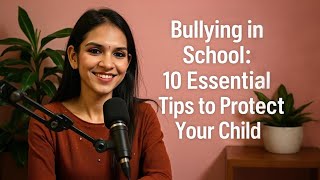
This is a YouTube video titled "How Mothers Can Stop School Bullying: 10 Essential Tips to Protect Your Child" created in January 2025. The content features Riddhi Deorah, a certified parenting coach and founder of Easy Parenting Hub, delivering a detailed monologue aimed at parents, especially mothers, on how to recognize, address, and prevent bullying in schools. The video provides practical advice and strategies for supporting children emotionally, communicating openly, and collaborating with schools to protect children from bullying.
Welcome back to my channel. Today we are going to discuss a very important and serious topic, handling bullying in schools. Bullying can have severe impacts on child's emotional and psychological well being and it's crucial and so important for parents to know how to address this and to prevent it Foreign before we dive deep into some effective strategies to handling bullying in schools, let me share about my mission with you in just one line. I'm Riddhi Devra, a certified parenting coach, the founder of Easy Parenting Hub, and I'm on a mission to help mothers build happy families so that we can build a happy nation together. If you're here and make sure to hit the subscribe button and click on the Bell icon so that you never miss on any important parenting update. I'm going to share with you 10 simple and important ways to teach your child to deal with problems of bullying. First, it's important to understand what are the different signs of bullying. Children who are being bullied may exhibit changes in behavior such as becoming withdrawn. They might feel anxious or they might get upset about the smallest things. They might show a reluctance to go to school and have unexplained injuries or report frequent headaches or stomach aches. Keep an eye for these signs and talk to your child if you notice any of these changes in your child. Second, create an open line of communication. Encourage honest communication with your child. Let them know that they can talk to you about anything, including bullying. Create a safe space where they feel comfortable sharing their experiences without fear of judgment or punishment. Ask open ended questions like how was your day? Or Is there anything bothering you at school? Ask these questions only if you notice signs of bullying. There's no need to ask these questions otherwise. The third thing that you can do is educate your child about bullying. Educate your child about what bullying is and why is it not acceptable. Explain the different forms of bullying such as physical bullying, verbal and even cyber bullying. Make sure you do this. Make sure that your child understand that it's not their fault if they are being bullied and that seeking help is the right thing to do. Tell them that being bullied does not make them weak. Tell them that they are still loved and that you're always going to be there for them no matter what. This makes your child feel emotionally safe and they feel their presence matters to you. Fourth, encourage positive self esteem. Building your child's self esteem can help them deal with bullying more effectively. Encourage them to participate in activities they enjoy and they are good at. Freeze their effort and accomplishments and and teach them to value themselves A confident child is less likely to be targeted by bullies and more likely to stand up for themselves. Make sure you watch my video on how to boost your child's self esteem. I've shared the link in the description below. The fifth thing that you can do is teach problem solving skills. Equip your child with problem solving skills to handle bullying situation, roleplay different scenarios and discuss possible responses. Teach them to stay calm and to avoid reacting and seek help from a trusted adult. Encourage them to use assertive body language and practice saying things like stop it. I don't like that. When you make them practice this a few times, your child will be quick at responding and will not freeze when they are being bullied. Sometimes when they are not prepared, children don't know how to react and they just allow the bullying to continue because they freeze in the moment and they just feel so lost and confused. So this role play can really help your child understand what to do when they are being bullied because they are more prepared. Sixth is get involved with the school. Stay involved in your school child's school life. Attend parents teacher meetings, school events and get to know the staff. Establish a good relationship with your child's teachers and inform them about all the concerns regarding bullying. Schools often have anti bullying policies and programs in place and working together with the school can be very effective. Do not blame the school, make them be on your team and then work together. When you discuss this with the school, make sure that you're not blaming any child or the school. Just share your concerns about your child's emotional health. When you discuss without blame, they are more likely to understand and to support you. 7 document and report bullying. If your child is being bullied, document the incidents. Keep a record of what happened, when it happened, where it happened and along with any evidence like text or social media posts. Report the bullying to the school authorities and follow up to ensure appropriate actions are taken. Be persistent and advocate for your child if necessary. As mothers it is very important to teach our children how to fight their own battles. But sometimes it is necessary to step in to protect our children from irreversible emotional damage. So when when you feel that it's getting too much, you must step in and you must protect your child. I've shared seven ideas with you already. I have three more ideas for you. I hope you are taking notes. This is very important because you know this is not a passive thing. You need to be active so take notes so that when a situation arises you are equipped to take action. So now let me Share with you Point number eight eight. Support your child emotionally. Provide emotional support to your child. Listen to their feelings and validate their experiences. Let them know that it's okay to feel upset or scared and reassure them that you are there to help them. Encourage them to talk to a counselor or a therapist if they need additional support. Then the ninth thing that you can do is Promote kindness and empathy. Teach your child the importance of kindness and empathy. Encourage them to be kind to others and to stand up for peers who are being bullied. Promote a culture of respect and inclusion at home and discuss the impact of bullying on both the victim and the bully. Which means if your child is being bullied, you tell them how your child is feeling and if the bully you also talk about how the bully feels. And the last thing is Be a role model. Children learn by observing their parents. Be a role model for positive behavior and conflict resolution. Show empathy, kindness and respect in all your interactions. Demonstrating these qualities in your own life will encourage your child to to copy you. Also, do not accept poor treatment from others. If you are accepting the wrong treatment as a parent, you're also teaching your child to do the same. So make sure you never accept poor treatment, especially when your child is watching you. So handling bullies in school requires a proactive and also a very supportive approach. By understanding the sign, by using open communication, teaching problem solving skills like role play, practice, empathy, kindness, you can help your child overcome these bullying situations and you can also prevent your child from being emotionally damaged. It's very important that you step in when you feel that it's really affecting your child. So I hope you found these tips useful and helpful. Also, if required, please go back and watch this video again. Make notes and maintain a proper notebook because I'll be creating these videos week after week. So I want you to learn. I want you to use this information for your child, for yourself, for your family. Because only when you put this into action will you see results. So don't be a passive learner, be an active learner. Also, if you're loving the content that I'm sharing, please give this video a thumbs up. Share it with other parents because they might also benefit from it. Don't forget to subscribe to my channel because I'll be creating more such parenting videos for you. I'll really make it slow and simple so that you're able to make notes and you're able to use this for your child. And next week I'll be creating another video on 15 screen free activities for kids. A lot of parents have been asking me for screen free activities. So I thought, I'll listen to the parents. I'll be creating this next week, so make sure you do not miss this. It's going to be super fun. It's going to be a very creative session. I'll make it very simple like always. So make sure you come back next week and you watch that video. Thank you so much for being a learning parent. I'll see you next time. Thank you.