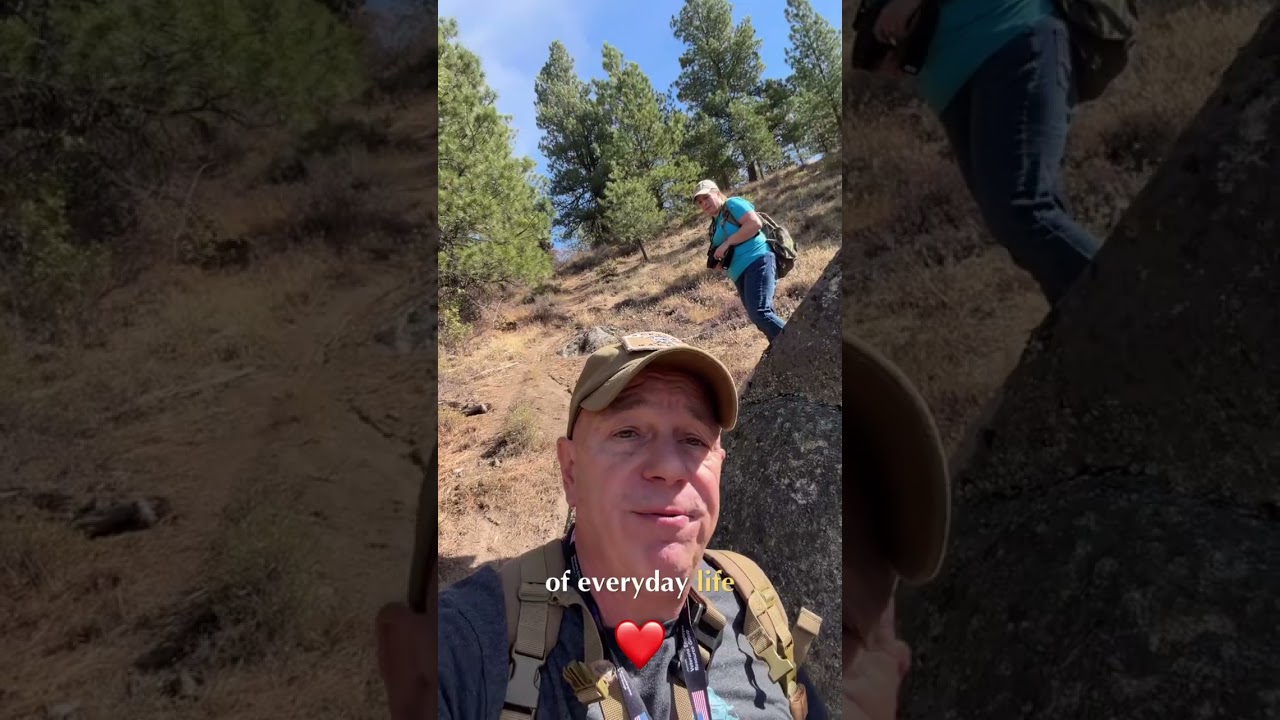
In this short video, the speaker uses his puppy Scout and a water‑bladder analogy to illustrate Maslow’s hierarchy of needs. He shows that basic physical needs, like water, must be satisfied first, and that the hierarchy functions like a bladder: if a lower‑level need (e.g., safety) is compromised, the “water” drains down, undermining higher‑level motivations. He reinforces the point with a personal anecdote about climbing rocks, where a sudden loss of safety caused his focus on a treasure hunt to disappear, demonstrating how unmet safety needs pull attention back to lower‑level concerns.
Chapters
Hang on, I got a curious puppy here. Come on, Scouty. Ah, no Maslow for you today. And you'll notice that even though Scout is not a human and Maslow was directed at humans, Scout also has physical needs. Come here, buddy. And one of those physical needs is getting water. Come here, bud. There we go. See, now Scout is interested in being a good puppy because I'm taking care of one of his physical needs. With Maslow and the hierarchy of need, you fill up those basic needs from the bottom to the top. So if I was to section this water bladder off to physical needs and then safety and security or order, belonging, esteem, and self-actualization. And in self-actualization. The bladder is filled from the bottom to the top. If I was to poke a hole anywhere in this bladder, it's going to drain down to that level of, of, uh, where the bladder's at. The same thing with the hierarchy of need. If I poke a hole in one of those needs, and we'll say that it's security, if I'm not feeling safe, then everything's going to drain all the way down to that level. So a few moments ago, I was up looking for the, the hide that is in these rocks. And I got way up on top of these rocks and all of a sudden I wasn't feeling real safe. Suddenly my desire to go find the hidden treasure that's buried in these rocks was nonexistent. And I went back down to the level of safety and I had to climb back off so that I could feel a little bit safer.