2 Skills for Healthy Relationships
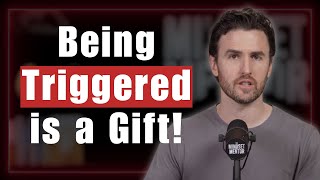
Two mindset shifts for better relationships: everyone does their best with what they have, and your emotions come from your thoughts, not other people. The speaker uses Eleanor Roosevelt and Viktor Frankl to explain the gap between what happens and how you react, then offers a breathing exercise to break old patterns.
Chapters
There's always good within a person. The worst person you could possibly find always has some sort of good within them. Nobody just becomes a adult. Today I'm going to be giving you two simple mindset shifts that will improve every single one of your relationships. Here's the deal. As a human, you have to be in relation relationships with every single person that comes into your life, every single person you pass in the street, every person that stays long term. Shouldn't we try to have the best possible relationships with other people, no matter who they are, no matter where they come from? I think that we should try to have the best possible relationships that we can. And how do we have better relationships? Well, first off, we need to focus on what we can control. And the thing that will really help you the most is focusing on what you control. And that is your perception of yourself and other people and in relation to each other. And so I'm gonna explain this to you, and it's gonna make a whole lot of sense as we go through it. So let's just dive straight in. The first mindset shift you need to make and understand is that no matter what, everyone is always doing their best. Now I get it. This can be really hard to accept because some people are really freaking difficult. And it's important to realize that someone that you're relating to, even if they're just a completely off the rocker, even being off the rocker, is the best that they can do. If they could be doing better, they would be doing better. That also means that everything that's happened to you in your past, if someone could have done better, they would have done better. So everyone's always doing the best they can based off of everything that they know and everything that they've learned their entire lives. And it's really important to remember that everybody has their own unique set of experiences, emotions, thoughts, beliefs, triggers, and circumstances that greatly influence who they are as a person, and it greatly influences their behavior and then in turn, their actions as well. And I want you to understand there are some people in your life that might be extremely difficult. You might have pushed them away. But it's really important that we learn to have compassion. And I say this walking a very thin line because I do talk about if someone's very toxic to you, you should spend less time with them. But there is also the case of if you knew every single thing that somebody who is very difficult to deal with has been with, it would be easier to have compassion. The problem is, is that, like, for instance, we only see the Adult man who's an. We don't see the six year old little boy who was verbally assaulted by his father every single day. You get that like we, if we did, it would be way easier to have compassion for those people. And the line of work that I'm in, it's really hard just not to have compassion for everybody. Because I hear I can have a conversation with somebody and they could seem like they're sweet and they're amazing, they've got it all together. And then they tell me about their past and I'm like, oh my God, I can't believe the hell that you've been through. And so they can sit in front of you and they can seem like they've got it all together, but then behind the scenes you're like, I can't believe all that this person's been through. Almost all adults are just wounded children in adult bodies. And I really want you to understand that. So when I say that, that everyone's doing the best that they can with what they have, I'm being fully honest with you. Like, I believe that with every cell of my body and many factors can influence a person's behaviors and actions. I mean, think about the past few years. Like a lot has happened the past few years for mankind. Since I don't know, 2020, mental health issues have skyrocketed. People have been through ups and downs and they've been beat up, you know, mentally and emotionally and all of that. And you might be sitting in front of somebody, you might be like, this person's a complete, this person's a complete. And this person's got that. But that person can be struggling with a mental health issue that you just really don't even know. Like they don't present it. It could be extreme anxiety, depression, it could be, you know, guilt from things that they've done in the past and they can't get over. All of these things can greatly affect somebody's behavior and their ability to make decisions and how they present as a person. They also might be dealing with personal problems as well. Like they could have financial difficulties, they could have relationship issues. Someone that they love could be really, really sick. Someone they love could, you know, have just died or they're about to be there. All of these things are all possibilities and people are just, there's so many people are just trying to keep it together and all of these things can cause them to act in ways that they might not normally act. And so it's important to have compassion for everyone as we never really know what someone else is going through. The only way that you would know what someone else is going through is if you walked a full month in their shoes and see every single thing that's going on. So I know this is hard, but instead of immediately judging people and condemning somebody for their actions, for what they say, for what they do, we should try to understand and acknowledge the various factors that have happened in their life that may have influenced their behavior, whether that was something that happened in childhood or whether that's something that was 20 minutes before they left their house in a phone call that they got about somebody being sick. And so by doing so, we can help create a more empathetic and understanding society. It's not saying she let people off the hook, but it's also like, hey, maybe we can support people and value people a little bit more rather than just judging and rejecting people, which is what I feel like a lot of people are doing nowadays. And so loving and supporting someone is better than lashing out at someone and probably what they need in the first place more than anything else. And that will allow them to have a space that is a safe space to more easily change. And I'm not saying that you have to let somebody off the hook, and I'm not saying that any of this is easy. What I'm saying is we should all try to be a little bit more compassionate to every person that's around us. Compassion makes us focus and try to find the good in people, even when it might not be immediately apparent that it's there. So instead of focusing on someone's negative actions, instead we could just kind of try to focus on and try to find sometimes positive qualities and the good in that person that might exist. There's always good within a person. The worst person you could possibly find always has some sort of good within them. Nobody just becomes a adult, you understand? Like, it doesn't just happen. No one's like, you know what? Like, I was really happy being like, you know, a nice person, but I think I'd be happier if I was an. It doesn't happen that way. Things happen that make somebody feel like that's the way to go. And it's usually somebody who's an. That's a protection mechanism. They're trying to protect themselves from something. Right? So also, finding compassion in other people makes it a lot easier to operate in the world. And finding compassion for yourself makes your life a whole lot easier as well. When you find compassion for yourself and for other people, you don't carry as much anger and hatred for. For the person who's in front of you. And you can go, you know what? Yeah, I'm gonna have compassion for this person. I'm just gonna let it go. It's like the phrase, anger is the acid that burns a vessel. Like, what? What does anger and resentment do for you? It does nothing for you. It hurts you. It doesn't hurt them at all. So when we practice compassion some sort of way, we can feel a greater sense of happiness and contentment in our lives, as well as have a whole lot less stress and anxiety, that's for sure. And listen, I get it. I completely understand. As I'm saying this, it can be really freaking difficult to have compassion for other people, especially the people who have really hurt you with their actions in the past. I get it. Compassion is not something that you're born with. Compassion is a practice more than anything else. It's something that we have to keep on practicing and we get better at as we start to see how our compassion shifts to the people around us. But it's something that we can all work on and we can all improve, and we should all try to improve and to be more compassionate. But it's really important for you to remember and understand that it will greatly help you and change your life, but it'll also help everyone that you come in contact with as well. So that's number one. Understand, everyone is doing the best they can with what they have, even if it doesn't seem like it. The second thing that you need to realize in relationship with other people is that nobody can change your mood. Nobody can trigger you in some sort of way. Now, you might be like, but hold on. My mom, when she calls me and says this to me, it really pisses me off. It really makes me mad. She changes my mood. It's her fault that I act this way. Well, here's what I want you to think about, okay? Think about the last time somebody really pissed you off. Think about it. Bring it into the front of your mind. Can you think about it? What was it that they did? What was it? Okay, now, was it what they did that pissed you off, or was it your reaction to it that pissed you off? It's never the actual thing that was done. It's our reaction to the thing that was done. What if I told you that what they did did not trigger you? You might be like, no, no, no, but my mom said this and she triggered me. No, no, no, no, no. She didn't trigger you. It was what you were thinking about what she did that triggered you. It's the internal conversation that you were having with yourself about what they did. Do you get that? Like, do you really, really get it? It's never what somebody else did to you that triggers you. It's what you are thinking about what they did that triggers you. I care less about what you do in this world, and I care more about the conversation that's happening inside of your mind, because it's like, oh, well, your mom called you up and she said this. Well, that's what happened in reality. But what happened in your brain? What meaning did you give what she said? Oh, my gosh, I can't believe she's doing this again. Why is she always doing this to me? She's always trying to make me scared of what's happening in the world. She's so based in fear, and I'm just so tired of it. Well, that's the conversation happening in your head. That's the thing that's making you triggered. You know, one of my favorite quotes, and I've shared this hundreds of times in this podcast, is Eleanor Roosevelt. And it's the quote, no one can make you feel inferior without your consent. Nobody. Which means you might say, oh, well, they said this to me and they made me feel bad. No, no, no, that's not what made you feel bad. It was. They said something to you, and then there was an internal conversation that happened in your head, and that's what made you feel bad. And to be triggered is really important. Like I always say, being triggered is a gift. The. The gift is that this person is showing you where you're not free, where you are hung up in some sort of way in your own head. Because it's not about what someone does to you. It's about how you react to that thing. And it's like, one of my other favorite quotes that has to deal with this is Viktor Frankl. And Viktor Frankel was a psychologist who lived in Auschwitz and other Nazi prison camps. And he says it's a rough quote, so I'm not going to say it perfectly, but it's something like between stimulus and response, there is a space. And if you can master that space, you can master your life. So between stimulus, which is something happening, and response, which is our response to it, there's a space. And in that space, we're having a conversation in our head, and it's usually a subconscious conversation, and it happens so fast. But if you can master that space, you'll master your life. Because someone can come say something to you, and it could completely trigger you, and they could go say the exact same thing to one of your friends, and one of your friends would laugh it off. So clearly it's not what's being said, it's your own interpretation of it, of what's being said. So if you can master your reactions, you can master, and you can master being, not be triggered and understand this is hard or be triggered less, you start to master your emotions and master yourself. And so I always say that, as I said a minute ago, that being triggered as a gift is because it's the universe coming to you through that person to try to show you where you're not free. So they're coming. Let me say that again. That person comes and does something to you, you become triggered. That's the universe coming to you through that person to show you where you're still not free and hung up in your mind and hung up in your life and hung up in your head. Now you have the opportunity to learn and grow from that thing. And so if you can really understand it, is that you have to understand that even though when you're triggered, you want to punch that person in the face, that person deserves a high five. Because you are trying to get a universal lesson right now from whatever created this entire universe of like, hey, you know how you're always triggered by this thing? This is the thing that you need to work on to improve your life. I'm trying to show you right now, improve this and your life will get better. Now, once again, I understand this one is also not easy, because when we're triggered, really what it is, is it's a pattern that we're stuck in, and we need to become aware of our patterns and start to shift our patterns. So we've got to say, okay, well, next time I find myself in this situation where I feel myself getting triggered, what am I going to do? Because I'm stuck in a pattern of being triggered, I need to create a new pattern. And so it breaks down to three steps. And you can write them down if you want to. I've said this before on the podcast, but I try to make everything as simple as possible. It's basically three steps. Apr, Awareness, practice, repetition, awareness. I need to become aware when I'm being triggered. Okay, that's the awareness part. Practice. I need to figure out what my new practice is. When I find myself being triggered, I will do this. If this, then that when I'm triggered, I will. You know, when someone pisses me off, and I find myself being triggered. My practice is I will take 10 deep breaths, two seconds in, 10 seconds out, and that'll take me two minutes. And so instead of getting triggered, getting mad, blowing up on somebody, and then 20 minutes later being like, oh, my God, I shouldn't have said that. When I notice my body start to ramp up, I'm going to take my new practice. I'm going to go, nope, I'm not going to go down that pattern anymore because I don't have to be triggered. So what I'm going to do is I'm going to take what they said. I'm going to say, okay, no big deal. I'm going to do my 10 deep breaths. It's going to take me two minutes to do, and I'm going to move on with my life. And it's not going to fix you the first time, it's not going to fix you the second, third, 100th time. But that's the r. The repetition. The more you do it over and over and over again, you'll start to realize that the things that triggered you in the past, a year ago, two years ago, five years ago, don't really trigger you anymore. And you can start to let go of things, because if somebody else wouldn't be triggered by the exact same thing that you're triggered by, then it shows you it's not the event that's triggering, it's you that's allowing yourself to be triggered. Because no one can make you feel inferior without your consent. And so if you really want to improve your relationships, understand these two things. Number one, you've got to know that everyone is doing their best, and you've got to find some sort of way to have more compassion. It will make you a better person. It will make you better in every single relationship. The second thing is no one can change your mood. You've got to take full ownership for any time that your mood changes and. And anytime that you triggered. Hey, thanks so much for watching this video. YouTube really thinks, based off of what you've been watching recently, you should watch this video right here. It's designed for you, and if you want to subscribe so you make sure you don't miss any more videos, click that button right there.
More from Rob


Why NOT to stay single 👉 @robdialjr #adviceoftheday #motivation #mindset #growth

You Reap What You Plant 👉 @robdialjr #adviceoftheday #motivation #mindset #growth

3 signs that you're addicted to chaos 👉 @robdialjr #adviceoftheday #motivation #mindset #growth

Stop making excuses for people 👉 @robdialjr #growth #mindset #positivity #adviceoftheday

Tip for an amazing life 👉 @robdialjr #inspiration #mindset #adviceoftheday #positivity

It's time to move on 👉 @robdialjr #adviceoftheday #motivation #mindset #happiness

The right person for you is... 👉 @robdialjr #love #truelove #inspiration #mindset #soulmate

Get ready to take risks 👉 @robdialjr #motivation #adviceoftheday #mindset #positivity

The real competition You Vs You 👉 @robdialjr #mindset #inspiration #positivity #adviceoftheday

Their Mood Isn’t Your Responsibility. 👉 @robdialjr #mindset #adviceoftheday #motivation