4 Ways To Make Yourself Miserable: Avoid These To Be Happy
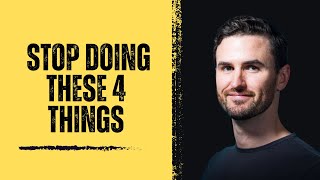
Rob Dial Jr. identifies four mental habits that kill happiness: obsessing over things you can't control, fixating on what you lack, ruminating on the past, and worrying about the future. He backs each with numbers like 90% of worries being uncontrollable and 85% of future worries never happening, then offers fixes like gratitude journaling, reframing the past as learning, and anchoring yourself in the present.
Chapters
Hey, welcome to today's video. Today we're going to be talking about the four things that you and I do pretty often that make us miserable. So if you want to happier life, if you want more joy and you want more peace, these are the four things that you need to avoid. Let's dive in. And so these are four things that are stealing your happiness from you. And to be honest with you, we all do them at some capacity. Some people out there listening do this more than other people. And also some people do it less than other people. Some. Some people do one of these more, some people do another one of these more. So we're gonna dive into them. But really, if you wanna be happy, if you wanna have a happy life, these are four separate things that you should be focusing on and you should try to avoid. So let's dive into it. The first thing that it's gonna make you absolutely miserable in your life is to focus on things that you cannot control. And there's a lot of psychology behind this, because we as humans, we have a really deep desire our environment. And really, this is an evolutionary trait that we have. And it evolutionarily, it does have its advantages. This mechanism that we've built into ourselves allowed us to survive, allowed our species to thrive and to continue on. And so the way it probably started, if you take a step back and think about it, is we needed to control our environment 1000-002000-00500,000 years ago. So what did we do? We decided we're going to live in a cave. Why? Because when you live in a cave, you can control the environment. It's a lot harder for animals to come into the cave, attack everybody, and everybody get killed. Right? So live in a cave equals control environment equals less likely to be killed. Okay, that makes sense, doesn't it? Build a TP control environment, less likely to be killed. Start farming is another version of controlling our environment means we're more likely to be able to eat, not die of starvation. Killing a neighboring tribe is controlling environment, not have them kill us first, not get killed. And so evolutionarily, it makes sense that everyone should have a little bit of a control problem built into their system. But however, in the modern world that we live in, this instinct often misfires in many different places. And what happens is we tend to find ourselves really stressed out over things on the other side of the earth that we might not be able to control, or we find things that are we're not able to control, like other people's actions, other people's Emotions, the economy, and just really things that are really beyond our individual control. And so what happens is we end up focusing on. On things that we cannot control, but we want to control them. It's built into our system. The reason why we want to control them is. Cause we feel like we need to control everything. Because when you look at controlling everything, if you have something that you can't control, that's a variable, that's uncertainty. And uncertainty inside of the brain is automatically seen as a threat. And so we think, oh my God, I've gotta try to control everything. But here's what the problem is, is we tend to fixate and really like, tend to fixate our minds on uncontrollable parts of our life. And we use a ton of mental energy worrying about things that, number one, we have no control over. And number two, we cannot change. And so one of the most common things that I hear from people is how much they spend their time worrying. And a lot of people don't think that they spend their time worrying. And then when they take a step back, they realize that a lot of their time is, is actually used worrying about things that they have absolutely no control over. And so when we dive into it, I actually started talking with people. What's really interesting is that the majority of time, like 90% of the time when somebody is worrying about something, they're worrying about something that they cannot control in any sort of way. They're worrying about other people, they're worried about their children, they're worried about their mother, they're worried about their brother who has something going on in his life. We can't control other people. We can barely control ourselves. But what happens is we get stuck and fixated on the things that we cannot control. And because we cannot control them, we start to get stressed, we start to get anxious around this. So that's like 90% of what I hear people saying that they struggle with. The other 10% is they worry about something that they can control, but it's never, almost never happening right now. It's usually they're worrying about something that they can control, but that thing is completely in the Future. So almost 0% of what I hear from people when they're worrying about something that is something that they can control and that needs them to take action right now. So it's usually, number one, things they cannot control. Other people, circumstances, things that are happening in other places around the world, the economy, that's like 90% of what they worry about, which they can't do. Anything about 10% of it is they can control it, but it's not even happening right now. It's something that could be happening in the future. So it's like, oh, I'm worried about paying my bills in three weeks. But the bills aren't due in three, or they're not due now they're doing three weeks. And so what tends to happen is we start to feel really helpless. And when you feel helpless, that can build intense anxiety, it can build intense stress within us. And so we've got to become aware of what we can and we cannot control and taking action on things that we can control. So really, then the question is, you say, okay, Rob, what do I do? Well, the key is, first off is this, identify what you can control and change, and then identify what you cannot. That's the first thing. So if you're worrying about something and you take a step back and you say, hold on, this thing that I'm worrying about, can I change this? No. Okay, well, then I need to learn to accept it. Can I change it? Yes. Okay, what action do I need to take right now? So if you cannot control or you cannot change the things that you're worrying about, which once again, is most things, other people, the weather, the economy, global problems, there's only one thing that you really can do. It's not easy. It's actually very easy, but we make it so hard in our mind. We have to accept them and we have to let them go. Because if I can't do something about it, then it's taking up my energy in this moment with there literally being nothing I can do about it. So we have to find peace, that everything will be okay. And when I say okay, I honestly don't mean that by okay that it's what you want it to be. But if you fast forward, most things end up being okay that we end up worrying about. So that's if we can't change it. If you can change it, then take action and change it. Most people have things that they can change, and instead of changing them, they overthink all of the things they need to do versus actually just doing it. If you can change it, get off your ass and do it. It takes more energy worrying about and thinking about and planning and planning and planning and overthinking about the things than it does just to get up and take action most times. So that's the first thing that causes us absolute misery. The second thing is, if you want to be miserable, focus on what you don't have There's a whole lot of psychology behind this as well. Comparative thinking is a trap that it's very easy for us to fall into, especially now that social media exists, advertisements exist. They often really spark the tendency to compare our lives to other people's lives. And then what happens is instead of focusing on what we have, we focus on what we lack. And it's a habit that's rooted in a scarcity mindset. And a lot of people have a scarcity mindset, which is to focus on your deficiencies or your insufficiencies or what you don't have, what you lack. And we think we don't have it. And if I don't have this thing, okay, this person, oh, my gosh, this. This influencer that I follow, they have. They. They fly first class. Oh, I've never flown first class. I must be less than. And so we automatically think that we're not worthy in some sort of way. We're less than that person in some sort of way. If I only had this thing that I lack, then, Rob, I would be happy. If I only had a million dollars in my bank account, then I wouldn't be stressed out. Trust me, the stress that you have doesn't come from anything external. It doesn't come like your stress won't go away when you have money. I promise you this. It is 100% fully internal. This is a thing that I've completely realized in my life is that all of my problems had nothing to do with anything external. Everything became an internal. I was like, when. When I finally get into a great relationship, then I'll be happy. Nope. Relationship didn't make me happy. I have to make myself happy. When I finally build a successful business, then I'll be happy. Nope, Successful business doesn't make me happy. I have to make myself happy. And I have an episode that's coming out about this in a couple weeks. But it's really, truly the truth. Nothing external can make you happy. How can anything external ever make you feel a certain way? Happy, sad, mad, joyful, Whatever it is, it is all 100%. If it's a state that you're in that happy is a state, sad as a state, mad as a state, joyful as a state, anxious as a state, then it is all 100% internal, and it is a decision. There's many of the people in this world that have way less than you, way less than you, but they are 10 times happier than you are. Crazy, huh? It shows you that it's not based off of external circumstances, but it's all an internal state. So if we're constantly measuring ourselves to other people or constantly thinking, if I finally get this thing, then I will be happy. It's causing us misery. It's perpetual dissatisfaction. It's envy. It's thinking that I can't be happy until. And what it does is it negates all of your achievements of your past, all the things that you do possess, all the things that are literally sitting in front of you that you have the opportunity to be grateful for. So you have to learn to actively cultivate a gratitude mindset and a feeling and a state of gratitude in your life and start turning it into a routine of acknowledging what you have in your life, appreciating what you have in your life, and you shift your focus from scarcity to abundance. Journal what you're thankful for, write a thank you note to somebody. You know, figure it out. A way to start seeing the things that are around you that you have to be grateful for. The people, the places of things. Even if you're just. Even if you're. If you're homeless, on the streets right now, but you're somehow listening to this podcast, you're breathing and your heart is beating. That alone is something to be grateful for. So one thing that I've tended to focus on and what's really helped me out when I noticed that I'm in a place of lack and I don't feel, maybe I feel stressed out or whatever it might be, is I'll meditate in the morning, and then I'll go outside on my back porch and I'll bring my coffee with me and for 30 to 45 minutes. And this is something I've been doing routinely for the past couple months now. Every morning I'll go outside and I'll drink my coffee in complete silence. I don't bring my phone with me, none of that. And I just think about, in silence all that I have to be grateful for. And what I realize is that if I start my day with gratitude, it permeates into my entire day and I feel way better. So that's the second thing. If you want to be miserable, make sure you pay attention to all things you don't have. The third thing that you want to do if you want to be miserable is to really fixate on the past. Really just only think about the past. Because we, as humans, we have a tendency to ruminate. We replay all of our past mistakes, all of our missed opportunities, all of our lost relationships, everything that we don't have that we used to have before how it was the good old days in the past or we had trauma in the past. And it's really, it makes sense evolutionarily as well, where it's a deep seated fear of repeating mistakes. Makes sense if you think about it from an evolutionary standpoint, why we would not want to have past mistakes come up today because we don't want to be killed or injured or any of that. But when you actually look at it in this day and age, the past means nothing. It doesn't. The past does not affect you in any sort of way right now. Now, I know this is going to trigger some people because you're like, oh no, Rob. But you don't know me. I am the way that I am because of my past. I am the way that I am because of how my mom treated me or because my dad treated her. Because, you know, I had bullying in school or because I was whatever it is, right? No, you are. The way that you think you are is because of your perception of what the past was. You are not who you are because of the past. You are who you think you are because of what your perception of the past was. I know many people who have had terrible childhoods and they have incredible lives right now. I know people who had great childhoods and they have terrible lives right now. So it doesn't mean that the past is going to dictate your present or your future. You know, oh, no, I'm like this because of my parents. Any trauma that you have from the past, that was you when you were a child, that is not your fault. It's not. But it's your responsibility to figure out how to get past it. Like my father being an alcoholic and passing away when I was 15 years old and all the trauma that comes from that, all the trauma from, you know, the different forms of neglect, of forgetting to pick me up and whatever it might have been and not being around, that's not my fault that my father was that way. But it is my responsibility as a 37 year old man to get past that trauma. It happened. There's nothing that I can do about it except for learn and grow from it. So how do you learn and grow from it? Well, first off, you have to stop making excuses for why you are the way that you are or why your life is not what you want it to be. And you start using it as a learning lesson, as a source of strength to grow and get better from and constantly thinking about the past and how you wish it would have been. What does it do? It consumes so much of your mental energy, so much of your emotional energy of something that no longer exists. It was just a fleeting moment. It's gone. So if you're focusing on that, how could you ever fully be present if you can't stop thinking about the past? So what do we do? We learn to accept. Same thing that we talked about the other ones. We have to accept these things. It happened. Nothing we can do about it, can't change it, but we can learn from it. We can move on. So that's the third thing. If you want to be miserable, make sure you focus on the past a lot. And number four, if you want to be miserable, worry about the future. Worry about the future as much as you can. Worrying about the future is one of our basic survival instincts. We do have it. We're constantly anticipating and preparing for all of these potential threats that could come down the road. We always are kind of mentally and physically, and our nervous system is just a little bit on guard. But excessive worrying about the future, especially things that are fully beyond our control, like we talked about, and you know, number one, leads to a lot of stress. It leads to a lot of anxiety. It's just a lot of wasted energy as well. You know, if you've been listening to podcasts for a long time, you have heard this statistic many times. But. But psychologists have found that 85% of what you worry about and what I worry about and what we all worry about will never happen. 85% of what we worry about will never happen. Out of that remaining 15%, 12% of it will happen better than you think it will. Which means that only 3% of what happens to us is as bad as we're worrying about. Which means that 1 out of every 33 circumstances that we worry about will be what we think it's going to be. 32 out of 33 times it's not going to happen, or it's going to be better than we thought it was going to be. Do you want to know why a lot of people worry? Is because really, we fear the future. And worrying gives you a false sense of control. It does. It makes you feel like, oh, I'm. I'm at least controlling this thing that I worry about. So when you worry about the future, it creates a constant state of fear and anxiety, and it robs you of the joy of the present moment. You can't be present if you're constantly thinking about the past or if you're Constantly thinking about the future. So right now, in this moment, if you're worrying about the past, worrying about the future, you're actually not 100% here. And how could you ever fully enjoy your life if you're not 100% here in this moment? So it robs you of all this joy of the present moment and it can lead to a lot of physical symptoms when we worry about the future as well. Insomnia, fatigue, a ton of stress related disorders inside of the human body come from it as well. And so what can we do? You know it. Accept. Accept that the future is not here. It's not here yet. What is here? This moment, this present moment. Our mind is always in the past, almost always in the past, or almost always in the future. Our body is always here. So do some breath work or some breathing exercise. Bring yourself back to the present moment. Because right now is all you will ever have. So why don't you bring yourself here and stop being so miserable? So that's what I got for you for today's episode. If you love this episode, please share it on your Instagram stories and tag me obdialjr. R O B D I A L J R Also, if you don't follow me on Instagram yet, I'm literally right now live on Instagram doing this podcast episode for a few hundred people. So if you want to follow me, maybe you'll be able to see these episodes earlier than when they actually come out. Once Again, it is Robdial Jr R O B D I A L J R on Instagram. And. And with that, I'm going to leave the same way I leave you every single episode. Make it your mission to make somebody else's day better. I appreciate you and I hope that you have an amazing day.
More from Rob


Why NOT to stay single 👉 @robdialjr #adviceoftheday #motivation #mindset #growth

You Reap What You Plant 👉 @robdialjr #adviceoftheday #motivation #mindset #growth

3 signs that you're addicted to chaos 👉 @robdialjr #adviceoftheday #motivation #mindset #growth

Stop making excuses for people 👉 @robdialjr #growth #mindset #positivity #adviceoftheday

Tip for an amazing life 👉 @robdialjr #inspiration #mindset #adviceoftheday #positivity

It's time to move on 👉 @robdialjr #adviceoftheday #motivation #mindset #happiness

The right person for you is... 👉 @robdialjr #love #truelove #inspiration #mindset #soulmate

Get ready to take risks 👉 @robdialjr #motivation #adviceoftheday #mindset #positivity

The real competition You Vs You 👉 @robdialjr #mindset #inspiration #positivity #adviceoftheday

Their Mood Isn’t Your Responsibility. 👉 @robdialjr #mindset #adviceoftheday #motivation