5 Ways To Scientifically Reduce Anxiety
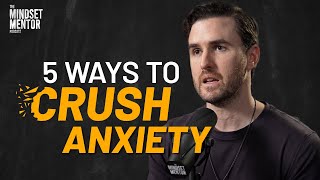
Rob Dial outlines five science-backed ways to lower anxiety: skip your phone for an hour after waking and before bed, cut processed foods, stop caffeine for a week, practice mindfulness and meditation, and use slow breathing through a straw. Each strategy targets either sleep, gut health, or your nervous system directly.
Chapters
Today, I'm going to give you five different strategies to help get rid of your anxiety. Let's dive in. I have noticed at least since 2020, it seems like anxiety is on the race and it's on the rise, and people are starting to get more anxious. And it seems like children who kind of grew up with. With cell phones in their hands are a little bit more anxious. And it just seems like to me, and I might be the only one, but I don't think that I am. That people are just getting more and more anxious. And when you look at anxiety, if I were to walk up to each person listening to this podcast and say, what do you think anxiety is? Everyone going to say something different? And so it's really important for us to kind of put a label on anxiety and a definition behind it before he starts to talk about how to actually reduce it. So when you look at anxiety, at its core, it is natural, and it's a. It's a really good thing. It's one of the things that helps keep our species alive, right? But it's often a adaptive response to perceived threats or stressful situations. And then what it does, it primes the body for action, which going and doing something or to freeze and do nothing. And so the important part of that definition is it is a natural and natural and often adaptive response to perceived threats. Most of the time, it's not actual real physical threats that are in front of us. It's usually we're thinking about the future and thinking about what threats could be coming down the line. And almost always we're thinking the worst. I always say a mind left to its own devices will basically just go negative. And so anxiety, what's really interesting about is first it's mental, and then it turns into physical and emotional. So you think it. And there's no way to disconnect the brain and the body from each other. They're this. They. They are one and the same thing. They're two parts of the same ecosystem, basically, right? Like the. The same organism. And so anxiety is mental, and then it turns into physical and emotional as well. But anxiety always starts in the brain. Anxiety is a good thing because it kept our species alive. When there was something right in front of us, that anxiety would immediately pop in, make us fight or flight, and then make us, you know, hopefully stay alive. But when it becomes chronic and becomes excessive and it interferes with your daily life and your functioning, what you're trying to do, it becomes a really big problem. And one of the studies that I was reading, and I. I read a bunch of studies for, for today, but one of them that I was reading said this. Basically, I thought this was the best way to, to wrap it up right, is cognitively, anxiety is linked with patterns of distorted thinking. Distorted thinking, you're distorting reality. And it says people experiencing anxiety often anticipate the worst and overestimate the dangers in situations while understanding, underestimating their own ability to cope. And so what we do when we have anxiety is we're. We're looking into the future and we are anticipating the absolute worst that could happen, and we are overestimating the dangers in the situations and then underestimating our own ability to cope. And that's basically what anxiety is. So now when you feel anxiety and you know what, you know what it feels like inside of your body, the first thing you need to be doing is to become aware of it. You can't change anything that you're unaware of, but once you become aware now, you can actually start to use some of these things and some of these tips and tricks to hopefully let go of it when you find yourself in it, but also at the same time, hopefully avoid it when you use these things as well. So let's go over them. Number one is do not look at your phone for at least one hour after you wake up and one hour before you go to bed. And that thing in your pocket is usually the main culprit to your anxiety. If you really want to get rid of your anxiety, get rid of your phone as much as you possibly can. Get rid of social media if you need to, turn off your notifications in it. But in the morning, you're basically setting your internal guide of how you want to feel throughout the day. And I try to. And I've been lost in this many times throughout my life. But I have gotten to the point where I wake up and I want to check my phone. I feel the addiction, I feel the pull to go check my phone, and I have to consciously tell myself not to check it. In the morning, you're setting your internal guide of how you're wanting to feel. And when you're going to your phone, your mind is going off somewhere else. And so stay away from your phone as long as you possibly can. There was a research that was done in the Journal of Affective Disorders that suggests that reduced screen time in the morning helps you better regulate your circadian rhythm and potentially reducing your morning anxiety and improving your mood more and more throughout the day. And so there's been Studies that have shown that when you delay getting on your phone, you will feel better throughout the day. So it's really good to try to stay away from it. I mean, literally as long as you can. If it's an hour, go for an hour. If you wake up early, if you're one of the people who wakes up early and you can go three hours without your phone, without checking email, without doing any of that, you will be a much better person because of it. It's also a really good idea to stay away from your phone an hour before bed because whatever it is that you do in the morning influences the rest of your day. Whatever you do at night influen your sleep. And so there was a study that was published in the Journal of Psychiatry Research that found that high levels of screen time, especially before sleep, were associated with poor sleep quality and were able to. And they actually were able to link that to exacerbated anxiety symptoms. So just in general, if you want to be less anxious and less stressed throughout the day, stay away from your phone more. If you really want to be even better with it, stay away from your phone specifically an hour before you go to bed and specifically an hour before you wake up. I'm sorry, an hour after you wake up. I'm hoping that you're staying away from your phone an hour before you wake up. So an hour before you go to bed and an hour after you wake up. So that's number one. Number two, and this is gonna be something that you might not have, not might not have seen, is to not eat any food that comes in a box. Processed foods are really high in sugar, preservatives and food coloring, and all of those can cause massive spikes and drops in your blood sugar and the way your body feels. So you can start to feel a certain way. You know, anxiety can. You can start to feel a certain way, your blood sugar's low, and you start to feel not really good. And then anxiety can start to kick in, because once again, it's almost always mental, but it can be physical and then mental. And so really what you want to do is try to stay away. And I would recommend. And obviously I'm not a nutritionist, but I've been really deep in this for a long time, and I try to eat as healthy as I possibly can. I get spring water delivered to my house and glass, and that's the only thing that I drink. So, like, I'm really hardcore about what I put into my body. And a general rule of thumb for me is if it comes in a box. I don't eat it, and I don't eat anything that wasn't once alive. Whether that happens to be fruits, vegetables, meats, anything else, I don't eat it if it wasn't once alive. Now, do I sometimes stray away from that and allow myself to have something? Sure, but it's not like a daily occurrence. And the reason why is because of how much research I've gone through of how much what you eat affects the way that you feel and the way that you think and how your, your, your microbiome, your gut microbiome, actually influences your brain. And so what you put in your body isn't just something that you put in your body. It affects every aspect of who you are. That's why the phrase you are what you eat is true. So, or do you want to be food that comes from a box? Probably not. You want to be something that's thriving, that's alive, all of that. And so there was a study that was done in Public health nutrition that shows that, that diets that people have that are high in processed foods directly correlate with increased risk and depression and anxiety due to spikes in blood sugar and other metabolic disruptions that you have. And so this isn't me just taking a guess on this. This is the study that was in Public Health nutrition that shows that people who have a diet that is a lot of processed foods have a massive increase in the risk of depression and anxiety. So if you want to stop feeling so anxious and stop feeling so bad, pay attention more to what you eat. Uh, there's also research that was published in Brain Behavior in Immunity that showed that artificial preservatives and dyes and foods could affect your gut flora, your immune response, in your mood stability, which basically heightens your anxiety levels as well. So there is proof that what you eat, especially eating processed foods, are linked to anxiety, depression, all of that. So if you want to have less anxiety, feel less stress, try to pull back on it. Try to go a week without doing any. Without having anything from a box. You know, it has to be out on the, on the counter, or it has to be in the fridge. And that's the stuff that you eat. Don't go grocery shopping in the middle of the grocery store. Just walk on the outside, because on the outside is where all of the freezers are. It's where all of the refrigerators are, all of that. And that's number two. Number three is to stop drinking coffee for seven days. Ah, shit. You didn't want me to say this one, did you? Right. Stop drinking coffee for seven days, stop having caffeine for seven days and see how you feel. I know I love coffee. I did have it this morning. I love caffeine. But caffeine can really induce anxiety symptoms and make your anxiety symptoms worse. I promise you this. If you're the type of person who wakes up, you have lots of anxiety, just stop drinking coffee for a little while. You don't have to stop drinking coffee forever, but just try it out. Be a guinea pig on yourself. What's crazy about the whole thing is that you might not be really stressed or anxious throughout the day. You might just be more. You might just be overly caffeinated. You might have too much caffeine in your system right now. And so it's really important for you to kind of think about that for a second, like, do I want to have my morning coffee or do I want to feel anxious throughout the day and try to try it out, see how it feels for you. But anyways, there was a study that was a clinical trial that was in the Journal of Psychopharmacology that found when you have less caffeine or no caffeine at all, it reduces symptoms of anxiety, especially people who have, who have more anxiety than the average type of person. So people who would have, for instance, like panic disorders and social anxiety disorders, if they completely remove caffeine, those symptoms tend to drop significantly. And so for you, maybe you don't have social anxiety disorder or a panic disorder, but if you have anxiety a lot throughout the day, just try cutting back on all of your caffeine. Just get rid of it for seven days. I promise you won't die. And if you need to switch to something like green tea, so you're still getting a little caffeine, you don't have withdrawals or anything like that. There was also another study that was done in Australian and New Zealand Journal of Psychiatry that found that even moderate amount of coffee consumption could lead to really high anxiety disorders and making your anxiety disorders worse and can also trigger panic attacks in susceptible individuals. And so I know it's not the tip that you wanted to hear. We all love our caffeine in the morning, but give it away for seven days and just see how you feel. So that's number three. Number four is focus on your mindfulness. And not specifically, like you can sit down and meditate. And I do definitely think that you should, but mindfulness can also just mean coming back to this moment. So when you're in a Anxiety, anxious feeling, right? What you're doing is you're in your head. And you're in your head, you're going off somewhere else and you're thinking about the future and your worries. You're in your head. And when you're in your head, you're almost never here. And so one of the things you could do with mindfulness is to bring your, your attention and your focus back to where you currently are. The only thing that's ever really in this present moment is your body. And so whenever you find yourself feeling anxious or stressed or depressed or whatever it might be, usually you're not in your body. And so you wanna bring yourself back to your body and just focus on how you feel, right? So, like, one of the things I love to do is, when I'm taking people through a meditation is to have them close their eyes, do a quick 60 breaths in and out, and then just tell them to feel their skin. And I just start telling them random parts of their body to start moving their focus, moving their, their focus around their body. And so I'll say focus on, on the sensation that's in your right big toe. Everybody that's listening to me right now can do that. And you can feel your right big toe even though you weren't paying attention to it earlier. So now you're bringing your focus to your body. You can say, okay, now what about your left thumb? Feel that? And so you start thinking about the things that you can feel. And then what you can do is you can start to think about what you can hear. Like, for instance, right now, I can hear right behind me to my left. I can hear the air conditioning coming through. You know, I can hear the humming of, of the different machines inside of the, inside the studio, right? So try to hear the sounds that you can. So it's first it's feeling, then it's, you hear the sounds that you can, you can hear. Then you see if you could smell any smells. Are there any smells that you can smell around you? Then you open up your eyes and you just focus on anything that you can see. And so you can say, okay, I can see the camera that's in front of me. I can see the TV that's, that's behind it. I can see the, the light that's to my right. I can see the light that's to my left. I can see the black curtain, the black walls in here. And you start focusing on what is here. All of your sensations are always here. When you see something, it's Here. When you feel something, it's here. When you smell something, it's here. Taste something, touch all of those things, all of those are here. And that's what you're trying to get to. Smells are here. And so you're trying to bring yourself back here because you're. You're so out of your body and so worrying about the future. You want to bring yourself here. And so we're making up stories about what could happen, what could not happen, all of that. When in reality, that's not even real reality, whatever reality is right. Right in front of you. And you do that through your five senses. And there was research does that was done in Lancet Psychiatry that found that mindfulness meditation significantly reduces anxiety levels by altering neural pathways related in stress and anxiety. I was giving a talk yesterday. There was a person that came up to me and they were like, so how do you calm yourself down? I was like, well, I meditate. They're like, how often do you meditate? And I said, every day. And they said, you meditate every single day. And I was like, yeah, it's just part of my morning routine. At least 20 minutes every single day for years now. And they're like, oh, my God. I've been telling myself I need to do that for years, and I just haven't done it. I was like, well, think about how much further you could be if you would have done it when you first started telling yourself and you had been meditating for years. So I'm not perfect at it. I'm not even close to it. I struggle with it all the time, but it's just something that you should. I believe that the world would be a better place if everyone meditated for five to ten minutes a day. There was also another study that was done in behavior research and therapy and found that mindfulness techniques improve emotional regulation, which induce the intensity and the frequency of people's anxiety episodes as well. Okay, and the last one, number five, is very simple. Breathe in deep and then exhale like you're exhaling through a straw six times. So focus on your breath. Whenever you get anxious, the very first thing to change is your. Your breath. And the way that you breathe is going to affect the way that you feel then. So you want to just breathe in deep through your nose. And now, like, you're out through a straw. I like to make my exhale anywhere between six to ten seconds. Um, it's just rule of thumb, if you want to lower your. Your heart rate, slow yourself down, make your exhale longer. Than your inhale. If you want to speed your heart rate up, make your inhale longer than your exhale. And so there was a clinical study in frontier psychology that demonstrated that controlled breathing techniques, like I just showed you there, can lower stress hormone levels and mitigate acute symptoms of anxiety. There's also another study that was done in Journal of American College Health that showed that diaphragm, diaphragmatic breathing, which is, you know, in your diaphragm, helps reduce anxiety symptoms and improve the concentration and the mood of college students that they studied. And so all of these are tips that will help you out and they'll help you in the moments, but they'll also help you whenever you're trying to prep yourself and, and, and try to get away from anxiety. So, like not drinking coffee, that's planning ahead, going to bed and not looking at your phone for an hour, not looking at your phone an hour after you wake up, those are also planning ahead. And then breathing techniques, mindfulness techniques, can get you out of it in those moments as well. Ultimately, the best thing about anxiety is it is something that we can work through and then we can, we can find ourselves getting better at it if we work at it. So if it is really important for to work on your anxiety, try to find all of the tips and techniques that you can to try to get better. Ultimately, I've worked at this really hard for the past few years to try to work with my anxiety, the stress that I felt throughout my entire life, and all of these things helped me immensely. So try them out and see if they help you as well. So that's what I got for you for today's episode. If you love this episode, you're absolutely 100% going to like this thing I have coming out called Mindset Mentor Plus. It's where you can not just listen to episodes, but you can actually fully integrate them into your life. And so my goal is to help you take these episodes, integrate, integrate them into your life so that you can change your life and make it better. And so inside of Mindset Mentor plus, you're going to get detailed worksheets, multiple page worksheets. With every single episode of this podcast that comes out, you're going to get a bunch of thought provoking journaling questions to help you understand and pull these into your life so that you can work through those. And you're going to get assignments with every single one of them, every single episode so that you can actually start to use these in your life as well, so that you're not just listening, but you're more of a participant in this, in these episodes more than anything else. Also, the the important thing is, is we're going to have exclusive Q and A sessions with me and a entire community that you could connect with of Mindset mentor listeners, as well as many other bonuses that are going to come in. And all the, you know, mostly those you guys that are out there offer less than you spend on coffee each month. And for some of you guys, it's significantly less than you spend on coffee each month. And so people who are the founding members are going to get a massive discount. So to sign up for the wait list to be the first to learn about it, go to mindsetwaitlist.com to learn more. And once again, that's mindsetwaightlist.com and we will email you before we announce it to the podcast so that you can go ahead and get a founding member discount. So with that, I'm going to leave you the same way I leave you every single episode. Make it your mission to make someone else's day better. I appreciate you and I hope that you have an amazing day.
More from Rob


Why NOT to stay single 👉 @robdialjr #adviceoftheday #motivation #mindset #growth

You Reap What You Plant 👉 @robdialjr #adviceoftheday #motivation #mindset #growth

3 signs that you're addicted to chaos 👉 @robdialjr #adviceoftheday #motivation #mindset #growth

Stop making excuses for people 👉 @robdialjr #growth #mindset #positivity #adviceoftheday

Tip for an amazing life 👉 @robdialjr #inspiration #mindset #adviceoftheday #positivity

It's time to move on 👉 @robdialjr #adviceoftheday #motivation #mindset #happiness

The right person for you is... 👉 @robdialjr #love #truelove #inspiration #mindset #soulmate

Get ready to take risks 👉 @robdialjr #motivation #adviceoftheday #mindset #positivity

The real competition You Vs You 👉 @robdialjr #mindset #inspiration #positivity #adviceoftheday

Their Mood Isn’t Your Responsibility. 👉 @robdialjr #mindset #adviceoftheday #motivation