8 Things Successful People DO That Poor People DON'T | Rob Dial
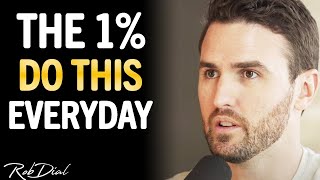
Rob Dial outlines eight habits that separate successful people from the rest: waking early, reading daily, exercising, writing down goals, finding mentors, positive self-talk, reframing failure, and relentless persistence. A Harvard study found the 3% who documented their goals outperformed the other 97%. CEOs average 60 books a year, and millionaires typically have seven mentors.
Chapters
How different would your life be if you just didn't stop? If you didn't give up on that thing that you gave up on years ago, how different would your life be right now? Today we're going to be talking about the eight things that successful people do that unsuccessful people don't do. I'm a very big believer in you don't have to reinvent the wheel. If someone else has done it, you can do it as well. And the first time that this was brought to my attention, it was when I was younger and I read a book called Think and Grow Rich. And in Think and Grow Rich, I read it and realized that it doesn't matter what I was born with, what my circumstances were, what my circumstances are. What matters is that I put the right pieces in place to create my life. And if I do, I will eventually get what I want. And so when I look at people who are successful, and success is a very relative word, it can mean something different for you than it does for me. It could mean for you joy or peace or happiness or a great family or cars and traveling and clothes and freedom or whatever it might be. It's different for everybody. But when I look at every single thing in life, I realize that every single thing in life has steps to be successful. And so when I say success, it can mean a lot of different things for a lot of different people. But I'm going to go through the eight different things that I've seen from people who have had success in their life that I would see. And I deem success is to have ultimate freedom. Freedom to do what you want, when you want, with who you want. And so when I say eight things that people do who are successful that unsuccessful people don't, my version of success is the ability to do whatever you want, whenever you want, with whoever you want, at any point in time, anywhere in the world, all of that. So let's dive into it. The first thing that I find with a lot of successful people, not every single one of them, but like 80 to 85, 90% of them, is they have some sort of consistent waking up early and, and having some sort of a morning routine. So when I was doing research on this, I was like, let me just see what time successful people wake up. And so I found people like Richard Branson, who's a multi billionaire, wakes up at 4:30 every single morning. Tim Cook, who's a multi billionaire, wakes up at 4:30 every single morning. Howard Schultz, who is the guy who started and is the CEO of Starbucks wakes up at five o' clock every single morning. So I'm not saying that you have to wake up at those times, but the reason why they wake up at those times is because they have time for themselves. Whether it's to read, whether it's to journal, whether it's to work out, they have time for themselves to be intentional, to grow into who they want to be. So they have some sort of a routine to growing themselves into who they want to be. And they do this before they go into work. And they have thousands of people that could report to them. They literally just work on themselves first. And so they wake up early. And the thing that's interesting is a lot of people are like, you know what? Like, I don't know if I can wake up early. It's hard for me to wake up early. I'm more of a night owl. And what I found is that if you want to wake up early, you can wake up early. You just have to start to reset your circadian cycles, which are now used to going to bed late. If you are a late sleeper. If you go to bed late and then sleep in late, you've just set your cycles that way, they can also be reset. And so if you sit there and you spend an hour watching Netflix every single night, imagine if you just were able to cut that out and wake up at least an hour earlier and spent that hour on yourself instead of watching Netflix, or instead of watching YouTube or instead of watching sports, if you cut that hour out at night, went to bed an hour earlier, woke up an hour earlier, and spent some time on yourself, what would that look like for you? So ask yourself the question, do you feel that you wake up early enough right now to have time specifically dedicated to you and your own growth? If the answer is no, I would recommend building that into your life. So that's the first thing. The second thing that I found that's really interesting is that they read almost every single day. There's an article that came out a few years ago. It says the average CEO reads about 60 books per year. 60 books per year. Which means the average CEO, which is at the highest of their company, the highest of their industry, reads 60 books per year. That is more than one book per week. So then you got to think to yourself, how many books am I reading? How much am I going out and trying to learn? How much am I going out and trying to grow myself and try to learn from some of the most successful people that have ever existed? The beautiful thing about life is that Everything that you want to learn about any industry, about self development, about mastering yourself, about religion, spirituality, all those things, all of the books have already been written that you could wanna read from some of the smartest people that have ever lived. Why don't you just start reading those books? And so ask yourself, how often do you read? And if you were to put yourself as a goal, how many books do you want to read every single month? Figure out that number, write it down and start to follow it. The third thing that they do is they exercise consistently. They understand that there's a mind, body connection. If your body is not in the right place, there's a pretty good chance your mind is not going to be in the right place. Your mind and your body have a constant communication at all points in time. You know, a good example of this is, you know, if you eat something really heavy in the middle of the day, do you get real tired after lunch? Do you have that, you know, that 2:30 feeling where you're like, oh man, now I'm really tired, I need to get some coffee. Maybe it's not that you just are naturally feeling that way. Maybe it's that you're eating something that is making you feel that way. And so when I say they exercise consistently is because they understand that when you exercise in the morning consistently or in the evening consistently, whatever it is, your body will start to create more energy throughout the day. And the more energy that you have throughout the day, the more energy that you have to go and accomplish your goals, whatever your goals are. And so one of the things that they do very consistently is work out all of the time, every single day, four times a week, five times a week, do some movement practice. They don't stay still very often. So the third thing is they exercise consistently. The fourth thing is write their goals down consistently as well. I've told you this story before, if you've heard it, but in the 70s, Harvard did a study on people that were graduating from Harvard with an MBA. Of this graduating class, only 3% of them actually wrote down their goals. And then 10 years later, in the 1980s, they followed up with all of those people and they found out that the 3% that wrote down their goals with pen and paper were 10 times more successful than all of the other 97% combined. So 3% of people who wrote down their goals were 10 times more successful than the other 97% combined. Why is that? Well, because it becomes real when you write it down with pen and paper. You put it down, it becomes Physical in this world, it becomes something that you can see and something that you can work through. And a lot of times people will set goals and then they'll never write their goals down and they're never work. They'll never work through their goals to figure out how to get to those goals, which is usually the biggest detriment to why people don't hit their goals. But the example I always like to give is like, if I, if I gave you a multiplication problem and said, hey, what is 127 times 43? Majority of people listening right now would not be able to do that off the top of your head. But if I gave you pen and paper and said these exact Same number, what's 1, 4, 1? What did I say? 147 times 127 times 43. You could figure it out by doing multiplication that you learned in what, fourth grade, third grade? And so when you can take something out of your head and put it on a piece of paper and see it and start to work through it, it takes things that seem very complex and make them much more simple to work through. And so when you write your goals down consistently every day and work through them just the same way that if you were to build a business plan, you're not going to try to do a business plan in your head, you're going to write it all down, why would you make it any different than getting your goals from your head physical on a piece of paper and actually start working through them so that you can get more clear on exactly what it is that you want so that you can get a date of exactly the dates you're going to hit it by. And so when you deal with number four and you talk about writing your goals down, ask yourself, how often do you write your goals down? And if it's not often, maybe you should just develop the practice of writing your goals down every single day, of working through them every single day, making it part of your journaling practice. That's the fourth thing they do. The fifth thing that they do is that they have mentors. I read an article years ago that said the average person who becomes a millionaire has an average of seven mentors before they become a millionaire in some sort of way. And so if you're out there and you're looking around and you're like, I don't have any mentors, or I need some more mentors, I have one mentor. How can you start going out and finding more mentors? The reason why this is important is because they can shorten your learning curve from, you know, their 20 years of knowledge to two years for you, so they can literally collapse time. This is the importance of hiring a coach. Sometimes hiring a mentor is that someone who's further along in the process than you are, that's already done what you want to do and already made the mistakes that you will eventually make if you were to just learn from them. You can shorten your learning curve, not have to go through their mistakes, and then also at the same time, see exactly what it is that you need to do in order to get where you want to go. I have a friend that I've recently become friends with, and she runs a business that's in the same industry as me, but hers does $50 million a year. Mine is at 5. And so I'm looking at that going, holy, she's light years ahead of me. What does she know that I don't know? How could I provide value to her based off of what I know in my business? And then how can I get value from her based on what she's doing in her business so that we can make this something that we work on together? And if you're out there and you're like, well, I don't have a successful company, what am I going to offer these people that are successful? Well, there's a lot that you can offer. And that's the thing, is that most people think that, oh, yeah, I'm not a millionaire. What would I. What value could I possibly give a millionaire? I'm not someone who's successful. What could I possibly give somebody who's successful? One of the things that I found is that once people have hit out their goals, they checked all their box, they've made all the money, they've done the traveling. One of the things that lights them up the most is helping somebody else succeed, is passing it, passing it along, paying it forward for people who are in the same situation. So don't think that you don't have any value to give your mentors, because once you start getting mentors, you'll find what it is like to be able to help somebody that's further along the process than you and also be helped by someone that's further along in the process than you. You know, there's two different types of mentors that I always talk about. Number one is paid and number two is free. And you can figure out, I think there's value to both of them, right? So I have a lot of friends that are great mentors of mine. That I don't pay them anything. And we brainstorm and I help them, they help me and they're free mentors, but they don't feel obligated for me to succeed. You know, they want me to succeed, but there's no obligation on their side to have me succeed. But I also have paid mentors that I pay. And when you pay somebody, there is more of a feeling of obligation and, and also more of a consistent meeting up process like with my mentors that I pay every single week. So if you have a mentor or if you have a coach that you hire, we meet every single week. So it's consistent. Every seven days we're talking, we're working through things. Every seven days we're talking, we're working through things. And they see it as their obligation to help me succeed because I am paying them good amount of money to be able to do so. And so that's the difference between a paid mentor and a free mentor. I find value in both of them. So that's number five. Number six is positive self talk. And you know, we're not born just super positive people. Actually let me reverse that. We're born positive people, then the world kind of destroys it out of us and we have to go and refine that positivity. And so you're not going to wake up every single day and just be super excited to go and take on the day. But how can you start talking to yourself in a way that motivates you to start moving forward and taking more action? How can you start talking to yourself and building yourself up? You know, it's, it's a lot, it's, it's hard enough to succeed in this world. It's even harder when you have someone talking in your ear the entire time. And that's what a lot of people are doing, is constantly talking themselves. And so how can you build up a system of positive self talk to be more intentional with all of the talk that you do inside of your own head? You know, I gave this example a few years ago. I made a video where I had a big bucket of water and just clear glass that it was in and there was a bunch of dirt that we put into it. And if you put another bucket of, if you put, you know, a cup of clear water inside a bucket of dirt, it doesn't change it much. If you put another cup of clear water inside a bucket of dirt with water, it doesn't change much. But if you take a garden hose and you put that garden hose and it's constantly flowing and constantly flowing. Eventually the garden hose is going to move the water so much that it eventually moves all of the dirt out. That dirt is equivalent to all the negative thoughts that are inside of your head. And so when you look at it, you go, it's not about like thinking positive sometimes or having a couple positive thoughts. It's like, how can I frickin brainwash myself to be positive all day, every single day? Like it's intentional. It's all day, it's all day, it's all day, it's all day. When I notice myself slipping and saying something negative to myself, I pull myself back. So you gotta ask yourself what part of your self talk needs improving? That's number six. Number seven is they don't worry about failure. Failure does not exist in the mind of a successful person. Failure does not exist until you've completely given up on something. And that goes into number eight, which I'll talk about in just a minute. But when they look at quote unquote failures, as most people would call them, they don't see them as failures. They just see it as falling, oh, I messed up. And a person that's successful, they failed more times than the average person has succeeded and failed together. Like it's just like they have. They fail and they fail and they film in. The creator of Honda says that success is just 99% failure. So a person that's successful looks at failure and what a normal person sees failure and just sees it as. It's just, you know, the universe showing me this isn't the right path. Gotta move, I gotta change, I gotta take a detour. The destination does not change. The route just might change a little bit. There might be a little bit of a detour to get to where I want to go. And so they don't worry about failure. They don't think about the missed shots. They think about how they're going to make the next shots. You know, if it's like the quote with Michael Jordan where he says, you know, I've failed so many times, I've missed thousands and thousands of shots. I've had the game on the line and I've missed the shots during the game on the line. And I failed over and over and over again, but that is why I succeed. So how can you realize that in order to succeed you're going to have to fail a lot of times along the way? Just don't let it stop you. Which then goes into number eight, which is they just don't stop. They Just don't stop. They decide what it is that they want, and they decide that they're either going to get there or they're going to die trying. You know, if you want to know the secret to success is just outlast everyone in your industry because most people are going to give up along the way. The majority of your competitors are going to give up. I guarantee you that. So if you just don't stop, you'll eventually acquire the skills, you'll eventually acquire the knowledge, and you'll eventually acquire whatever it is that you need to be more successful than everybody else is out there. And so if you make the decision in your head, it doesn't matter what happens. It doesn't matter how many times I fall. It doesn't matter how many times I talk negative myself. It doesn't matter how many times I mess up. It doesn't matter because I'm going to continue to improve and continue to get better, and I'm not going to stop. Eventually, you will be successful. That's just the way that it goes. When you look at the list of people who have failed, like massive successes in this world, but they failed over and over and over and over and over again. If you look at the list of Abraham Lincoln, how many times he failed, and all the crap that he went through in his life and then he became President, United States, you know, you start to realize, oh, man, a lot of very successful people end up failing tons of times along the way. The only difference is they don't allow their failures to get in the way of the success that's about to come. They don't let their failures stop them from going on the path that they're on. The destination stays the same. They just continue to make different detours. So you gotta ask yourself, and this is a question I want you to think of, how different would your life be if you just didn't stop? If you didn't give up on that thing that you gave up on years ago, how different would your life be right now? Think about that. Hey, thanks so much for watching this video. If you want to learn even more about mastering your mind, click right here and watch this video as well. What would your life look like today? What would your mind look like today? What would your body look like today? If you never gave up on that thing that you gave up on 10 years ago, your life would be vastly different. But the problem is you gave up on it.
More from Rob


Why NOT to stay single 👉 @robdialjr #adviceoftheday #motivation #mindset #growth

You Reap What You Plant 👉 @robdialjr #adviceoftheday #motivation #mindset #growth

3 signs that you're addicted to chaos 👉 @robdialjr #adviceoftheday #motivation #mindset #growth

Stop making excuses for people 👉 @robdialjr #growth #mindset #positivity #adviceoftheday

Tip for an amazing life 👉 @robdialjr #inspiration #mindset #adviceoftheday #positivity

It's time to move on 👉 @robdialjr #adviceoftheday #motivation #mindset #happiness

The right person for you is... 👉 @robdialjr #love #truelove #inspiration #mindset #soulmate

Get ready to take risks 👉 @robdialjr #motivation #adviceoftheday #mindset #positivity

The real competition You Vs You 👉 @robdialjr #mindset #inspiration #positivity #adviceoftheday

Their Mood Isn’t Your Responsibility. 👉 @robdialjr #mindset #adviceoftheday #motivation