Dealing With Death | The Mindset Mentor Podcast
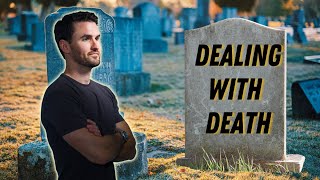
Rob Dial shares his experiences with death, from his father's passing at 15 to losing his dog Toby, and argues that avoiding grief only prolongs suffering. He suggests journaling what you loved about the deceased, meditating on those qualities daily, and distinguishing between pain and resistance to it. Remembering death creates urgency and gratitude in life.
Chapters
Welcome to today's episode of the Mindset Mentor Podcast. I'm your host, Rob Dial. Today we're going to be talking about death. We're going to be talking about dying. Oh, everyone's favorite subject, death, Right. And we're also going to talk about the benefits of death, which is kind of interesting if you think about it normally. You think that if we're going to talk about death, it's going to be really down and boop boopy doo and sad. And, you know, that's not really what we're going to do today. We're going to talk about, you know, this thing that is omnipresent, that is here since the moment you're born, and how to cope with it, how to get better at working with it, how to understand your own better, but also how to understand other people's as well. And so, you know, we're going to talk about how to cope with it because if you look at it, every single person that you know and have ever met was born and every single one of them is going to die. It is always there. And that goes with you. I think a lot of times people like to live their lives as if there's not this thing that's coming down the line for them, as if we're not slowly walking towards death. And we're going to talk about yours as well. And the reason why is because I get a lot of messages on Instagram about death. I get messages about people who have loved ones who die. I get messages about people who friends or parents or brother or sister committed suicide. I get messages about people's grandparents that they were close with that died. I get messages about people's parents who die. Some of them were at an old age. Some of them were young. Some of them killed themselves. Some of them died by accident. And when I see enough messages about something, I usually make an episode on it. And so that's why, you know, I always say I look through my messages on Instagram, I can't respond to everybody all the time. I try to respond as many as I can, but. So that's why if you have any ideas as far as episodes, you can send me a message on Instagram. Robdial jr r o b D I A L J R. Cause that's how I communicate. And that's also how I kind of get ideas of different ways, different podcasts to make as well. So as of recently, I've gotten quite a few messages about death. People being afraid of their own, people being sad, people grieving the death of a loved one, people who have somebody who's killed themselves. And. And the reason why I thought this was important is because I've been thinking about creating a podcast episode about this now for, shit, about 10 months at this point. Reason why is because recently I had somebody who I knew that was young, 33 years old, that passed away. And also last year, Lauren and I, our dog, who is 13 and a half years old, Toby, passed away. And if you've ever followed me on Instagram, you saw that Toby was, like, a huge part of our life. We traveled all over with him. And so he was basically like our child. And we were really close with him. Both of us work from home, so we were with him at, like, every moment, all the time. And so I wanted to kind of have enough time to go through the grieving process so that I could talk about it and not just break out and cry when I talk about my dog. And so, you know, I wanted to talk about it. I've been thinking about it for a while. I wanted to integrate it. I wanted to integrate the lessons that I've learned from Toby's death, the person that I knew's death. And then I started seeing all these influx of messages about death and about suicide and about, you know, grieving. And I was like, okay, I feel like now's the perfect time to talk about it. And so I'll go ahead and say it. You know, I'm here to tell you that the death of someone that you love is never fun, right? Like, we all know that. And it's not something that is. It's not like something that we're stoked about while it's happening. And it can be hell, but it's life, and there's really no outrunning it. And so the more that you try to turn a blind eye to it, the more that I think you will be blindsided by it when someone that you do know ends up passing away. And so what it comes down to is death is going to happen to you, to everyone that you love. And that's not morbid. I'm not trying to be morbid any sort of way. And this episode is not going to be morbid. It's just a fact. And so, you know, the very first time that, if you've been listening to the podcast long enough, you know, this. The very first time that. That I came in contact with death was my father. So for the first 14 years of my life, I had never known anybody who had died. You know, I'd Seen, like, people dying on TV and, you know, stars and actors and athletes and rappers and all that stuff die. But I didn't actually know somebody personally. And then when I was 15 is when my father passed away. And, you know, so for us, what happened was it was Halloween, 2001. I was out trick or treating, having fun. Halloween was my favorite holiday. And then I came back home and my mom was like, hey, your father is unconscious, and we need to go to Tennessee immediately. We lived in Florida at the time, and so we packed to go to go to Tennessee and to fly up there. He was in Columbia, Tennessee, where he grew up. And so we fly to. We drive from Sarasota, Florida, to Tampa, which is where my sister was, to go pick her up and go. And by the time that we got there in the morning, he had already passed away. So we packed knowing that we were going to be going to see somebody who was in the hospital. That trip ended up being going to see someone and going to a funeral. So we were pretty blindsided by it. So the first time I ever saw a dead body was my father's. I was in the room when my grandfather passed away, and, you know, literally the seconds that he stopped breathing. And that was a incredible experience. If you've never been in the room with somebody as they pass away, it is. It is hard, but it is also, you know, it's. It's interesting because you have. It's a spiritual experience, is the least that I say. So I was in the room when that happened and was a person then called everybody. My cousin and I slept overnight in the hospice with him. We called the entire family. You know, we were around him for a while when the family came in, all that stuff. I was in the room when my mom and her three sisters told my grandma that her husband of 70 years passed away. I've had friends die in car accidents. I've had quite a few friends from younger years die in overdoses, had friends commit suicide. And so I feel like I have quite a bit of the different sides of death. And so I want to speak to all of those different sides as we go through today. And the first thing I want to talk about is just the grieving process in general. One of the things that I think is really kind of screwed up nowadays is that people try to speed up the grieving process, right? And they don't really. What it comes down to is they don't want to feel it, so they try not to feel it is what it comes down to. And I believe that if you try not to feel it, like, you know what? I'm like, how many times have you known somebody or done this yourself or somebody will pass away? And they're like, I got to get back to work as soon as possible, so. So I can keep my mind off of it. And I'm like, that's the dumbest thing I've ever heard. Because really, what it comes down to is if your mind can't come off of it, maybe you should spend your time grieving so that you can actually work through the process of grieving somebody so that you can move on. Because if you just decide to pivot and do something else to keep yourself busy so you don't feel, that means that you're actually never past it, and you're holding onto that grief inside of your body, which, you know, can. Can turn into a lot of problems later on down the road. And so don't try to not feel it. I think that that death of someone that you love is a really beautiful place to be in because you start to find a side of yourself that you're not normally in contact with and one that can appreciate. And I don't know if you've ever felt this way, but anytime I know someone that dies that I'm close with, I notice parts of my life that. That are bullshit. And I'm like, why do I spend my time doing this? Because you start to. Death kind of pulls away all of the stupid things of like, why do I spend my time doing this? Like, this person just died. I'm gonna be there one day. Why do I spend my time doing this? Why do I spend my time worrying about this? Why do I worry about what other people think about me? And so I think that if you allow yourself to feel it and be in the energy of that, it's usually a whole lot of lessons that come to you of how you can change your life and shift and what's really important if you decide to focus on it. And if you try to rush that process, like, obviously, the grieving process doesn't need to take five years, but if you try to rush the process, you're actually not getting the lessons from the death of someone that you know that you could get from it. And in turn, I think trying to move on too quickly is actually not doing a service to the person and what their death was supposed to teach you. Right? And so what I always recommend is trying to figure out what you're supposed to get from it and then also writing down everything that you Loved about the person. If you have a loved one that passes away, a loved one, whether it's a person, whether it's a pet, whatever it was. Write down all of the things that you loved about them, right? Write down all of the things that you loved about them and then try to see how you can integrate that into your life. So the first time I did this was the night before my grandfather passed away, when I was in the room and he was still alive, and I was looking at him and I was journaling about all the things I loved about my grandfather, because he was like the closest thing to an enlightened being that I've ever met in my life and might ever meet in my life, Right? And so he was very religious and, you know, so I started writing down all these things I like about him and what. What I want to be more like as far as. Like him being an example for me. So I wrote that all down, you know, about 3 o' clock the next morning, he had passed away. And then I finished the journaling session after he passed away, and I wrote down all of these things that I love about him and how he is a prime example. Example for me of who I want to be in many areas of my life. And then what I did was I decided if I want to become that, if he was an example of that for me, what I should do is I should meditate on those things every single morning to be a reminder of how I want to be more like him in this way. Like, extremely humble. He would literally, when people say somebody would give you the shirt off their back, sometimes that's true, Sometimes it's not. Like, he literally was the most giving person I've ever met. And so what I did was I actually started taking the pieces that I loved from my grandfather and started meditating on how I can be more like that every single morning. And so that's a really important lesson I think death can bring to you. And if you're just trying to move on and stop the grieving and just stop feeling more than anything else, you're doing a disservice to yourself, but also that person in integrating and keeping their memory alive. More than anything else, the best way to keep somebody's memory alive is to find out what you love about them and start becoming more of that. And then, you know, you look at it and there's a difference between pain and suffering. So it's like when somebody dies, there is a lot of pain around that, right? The pain is the pain that you Feel of a loss from someone. The suffering is the resistance towards someone's death. Oh, they were too young. It shouldn't have happened this way. Most of the time the suffering comes from us not accepting it. Oh, I didn't say what I wanted to say. I wish I would have said this. I wish I would have been this way. There's nothing you can do about it. There's literally nothing you can do about the way that they pass away, the way that you act around them, all of that. The only thing that you can do is changing aspects of you. And so there's the pain of someone passing away and there's a suffering which can go on longer. And what you really need to come back to is accept that which you cannot change, right? You cannot change somebody's death. You cannot bring them back. You cannot rewind back in time. Except that that's just the way that the world is. And the thing that I always remind myself when I'm in that place, because I've been in that place many times, is something that I remember Ram Dass saying, I've heard him say it many times, is that a soul does not leave this human plane a second too early or a second too late. So I always remind myself of that when I get caught up of like, oh man, like, I wish this wouldn't have happened. I wish I would have said this. I wish that. Would have said this emotion would have. I wish this wouldn't have happened this way. They shouldn't have died so young. It's like, it's just a reminder of like a soul does not leave this plane a second too soon or a second too late. So the way that it happened was exactly what it was supposed to, the way it was supposed to have happened. And there's lessons in all of that. And so it's really about accepting all of that now. The interesting thing about it is, is for me, if we go back to like talking about Toby, for instance, right? So Toby, he. Five years before he passed away, he had this things called Cushing's. And Cushing's is a disease. It's usually a tumor on the pituitary gland. Human can, humans can get as well, but he had this, this disease. Cushing's, an average dog, only lives for about two years with it. We got him to live with five years by switching up his food. You know, we never fed him ever again any sort of pellets, any of that stuff. We gave him real food from the earth and, you know, animals that once lived and things that were once alive as far as plants go, and then gave him a bunch. We took him to a holistic doctor, you know, gave him a bunch of. Never any medication, but just different types of things that kept him alive longer, that were just healthy and good for him. Chinese roots, all this type of stuff. We went overboard, but would do it again. And we put so much emphasis on making sure that his body was good. His body was good. His body was good for five years. And the thing that hit me the most is when he passed away, this thing that we put so much emphasis on our body, literally, the moment that we die becomes absolutely useless. And it was this weird, crazy spiritual experience for me where I was like, I try to keep myself as healthy as possible all of the time. I eat the cleanest I possibly can. I work out as much as I possibly can. I drink the cleanest water you can possibly get. I get spring water delivered to my house in glass. So, like, I focus on this thing because I want to live as long as possible. But then when we pass away, that thing is absolutely useless and it's just going to be recycled back into the earth. So there's two things I should be focusing on. There's the body while I'm alive and keeping that thing the best that I possibly can. And the other side of it is what I believe leaves the body when we get done, which is our spirit, right? And so it's like, oh, also, I should be working on this spirit thing, right? I should be working on that. And to be able to understand, I don't know what happens after we die. I don't. Neither do you. We've been told by many people, different circumstances, but Nobody actually truly 100% knows. There's no, like, actual fact. And so it's like, all right, the two things I'm going to work on every day are my body and my spirit. My body, my spirit. And what can I do every single day to make sure those things are the best they could possibly be? My body, so I can live as long as possible and have as happy and healthy life as possible and in my spirit, because who knows what happens after it? But I'm going to try to keep you the best I possibly can. That was one of the biggest things that I got from, you know, Toby's death. And what it comes down to is looking at our own death. Eventually, you know, we have to accept that it's going to happen. So many people are terrified of it. And no matter how terrified you are of it, it will still Happen. And death is really a beautiful part of life. Death is really what gives life meaning. It gives life urgency, because tomorrow is never guaranteed. And there's a stoic phrase that the stoics used to always say that I remind myself of every day, which is memento mori. And momento mori means remember that you're going to die. So every day, just remember that you're going to die, because that brings urgency to your life. Like, if you didn't die, there would be no reason to do anything today. You'd be like, ah, whatever, I got tomorrow. Whatever. No big deal. I got tomorrow. And so I remember I had a conversation with my mom a few years ago, and I was like, hey, how often do you think of death? And she's like, you know, maybe a couple times a week. How often do you think of death? And I was like, I don't know, probably ten times a day. She's like, what? You think of death ten times a day? And I was like, yeah, because it reminds me that it's coming down the line. And that could be scary for a lot of people if you don't accept it. But when you do accept it, it's like it gives more meaning to each day when you wake up and you know that you could die soon enough. And you wake up each day you're grateful for another day, and you go, how can I make this day the best that I possibly could, as if I was going to die tomorrow? How can I make the knowing that this train is coming down the line some point in time, and I don't know when it's coming? I could hopefully die when I'm 100. I could die when I leave the studio today, driving my car home. I don't know. But when you think about it, it makes you really try to get the most out of each day, out of each moment. You know, I work really hard because I want to experience all that I can. I want to help all that I can. And so the. The reason why I wanted to bring up and start talking about today is so that you can understand that, that we just need to become more okay with it. We need to be able to extract the lessons that we can from it, from our own death that is pending and other people's death, who we love, so that we can make the moments where we are alive when we wake up in the morning, and we do, because 150,000 people did not wake up today that were alive yesterday. That's when people die every single day. We can wake up and be like, fuck, this is awesome. I get another day versus waking up and being like, oh, well, I just want to sleep in a little bit more. I just want to hit the snooze button. Oh, the weather's not what I thought it was going to be. Oh, my gosh, my life sucks. Like, we can look at it that way if we really want to, or we can realize that we get another beautiful moment where we can just try to make something great out of it. Really, I think that if you can use death and think about enough, death can actually be a really good tool to make your life amazing. So that's what I got for you for today's episode. If you love this episode, please do me a favor. Share it on your Instagram stories and tag me in it. Robdial Jr R O B D I A L J R I love checking every single day. Hundreds and hundreds and hundreds of you guys share this podcast episode and we grow because you guys share it. So I greatly, greatly appreciate it. So if you've ever gotten any value from what we put out there, do me a favor, share it on your Instagram. Spread the love. And I would greatly appreciate it for you. Greatly appreciate you for that. So with that, I'm going to leave you the same way I leave you every single episode. Make it your mission to make somebody else's day better. I appreciate you and I hope that you have an amazing day.
More from Rob


Why NOT to stay single 👉 @robdialjr #adviceoftheday #motivation #mindset #growth

You Reap What You Plant 👉 @robdialjr #adviceoftheday #motivation #mindset #growth

3 signs that you're addicted to chaos 👉 @robdialjr #adviceoftheday #motivation #mindset #growth

Stop making excuses for people 👉 @robdialjr #growth #mindset #positivity #adviceoftheday

Tip for an amazing life 👉 @robdialjr #inspiration #mindset #adviceoftheday #positivity

It's time to move on 👉 @robdialjr #adviceoftheday #motivation #mindset #happiness

The right person for you is... 👉 @robdialjr #love #truelove #inspiration #mindset #soulmate

Get ready to take risks 👉 @robdialjr #motivation #adviceoftheday #mindset #positivity

The real competition You Vs You 👉 @robdialjr #mindset #inspiration #positivity #adviceoftheday

Their Mood Isn’t Your Responsibility. 👉 @robdialjr #mindset #adviceoftheday #motivation