"DO THIS To Stop WASTING YOUR LIFE Today!" | Matthew McConaughey & Rob Dial
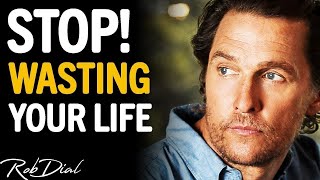
Matthew McConaughey talks about his memoir Greenlights, sharing stories from a peyote ceremony in Mexico and wrestling a champion in Africa. He argues the world conspires to make you happy if you choose to see it that way, and emphasizes journaling, refusing to quit, and constantly chasing personal growth to avoid wasting your life.
Chapters
When faced with the inevitable, get relative. Stay resilient. Don't be defeated as quickly.
Don't quit.
Welcome, everybody, to the Mindset Mentor Podcast. I'm your host, Rob Dial, and I'm excited to be joined with Mr. Matthew McConaughey here. And I've got to tell you a story real quick before we dive in. I think you'd appreciate. So when I was about 10 years old, my mom was always working. She worked three jobs because my father was, you know, they got separated. My sister's about six years older than me. She was in her, like, troubled years, I guess you could say, into partying, into drugs and all of that stuff. For those of you guys that don't know, Matthew just had a book come out that's incredible. And I'm. I won't even blow smoke. I'll just tell you, it's one of my favorite books ever. My girlfriend and I got it. The audiobook is Is and Behind the Stuff Bunny was two things. Number one was dog. On our drive back, we spent a month in Sedona. We were on our way back, and we listened to it and Dazed and Confused. And I think Daisy Confused is part of the reason. Not the whole reason surfing helped, but part of the reason why I got into partying and drugs as much, because I was like, this looks like so much fun. Like, this seems like a great life. Like, I want to see what this is all about. And so I want to tell you, first off, I appreciate that, because that was.
How'd it go?
Well, it's good now. It was kind of crazy for a little while, but everything's great. It was real good. So for those of you guys that don't know, Matthew just had a book come out that's incredible. And I won't even blow.
Thank you.
Yeah. And, you know, the very first question, the thing that I love is in the beginning in the entry, you say, well, you know, I've been through heartbreaks. I've broken hearts. And you go through all these different things you've done. And then the very. On our drive back, we spent a month in Sedona. We were on our way back, and we listened to it, and by the end, I was like, I wish this was longer. Like, I want it to keep going. Like, I want. I want Green Lights Part two. Because all of the other stories that weren't put in in 30, I. That's what I really was hoping that you'd dive into. When you missed it in the book, you mentioned it. And he never came Back, which I love journaling and tell people they should journal all the time at 15 years old. And so it's 35 years of you going back and looking through your 35 years of journaling and just kind of pulling out life stories and wins and losses and how it culminated to get you into the position that you're in right now. And I can't recommend it enough. I thought it was incredible.
Thank you. Thank you.
Understood that it's not something to flippantly do. It's not something you do on Saturday night and head out on the town.
No, I'm sure you say, well, you know, I've been through heartbreaks, I've broken my hearts. And you go through all these different things you've done. And then the very first thing you say is, so the question I. The first question you probably have is, what is a Green light? Which is the title of the book. And that's not my first question. The first question that I had is, can you dive deeper into the story of you doing peyote in Mexico in a cage with a mountain lion? Because that's what I. That's what I really was hoping that you dive into. When you missed it in the book, you mentioned it and he never came back around to it.
Just mentioned it. Yeah.
So I'm in Real de Catorce in Mexico and had some time off and I'd met this shaman and never done peyote before, but read enough on it and talked to enough people who had and understood that it's not something to flippantly do. It's not something you do on Saturday.
Night and head out on the town.
No, no, it's, you know, it's more of a spiritual adventure. And I've met the shaman and we.
Talked, we talked about it and I've.
Gotten to know him a little bit and I started talking to him about. About that, hey, what's a safe way, you know, spiritual way to do peyote? He goes, I'll meet you here at 4:30 in the morning, tomorrow morning. And I show up, it's dark and not hardly saying a word. He says, bring your hiking shoes. We start hiking and just as the sun starts coming up, he stops. And we walked about a mile up this hill. And he delivers a little small bite. What? This pale, small bite, small bite. And we just keep walking. Doesn't say a word. About another mile up. Now we're starting to break a sweat. Sun's up, another one. Another mile up, another one. By the time we reached the top the peak. We'd gotten to the top of this beautiful mountain, the highest mountain that was around there, and just quietly sat there and listened to everything that was going on. I remember there being. This was. This is real. This was not a fictitious memory.
This.
There was on the top of this mountain, there were all these, like, sunflowers and there were thousands of bees. And the hum of the bees was a baseline because obviously with peyote, your senses get tuned in more so than they are under normal circumstances.
And we sat up there for about two hours.
Didn't really say much of a word at all. Just sat there, thought, meditated, prayed on my own. And then we walked slowly back down and we got down. This is probably six, seven hours later after we left that morning. And he and I saw this cage. When I say cage, I mean it was more like a habitat.
It was huge.
It was probably 10ft tall, 20ft by 30ft. And inside that was this mountain lion. And I kind of, you know, was. Was on the frequency of Mother Nature. And I nestled up next to the cage and started sort of getting on the frequency of this. So said mountain lion. And his mountain lion's pacing turned into. When he was a little bit disturbed at first turned in, he slowly moved towards me, as animals would do when they get more comfortable, and came up to the gate. And instead of being aggressive, he sort of licked my hand, the gate through the fencing. So I slowly moved to the entrance, opened it up, slowly slid in. He began to pace again, but I moved very, very slowly. His pacing was not agitated as far as I could tell. I moved to the opposite side of the habitat and slowly sat down. And his pacing, as animals do, slowly moved a little bit closer to me but was not agitated. And about an hour and a half after I'd sat down, he made his way up to me about three feet away. And cut to two hours later, that mountain lion's head was in my lap and he was purring.
Oh, my God.
Now what's the astro? What's the, you know, the, the. The do not try this at home.
Here's the do not try this at home part.
The. The. It was a. It was a mountain lion. And that's a wild animal. Absolutely. But it was. It was fed. So meaning I've learned that like in the African trips, when I've crossed rivers with. With crocodiles and such, and you don't want to do that in the dry season when the animals are hungry and desperate, in the wet season, when they're more well fed by the food chain, you have better chances. So that's the, the longer detailed version of that story.
I love it. And I do want to talk to you about Africa because it sounds you had some, some stories from there that were incredible in the book. But one of the things that you say in the very beginning that I really love is you say I have proof that the world is conspiring to make me happy. And I always preach to people that there's two ways to look at life. Number one is that you can look at it as if life is happening to me and you're just throwing a bunch of circumstances and you have to wake up and try to move around them every single day. Or number two is you can look at as if this is happening for me, whether it's good or bad, it's happening for my own natural progression in life. So could you dive a little bit more into how you view life, good or bad, and as it's conspiring to actually make you happy?
Yeah. Well, you just said it. I mean, it's more than. It's more. It's not foolish optimism. It's not, hey, the glass task full, hey, lemonade out of lemons. It's not that I'm not really for that Hallmark card stuff. It's actually more survival. You know, I write very early on, one of the tools that has come to me is when faced with the inevitable, get relative. There seems to be the art of how do we see things for us. Well, as soon as something's inevitable, even if it's a crisis, what's more constructive? To let it cripple you or to go, okay, I can't do anything about this and I don't like it. So how do I make this for me? How do I think Eastern I'm going to use this momentum. You know, sometimes you can get by that by out enduring it. You know, people right now in Covid times, some people will get a head through in this time because they kept their damn head above water. They survived, they didn't thrive. But a lot of times you get through it by pivoting and saying, you know what? I'm going to look at this situation differently than I have before because maybe the way I'm looking at it now, it's not feeding me, it's not constructive. I'm banging my head into the proverbial wall every day again and again and again, and there's nothing I can do about the sit.
So maybe I need to sit back.
Up and go, well, maybe I need.
To look at the situation differently or re approach it.
And sometimes when we find out we re approach it from a different angle or perspective, we find a little spot.
And we kind of dance by it.
For the first time. You're like, ah, the way past this was right there. But I didn't notice it because I was just banging my head into the problem or denying the problem. That's another thing. You know, I had that line later in the book. Once you know it's black, it's not near as dark. A lot of times we are at least repeat offenders in crisis in our life because we don't give the crisis credit and we don't look it in the eye and we go, it'll be gone, it'll be gone, it'll be gone. We have all those things, oh, I'll start that tomorrow, I'll start that tomorrow. We procrastinate or whatever. But if you look at Christ in.
The eye and go, oh, this is.
A real one, I want to deal.
With this and.
Say, it's black, it's dark. Well, once we do that, it's actually not as dark as we initially thought. It's like when you wake up in the middle of the night and it's.
Dark, you walk, you can't see anything.
But your eyes slowly change focus and you start to pick up shadows and images and you can see better once your eyes adjust. It helps you get your eyes adjusted if you admit something is actually dark and it's black. So that's another way. But then it becomes, I mean, at the very least, once you facing that inevitable hardship or life is not dealing you what you hoped it would do, you, I mean, to look at it another way. Well, the alternative sucks. The alternative is like, well, what, what's proactive about that? There's no way through this around this unless I step at it, admit that there's a problem, a hardship or crisis, and now say, am I going to out endure it? Or am I going to pivot and go around this? Or am I going to live to fight another day and say, no, I'm out, you win, I'm moving on. Sometimes that's happens in relationships. Persisting in a relationship is great. Pivoting in a relationship is great. But sometimes we got to go, hey, it's the wrong person, white flag, we had a good run. That's as far as we can go. Which is a version of an extreme pivot. But I mean the alternate, basically at the very baseline of my, my line that the world's conspiring to make me happy is like, well, see what happens if you think the opposite. See, see how your day is if you waking up going, everything is conspiring to make me unhappy. Now, I'm not saying that we're not all on the way to death.
Yes.
You know, you hear people say, well.
You know, life is just cruel.
We're on the way to dying. Well, I'd say we're on the way to dying, but I wouldn't call that cruel. And especially now, let's flip that if that's an inevitable fact, which it is. So how should we go if we're deteriorating every day on our way to our death and we want to. How do we look at that? We either go, oh, doom and gloom, what's it all for? It's for nothing. Or. And see how that goes. See how you see how that goes. Or go the same is true. We're all deteriorating. We're on our way out of here. So, shit, I'm gonna make the best of it while I'm here.
Might as well make it fun.
What's the. What it's that it doesn't change again. That's why it's not foolish optimism. It doesn't change what's happening. Sometimes it's just about how we look at it and owning up to that being a fact, if it's a hardship in our life or reality in our life, and saying, well, I got two ways to look at it. And which one's gonna be one more fun? Which one's gonna be more constructive? Which one's going to lead to me being able to evolve, to turn pages, to grow, be more true, all those things, and have more fun?
For sure. Yeah. And I think it. You know, the thing that I love about the book, going into what you're talking about and then diving deeper into the book is that it gives you an idea of the mindset of someone who has had success like you. And it also gives a lot into your parents and the way that they raised you, which was quite unorthodox, but it worked really well. And the one thing that I love about the stories about your parents is that it seemed like your mom and dad were really, really good at instilling hardcore confidence into you. And one of the things that I love is that you said you got your. I don't know if I love it, but I love the thing behind it is that your third beating that you got was because you said, I can't. And I remember my mom always told me you could do Anything you want. You just got to work hard. That's it. And then she always told me she was proud of me. And that was the thing that no matter what, I think that's super important. And. And your parents told you that you can't say I can't. And so I want to dive into that and what lessons you learned from going, I can. I mean, did I give you as a child? I can do anything. I've just got to have the right mindset and right work ethic or. What did that build and instill in you?
It built resilience, it built hustle, it built giddy up. It built the understanding of collaboration. Because let me tell you one of the examples after I had already gotten. I had already learned and heard from my parents that they were too. Can't is a bad word again. You got your mouth washed out for saying damn. But you say C A n, T. Oh, bend over. There's a value instilled in that, you know. The others were just words, boy. A mindset that believes I can't do something is means they were. I got that butt whooping because they meant. Because they were letting me know. Oh, you go out in the world with that idea, world's gonna be tough on you. It's gonna be. You will be done on two, you know. So I remember one morning, my chores were to mow the grass weedy yard on Saturday mornings. So I go out, I'm in the back shed trying to get the push lawnmower started. It's not starting.
Not starting. It's not starting. I check everything. It's not starting.
I go inside, dad, I can't get the lawnmower started. And I saw his mowers meet. I saw this.
And I went, oh, geez. Ding. Oh.
I said the word, oh. I say that. He got up off the bed, walked past me.
I walked with him.
We went out of the bedroom, through the kitchen, through the garage, around the back to the backyard where the shed was, where the lawnmower was. That would not start for me. He pulled it a few times, didn't start. He got down, got a screwdriver out, looked around. I found a hose, like to the gas pipe that was detached, hooked it all back together, pumped some gas, started the lawnmower. And while the lawnmower was running six feet over there, he walks over to me, puts his hand on my shoulders, leans down eye to eye, and goes, you see, son, you were just having trouble.
Yes.
And that's what I mean by I learned collaboration as well. Yeah. Even if you're unable to do something, pull something off on your own, you can still ask for help or ask for assistance or get the right tool. And it was very valuable and something that we don't allow our kids to say to this day either. And so it didn't instill supreme confidence of, oh, I can do everything, anything. But it did say more.
So.
I.
It'll take a lot more to defeat me.
Right?
It will take a lot more before I cry uncle. It will take a lot more before I go, I give. It'll take a lot more before I say, that's as far as I can go. So it built resilience and endurance and hustle and also creativity in the collaboration to go again. I talked earlier about pivots, you know, in endurance, getting creative, about when you're running into blockades, going your mindset.
I can't figure this out.
Why is this relationship going this way? Why do I keep trying to get this outcome in the job, but I'm not getting it?
Well, don't say I can't. I haven't yet.
I'm having trouble.
And if you just say I'm having.
Trouble, it just leaves it open.
There's a way, there's another puzzle piece.
Here somewhere.
That'S constructive. And that was one of the values that he put in us. You know, it's just a perspective, a mindset and an understanding that actually, hell, you could even say, if you were unable to do something for 50 years, but you found someone who could, do you then go.
Well, I mean, maybe.
There'S even value of going, I'm not able to. But it, but it is possible, you know, if you want to take it all the way to that extent, which then opens up, well, maybe I didn't have. Maybe I wasn't educated for this thing that took me. Maybe some, you know, there's certain things that people have to be an expert to pull off. So saying not being able. So not saying I can't does not mean, oh, I, I can do everything.
It's not about like nobody.
No, you can't just be a 50 minute expert and go, well, I am, because I didn't say I am. No, it's not what it means. It just means don't. Like I said, don't be, stay resilient. Don't be defeated as quickly. Don't quit, don't quit.
We quit.
I think too often, me included, we quit things too often. We quit relationships. We quit doing the hard work that we know it's going to pay off. And if we just stick with Will. But we're so into immediate gratification. We need it now. If I'm not getting my results right now, then I'm going to say, well, I can't do it anymore. Oh, hang on, man.
This is long money.
This is long money. Hang in there. This one has real value, real currency at the end, and we're talking about the kind that fills the bank account, and the soul's account don't quit.
Yeah. I think it's. I think it goes back to. So many people love to start, but then they give up somewhere along the way, you know, and it's. It's. It's not that I can't. It's just that I'm not able to yet. But it doesn't mean that I won't figure out a way.
Right? Yep.
And that's what I love about it.
And not being able to yet is. Exactly. Not being able to yet is different than I can't.
Right. And too many people try one thing, and they. It doesn't go good right away for them. So then they go to the next thing, and then they go to the next thing, and then, like, man, nothing works out. It's like, no, it's not that nothing works out. It's just that you haven't been putting in enough time to actually succeed at something. You don't succeed at almost anything right away. It takes time to get to where you want to go.
Yeah, it's true. I mean, you know, we want things to be easy, but the hard work and the persistence at certain things, if we're doing something that we have the innate ability to do and we're willing to hustle for it, and if it's in business, if there's a demand for it, you know, choose something that you can supply that can also be in demand is a pretty smart thing if.
You'Re talking about business.
But. Yeah. How many times we go, oh, no, if you work hard, it actually then gets easy. It actually. I get. You know, I got I POV on me is for a long time in my life, in career, it's been like, oh, McConaughey just makes it look easy. Rolls out of bed. So it's like, what are we doing today? Yeah, trust me, I've been breaking my sweat behind the. Behind the doors over there so I can come out and make it look like I just rolled off the apple.
Yeah, that's right.
Yeah.
There's so many great stories throughout it, and one that was something that you said that was a really good lesson is number one. I was crying at the point where you're talking about your brother and his seeing eye dog. Good thing my girlfriend was driving at the time. She was driving my truck at the time because I was literally crying, laughing so hard about the CNI dog. So that's a beautiful story that people have to hear. There's a great story about you building a 13 story freaking tree house by yourself with stolen wood. And then there's another one if you get this. And this one I want to dive into is the story of you wrestling the championship wrestler at a tribe in Africa. And it was at that moment and I love it because it's like you were challenged, you could have said no and nobody would have ever known, nobody would ever judge you. One thing that I wrote it down is it says it's not about win or lose. It's about did you accept a challenge?
It is not about win or lose. Did you accept challenge? Yes.
And so what's the, what's the story behind that? And how, what made you decide to go, you know what, hell yeah, let's go ahead and arrest this guy. Random guy in Africa.
I remember the moment we'd been. I've been as in the Banji Agara of Africa, which is these place where I think it was around the 11th century. A lot of the animist and Mali fled after the Muslim invasion and they went off to these places and built these camps at the base of these huge mountains where the rivers flow. And these camps, these little villages are spread out between 8 and 15 miles apart. And we were on about day six of our hike. So each day we'd hike the 8 to 15 miles to the next place the chief would meet you at the boundary. I had read, you know, the chief likes what he sees in your eyes. He puts a hand out and to.
Give a soft handshake, not a firm.
Handshake, that means aggression. Well, I was being accepted into. The chiefs evidently liked what was in my eyes. So I was being accepted in the camp.
You get to the camp, there's always.
A young boy in camp, usually aged 11 to 14, who was sort of the runner, you know, a new guest in town. He's going to fetch you a chicken, he's going to walk. He would walk me to the cleanest place in the river to then go brush my teeth and bathe. And he'd watch out for crocodiles or people, what have you. You come back, they give you the best chair, meaning the one with the least rips in it, you know what I mean? And then eat the chicken meal and you'd have like 10 kids sitting around. And I was hungry. I would eat all of my meal and trust me, I can clean it. I can clean a chicken bone. But I would put this plate down when I was done, and all those 10 kids would be on it and clean it up even more. So anyway, I get to this one camp one day and I had shown up over there. Molly. I said my name was David. I was looking for anonymity. I was going to a place where nobody knew my name. I said my name was David. I said I was a writer and a boxer. Well, David Mbambara, which is their native tongue. The native language is Dauda. Well, very quickly became clear as word of strong white men named Dauda is coming. But they didn't give a damn about the writing part. They were damn interested in the boxing part. And over there, they love to wrestle. It's their pastime. And I'd shown up at this camp in Benjamin after about a 14 mile hike. And I was laying on my back, stretching, as I usually do at the.
End of this guacamole.
And the village kind of came around and over me. And I'd noticed this was the ritual. I show up, I look different, I'm a visitor. I'm going to be the night's entertainment, you know, from how I look to what I say to what innuendo we can have and jokes we can tell and kids playing with the kids, etc.
Etc.
Well, these two young men that were about looked about 18 to 20 started to talk, sort of just to have a bit of an aggression to it, right? I could tell they were talking at me. And I leaned over to Issa, I said, are they talking shit? He goes, this is exactly what they're doing. They talking shit. They challenging strong white men named Dado to wrestling match because they say they are the champion wrestlers of all of the village. And I'm like, oh, geez, they're talking all that smack, huh? And he I said, you know, in America, when people talk a lot before a challenge, it usually means they can't back it up because they're talking too much. It is the same in Africa. They talk too much. Anyway, they're coming at me and they're getting all the other villagers excited. And the villagers know what they're saying. Challenging me to a match, two of them. And I'm just laying there, I'm still stretching, and all of a sudden the pitch of the village just skyrockets. And the screens go up. And I look up, and these two boys that were talking at me just go run off, sprint. And everyone's laughing, going on. Oh, why? Because who steps up? Michel. Burlap bag around his waist, tied with a rope, no shirt, no shoes, about 5 foot 9, 5 foot 10, tree trunk of a guy stands where the two boys stood. This is the real champion of the village. He doesn't say a word. He comes and stands over me. He points at my chest, points to his chest, and then points to his right. And I'm laying on the ground. I know this is a challenge. My heartbeat starts to go up. I look over there, and what's over there where he pointed, there's this big dirt pit. And just as I see that, my heart rate starts going up. And in this ear, I'm going, are you kidding me? No way am I going to do that. And as I'm hearing this voice in this ear, I hear, are you kidding me? If you don't, dude, you will regret.
This for the rest of your life. This is legendary.
You got to find out.
You got to.
And so while I'm doing that, this year's winning. And all of a sudden, I find myself stand up right in front of him, heartbeat, pacing. I point to his chest, point to mine, and move towards the big dirt pit. Now the crowd goes crazy, and it's on. And I write about what happened in the wrestling match in the story. But what happened is I had handled myself pretty well, and all of a sudden, after the match, became what was called a big man in the village. A big man in the village. And the next day, which is a beautiful part about the story, because that guy wrestled. You got to read the denouement so good. He walks me. It was so graceful. But we get to the next camp the next day after that night of wrestling, where I accepted the challenge. And I said to Issa, my guy.
I was like, so what about last night, man?
I mean, I think I did pretty good, you know? And he goes, oh, no, you do very, very well. Everybody think that Michel going to have strong white men named Dada on his back in 10 seconds. You handled Michel.
I said, ah, so I. I won.
He goes, no, no, no. You were a big man in the village. Not when you handled Michel. It was not about to win or lose. You were big men. As soon as you accept the challenge, I was like, boy, take that one. Don't Forget that one, McConaughey. You know, and it's A good one for us all more often. And I think the reason that we don't accept as many challenges or take as many risk like that or others. Not that everyone's going to go to Africa, have the option to go wrestle, but what was inherent in the proverb that was thrown back at me was it wasn't about the winning and it wasn't even about the losing. Well, we usually say no to those kind of risks because the fear of losing. But what happens when we. What really. I've found that through life, what really seems to happen is we need to be a lot less fearful of losing.
Right.
And those people that do go, ha, na, na, na, na, boo, boo, loss, I saw you. Number one, they're usually not.
Real players.
In this whole game anyway. They're usually the people on the sidelines, and they're on the sidelines because that's where they belong. But number two, not as many people do that as you think. More people go, yeah, I tried that too, and lost. You know what I mean? Or, way to go. I've gotten things in my life not for victories, but because I've had people come up and go, you stepped in the proverbial ring again and lost again, but you came back again. I want you on my team. And I think it's just, don't give so much credit to the idea of losing and don't think that you're the center of the world, especially in today where it's thumbs up or thumbs down on somebody to give you. To give each person their identity via what we say about them.
Don't, don't, don't go. Don't go by that.
The real ones, the ones that matter, the real players, the ones that ain't on the sidelines because that's where they, those sideline people belong. They. They appreciate the acceptance, acceptance of a challenge more than they dismiss you if you lost.
Yeah. And it goes back to, like, the whole mindset your parents instilled in you of, like, don't say you can't. There's a part of you, it's like, I could beat this guy and have the greatest story of my life. You know, I've been a Hollywood actor. I've done all these crazy things, but I could literally beat this guy in a tribe, in a village in Africa and have that inside of you. Had you never told this story, you still have an incredible experience that most people will never have. And I don't think people think.
Yeah, no, I mean, it's true. I mean, you read the book, it goes on the story. And the fact that moment when I got up off the ground to accept the challenge, still, that story's still being told. If I wouldn't have done that, well, I don't know how many other things would have gone differently in my life. I mean, you have the story, the beautiful story of the grace of Michelle walking me back to the next village the next day. Then I go back six years later.
He does the same thing, talk about lineage.
And the term I use in the book is leave your scent. You know, boy, that's leaving your scent.
And, you know, for me, also very.
Just personally with that, you know, and it has to do with Peru story. It has to do with the African story.
Yeah.
And, you know, for me, also very.
Just personally with that, you know, and it has to do with Cruise story. It has to do with the African stories and a lot of other walkabouts I've taken.
But I've needed that in my own.
Life, being famous because I don't meet strangers anymore. And I have to sort of decipher. Wait, am I. Is this person, you know, endearing, being endearing to me because of. Wait, the biography of who I am? And so. So I'm always trying to measure, like, wait, wait, I got to make sure. Am I still earning this? Am I still getting credit for who I am right now?
Yeah.
You and I just met. We've been on this call for 25 minutes. Is my worth to you? What's my worth to you that I'm creating in our relationship in the last 25 minutes, but not before?
Right.
So to go away to faraway places where nobody knows my name, and I have a story like this, and then come back six years later, and the same guy walks me 15 miles holding my hand that goes, ah. That was all based off of the man they met named Dowda six years ago. They didn't know I was an actor. They had never seen me on tv. They didn't know I was famous. They had no biography. I was a stranger who showed up in their strange land. And when I show back up, that whole village is six years later. That whole village is hugging me. And everyone's growing six years old, and I'm talking to their kids who are all six years older, and the fathers and Michelle and the whole village, they all remember. And it's all based off of who was the man that they met six years ago, who that night accepted that child?
Yeah.
Nothing.
Yeah. And it's. It's a perfect example of, like, there's many times throughout the, throughout the book that you can hear that you are on this journey to kind of become better and seek new experiences. So there's, there's, you know, literally you went to Africa and this is the moment where you're actually already famous to this point. Right. So you, so you're already famous at this point. You go to Africa and do this. There's also stories of how you literally road tripped with your dog inside of an Airstream when you're already famous as well.
Yeah.
And then you go down to Iquitos, Peru and go on a spiritual journey. In the middle of the height of when most people feel like you've made it, you've gotten to this point, it seems like you're always trying to learn more about yourself and see what other. You know, I always say, like us as are kind of like a rose that's always constantly blooming and as new petals fall off, there's new petals that pop up that we need to go, oh, I should discover this. And as you're talking about your trip to Iquitos, Peru, I know about Iquitos, Peru because I've had quite a few friends go down there. And I was like, that's interesting. There's only one reason why I know people go down to Iquitos, Peru usually, and that's usually they do ayahuasca experiences and spiritual journeys down there. And so I'm curious with what, what made you decide to go down there, do the do these experiences, whether it was ayahuasca or whether it was just spiritual journey in general. And at the point when most people be like, I've made it. Why go down there and find another part of yourself when you've gotten everything in this world that we're taught we're supposed to have?
Well.
You gotta remember that was at a time when, yes, the roof was taken off of all the possibilities. For me, I had just gotten famous. Time to kill had just come out.
All of a sudden, the 99 no's.
Out of 100 that I was getting yesterday were now 99 and yeses. So when everything comes up and is open to you and is now a yes, that's a hell of a challenge. Yeah, that's a intimidating thing. Wait a minute.
48 hours ago I would have done.
Any of these and now you're telling me I can do all of them and you want me to be discerning and go, well, now that I can do all of them, let me pick the one I really want out.
Wait a minute, 48 hours ago, I.
Would have done anything to do any of them.
Yeah.
So, you know, to use the term green lights in the top of the book, when all of a sudden, you know, there were 99 red lights and one green light 48 hours ago, and now there's 99 green and one red. Whoa, where did I go? I couldn't travel down all these paths just 48 hours ago. And now you're saying, go, move on forward. I'm like going, well, wait a minute. There's a whole lot more past than I've ever had. So I needed to go hear my own self think. I needed to go let memory catch up with me. I needed to go see, check in with me, and put myself in a place where I didn't have all the frequency of those green lights. I was choosing a red light by.
Going away on my own to where.
People didn't know my name. I didn't want to hear all the noise, all the yeses, do this, do this. You're the greatest. This is awesome.
We love you.
Bye. Yes, more, please. Do this one. No, do this one. Do this. Whoa, man. Hang on. I gotta go hear myself think.
So I had a.
I had a dream that I go through that was not a nightmare, but had elements of a nightmare, but was not. It was actually just quite the opposite. Like, literally the opposite. And in that dream, there were two things. Now, dreams go. You can mix realities and times, right? In that dream, there's two things I was sure of. I was floating down the Amazon river, and the banks. And the banks on the left side of the river into the horizon was lined with African tribes. So I went to the Atlas to go look for the Amazon river in the continent of Africa. Two things I knew. And as most of you know, you can look forever and you won't find the Amazon, the continent of Africa's. It's a wrong concept, but in my dream, those two were the same. So then I found the Amazon, obviously, in South America. Picked out a spot to say, this is where I'm heading, and I'll go chase down the first part of that drink. And that's why I went away. I was looking for somewhere to go. But that came to me as a sort of a celestial sign and feel like. And I actually. What I didn't say is it was the second time that I had a dream. So when I had it the second time at this time in my life where I'd just gotten all this fame and access, I went, oh, I've Never had a dream that is exactly the same frame for frame 11. Second dream. I've never had the exact same dream before twice. And now I have. This must be signed. This is telling me something. And so I went off to the Amazon. And as you read later in the book, that was only half the dream. The other half was the African tribe, which we prequeled this story with one of the stories to Africa, which is.
What led me to Mali years later.
Again, exact same dream years after Peru, years after I went Peru and said I, oh, that dream came back and it's the exact same one. I guess I need to chase down the other half. What's the other thing? I know did the Amazon. African trash. So then it was fine to go in Africa, which I ended up going to Mali and learned things that we talked about earlier. Except the challenge.
Yeah, man. And the thing that I love about that's consistent throughout the book is that it seems like you're really okay with betting on yourself. Like especially I remember you would prefer. Yeah, so I remember I was watching this is 2013, 2014. I was watching True Detective and I was like, holy. I didn't know that he could act like this because you talk about, you know, how you used to be. You were kind of like put in this box and you kept betting you, you want to get out of this box and start doing something different, right? So we watched Dallas Buyers Club last night. Cause I was like, I need to watch this again. Just to get the whole, the whole vibe of when this switch was for you. And. And you decided to stop doing like the rom coms. And you got these big offers. It was like a million, you know, 5 million said no's and then they upped it to like 7 million. They said no. And then I think they went to like 15 and then like 22 million or something. And you're like, oh my God. I'm at the point where I've got to decide if I'm actually going to be real about this or if I'm going to go back to what I was actually doing. And so I'm curious behind all of that confidence embedding on yourself, how do you talk to yourself in your head? Because I know a lot of people that I've spoken to that follow me, reach out and they just, there's no self love in their head. There's not positive self talk. I'm curious with you. Are you, do you, do you build yourself up? Are you an affirmations guy? Do you look yourself in the mirror and you're like, yes, you're amazing. Like, how. How do you. How does Matthew McConaughey talk to himself in his head?
Good question. The truth, for me, that usually settles on us very quietly. But like a lightning bolt at the same time came that, you know what your work life is, not challenging your real life. At that time, when I was only doing rom coms and only getting offered those, it was not able to, or getting offered the dramatic fair that I wanted to do, that truth came to.
Me and I said, and I wasn't sleeping well, man.
I was like, ah, I was not happy enough with my work. And I remember saying to myself, well, I'm glad your life is so vital and more vital than your work, but, boy, I'd sure love to try and do work that can at least challenge the vitality of the life. And that was not coming through the scripts and the rom coms and the action comedies that I was only getting off of. So when I said sort of, what's the bigger risk? You know, bigger risk was, well, I want to find out if I can't do what I've been, what I want to do, what if I stop doing what I'm doing? And that will at least remove me from what is giving me my angst. It won't give me the place to go because that's not being offered to me. But maybe I just, by process of elimination, remove myself from that. So as soon as that was clear, clear that that's what I'm doing. And Camilla, my wife, helped me out a lot. And she's like, this is gonna. Who knows how long you're not gonna go with that work. You're gonna get wobbly, that bottle's gonna look better to drink out of. Earlier in the day, all those kinds of things, I was gonna. I battled senses, I battled not feeling significant. I battled not being able to feel like I could accomplish things, like I couldn't build something. I purchased a one way ticket into limbo.
And we all know limbo is where it sucks.
And that goes back to what earlier when I was saying I'd rather bet on me. Because at least then I know if I win, I go, yes. If I lose, I go. That was on you. I just like, I like knowing, right? So what's going through my head is it's not a daily. Come on, you got this. Once that truth was clear, that's the hardest part for me. After it's clear, it's, when do you put it into action? I mean, I find that the truth is clear to us more often than we give it credit to be. The hard part is, when do we implement it? Cause we're always going, well, tomorrow will be a better time to do that. Or maybe after this next one. Well, let me do 14.5, man. Geez, just do this one and then we'll stop doing mine. You can kind of. You can push the bucket. And trust me, my blood family, my brothers and mother, when I turned down those offers, they're like, what is your problem? But I admit it was clear to me and it was clear to Camilla why it was for me. Then it was just, okay, this is what I'm doing. I don't know if I'll ever work again in Hollywood, but even if I don't, I won't regret this decision. The only thing I will regret again, like saying, yes, I'll accept the challenge is not knowing. And if I stay in the business and do the movies that I'm getting offered, I can have very affluent lifestyle. I enjoy the work of rom coms. I get paid very handsomely. But those will be taking me further.
Away from ever being able to having.
The chance to experience the kind of work that I want to do in acting. So I said, I'll regret that more.
Not knowing than I will this.
And it was like, if I don't work, I'll figure out something else to do. You know, I don't think I'll go back to law school. Maybe I'll be a wildlife guy. Maybe I'll be an orchestral conductor, a teacher, a high school football coach. I don't know. I'll figure something else out. So it's not daily after that decision's made, there was no going back. It didn't matter if I hadn't. That was, what, 15 years ago. If. If I never got. If I'd still only been getting offered the rom coms I was getting offered that time since then, 15 years ago, I don't think I would have. I don't think you'd have seen me in any movies for the past 15 years. The decision was clear, and it was just about. And so once that became clear, that's. Again, once you know it's black, it's not near as dark. I said, it's black, man. For 20 months it was black. Nothing came in. I was like, this is it. But I was like, okay, again, when I say no understanding that it's black, when you know it's black, it's not near as dark. Saying, realizing that in this decision means I may never work in Hollywood again. Face that blackness.
You still willing?
Let's go. Let's roll the dice. Let's accept that challenge. I'll accept that damn challenge. And let's just see now. Funny thing is that along the way, I actually started to. In the last year of not getting in, I started to kind of gain.
Strength because I had miles under my belt. I'd been saying no to things for, like, 10 months.
And so each day became sort of a little more of a badge of honor for me, became a little more like, that's right, I'm holding out, man. I'm still on my sabbatical. I'm saying no. And then I started to feel like, you know what? The longer I'm gone here, I think I'm building a little momentum of what I'm definitely not going back now. And it became really clear to me, and at that time is when the industry started going, he's not doing any more rom coms.
He's just paring down a 14 and.
A half million dollar offer. He's not bluffing. So let's quit offering in those. So then they offered me Nothing for another 14 months. And 20 months went by. Where's McConaughey? Haven't seen him in a rom com. He hasn't been in the theater. He hasn't been in our living room. He hadn't been shirtless on the beach. Where the hell is he? And you know who might be a new good idea for, like, Lincoln Lawyer Killer Joe Mud, Bernie Paperboy, Magic Mike, True Detective, Dallas Bug. Well, guess who.
Now was now a new good idea, a novel idea.
Where's he been? No one knows where he is. Here I am, ready, put me in, coach. And just pounced on. But it took the unbranding before the rebrand.
So the daily thing, there's not a daily.
It was just reminding myself, hey, outlast this. It's a longer penance, it's a longer pilgrimage than maybe again facing. Look at Covid right now. I call it. There's something we have that's called anticipation, fatigue. And it's part and parcel with, once you know it's black, it's not near as dark. Like, in making that decision not to do the rom coms, I said, you may never work again in Hollywood. That's saying, face the worst case scenario. But if I don't do that, and I'm like, going, it's been a couple months, man. Maybe, maybe this week. Maybe this week. I'm wasting 30% of my energy on anticipating it being over.
Yep.
It's like in Covid right now, we're.
Thinking, well, tomorrow, for the last eight months, there are those of us who have thought, well, maybe this week. And you get up, you get your hopes up, and you get your hopes up, and then you let it down. You do that that many times, you're wasting energy. But if you sit there and go, this may go on forever, your body on a cellular level, on a mental level, slips into survival mode. You start conserving energy. And so that's what happened to me in that 20 months. I was like, I may never go back and work again. So my body slipped into lean horse, long ride. Lean horse, long ride, easy. And I told myself and Camilla said, you're going to get wobbly, you're gonna get anxious, you're gonna get like, ah. What was I thinking? The decision was clear. Let's remember this truth right here that we've agreed on. And no matter what happens, what comes, doesn't come, stick to it, trust it.
Yep. And then you do Dallas Buyers Club. You do some really big things. You win an Academy Award for best Actor and completely changed your life.
But it all came because you decided.
To bet on yourself and you decided.
To stick to something and stay with it.
Stay with your guns and what you wanted to do. And, you know, I love the. I love the speech that you gave on the Academy Awards there because you talk about how, you know, you're chasing yourself in 10 years, who you want to be in 10 years, and that's who your hero is, is you in 10 years and trying to get better. And one thing I always say is that. Is that I believe that God has, like. I like to visualize it. God has, like a checklist, right. Of like, okay, Rob, dial. This is everything that he could do. And, oh, he's doing that. He's checking off. And my goal is to get to the end, go up, and God looks at it and says, I didn't think you were going to do this much. Like, that's. That's my goal, right. Is that that's what I want to have happen, is God, be like, tim, you did well, my son. Like, that's what I want to see. And what's amazing about it is that it kind of goes what you're saying, where it's not that you have a hero, that's someone else. You have a hero of the person who you want to be in your future. And so do you have a daily of trying to get better each day so that you do become that hero in 10 years and this progression and wanting to see yourself get a little bit better every single day. Every single day. And every single day.
Yeah, I call it chasing yet. I think it's something personally a personal credo. I think it's, I think it should be our country's credo. Chasing yet.
Meaning.
You never get to. Yet there's no landing spot. There's not a ta da moment. There's never going to be perfect equality and righteousness in America. Can we get a little bit better and have a small ascension in our life? That means, oh, I see evolution. Yeah, it's a small ramp. Even if it's just slightly a ramp.
Or what the hell are we doing growing older? What are we doing?
If we all have in us yesterday's experience from yesterday that we didn't have the day before, then there's gotta be, there's gotta be. If we utilize it, there's gotta be a small ascension or at least a huge opportunity for a small ascension of involvement as individuals as even as a collective. It's, it's, it's that I think realizing that yes, we can understand that we can just stay in the race and commit to the chase to be in a little bit better, a little more truer, if you don't like the word better. Sometimes people go better, worse. That's more like, okay, a little more true to yourself. And only you, only we each know what that is. If you can do just a little bit in small increments, that's as good.
As it gets, then you're always in the process.
But what we have to watch is our result orientation. I've got to get to that goal. And I'm for goals.
I'm for those.
Trust me. I used to reread the book. I've written many a headline first that I then lived the journey to the headline and pulled some of them off. So I'm all for that. But we have to watch sometimes going and understand that even when we do that, even when we pull off that goal, get that girl, win that award, whatever it is, you don't go, ah, okay. Actually it opens up twice as many more avenues for which with which to go forward and evolve and go and.
Get a little bit better at it.
There's not a land, there's not a final landing spot in this life until we die in this life. So it's thinking that's what chasing my was me in 10 years. It's just going, who am I?
Who do I want you know, and.
You have to watch. It's different for everybody how far out they can project, because maybe 10 years are too far for somebody.
And you don't want to be like.
Well, I want to chase who I want to become. Because you got to give yourself credit for who you are right now too, you know, so you can't be just completely objective without just saying no, I'm going to live out my moment as who I am. But it's a step at a time. Is the subjective with the big picture in mind, which is the objective projection forward of where I want to go and who I want to become. And it's balancing those two, I believe, because maybe for some people that's like, hey, a month out is as far as I can think. A month away is as far out as I can project where I can simultaneously understand the paradox in that.
Who I want to be and who I am.
If you can just keep stretching that as as far out as possible while keeping those two in relation.
I mean, I think ultimately.
The place, the extent in this life is to think about your eulogy, think about how your kids introduce you when you're gone, how the world introduces you when you're gone. Now that's a daunting task, but it's an exhilarating task. And even if you can't keep hold the concept of it, just give it a nudge, give it a try, or walk the dog out and go, I can think of who my hero is, me in a month. What can I get better at? Be more true in this month. And that'll lead to maybe six months down the road. Then maybe you can think a year. Then maybe you think 2 years, 5, 10, 20, 30. And it can start to extend. You can kind of. It works out your projection muscles, you know, mentally and spiritually. But that's what that is chasing. Yet we can understand that. That's, that's, that's it. You don't get there. We never get there. And that's the point.
Yep. Yeah. And literally could not ask for a better transition to the question I love to ask people at the end. But first, I want to honor you, man. I appreciate your time. I love the book, like actually love the book. I thought it was amazing. I think everybody needs to get it. It's called Green Lights and it's the memoir of the past 35 years. I guess the past 50 years of your life. But going through journals for 35 years of taking journals. And I tell my mom it was really weird to her because I tell her I think about death every day, and she goes, why the hell do you think about death every day? And my dad died when I was 15, and so since that day, I've thought my time is coming at some point in time, like I know it is. So my biggest fear is to get to the end of my life and have regrets and things I wish I would have done. And you're talking about your eulogy in the time when. When people. What people say about you after you leave and there's a phrase that says, you know, there's you. They say you die twice. First is when you're in the casket, you stop breathing, and this last time is the last time that someone says your name. And so I'm curious with you, in between the first death and the second death, what do you think and what do you hope people say about you?
Yeah, you know, I. I believe that. Are you a parent?
No.
Okay. Well, when you, you know, you just. You just purported an extension of saying, hey, the life we live makes us immortal. Right.
Well, when you have kids, it's another thing.
You go, oh, now I'm actually literally immortal.
I'm biologically.
You know what I mean? I think. That, you know, if I was introduced as being someone who said, you know what? McConaughey was at home in the world. He saw himself as who he was individually. The boy sure did see himself in others, and as well, he. Damn sure committed. He didn't half ass it, to use my dad's word. He didn't half ass things. He didn't know how to half ass things. He really didn't know how to half ass things.
He wasn't always right, wasn't always true. He wasn't always right, but he was at least true.
I had this director tell me this one time in this scene where in the scene I'm very rigid about or at least secure with what I know about what my man as a character and a story would do and wouldn't do.
And this director was like, going, no, but you should.
I want you to do this. I'm, like, going, no, my guy wouldn't do that. No, I'm doing this. And he goes, you know what, Makai? You're never wrong. And I went, thank you. And he goes, but there's more than one way to be right.
And I went, oh.
Oh. I remember putting my hand up, going, touche.
Mark Waters was his name. It was a great. It was a great one. It was a great lesson. So I would say, yeah, I wasn't always right, but I was always did my best to be true. And maybe, maybe, maybe something to how.
Much.
Truth you can get out of good humor. You know, we see that as such a contradiction. Like, oh, you're gonna laugh at the crisis. It means you're denying the crisis. No, no, no, no, no, no, no, no, you're not. It actually unties that KN have real confrontation where they can finally get unified over a situation.
And I'm probably going long on my eulogy, aren't I? He didn't have to asset it.
It's your own eulogy.
And he you know what? In that I revered fatherhood as the greatest and most freeing and privileged job.
I love that.
Love it, man. Well, once again, I fully recommend everybody go out there, get the book. It's incredible, Especially the audiobook where you get to hear your voice and the voice inflection and all of the crazy. I was telling my girlfriend, I was like, I think he needs to be the Dos Equis guy, because he might be the most interesting man in the world. Just the shit that happens in the book and all the stories that you tell. I appreciate you for being here. I appreciate your time. I know that you're a busy, busy man, and I recommend everybody go get that book.
Well, I quite enjoyed talking to you, and whoever reads or listens to that there. I hope you enjoy.
Yeah, thanks so much, ma'.
Am. I appreciate it.
Hey, thanks so much for watching this video. If you want to learn even more about mastering your mind, click right here and watch this video as well.
I see success and happiness as two separate pursuits.
And don't expect happiness from success. And don't expect success from happiness.
More from Rob


Why NOT to stay single 👉 @robdialjr #adviceoftheday #motivation #mindset #growth

You Reap What You Plant 👉 @robdialjr #adviceoftheday #motivation #mindset #growth

3 signs that you're addicted to chaos 👉 @robdialjr #adviceoftheday #motivation #mindset #growth

Stop making excuses for people 👉 @robdialjr #growth #mindset #positivity #adviceoftheday

Tip for an amazing life 👉 @robdialjr #inspiration #mindset #adviceoftheday #positivity

It's time to move on 👉 @robdialjr #adviceoftheday #motivation #mindset #happiness

The right person for you is... 👉 @robdialjr #love #truelove #inspiration #mindset #soulmate

Get ready to take risks 👉 @robdialjr #motivation #adviceoftheday #mindset #positivity

The real competition You Vs You 👉 @robdialjr #mindset #inspiration #positivity #adviceoftheday

Their Mood Isn’t Your Responsibility. 👉 @robdialjr #mindset #adviceoftheday #motivation