Get Over Your Fear Of Rejection
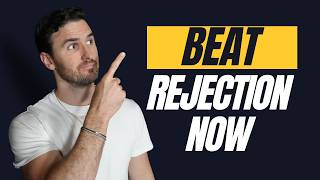
In this solo, motivational episode Rob Dial Jr (Mindset Mentor) explores why the fear of rejection holds many people back and offers a framework for overcoming it. He begins by tracing the fear to an ancient tribal survival instinct, explaining that modern rejection is no longer a matter of life‑or‑death but still triggers the same circuitry. Dial argues that the core of the fear is not the external judgment itself but a lack of self‑acceptance: we seek others’ acceptance to fill the void left by rejecting our own true selves. He distinguishes between the "true self" – the uninhibited, playful child we were born as – and the "conditioned self," a persona shaped by parental, social, and cultural expectations. This conditioning leads us to become chameleons, constantly adapting to be accepted, which perpetuates the fear. To break the cycle, Dial recommends a process of rediscovering the true self: recalling childhood passions, spending time in nature, engaging in creative play, and taking small, concrete actions (e.g., 10‑minute activities) that reconnect us with authentic joy. He frames this as a lifelong journey rather than a quick fix, emphasizing progress over perfection. Throughout, he promotes his Mindset Mentor Plus program, which provides worksheets, journaling prompts, and monthly Q&A sessions to help listeners integrate these ideas. The episode ends with a call to share the content, tag him on Instagram, and commit to making others' days better.
Chapters
Welcome to today's video. Today I'm going to teach you how to overcome the fear that I find that holds most people back from creating the life that they want, which is the fear of rejection. Let's dive in. After working with people and being a coach for 19 years, where I think the fear of rejection comes from when working with thousands and thousands of people, and to start off, before we dive into it, I want you understand that the fear of rejection, it makes sense. You know, as humans, we are wired to. To have the fear of rejection in us because we are tribal beings. And back in ancient times, rejection from the tribe literally meant that you were going to die, which is why rejection can feel so painful. It taps in to this survival instinct that's inside of all of us. Nobody in this world wants to be rejected. Nobody in this world likes to be rejected. And so everybody wants to avoid it in some sort of way. So it is, of course, built into our human circuitry. But I think it goes way deeper than that when you actually start to look at human psychology. So today when you look at, okay, the fear of rejection, if you get rejected and you don't see another person your entire life, you can still live, right? It's. And so it's. It's not a tribal thing anymore like it was before. It's not a safety thing like it was before. Now what I really think that it is, and I'm going to tell you why we're going to spend the entire episode talking about it, is I think it's actually a self love and a self acceptance thing. And so our brain might still process rejection as danger, but in today's world, rejection is mostly just social. It's not a threat to your actual survival. So what we're doing, though, is we're actually searching for acceptance. Not because we feel like we're going to physically be harmed or that there's death attached to it, but because we don't actually accept ourselves. And so in turn, we look towards others for acceptance, hoping that they'll give us what we're not giving ourselves. And I get it. This might not make a whole lot of sense, but by the time we get through today's episode, it's gonna make a whole lot of sense to you. And so how does the fear of rejection correlate with self love and self acceptance? So let's dive in, let's talk about it. Yesterday, I was doing a Q and A session on my monthly Q and A session with Mindset Mentor plus and one of the members Asked about the fear of rejection, and everyone was like, please do an episode on that. And, and so here we are. Side note, if you want to learn more about what I was just talking about, just go to mindsetmentor. Com and you can see about the next steps of coaching with us and stuff. So when you look at it, let's make it really simple. We have the fear of rejection, okay? The fear of rejection. What is the opposite of reject? Of rejection? It's acceptance, right? The opposite of rejection is acceptance. And so if you're afraid of rejection, what that means is that you're really searching for. What you're really searching for is acceptance. It's like when someone has a fear of flying. They think they have a fear of flying, but flying is not the problem. They have a fear of crashing. That's what they have a fear of. And so you might think that you have a fear of rejection, but really what it is, is you're searching for acceptance. And here's where it starts to get really interesting. Why are you searching for acceptance for other people? Have you ever asked yourself that before? If you're a people pleaser, why are you searching for acceptance from other people? If you have a fear of rejection, why are you searching for acceptance from other people? Why is acceptance so important? And the reason why is because you don't accept yourself. Now, why don't you accept yourself? Well, because you don't want to accept what you are not. And you're gonna be like, what the fuck does that mean? Right? This is why I said we're gonna start getting really deep into this. The reason why you don't accept yourself is because you don't accept what you are not. And so let me explain this whole thing. When you were a child, you were your full, 100% true, authentic self. You were loud, you were playful, you walked around without worrying what people thought of you. We all came into this world completely uninhibited, just free, doing whatever it is that we want. Free to be who we are without any fear of judgment. We were born into that. You weren't born with the fear of being judged by other people. But then somewhere along the way, it was programmed into us to fit in, every one of us. It was programmed into us in some way to fit in. And in turn, that turned into us caring about what other people think. Take a wild guess. Who do you think the first people who we developed this relationship were with? Of wanting to fit in, wanting to be what we wanted, they what they wanted us to be. You know, of course, you know, it's your parents. And I'll give you an example. My sister was in town this past week. My sister just recently became a therapist, and she's got four kids. And her youngest kid, Joseph, he's like the craziest, wildest, funniest kid I've ever met. Like, he has just this. This personality. And like, just the stuff he says is so funny and so off the wall, and he's so Witty, and he's 13 now. And my sister came in town this week, and she was talking about how much Joseph's personality has changed. And she's like, oh, he's much more quiet. He's much more reserved. It's so crazy how much his personality has changed. And so then I asked the question, I was like, do you think that it changed naturally or it changed because he's now more aware of himself? He's more aware of how he is around other people. And maybe he's just trying to fit in with his friends or what society wants him to be. Because when he was young and he was wild and he was crazy, he spent a lot of time in my sister's house on the farm. And most of the people that he spent time with was his brothers and sisters and my sister and her husband. Now he's older, he has friends, he goes to school, he hangs out with them, he has sports. And so I was asking, do you think it's that his personality has changed because it's natural that he went into that, or because he's changing as he goes in to fit in with other people? She was like, that's a crazy question. I've never thought of that before. I'm gonna have to think about it. And so, you know, as parents, we need to socialize children. That's the way that it goes. That's the way that they fit in with society. And so what all parents do is they socialize their children. I like to call it domesticate. Because that's literally what you have to do, is you domesticate these feral people so that they fit in. It's a necessity. It's a necessary. Part of all of us growing up is we learn to fit in with society. And so we learned at some point in time, don't be loud. Don't take off your clothes in public. Don't touch that. Don't hit her. We learn all of these things of what we can do and what we can't do, not necessarily what we want to do and what we don't want to do, but what we can and cannot do. And the average child is reprimanded eight times more than they're praised. That means that subconsciously, a child, subconsciously in their mind, thinks there's something wrong with me, there's something wrong with what I'm doing, there's something wrong with my true self eight times more than they think there's something right with me. Hey, real quick. I want to introduce you to something called Mindset Mentor Plus. If you love this podcast, you will absolutely love what I'm about to talk about. I designed Mindset Mentor plus to help you actively integrate every one of these episodes into your life. And here's how it works. With every episode of this podcast that comes out, Mindset Mentor plus subscribers get more. You're going to get multiple page, detailed, printable worksheets, effectively a mini masterclass that's way more in depth than just this podcast. They also come with journaling, questions, challenges, assignments, and so much more. So that you're not just listening to these podcasts passively, but you're actively integrating them into your life. That way you improve much faster. I also do monthly Q and A sessions in there and much, much more. If you want to learn more about it, go to mindsetmentor.com or click the link that's down in the description. And this all happens unconsciously. Like, I don't think that a seven year old is sitting there thinking, you know, there's something wrong with me. It's usually subconscious of like, I want to do this thing now, I'm not being accepted. There must be something wrong with my true desires. And so this all happens unconsciously. The children aren't actually sitting there, but it really shapes their understanding of themselves and the way that they fit in with the and for us, all of being children at one point in time shaped us as well. And we follow what our parents and what older people tell us to do. And then we follow what our friends tell us to do and what our friends are and what makes us fit in with them and the clique that they're in. So we start to build ourselves essentially into someone else who will be accepted by other people. You see what I'm saying here? We take our true self, who we came into this world as, and we start to build ourself into someone else that will be accepted by other people. This is called your conditioned self. So you have your true self and then you have your conditioned self. So there's your true self, which is the version of you that you were As a child, free, unfiltered, don't care what anybody thinks about you. And then there's the conditioned self, which is the version of you that you built yourself into being for society to be accepted by others, to be accepted by friends, to be accepted by siblings, to be accepted by your parents. And this is where the problem lies. And I want you to really understand this. You've become your conditioned self, and this is why your true self struggles to accept you. Hmm, get that? So you have built yourself into a conditioned self, a set of programs, who you're supposed to be. And it might not necessarily be who you truly are. And so it's really hard for your true self, the consciousness behind everything that you're, you're doing on a day to day basis, to accept yourself. And so what do you do? You start to believe that you need acceptance from other people. And so you mold yourself into a different version of yourself to fit in. You do it for your parents, you do it for your siblings. You do it while you're in middle school, while you're in high school, when you get into college, when you get your first job, you become someone else to fit in with the group. And now you're 20 or 30 or 60 years old and you don't know how to truly love and accept yourself. So you search for acceptance from other people, hoping that they will accept you. So you become a chameleon and you adapt yourself so that you fit in wherever you are. But what you're truly searching for is love and acceptance for yourself. If you fully, truly accept yourself. You don't have a fear of failure that much, because you don't. There's, you're already on solid ground. You're not on quicksand. Quicksand of like, oh my gosh, I don't know if I can, if I love myself, if I accept myself. Maybe I should go ask other people if they love and they accept me. And so what you're truly searching for is acceptance from yourself. But here's the tricky part. Your true self will never fully accept your conditioned self because it's not who you are. Why? Because it's a character that you're playing. It's not truly you. I told you we were going deep today. So what the hell do you do in this situation? Well, what you need to do is this. You need to understand, okay, sure, we can want love and acceptance from other people, and that's a good thing. We are, you know, tribal beings. We want to, we're social animals. We want to be around people. But you don't need need anybody else to accept you. What you need is you to accept you. But you will never truly accept you if you're playing a character for other people to accept you. And so what you need to do is rediscover who you truly are. This is the key to real self acceptance. It's not always very obvious. It can be really subtle. You know, when I think back to, like, think back to your childhood. Think back to who you were as a child. Think back to if you see a home video of yourself as a child. How were you? What were your hobbies? What did you love to do? Did you do dancing? Did you do painting? Did you love playing sports? Did you love going out in nature? You need to rediscover your childhood self because that's who you truly are. I get it. Some of you guys are like, but I need to pay the fucking bills. We all do. I get it. But there's no reason why you can't pay the bills and have some fun with your life and be the childhood version of you that happens to be an adult as well. That child, I want you to know, is still inside of you. It's just sitting there waiting for you to reconnect, to start doing the things that you love again, to start being more creative, to start putting yourself out in nature. Ask your parents, you know, ask them about what you were like as a child. What were you passionate about? You know, for me, I recently remembered and I was living downtown a few years ago, and I loved being downtown. It was great, but it was like, I felt really like claustrophobic living downtown in Austin. And I remembered through like an experience of like, I remember how much I loved being outside as a kid. When I was a kid, you know, I never had a bedroom until I was about 10 or 11 years old. And so what I would do is I had to sleep on the couch. And so I slept on the couch, but we also had a couch that was outside and in a screened in area. And I used to sleep outside on that couch, outside in the screened in area more than I would sleep inside. And my family was like, you used to just love being outside. You always felt free when you were outside. You'd always, you know, we grew up in Florida, so you'd always be at the beach and you'd always be playing with your friends. You'd always be outside playing baseball. And so when I lived downtown, I felt like really crammed and I didn't feel really good. And so we kept taking trips when I lived downtown. We'd go to Sedona, and we would go all these different places. And I realized I was going to all these places where I loved the nature that was there. And so recently I moved into a house. The house that we're in now, it backs up to 2,000 acres of protected land. There's an endangered bird that mates back there, and so there's no building that can happen on it. I can barely see any other houses. And so it's helped me reconnect with a part of myself which is like, I go outside all the time. I go on my back porch, I sit outside and I stare out the window. And I should think about business and life and what podcast I'm going to create. And it's just like, tapped me back into a part of myself that I haven't had for years, but I didn't realize that until I was like 30 something years old. And so I want you to understand, like, rediscovering yourself is not like an immediate thing. It's not an overnight thing. This is like a lifelong journey. This is a rediscovery. And this is the key part is I've always been thinking to myself, like, why do we. Why is it that so many of us, like almost everybody, has to lose ourselves? We have to become someone that we're not like. I have built myself for years in my 20s and early 30s into a different version of myself. And then I realized, like, this isn't who I am. And so I had to go on this path of rediscovery. And the reason why we have to lose ourselves is so we can find ourselves. You cannot find something that you've never lost. And so if you listen to this podcast, there's a part of you that does feel like you've lost a version of yourself, most likely. And so what you need to do is go on that path of rediscovery. So ask yourself, like, who am I? What do I love? What do I love to do? What do I miss doing? What do I not have enough time for anymore? And then what I want you to do is I want you to start taking action towards that. You know, start small. If you need to take 10 minutes to do just something that you loved as a child. Dancing, drawing, playing outside, going to a park and playing soccer with your friends, or just going to pick up game of basketball, anything that could that really connects you to the joy of being yourself. Be creative in some sort of way. Remember, the journey is not about being Perfect. And being like, I have to figure this out. And putting stress in yourself. It's about making progress towards just rediscovering who you truly are. And so really what it comes down to is the reason why you have, like, if you're listening to other people say, like, here's how you get past the fear of rejection. Stop caring what other people think. You know, you do whatever the fuck you want. Sure, you could do that if you want. But the reason why you fear rejection at the deepest, core version of you is because you're looking for other people to accept you. And the reason why you're looking for other people to accept you is because there's a part of you that's like, somebody, please accept me. Because I don't accept me. I don't accept this version of me that I built. It might not be. And I don't want you to think like, you don't accept all of you. There's definitely some versions of you that are amazing and great, but there's some version of you and everybody that we've built ourself into being a chameleon, into being somebody for somebody else, then ultimately that's not who we truly are. And so what I would recommend for you is go on a path of rediscovery and spend the rest of your life going on this journey of finding what you love, what you're passionate about, what your hobbies are. Do new things, try new things, go to different places, and start to find out what you love and what you want to be and who you want to be throughout your life, and let go of the things that are no longer you. If something doesn't fit you now and into your future, let go of it. You won't miss it, I promise you. And then once you build yourself into who you truly are and you build yourself into the real, true version of yourself, you won't really fear rejection, because other people don't really need to accept you for you to feel better about yourself. You just need to accept you. And so, ultimately, at the core of the fear of rejection is acceptance. And the person that you want to accept you is you. So that's what I got for you for today's episode. If you love this episode, please share it on your Instagram stories. Tag me robdial jr r o b D I A L J R the only way this podcast grows is from you guys sharing it. So if you would do that for me, I would greatly, greatly, greatly appreciate it so that we can impact more people's lives. And if you want to learn more like I talked about, mindset Mentor plus, once again, it's just another step and the first step into going and coaching with me and being able to help you get better. Go to mindsetmentor.com once again, mindsetmentor.com to see how we can help you learn and grow and improve your life. So with that, I'm going to leave you the same way leave you every single episode. Make it your mission to make somebody else's day better. I appreciate you and I hope that you have an amazing day.
More from Rob


Why NOT to stay single 👉 @robdialjr #adviceoftheday #motivation #mindset #growth

You Reap What You Plant 👉 @robdialjr #adviceoftheday #motivation #mindset #growth

3 signs that you're addicted to chaos 👉 @robdialjr #adviceoftheday #motivation #mindset #growth

Stop making excuses for people 👉 @robdialjr #growth #mindset #positivity #adviceoftheday

Tip for an amazing life 👉 @robdialjr #inspiration #mindset #adviceoftheday #positivity

It's time to move on 👉 @robdialjr #adviceoftheday #motivation #mindset #happiness

The right person for you is... 👉 @robdialjr #love #truelove #inspiration #mindset #soulmate

Get ready to take risks 👉 @robdialjr #motivation #adviceoftheday #mindset #positivity

The real competition You Vs You 👉 @robdialjr #mindset #inspiration #positivity #adviceoftheday

Their Mood Isn’t Your Responsibility. 👉 @robdialjr #mindset #adviceoftheday #motivation