HAVARD PROFESSOR Reveals The Secret To AGING IN REVERSE! | David Sinclair & Rob Dial
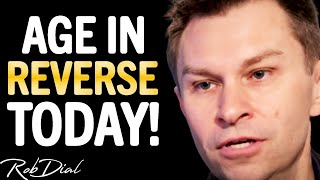
In this extensive interview, host Rob Dial talks with Harvard professor Dr. David Sinclair about the biology of aging and how it might be reversed. Sinclair frames aging as a loss of epigenetic information—analog "software" that becomes corrupted, much like scratches on a CD—while the DNA remains a stable digital backbone. He describes his lab’s gene‑therapy approach that re‑activates three embryonic genes in adult mice, restoring youthful function to eyes, hearing, liver and spleen, and outlines the long‑term goal of whole‑body rejuvenation via controllable gene switches. The conversation moves to lifestyle‑based hormesis: intermittent fasting, time‑restricted eating, exercise, heat (sauna) and cold exposure, all of which turn on longevity genes such as sirtuins and boost autophagy. Sinclair shares his dietary philosophy—plant‑forward, fish‑rich, low‑sugar, limited refined carbs, occasional gluten avoidance, and a cautious stance on red meat—citing epidemiological blue‑zone data and animal studies. He explains the role of NAD⁺ boosters (NMN, resveratrol), the importance of circadian hygiene (dim lights, limit blue light, consistent sleep), and the benefits of brown‑fat activation via cold. The interview also touches on brain health (Ornish diet, autophagy, misfolded proteins), emerging but unapproved therapies (BPC‑157, hyperbaric oxygen), and the psychological perspective on mortality, where Sinclair lives as if he has already died to appreciate each day. He concludes with a practical “ideal day” routine and points listeners to his book, social media, and newsletter for deeper learning.
Chapters
What do you find are the most common softwares that you reinstall for the aging process?
The way to think of the body is that there's two types of information. One is the DNA, which we all know. The other part of the information, the other type in our body, unfortunately is analog. Not the genetic, but the epigenetic information. And that's the part that I believe gets corrupted most rapidly.
Are you one of the world's leading experts in aging, or are you the leading expert in the world on aging at this point?
Oh, that's a pretty tough question to answer.
I'm definitely not the leading.
There are hundreds of people who work on this topic.
As interesting as that is, I've been working at this for now, 30 years almost. So if I don't have a reputation yet, I've done something wrong. But, you know, I'm not going to say I'm the leading guy. I'm probably one of the most well known because I've been brave enough to go out in public and talk about it since I was in my 30s, even 20s. And my book that came out, that's also been successful. But yeah, I am not going to stand up and say, I am the greatest. You know, I'm not Muhammad Ali kind of guy. I'm an Australian originally. And Australians definitely don't stick their head up above the poppy field. Tall poppy syndrome, exactly right. Cut off.
Yeah, I know a lot about that because we have a lot of Australians that listen to us that happen to be the number one business podcast in all of Australia. And I was like, I don't even know how all the Australians found me. So that's pretty amazing. But the thing I love about your book and everything that you talk about is you take age, an aging process, and actually kind of flip it on its head and think differently about it. But before we dive into that, specifically, when you look at aging, we think it's just something that we do. It's. We're just. It's something that we're gonna. It's gonna happen no matter what. But I'm curious, from the way that you, your perspective, the way that you describe it, why is it that humans actually age?
Well, first of all, let's just get something straight. Just because something happens and it's natural doesn't mean it's good. 200 years ago, we thought you get cancer, you home, pack your stuff and can't do much about it, but you develop medicines and you try to stop pain and suffering so that, you know, I regard aging as A disease, one that's treatable. And that mindset is very important here. What is aging? Well, people have been trying to figure that out since before the pyramids or even first block laid down there. So we don't know 100%. But what I put forth in my book is a new theory that has become one of the hottest theories in the field. And that's the idea that it's not just things going wrong. Willy nilly. There's, if you boil it down, actually you can make it into a mathematical equation. It's a loss of information. And I think it's a good time. And the reason that it's being received well is because we live in an information age. Fifty years ago, people didn't really understand what that meant. But today we can understand that if the body's like a computer and the drives get corrupted or the chips get corrupted and slow down, that's aging. And that what I think we can do is to reboot the system and reinstall new software and get it to work really well. And that's what we're working on in my lab, which is to reinstall software into body parts. And we're finding that those body parts become young again, literally and work again like they were young.
Yeah. And so what do you find are the most common softwares that you reinstall for the aging process?
Yeah, well, you know, if you want a biology lesson, you can read my book. I'm not going to go too much into it. But the way to think of the body is that there's two types of information. One is the DNA, which we all know that's a digital form of information, very robust. It's the reason we can talk through the Internet. The other part of the information, the type in our body, unfortunately, is analog records, cassette tapes. This is not the kind of information that lasts for a long time. And we call that the, not the genetic, but the epigenetic information. And that's the part that I believe gets corrupted most rapidly. Now the good news is, though, let me switch analogies. It's not the best, but probably everyone knows what a CD is at this point. The music on a CD or the photos, that's digital information. But if you scratch the cd, that's like aging the epigenome. The reading of the information is messed up. You can't read it. So song skip. And in the body, the equivalent is that the genes that should be on and off in each part of the body, you know, your brain has to have a different set of genes on compared to your liver, because otherwise the cells are going to be the same. We all have the same DNA in our cells. So now that. Now that hopefully you understand what I think is going on. The scratches on the cd, we've been looking to polish the cd. So that's a different analogy, but one that I think is apartment and what we do is we use gene therapy. At this point, we turn on three particular genes that are normally only turned on in embryos to develop a very robust, healthy child. We turn them on in adult animals. So we're taking mice. They're old, they can't see, they're blind. And we put those three genes into the back of the eye. We turn them on for three, four, or five weeks. We can go as long as we want. And the eyes, they go back in time. The retina, the optic nerves literally become young. They don't just get healthier. We measure their age. We can measure that, we can measure the scratches. And when they're young, they get their eyesight back fully. First time that's been done to actually reverse aging. We think that we can do that probably in many other tissues. We're working on hearing loss, some early results. We're going to work on other parts of the body. So spleen, liver. And the most exciting part, the one that keeps me up at night, is whole body rejuvenation. Imagine a world where you either take a pill or a gene therapy, you fill your body with these three embryonic genes, and then you take an antibiotic or some drug that turns it on. That's how we do it in the mice. We give them a doxycycline to turn it on. And then your doctor monitors you. Okay, you've gone back far enough in age. I'm 51. Three weeks later. Okay, David, you've gone back to 35. Do you want to keep going? Yeah, give me another 10 years. Go back, stop it. You don't want to go too far. And then, you know, you arrange another visit 20 years later. So that's what we're talking about. Theoretically, though, it's early days because we're still in mice.
Interesting. So I know that I hear. I've heard Bruce Lipton talk a lot about epigenetics, and he talks about how the DNA matters. But in some cases, it seems like the epigenetics matter, sometimes even more where it's. And the way to. I guess, he explains epigenetics is it's kind of like you have the DNA and you have the genes but the epigenetics is kind of the environment that it is. And if you change the environment, it could be healthier for it or cancerous for it. But you're talking about not just changing the environment, but also taking new cells and new stuff and putting it into it directly, right?
Yeah, that's essentially the right thing to imagine. But it's a little bit better than that, more exciting. What we've discovered is, my colleagues and I, is that the information to be young, the DNA is largely intact in our body. We didn't realize that. So the hardware is all there. The main information, digital, is there. It just doesn't get used. And what that means is that we can tap into it, that aging is far more reversible than we ever thought. And this epigenome has become one of the hottest things in biology right now because you're right, it is affected by how we live. And when you are overweight, you don't exercise. You spend 20, 20 sitting in a chair, like a lot of us did. That affects your epigenome, and in good and bad ways. There are longevity genes that we study that if you have a sedentary lifestyle, don't eat the right foods, those longevity genes get switched off, and they don't protect your body. Conversely, you know, you don't smoke, you exercise, you eat rarely, I skip a meal at least a day. Then the longevity genes come on and protect your body and stop those and slow down those scratches from occurring. But here's one thing most people don't realize. We tend to think our DNA is our destiny. That's totally wrong when it comes to aging. And we know this from studying tens of thousands of people measuring their clock over time. 80% of what you experience in aging depends on how you live your Life, and only 20% is your DNA from your parents. And that really is motivational. It should be to do all the right things.
Yeah, yeah. I saw a study that came out a couple days ago, and they were talking about COVID and said that obviously the number one thing that's killing people is. But the second thing seems like that the factors from obesity seem to be as well. So it looks like age. You know, it's funny because in the article, it says age is something that you can't do anything about. Looks like you would definitely want to go into debate about that. And on the other side, it then talks about obesity, and there's all the stuff that comes from that. Diabetes, you know, cardiovascular issues as well. So it seems like the actual two biggest issues now, talking to you actually can be worked through to actually help people be healthier, boost their immune system, and actually be able to fight it better, it seems.
Well, they're inextricably linked. Obesity, heart disease, Alzheimer's, even cancer. These are manifestations of aging.
And let's talk about obesity just for a second. It's known that the clock of aging ticks faster if you're overweight. And so it's not that obesity is just the problem. It's that your obesity is accelerating your aging. And that's why obesity causes a whole range of diseases, including cancer. Your body clock is ticking, so if you can lose that weight and your body clock will slow down. But the other thing to think about is what is the root cause of most suffering on the planet? What is the root cause of disease? Well, we know that for cancer, for example, the majority of the risk for cancer is aging. The processes that drive aging, we forget about that. We try to treat cancer after it occurs. We forget about the preceding 50 years that lead up to that, typically. And you can have a big difference on your cancer rates. I'll give you one example. So my mother died of lung cancer. She smoked, which accelerated her clock. It mutated her DNA as well, which was not helpful. But her risk of getting cancer because of smoking went up fivefold above the average person. Whereas going from age 20 to 70 increases your risk more than 200 fold. So which is more important to work on, smoking or cancer? Well, I'd say do both. But we ignore the major cause of cancer in the world.
Yeah. Which is people's environment, what they put in their body, how they take care of themselves. And one of the things that you said that I put down that I was really interested on, which I haven't heard you speak a whole lot about, is just being sedentary and just sitting all the time. Like, that's one of the things that I'm getting better at is every hour trying to get up and move in.
Some sort of way.
And, you know, the thing that I've heard it explained is it's like sitting is basically the new cancer. What is. What is the issue with sitting so much? And how do you see that happening in affecting the aging process?
Well, I have personal experience of that. When I wrote my book, which took 10 years, but I was literally sitting for about 18 months every day and night. I ended up suffering. My health went. I could barely walk because my piriformis muscle atrophied and then seized up. It was in a cramp for Six months. And that's the muscle that goes through that hole in your pelvis. And it took me six months of exercise and therapy to get back to walking again. So I've switched over to having a standing desk. It's right next to me, just here. I go on a lot of walks. So why is sitting so bad? Well, first of all, your heart rate doesn't go up. You're basically at minimal basal heart rate, which is bad. Second of all, if your major muscles atrophy, if you're a man, you can have less testosterone. But even for women, that lack of muscle bulk is super bad. Not just because you're. Your hormones are diminished, but particularly those people who are my age and older. If you have weak muscles, it's super bad because a. It's very hard to get them back. It took me a lot of work, and it's harder the older you get. But the number one, or maybe one of the top five, not number one, but one of the major causes, preventable causes of death is falling over and breaking your leg or your hip. And you've got to keep those muscles that are required for standing really strong so that if you fall, you don't break, you just bounce.
Yeah, it seems like, you know, one of the things that's happening is people are getting too comfortable.
It seems right.
We're staying inside. You know, inside of my house, it's 72 degrees all the time. I can sit most of the day and do all that. But then also at the same time, it's like, you know, if you think about it, we don't put our body through enough stress. And, you know, I live in Austin. We had this. I don't know if you heard about the whole snowpocalypse thing, where it was just, like, crazy. So our ancestors would have been outside in that there would have been massive amounts of stress of going down to 5 degrees and all that. But, you know, the thing that I'm. I'm curious of and that I like to do is I like to kind of seek discomfort. Like, I love.
There's a lot of.
And I don't even really do it, I guess for the body effects. I actually do it more for the mindset effects of, like, really pushing myself and doing something that's uncomfortable. One of the things. There's a couple of things I want to dive into with you on it, but one of the things is actually intermittent fasting, which I know you talk a lot about. Um, I'm really curious with what type of fasting people should do. You said that you normally skip one to two meals, what that looks like. Um, and then also long term fasting. One day, two days, three days. Because if people have done research, they talk about, you know, when you go three days or so, it seems like your body starts to clear out old dead cells and create new ones. So I'd really love to dive into fasting long term and also intermittent fasting as well.
Exactly. So this is the concept that's most important. And always keep in your mind that your body isn't healthy if it's comfortable. Our mind wants to be comfortable. We want to sit and watch TV and eat popcorn. That's very enjoyable. But if you always do that, your mind and particularly your body will atrophy. So you do need to push it. You need to be uncomfortable at least part of the time and then you recover.
Hey, did you know that monotasking is better for mental performance than multitasking? Or that simply cleaning your kitchen can reduce excessive snacking? And listening to happier music can help you think more creatively? These are just a few of the fascinating things that I picked up while watching Outsmart Yourself Brain Based strategies for a better you. Not only am I learning something new, but I'm also learning things about myself, which is a great feeling and super empowering. And with the great courses plus there's so many opportunities to learn and to feed your curiosity about virtually anything. You could speak a new language, learn how to play chess, dive into the history of World War II, or explore the universe and so much more. And you get unlimited access to hundreds of video and audio lectures from some of the best professors and top experts in the entire world. And with great courses plus app, you can watch and listen on any device. So learn what you want when you want to learn it, wherever you are in the world. And I want you to try the great courses plus for yourself. I know you're going to love it. And right now you can sign up for the quarterly plan and get an extra month for free. So just Visit my special URL, which is thegreatcoursesplus.com dialogue. Don't miss out on this. Sign up and redeem your free month right now@thegreatcoursesplus.com dial hey, I know many of you are just starting out with buying a home, having babies, building wealth. But you gotta make sure that securing your family's future is on your to do list by establishing a will or a trust@trustandwill.com@trustandwill.com setting up an estate is simple, convenient and secure. And for as little as $39, you can nominate guardians for your children, determine who gets your stuff, and plan for future medical care all from the comfort of your home. And hiring a traditional estate attorney can cost thousands of dollars. And using a one size fits all template is not nearly specialized enough. Trust and will documents are designed by estate planning experts and customized for the state that you live in. And as you get older, you realize how important it is to make sure.
That all of your stuff is buttoned up like this.
Which is why I'll be using trust and will as well. So gain peace of mind. @trustandwill.com dial and get 10% plus free free shipping on all of your customized legal documents. So don't wait. Go right now. Get 10% plus free shipping@trustandwill.com dial that is trustandwill.com dial.
So running for 10 minutes, losing your breath is great. Being hungry once in a while is great. Being hot in a sauna has benefits. Even being cold, we think, can help. We call these concepts. Well, overall, they're called hormesis. H O R M E S M E S I s and the idea is that our bodies need a little bit of perceived adversity. Think of it this way. What doesn't kill you makes you stronger. And what's happening, we've discovered, comes back to these longevity genes that I mentioned earlier. We work on a set of seven genes called sirtuins. There are others, but these ones control the scratches, and they control your body's energy and fat, fat content, your brain, Alzheimer's, even, how fast that progresses. And here's the key thing. When you exercise, when you're hungry, these genes come on. They protect the body. They give you longer life, we think, and certainly health, increased health. But when you're sitting down, you don't do any of that stuff. They just say, hey, times are good. We don't need to work hard. Your body will not protect itself unless it actually thinks there's a threat to survival. So that's hormesis, and it's super important.
So is hormesis the longevity gene that you're speaking of?
Well, hormesis is the concept of keep your body in a stress state every day, once in a while. But actually getting to your point, Rob, about being hungry in particular, I've always tried to keep a lean weight. I just have known that that's healthier. So I've tried to do that. But I thought that eating small meals during the day was the way to go, because that's what nutritionists have said for at least most of the 20th century. I don't believe that anymore. I think that the idea that you should always be satisfied and have snacks in between meals is wrong. I mean, certainly not wrong for teenagers. We don't want malnutrition or starvation, heaven forbid. But what we're talking about is people 30, 40, 50, and beyond where metabolism is starting to slow down. You're already gaining weight. If you eat three meals a day, you don't want to do that. So I skip breakfast. I often skip lunch. I have a normal dinner, healthy greens and maybe a bit of meat. I've recently switched to just fish as meat to see how that goes. But what's important is when you've got that hunger state and you call it hunger, but I'm really never hungry. I'm used to this. After two weeks, you don't feel hungry. I'm drinking tea and coffee in the morning. It feels great, actually. I feel much better than being bloated. What's going on at the cellular level is a lot. Those longevity genes come on and they turn on a process in particular called autophagy. You might call it autophagy depending on where you live. And that is the process that grabs the old proteins in the cell and digests them. We have a lot of old proteins that sit around and don't do a lot of good. In fact, in the case of Alzheimer's disease, that's the reason we get Alzheimer's disease. There's a lot of misfolded old proteins, one called a beta, for example, and our bodies need to chew those up to stay young and healthy. And a really good friend of mine and colleague down at Albert Einstein College of Medicine, her name is Maria Anna Cuervo. Anna Maria Cuervo. You should look her up if you're curious. She's the star of this. And she's discovered a type of autophagy that happens when you go hungry for three or more days. And it's called chaperone mediated autophagy. And that's the deep cleanse that grabs all of the really bad proteins and old ones that have crystallized and formed these tight bundles that are very hard to get rid of and just chews them up. And she has new work. I think it's coming out in the next few weeks. Actually. She just had a Nature paper. Now she's coming out with another big paper that says if you turn this process on in a mouse, it lives dramatically Longer. I think it was at least 20% longer. And they're healthier, they look great. You look at a mouse that's got this and it's shiny and black coat and the other ones are gray and can barely walk. It's huge. And right now the only way to stimulate that process is to go hungry or skip meals, I should say. But we're develop. I'm working with Anna Maria on a medicine that would give patients that kind of feeling so that older people, sick people, people in hospital, you know, obviously wouldn't have to fast for three or more days. That's not necessarily what you want to have if you're recovering from a disease. But here's the point. You can induce hormesis with a pill and that's what a lot of my companies work on.
Interesting. So is there a fast that's too long? Because I've sat with a doctor before who said, you know, I was telling us about doing a 10 day water fast and he's like, well, at that point in time it actually starts to be, you know, you're going so far that you're actually starting to do harm to your body.
So is it three, four or five days?
It tends to be perfect to go into this hormesis and then, you know, is there is it is three days the amount of time that we at least want to go to, to get into that state? Like what is, what is the typical amount of time that you guys recommend?
Yeah. Well, there's two mistakes in your sentences, unfortunately, Rob. One probably be a lot more thought.
Than the rest of the interview.
No, it's totally inadvertent. I'm being a bit facetious. We don't recommend stuff. I definitely don't recommend stuff. I can tell you scientifically what's known. And then the other mistake was we actually don't know. We're on the cusp of learning this, but we know that three days is good. Is five days optimal or do you start to lose muscle mass too much? And doctors like Peter Attia. Attia, a good friend of mine, he's self experimenting, he's got some patients, but we really don't know. We need more clinical trials to know that. I would say that what I do is harmless. Three days, probably all good. Five days. I would start to think that any more than that would start to take away muscle mass. And you don't want to do that.
Yeah. So one of the things that I hear a lot of people talk about and it seems like it's been very prevalent is neurodegenerative diseases, which you kind of spoke about for a second. Alzheimer's and dementia. My girlfriend, both of her grandparents on her dad's side, had either dementia or Alzheimer's as well. And that's one thing that she worries about for herself and then also for her father. So when you're saying these people don't go into this, if I understand it correctly, when they don't go into hormesis, basically they have old proteins and cells that are still inside of the body that the body hasn't flushed out. Is that what turns into the amyloid plaques that then destroy the actual brain itself? Or is that something that's separate? And then in that case where somebody knows they have something, because there's a lot of people that have. Somebody had a neurodegenerative disease in their family. Obviously we can't recommend, but the science. What does it say is best for that person, knowing that that possibly could come down the line for them?
All right, well, first the diet, then the science. So the diet. I'm working with Dean Ornish. You might have heard of the Ornish diet. So Dean and I are with another five other scientists running a clinical trial on Alzheimer's patients and so far seeing dramatic results. Now, his diet is lower on calories and focusing on plants and just really healthy food, and it seems to be working. Now, we'll publish this and we'll do more patients and get more data, but I think that that's the right approach is what he's saying. So if you want to look up the Ornish diet, I'd recommend doing that. O R N I S H Now the science. Now, there are misfolded proteins that accumulate in your brain. They form these little crystals. A beta I mentioned is 1, Alpha synuclein is another. And they're very hard to clear. It's thought that actually your body just cannot get rid of these crystals and you find them inside the cell and very much so outside the cell. Now, there's been a lot of debate which is the worst form. I think it's clear that some of these are bad for you, no doubt, because there's some therapies based on the clearance of these proteins outside the cell using antibodies, and they're starting to see some pretty promising results. But I'll tell you, my view is that it's far easier to prevent them than to try to reverse them. And this is why it frustrates me that very few doctors focus on what you can do leading up to actually getting the disease. And that's not just true for Alzheimer's disease, it's true for everything. And I think doctors, because their training has been on we only treat diseases, we're not preventative medicine doctors. That's for the kooks. We need to change that attitude. I mean, how many people's doctors spend half of the time with their patient talking about lifestyle, which I would say, especially in midlife, is far more important than worrying about what kind of flu you might be catching.
Yeah, yeah. I'm curious also that as well, um, one of the things that I literally just got delivered yesterday, it's in my garage, is a sauna, so a traditional sauna. And also I do cold plunge therapy and usually I put a, you know, I talk about all the time just for the, the mental benefits of pushing myself and doing it. And now it seems like they're starting to, you know, Wim Hof is starting to go viral and people are loving all this stuff and people are looking into it. When you look at the, the hot cold therapy, heat shock proteins, all those types of things that come out when you do do this, what are the benefits with hot and cold therapy that you're noticing? And then also what do you recommend for people who might decide to buy a sauna, might decide to start doing cold plunges? Is there too much, is there too little that you find?
Well, again, we're on the cutting edge and Wim Hof is right on the bleeding edge. The science says that yeah, turning on heat shock proteins and hot temperature saunas in general do seem to have long term benefits on health. There are some studies that I have referenced in my book which people can go to get more detail, but typically it's in Finland where pretty much every house seems to have a sauna. If you look at people who do a lot of sauna bathing, they are protected. I think it was 30% less chance of heart having a heart attack late in life. So those studies are convincing. Actually, I was surprised how convincing the data is exactly how they work. We don't know. It might also involve the turning on of these longevity genes due to hormesis. The cold therapy is actually less known about. But the best explanation I can give right now is that there are longevity genes that respond to cold, not just hot. The sirtuin genes that I work on, there's one called number three Sirtuin 3 that comes on during cold and it's really healthy. It turns on the body's brown fat, processes and burns energy, revs up the mitochondria the battery packs in the cell and brown fat, which we didn't even know existed 20 years ago. In adults, it's usually baby fat. Babies cannot shiver. They have to use brown fat to get warm. But adults can build it up, particularly on the back and other regions. It depends on how old you are and who you are. But being cold, I bet you that Wim Hof has a ton of brown fat and that keeps his metabolism going. But also brown fat secretes these little hormones that are increasingly thought to be healthy as well. So it's not just your fat that's in good shape that your whole body gets the benefits long term.
Hey, let me tell you about my favorite drink that I drink first thing in the morning. It's called Athletic greens. Here's how I start my day. Go to the bathroom, brush my teeth, drink athletic greens, and then meditate. And in 30 seconds, with just one scoop, I get 75 vitamins, minerals and whole food source ingredients and has everything that a multivitamin has, plus greens, probiotics, prebiotics, digestive enzymes, immunity formula, adaptogens and so much more. And I order it from my mom because I want to keep her immunity up right now and I pay for it out of my own pocket. So if you're looking to upgrade your multivitamin or take just one nutritional formula that's going to help you cover all of your nutritional bases, then you want to get athletic greens. Athletic greens makes getting as much high quality nutrition as possible incredibly easy without the need to buy multiple products. So make an investment in your health today and try the ultimate all in one Wellness bundle and, and support your immunity, your gut, health and energy by visiting athleticgreens.com dial and you'll receive a full year of liquid vitamin D for.
Free with your first purchase.
Again, that is athleticgreens.com dial.
See, now most people are listening. Well, I don't want more fat. That's the exact opposite of what I want. But you're talking about the brown fat, not the white fat is right?
Well, yeah, it's not building up more fat, it's converting the fat in your body to become brown or beige. So yeah, you don't build up fat. It's quite the opposite actually. It'll make you thinner if you have, if you have more brown fat.
So more brown fat will make you thinner. That's going to be a, that's like a. People would never think that having more fat would make you thinner. But from what I've heard also as well, it seems like the Brown fat, you've said before, has energy producing mitochondria that's in it as well.
Oh, exactly. And actually what happens is those mitochondria, when you get cold, can uncouple. Now, uncoupling will extend the lifespan of flies and mice. And basically what uncoupling is is that the body uses some proteins called uncoupling proteins to basically punch holes or let holes through the mitochondria. So quick biology lesson. Mitochondria are like a hydroelectric dam. There's a lot of water inside that gets let out. And as they pass through the hydroelectric turbine, they make energy. And if you let the water through somewhere else, you're not going to be able to make as much energy. And in doing so, your body that has the food in it, you eat a muffin, it's not going to make as much energy. So it has to work harder and you expend more energy. What happens to the energy? Well, laws of physics still apply. It comes out as heat. And so your body might go up 0.01 degree Fahrenheit or Celsius. It's very subtle. You don't feel it, but you're expending more energy. And that over the long run leads to less weight gain.
Interesting. So one of the things that you mentioned real quickly as well is mostly plants, but a little bit of fish is what you feel like you've switched to. So I always hear people talk about red meat's good for you, red meat's bad for you. Stay away from pork, stay from like those. I mean, there's every possible things you can think of, obviously. But what are you finding as far as if there, there's science around it between the fish, the chicken, the pork, the, the beef, and how that either helps us with aging or actually holds us back with, with aging?
Well, this is a huge debate. There's the carnivores who attack me on social media.
Kindly.
I know, I know most of them. So it's, it's not vicious like it could be, but it's a healthy debate.
Really. We don't know.
There's some evidence that, at least in mice, you know, we're not mice, so fair is fair.
But in mice, if you give them.
A certain amount of protein, particularly meat based protein, and there are chemicals in red meat that get converted can cause atherosclerosis. So that's one possibility that red meat is bad for you. Processed meats, definitely bad. The nitrates, there are carcinogens in there. So I try to Avoid that though, you know, Sunday piece of nibble on bacon is certainly fine.
But what I'm convinced by more than a mouse study even are epidemiological studies. You go to the world like Dan Buettner has the blue zones and you look, where are people the healthiest? Where don't they get cancer, where do they live? Over 100 on average. And these blue zones, you look at what they eat and they're typically eating, if you're in the Mediterranean, they're eating a lot of vegetables, olive oil, getting a lot of exercise, fair amount of red wine. And that sounds like my diet, right? And it's not a bad diet to have that. Might go fishing in the Mediterranean, pull out a fish and eat that, some sardines, a lot of good oils in there. And the olive oil, by the way, actually we found, or somebody else found, but we've confirmed activates one of these longevity gene pathways that we study, the sirtuins, which is pretty cool, the idea that olive oil is good for you because it's turning on a longevity mechanism. But that's another story. If you go to Okinawa, they have a really interesting diet too. There's a book that I love called the Okinawa Program, where they also, they exercise, they eat not a lot. They stop eating a meal at 70% full. They're in the fields, they have a social network. They eat a lot of plants and they only eat fish generally, maybe a little bit of pork, but not much. And they're the longest lived people on the planet. There's a lot of people out there that are still working the fields in their 90s and 100 above. So all of that convinces me that the best bang for your buck is more of a rabbits than a lion's diet. But then again, I'm not. Some people have a shock when they learn that I very occasionally, or I might eat some cheesecake or I might eat a steak. It's not worth living if you can't eat the foods you love. I just try to limit it to special occasions and when I really feel like it.
Now, if we're talking about stress and discomfort, is there benefit to every once in a while, once a week, once a month, whatever it is, to literally just going all out and going crazy and eating. Like, is there a benefit to that at all? Because we're talking about stressing the body in different ways. Is there benefit to just having a cheat day, just eating whatever you want or a cheat meal, passing out because you don't have enough energy because your body's got to digest it all and then going back and not doing that for another month or so. Is there actual benefit or any science behind it at all?
I haven't seen any science behind it, but last weekend I had to spend some time Sunday in bed, put it that way after a pretty big night. But I don't think it does long term harm if you do it once in a while. If you do it a lot, you're going to hurt your liver, you're going to build up fat in your liver, just probably hurt some neurons in your brain. But once in a while, I mean, I do it because I love life. But you can also do it because you just need some mental relief. You can't always be so strict, I find. And probably the best effect on it is is the fact that you know that you can have a bit of fun once in a while and it's that mental stress relief that it benefits. But I don't know, I don't think a lot of food and a lot of alcohol, I haven't seen any benefits. If I find it, you know, you'll be the first to know.
So. One thing that I've heard you say that you do avoid though is sugars and carbs. I'm really curious with that, why you tend to avoid those.
Well, I try to avoid them. I've learned even through wearing a glucose monitor that type 2 diabetics wear. What foods trigger me. Now we're all different, we have different microbiomes and whatever genetics. So I try to avoid things that shoot my blood sugar straight up. Now, cheesecake is not going to make me live longer, but again, I don't do that that often. But generally during the week I would try to avoid white rice, white bread, even bread. I'm starting to wean myself off because that just shoots the sugar up. Sushi, unfortunately, I love sushi. That still is bad for me. So the reason that I do that actually is it's clear that having high blood sugar and continuous high blood sugar is bad in the long run. You can measure your long term blood sugar levels. It's called HBA1C. It's what your doctor will test midlife to see if you've got type 2 diabetes. And that's basically glucose attached to your hemoglobin, which is an average. As that goes up, it's perfectly correlated. Not perfectly, but as highly correlated with heart disease and of course type 2 diabetes and even cancer. So you want to over your life keep those levels relatively low. On average it can spike. It's not going to kill you. And that's why I essentially gave up desserts at age 40. I say essentially because I do steal some and occasionally eat it, but probably most of the time I'd rather have a little piece of cheese instead. And I think that's the best way to go. Lower blood sugar, lower. HbA1c will prevent glucose from binding to your proteins. Remember we were saying these proteins get misfolded and messed up? So this is called glycation, and it happens during aging, and you don't want it to happen. It's like cooking your food on the barbecue. It's terrible stuff. Now, you can get rid of it with fasting, but in general, it's best not to accumulate this. So that's why I wouldn't say I totally avoid carbs. The other reason for avoiding carbs, by the way, is, you know, I enjoy food and the more the better. And if I don't eat a lot of carbs, then I can eat more food. So I stick to foods that are full of flavor and I really enjoy. I'll admit something that I've never admitted publicly. If I put something in my mouth and I'm not at a fancy restaurant that has no taste, tastes like crap, I will consider spitting it out because I would rather replace that with something that's really tasty.
Right.
This is not an eating disorder.
This is just.
Was that mouthful of whatever worth it? I don't think so.
That's awesome. I love that. The thing that I'm real curious about, I've never really asked, but that's. Come on. Is about three years ago, my girlfriend, I decided to go gluten free because she was having a lot of problems with eczema and started seeing the gut biome and all that stuff. What's your thoughts around gluten? And is it something that you recommend that people avoid or is it something that you just feel like is? And I know it's different. Depends on where you are. My mom has gluten issues. She can go to Italy and she can eat anything here. She can't eat any gluten in America. So, I mean, what are your thoughts around gluten and consuming it?
Well, I'm not the world's expert. I know enough to be dangerous here. So, yeah, gluten's an issue. And cutting back on grains in general, certainly processed grains is a good thing for the reasons I just mentioned. Anyway. And there is a sensitivity, no question. You can have it tested by your doctor, and there's a Lot of it. The thing to remember is we all have different guts, we have different microbes, we have different sensitivities. And I totally believe that gluten does harm to a lot of people. I don't know if it's the majority of people. I think there might be a lot of people who suspect a gluten sensitivity, whereas it's probably something else. But yeah, I mean, it's a real thing and you can have it checked out and you can do self experimentation like I do, because we're all different. We need to know if it works for us, whatever we're trying. And yeah, go off gluten and see if you feel better. There's certainly no harm in that.
Yeah.
I'm curious because we talked about cancer a little bit as well and we also talked about Wim Hof. Is there any studies around breathwork in over oxygenation? Because I know that from the stuff I've read that usually cancer, if you're looking at this place that it is cancer, tends to grow in an acidic environment. People talk about how if you're over oxygenated, that's an alkaline environment. Do you know of anything around breathwork and over oxygenating the body that way?
Well, yeah. So the Warburg effect is what it's called. And cancer cells love sugar and don't use a lot of oxygen for that reason. They're in a hypoxic state, whereas the opposite is hyper oxygenation. And now I don't think that I've seen evidence that just breathing a lot would make any difference. But you can do hyperbaric chamber therapy. And there is some really interesting data that just came out, not on cancer, but on. What was it? It was dementia, I believe. And there's also, as a paper that came out, looking at telomeres, the ends of the chromosomes that represent your age and get shorter as you get older. They reversed that process with age, just with some therapy in this hyperbaric oxygen chamber. So I think there's some merit to it and I've done some work on this as well. We find that I won't get too much into it, but having as you get older, your muscles get tricked into thinking that there's not enough oxygen around. They become hypoxic and they shut their own mitochondria down because they think, oh, this person's not breathing enough. They've gone to the top of Mount Everest, so they don't make as much mitochondria. The problem there is that your body's in a State of hypoxia, which is bad. You don't make mitochondria, you don't make energy, you feel, probably you feel lethargic. And we found that by blocking that process and getting the cells back in a couple of weeks to feeling normal, mice could now run twice as far on a treadmill. That was super healthy, super fit, had the energy back. And so, yeah, it's this oxygen stuff. And mitochondria is intimately linked to aging. And the older you get, the less mitochondrial activity you have. Now you can boost that up again, probably by exercising, by being a bit cold, and perhaps even by heavy breathing. That part I don't know about, but it's really important and I think it's the future for a lot of therapies, given what I've seen.
Interesting. So it's fun because I feel like you're like right on the cusp of all of the stuff that was weird five years ago. You know, like people were making fun of and it's like, oh, this actually could have some sort of merit to it. So it seems like cold therapy is made fun of. Going in saunas was made fun of, breathing was made fun of, fasting was made fun of. All of these things were made fun of. But it seems like the core of it is really putting your body under some form of stress because when it gets too comfortable is where it becomes an issue. So it's finding some part throughout the day where you, I mean, even if I'm thinking about, you're talking about being sedentary, so thinking like, all right, if I'm sitting down and watching Netflix, should I jump up and do like, you know, 50 jumping jacks and 50 pushups and then go, all right, now I can go back to watching Netflix every hour. Is that like, is that. That's probably even more beneficial than just sitting there watching Netflix for an hour, an hour and a half, right?
Well, yeah, that's a little extreme. Hopefully you're not cuddling with somebody under a blanket at that point.
But, you know, sometime during the day you should be moving. If you're older, just go on a walk.
If you're, if you feel like getting on a treadmill for a few seconds or for 10 minutes, that's fine.
I do a fair amount of weightlifting, you know, despite what you might think. And that is also important. Long term, your body, your muscles in particular, will secrete hormones that have long term benefits as well and allow you to eat more and burn fat. So all of that is good. You do want to do it. But you need rest as well. Don't forget, you can't run a marathon every day and expect to be healthy. And so I have days of rest as well. And that's when you should watch Netflix.
Yeah, on the rest days. On the rest days, we're eating all that you possibly can, right?
Yeah, once in a while.
Yeah. I don't think. I don't think that's the thing that's going to help. I put up a question that I had a feeling. Number one, I have a feeling I know your answer. Number two, I had a feeling I knew what the question back would be from everybody would be. I put up on my Instagram and I was like, hey, I'm going to talk to him. One of the frontrunners as far as anti aging and aging in general. What questions do you have? And you might not be surprised by this question. The number one question that came back was from a lot of women and it said what to put on their face to remove lines. I have a feeling I know what your answer is going to be around this. It probably has something to do with, besides just putting something on your face. But with the look of aging, what helps with that?
Yeah, well, so I have a fair number of VIP clients who are asking me these same questions. The good news is that if you do what I do, probably what's happening is your whole body will stay healthier and younger. And your skin is a very large organ, if not the largest. So you can start on the inside. You don't need to slather yourself with stuff. I don't know, you can judge me. I'm 51, so I haven't got a gray hair yet. And I don't think I've lost much either. So, you know, that's what we call an N of one clinical trial. Not exactly helpful, but I do believe that you should start on the inside and you can apply things from the outside. There are. I mean, the easiest thing to do is just avoid the sun. I grew up in Australia. Unfortunately, when it was fashionable to get burnt, that's gonna come back to haunt me. So avoid, avoid the sun. Take vitamin D. That's also very good long term for health and the skin. There's retinol, which actually does work. I would say that's something that a lot of people already know. There are creams that are purported to raise NAD levels. NAD is a molecule we work on in my lab. And that's the fuel for these sirtuins that I've talked about, these longevity Genes and actually, actually as we get older, the NAD levels in the skin go down by about twofold. So in my 50s, I'm 51, as I said, I would have roughly half the levels as I did when I was 20. So maybe you can raise the levels of NAD in the skin with a cream instead. I take a pill that raises my NAD levels. I talk about it in the book, page 304, if you want to learn all that stuff. I think it's possible to slow aging in the skin and then if that doesn't work, there's always the other cosmetic stuff. But I think you want to start early in life once you're in your 30s. When I started, it's a long term program. You cannot expect to start at 45 and instantly reverse the effects.
I had a feeling you were going to say it started from the inside out. There's not a whole lot of magic effects that actually takes. But people want the fix all they want to. They just want to fix it and look young immediately. But I'm curious with that and with skin in general, what do you know about red light therapy around the skin and producing mitochondria as well?
Yeah, I think it's got legs.
As a scientist, I tried to extend the lifespan of nematode worms with this red light in my lab. It didn't work.
But I haven't given up on it yet.
I think there's something to the red light therapy.
There's some reasonable data on what is it? Hair growth from this. So probably there's something going on, but it's really not well studied. We need a lot more. I've seen that you can buy these red lights. Someone even sent me one. To be honest, I haven't used it much. But I think that there's, there's good reason to think that certain wavelengths could trigger your body into a hormesis effect. Effect. Yeah. I think where I stand on that is we need more research, but I doubt that it's doing harm.
Right.
So I'm curious because you said something, I want to get really clear on it. You said avoid the sun. Now do you mean completely avoid the sun or do you mean, you know, avoid getting burned? Because a lot of people are going to be like he said, don't go out. So I'm not going to go out.
Yeah.
But I've also heard that being, having at least some sunlight triggers, you know, turns off, like between turns on or off, like 300 switches inside of your brain and your body and all of this stuff. So so with sunlight and getting the vitamin D from sunlight, but also taking it as you recommended, what is, what is your recommendation around sunlight?
Yeah, well, disclaimer.
I don't recommend stuff, but what I.
Can tell you is that no recommendations. What does the science say around sunlight?
Yeah, thank you, Rob. Thanks for bringing that up.
Maybe I misspoke.
What I meant to say was don't.
Stay in the sun long enough for there to be irreversible damage. So a little bit of sunlight is good. I walk out. Haven't been out that much because it's middle of winter here in Boston. But yeah, some sunshine is fine, but don't do it for more. It depends on the uv. But these days, because I'm pasty as much as a vampire would be, I don't want to spend more than half an hour out there in the sun. That's enough. But think of it as a competition between DNA damage. What's happening with the sunlight is your DNA gets cross linked and your body has to come in and take out those cross links and put a new piece of DNA in. And your body takes time to do that. And the older you get, the worse it get, the slower it is. And it's a balance of damage repair, damage repair. And if you don't repair it, you get mutations and epigenetic changes too, don't forget. So what I like to do is get a bit of sun. It's healthy for sure. You get a bit of a tanning effect too, but if you stay red, you've overdone it. Your body can't cope and it's got inflammation, so you limit it. But you know, I wasn't trying to say live in your basement for the rest of your life. I'm eager to get out. This pandemic has been pretty harsh on myself and all of us.
Yeah, so I've heard you talk about, you know, nad, nmm, a few different other things as well, a lot of the podcasts. But one thing that I've heard a lot about recently, maybe just because of people that I hang out with, is something called BPC157 for. It's a peptide that you inject into different parts of your body that you want to regrow, but also like joints as well. Have you heard any of the science around BPC157 at all?
Well, I hear it a lot.
People ask me that. I don't know enough even to talk.
About it with any authority. I'm sure it has effects because athletes have taken it. It's not approved for human clinical use by any authority. And it's thought there may be some negative effects. So it's on a prohibited list, depending on waiting on new research. Also athletes. It's part of that doping test. There's tests getting developed. So I don't know enough. I mean, maybe you do to say something about it.
I wouldn't say that I'm authority in it. I don't recommend anything either. So that's one thing I want to make sure of. So we've covered a lot of different things. And so I know everyone's. There's a lot of different things we've jumped around in. But, you know, if we're saying, okay, for the typical person, I'm 35, about to be 35 years old.
Right.
If we're going through and we're saying the science, as far as sleep, to waking up to the stresses to put my body through, the type of stuff to eat, the fasting, how often to do all of it, what is a typical, as far as the science says, what would a typical really day, good day look like as far as the stress we put our bodies through, the stuff that we eat, how often we eat, does it matter when we eat, and then also how much sleep we should have. And if there is a time of when we should go to bed, we should not get better. If none of that actually matters, it all matters.
But again, don't be so strict on yourself because you'll stress about not sleeping. That can backfire. Well, let's see. Let's start with a typical day for me. Get up, shower. I'll have a cup of tea or coffee. Little bit of milk doesn't hurt. Bit of stevia certainly doesn't hurt. I will most days have a little piece of. Not piece, spoonfuls of yogurt, probably a Greek yogurt or one I make myself and I sprinkle in about a gram of resveratrol. This is the molecule in red wine that we discovered activates the sirtuins going back to 2003 now. But if anyone hears that red wine is good for your slowing your aging, that's our lab. So I do that. I've been doing that.
Yeah.
Actually, when we published that in Nature back then, red wine cells went up 30% and it stayed up. So you're welcome, red wine industry. So I do that and then. Then I go hungry. You know, I'm not hungry. I fast probably until late afternoon or go all the way to dinner. During the day, I'll try to stand Up, I'll go on a walk, I'll go to the gym maybe once every three days, lift some weights, run on a treadmill for five, 10 minutes. And that's a good day for me. When it comes to the night, it's very important to dim the lights. You and I are looking into the screen all day. I've got lights here on my face that's really bad, this blue light in particular. And so I dim that at night automatically on my phone, on my computer, there's a piece of software called F Lux, which is great for computing. I wear those yellow glasses to block out the blue light if I watch tv. And I try not to do a lot of computing after 10 o' clock at night, it's difficult, right? We're all on our phones. And then I try to get to sleep. Then, you know, I practice breathing and try to calm down because I'm going at 200 miles an hour every day. And I try to get a good night's sleep every night if I can. I typically do. I know if I do because I've got this aura ring on and that's a good day. So why do all that? Well, hormesis and even the sleep wake cycle, it's important that I take my nmn, which is the NAD booster. This is part of my breakfast. That's the NAD boosting molecule, which we're testing clinical trials right now. Any of my colleagues who say I'm just experimenting, we have clinical data at this point. It's not a medicine yet, but hopefully it will be. So there's, that there's virtual, that's in the morning. So I get this, I feel this boost and it sustains through the day. But then at night I need to come down. The NAD levels would come down by then and I get a good night's sleep, which is important. We know that that cycle, the sleep wake cycle, we call it the circadian rhythm, is intimately connected with longevity. If you mess up sleep in an animal, within a few weeks, it's got type 2 diabetes and it'll age more rapidly. Conversely, as you get older, your sleep wake cycle will get messed up. You know how many people have a grandparent who doesn't sleep well? That's in part because this NAD cycle that we have during our day naturally gets flatter and you don't feel as tired and you wake up in the middle of the night. Long way of saying get exercise, skip a few meals, one a day, don't eat a lot of snacks and get a good night's rest.
Love that last thing I want to dive into that we spoke about right before everything we started recording, which was death, just in general. And we connected in a weird way around the fact that we just actually think that death is something that actually drives us. And I'd love for you to share kind of your viewpoint on, you know, we talked about carpe diem and we also talked about just viewing our lives as if it's already happened and we already have died. So if you'd share with that, since this is a mindset, mentor and I want to dive into the mindset of everybody. If you'd share kind of your viewpoint on that, because I thought it was really interesting.
Right.
Well, anybody who listens to your podcast knows that you've been through some hell too.
Yeah. By the time you're my age, 50, you've seen a lot. And most of us have seen at least one of our parents pass away a few years ago. It's probably going back five years now. I watched my mother pass away. She had lung cancer, had her lung removed. Survived for 20 years, actually. Maybe reservatrol had something to do with it. But she really did do well. But then her remaining lung gave out. So I flew to Australia to be by her bedside. Fortunately, she didn't die during that flight. I wrote the eulogy for her funeral. I thought this was it arrived, shoots, sat up, she was happy. I said, hey, mom, do you want to hear the eulogy that I wrote? It's really. I think you'd get a laugh. And she laughed. It was great. It was probably five minutes later. I hadn't had a chance to read it to her. She coughed, her lungs became congested, there was fluid in them. And I literally watched my mother, wide eyed, suffocate to death in front of me. It only took about a minute. I only had time to start screaming at the nurses and the doctors to get help. They said, there's nothing we can do. And I whispered in her ear, mum, you're the best mum I could ever hope for. Thanks for everything. And you see that as a kid, as a human being, first of all, my first thought was seeing her writhe on the bed like a dying lizard. That's something that no one tells you about, you know, sorry if I've, you know, told everybody here and you didn't want to hear it. Often, death is not a pleasant thing. It can be horrific. And my mother suffered that way. And, you know, we got to live life first of all, like every day could be our Last. And there will be a last day. We will take our last breath. That's a fact. And then when you see something horrible like that, I live life like it's a great day if somebody hasn't died. When you see something like that, there is no such thing as a bad day. I still get home and how was your day? The kids will ask and I'll say, it was a great day. Nobody died. And that's my bar. And that's why every day to me is a blessing and I'm super optimistic about things. Carpe diem. I live that every day. The other thing I like to think about is I live life like I died years ago. I've had some close miss close calls. I drive my car a little too fast. I drive one of Elon's Tesla vehicles and I regard myself as having died. And I live my life like, hey, every day is an extra day that I got. And that also helps.
I love that. Well, thank you for sharing that.
That was.
Yeah.
I've been in the room when someone passes away and there is. I've never been in the room when someone's birthed, yet I've heard that's quite amazing. But to be in the room when someone passes away is a life changing experience and it really changes the way that you think of everything. I was in the room when my grandfather passed away, myself and my cousin, and it was just like, it was an interesting thing to go through, but I also felt so blessed to have been in the room when it happened because it changed even more my viewpoint on life and death as well.
Yeah, it really does. And you know, I don't want anyone to have to go through something like that if they don't have to. But if you do, it certainly gives you this different view about mortality, your own mortality. Right. You know what's coming. It doesn't. I don't live in fear, Rob. I'm sure you don't. But we live life with energy, with the thought that every day is a gift and there will be one day when they run out. And I think you're the same. We want to do the most to leave this world a better place.
100% love it. Well, Dr. David Sinclair, I know you have an amazing book, Lifespan, why We Age and why We don't need to. But where else can people find you? There's obviously your book people can consume, but where else can people find you if they want to learn a little bit more?
Well, of course, on social media, I'm fairly active on Twitter. So I'm there at David, David A. Sinclair. I'm on Instagram occasionally post some videos and some tidbits on that. Little insights into my life in my lab there. More detail. I have a newsletter you can sign up for that is on a website, lifespan book.com lifespan book.com I also have an illustrated section to my book, so if you buy the Audible version, you can download the PDF that comes with it. There's a glossary, illustrated glossary. There's a cast of characters that I actually drew, all of the characters that had to do their headshots by hand due to copyright. So there's all that and there's a Q and A. You can sign up for the newsletter there. I'm working on a second book which actually talks more about hormesis and what we can do. But a lot of the book is about why we're aging. But half of the book, well, at least a third, is about what you can do now to slow that process and look better and feel better by the time you hit my age and beyond.
Amazing. Dr. Davidson Claire, I appreciate your time, man.
It's been great.
And I think a lot of people are going to learn a lot from all of this because it's definitely a different perspective of going, you know what, we can look at this differently and we can actually try to slow or reverse this aging process down.
And.
But man, if you're putting out books, you're going to have to keep putting out books. With all the research and stuff that's coming down the line, it seems like in the next five or ten years possibly.
Well, this is the reason I have to. So we made a discovery that hit.
The COVID of Nature. Hopefully this isn't too egotistical, but it's pretty fun. So we got the COVID of Nature magazine in December, and this talks about.
The biggest thing that you could get. And that's like the the top of the top is Nature magazine, right? For people who are doctors and scientists and work in your field?
Well, I mean, you can win a Nobel Prize, but that's pretty good. That was a highlight. And I had a fantastic team that was able to show how to get rid of those scratches on the cd. And that was the work that we showed could reverse blindness in old age. And the first time safely reset the age of an animal's tissue in vivo in the actual living animal without causing any issues. So the exciting part is that, and the reason I'm writing a second and probably a third book is that this field is going so quickly. Five years ago, I started saying, not just delaying aging, but we could reverse it. And a lot of my Harvard colleagues and elsewhere screwed up their face. Here goes Sinclair again. He's going off in a dream world. I'm happy to say that the science has caught up to that. And like you said, it's no longer crazy to think and even dream about what the future looks like.
It's amazing. Well, thank you so much for your time. I appreciate it, Rob.
It's been great. Thanks for doing what you do.
Hey, thanks so much for watching this video. If you love this video, I've got another one you're going to love. Just click right here and watch it.
More from Rob


Why NOT to stay single 👉 @robdialjr #adviceoftheday #motivation #mindset #growth

You Reap What You Plant 👉 @robdialjr #adviceoftheday #motivation #mindset #growth

3 signs that you're addicted to chaos 👉 @robdialjr #adviceoftheday #motivation #mindset #growth

Stop making excuses for people 👉 @robdialjr #growth #mindset #positivity #adviceoftheday

Tip for an amazing life 👉 @robdialjr #inspiration #mindset #adviceoftheday #positivity

It's time to move on 👉 @robdialjr #adviceoftheday #motivation #mindset #happiness

The right person for you is... 👉 @robdialjr #love #truelove #inspiration #mindset #soulmate

Get ready to take risks 👉 @robdialjr #motivation #adviceoftheday #mindset #positivity

The real competition You Vs You 👉 @robdialjr #mindset #inspiration #positivity #adviceoftheday

Their Mood Isn’t Your Responsibility. 👉 @robdialjr #mindset #adviceoftheday #motivation